- Category
- War in Ukraine
How Ukraine Spots Russian Oreshnik Launches From Kapustin Yar Before Alerts Go Out
 Prefer U24 Media on Google
- Authors


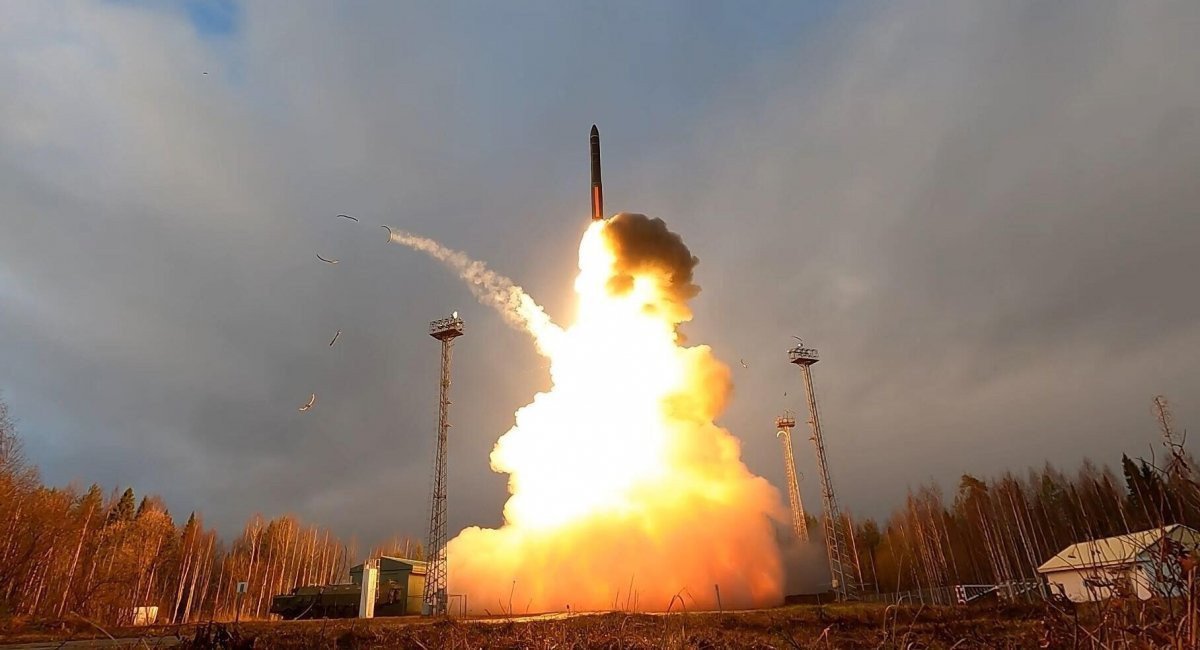
Ukraine uses satellite monitoring and other intelligence tools to track Russian missile launches from the Kapustin Yar test range, where heat signatures can provide the first sign of a potential attack, Ukrainian Air Force spokesperson Yurii Ihnat said in an interview with Radio NV on May 26.
According to Ihnat, satellite observation is one of the key tools used to detect launches. Every large missile launch produces a powerful energy release, creating a visible thermal flash that can be detected from a distance.
We bring you stories from the ground. Your support keeps our team in the field.
“Any given launch is a flash, and ‘danger’ lights up. When exactly, how exactly—the enemy will not inform us. Of course, they warn that they are conducting some exercises, they close airspace, these are all established procedures. But a launch may be carried out—you understand, this is Russia. Whether they will warn anyone or not, no one is counting on them,” Ihnat said.
Kapustin Yar is not used only for Russia’s Oreshnik missile. Russian forces also launch S-400 missiles and Iskander systems from the range, making it harder for Ukrainian air defense specialists to immediately determine what type of missile has been fired.
-fe851b90d8a0ba797c376cd41cd6a9ac.png)
Identifying the weapon in the first seconds after launch is extremely difficult. Russian forces also conduct simulated launches, either to test systems or to intimidate Ukraine.
The main challenges include the high speed of ballistic targets, the similarity of thermal traces from different missile types, and Russia’s repeated use of airspace closures and maneuvering around test activity.
Ihnat said more information is needed before Ukraine can confirm the exact type of launch.
“It is also impossible to immediately determine what kind of launch it is. That is why there may even be an alert when a launch is simulated or carried out for the testing purposes I just mentioned. But to know for sure whether it is Oreshnik or not, that is possible only when there is more information—whether the enemy is preparing to do it or not, and so on,” he said.
-7659cd20a14d074ef39d2b81a5a71b27.png)
Ukrainian intelligence analyzes Russian preparations in advance, looking for indirect signs that may indicate a real attack. This helps Ukraine issue air raid alerts in time and prepare countermeasures.
The Air Force stresses that every warning linked to Kapustin Yar is based on real data. Even if a launch later turns out to be simulated, the warning must be treated seriously, Ihnat said, because the risk is too high to ignore.
Earlier, reports emerged that Russia may have launched two nuclear-capable Oreshnik intermediate-range ballistic missiles during its overnight attack on Ukraine on May 24, with one of the missiles reportedly striking Russian-controlled territory in the Donetsk region.
Discuss this article:
-9a7b3a98ed5c506e0b77a6663f5727c5.png)

-72b63a4e0c8c475ad81fe3eed3f63729.jpeg "Photo of Cyril Barabaltchouk")