- Category
- War in Ukraine
“I Had Schizophrenia, No One Cared”—One Soldier’s Brief Time in the Russian Army
The Russian army is known for its doomed missions carried out by untrained soldiers. Men are sent to war even while mentally ill or wounded, because there are simply no reserves left.
 Prefer U24 Media on Google
- Authors

-29a1a43aba23f9bb779a1ac8b98d2121.jpeg "Photo of Illia Kabachynskyi")
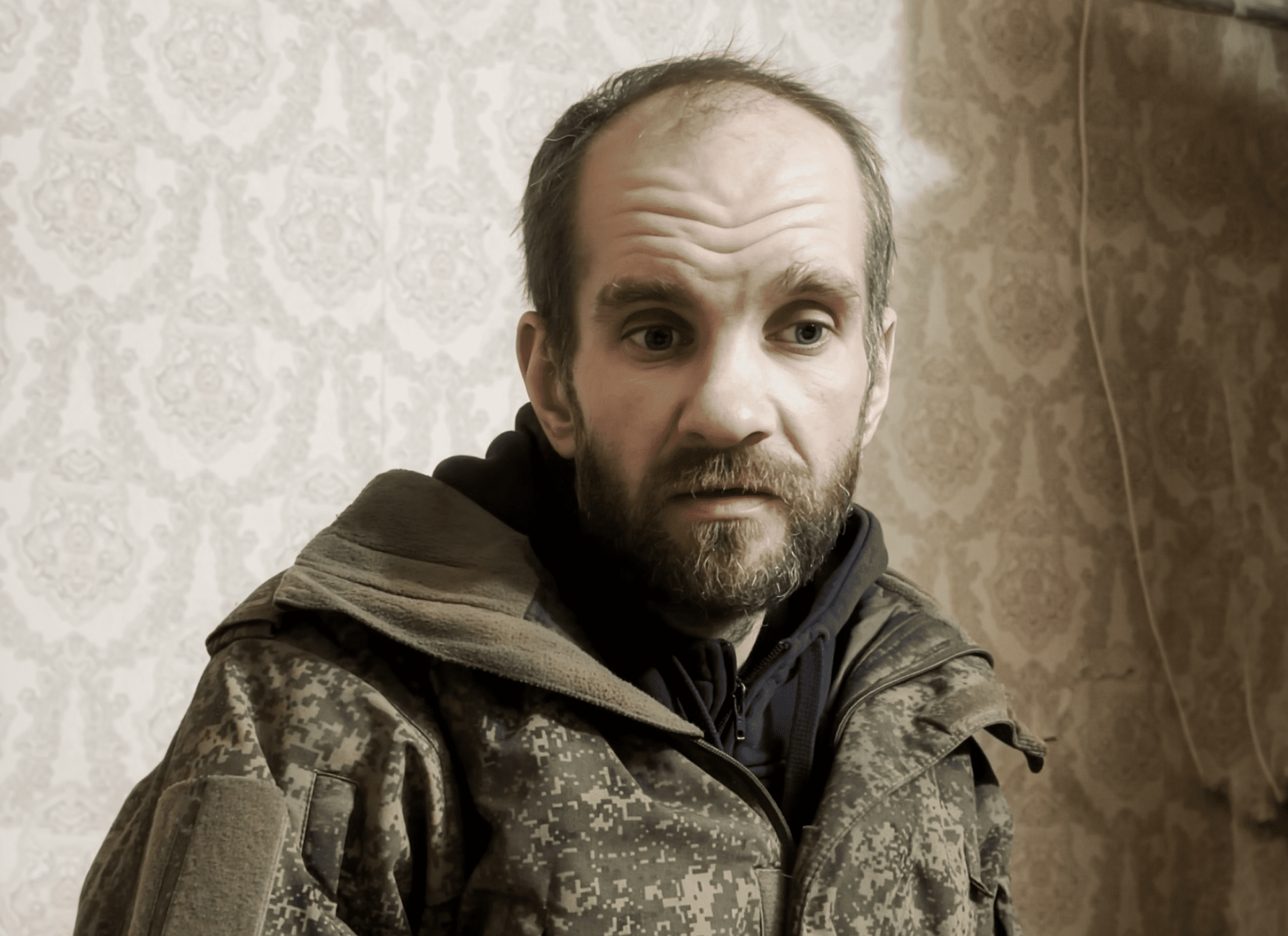
Ukrainian forces captured a Russian soldier named Vitaly Vaganov. During an interrogation, a recording of which is in the possession of UNITED24 Media’s editorial team, he said he had been sent to war despite a severe medical diagnosis of schizophrenia. Vaganov received no appropriate treatment during his service and was instead deployed while already wounded.
We bring you stories from the ground. Your support keeps our team in the field.
Vaganov speaks in fragments, sometimes losing his train of thought. He leaves out many details, saying he does not remember. At times, he recalls commanders’ call signs and certain moments from his service. The editorial team is publishing a shortened version of his account.
How a wounded soldier ended up in the Russian army
“Simply,” Vaganov says. Men approached him on the street, checked his documents, and asked him to go with them. In a building—described by him simply as “a house”—he saw several other men. From there, they were taken to another city, where they realized they were standing in front of a military enlistment office.
Without understanding what he was signing, Vitaly signed documents. A medical commission followed.
“I said that I had schizophrenia, but no one cared,” Vaganov says. “The doctors who examined me didn’t ask anything or clarify anything.”
He says he simply signed the medical conclusions handed to him.
There, he was also issued a Russian Gazprombank card (the United States imposed sanctions on the bank only in 2024). Vaganov said he does not remember the PIN code.
Vaganov says such disregard for conscripts’ medical conditions is routine in the Russian army. Doctors ignored whether men had health issues and marked everyone as fit for service. “People had problems with their arms and legs, and they were sent to war anyway,” he says.
After the medical examinations, he and about a dozen other servicemen were sent by train to another city, where they were issued uniforms. “It was only then that I realized I had ended up in the army,” Vaganov said.
Preparing for war
Vitaly avoided discussing preparations for war, suggesting they were minimal. But he clearly remembers the beginning of his service—and that it ended almost immediately.
Under a commander’s leadership, they were supposed to move between dugouts and reach a designated position.
“But we didn’t reach our spot,” he says. “A drone came. I remember a drop, and then being thrown from a tree and feeling sharp pain—I shouted and realized I was wounded.”
To stop the bleeding, he removed his body armor, grabbed his first-aid kit, and began treating the wound. It would prove to be a mistake. He managed to crawl back to Russian troops—but without his armor, which he would never receive again. The loss became his problem alone.
When he reached a dugout, Vitaly saw eight to ten wounded soldiers there. No one was planning to evacuate them.
“They took us out and told us to return to positions in the forest—we were supposed to be reserves. ‘What kind of reserve?’ I thought to myself. I could barely walk,” the soldier recalls.
What followed was chaos.
Because of his illness, he needed medication—but there were obviously none at the positions, and his own supply ran out. He spent part of the time in delirium and stress, barely eating, smoking one cigarette after another. In that condition, he was constantly met with criticism and shouting from commanders who cursed at him.
“While I was serving, voices in my head started appearing more often,” he says. “I didn’t know what to do about it, and there was no one nearby. They’re yelling at me, and in my head it’s something completely different—someone is talking, and I’d freeze up. It wasn’t even like this when I was in a psychiatric hospital.”
The chaos continued with another move. One night, this “reserve” group was gathered and told they had to relocate. Having lost his body armor, helmet, and rifle, Vitaly had nothing left.
But something worse happened: once they went out at night, their commander realized he was lost. They had to hide somewhere and wait until someone made contact and could tell them where to go. Even that did not help. Moments after they established contact, shelling began at the location they had been told to move toward.
Vitaly Vaganov is a Russian serviceman currently held in captivity in Ukraine. He is being afforded all the rights of a prisoner of war.
Discuss this article: