- Category
- War in Ukraine
Ukraine Seizes the Initiative: 400+ sq km Liberated as Russia Prepares Major Offensive
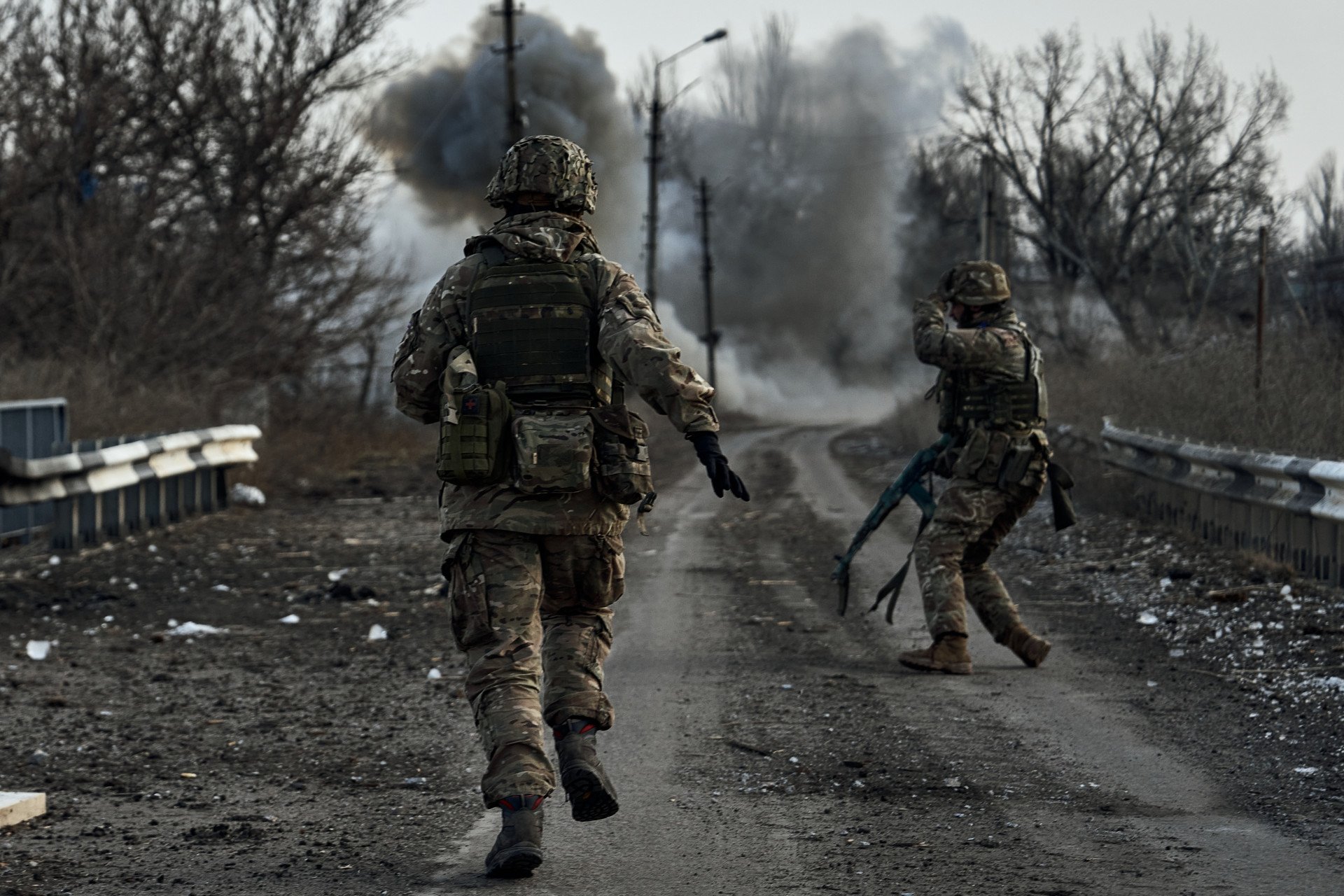
For the first time since the 2024 Kursk operation, Ukrainian forces have reclaimed more territory in a single month than Russia managed to capture. By going on the offensive, Ukraine is disrupting Russia’s plans for a major spring–summer campaign and seizing the initiative.
 Prefer U24 Media on Google
- Authors

-29a1a43aba23f9bb779a1ac8b98d2121.jpeg "Photo of Illia Kabachynskyi")
The past month has been more than successful for Ukraine.
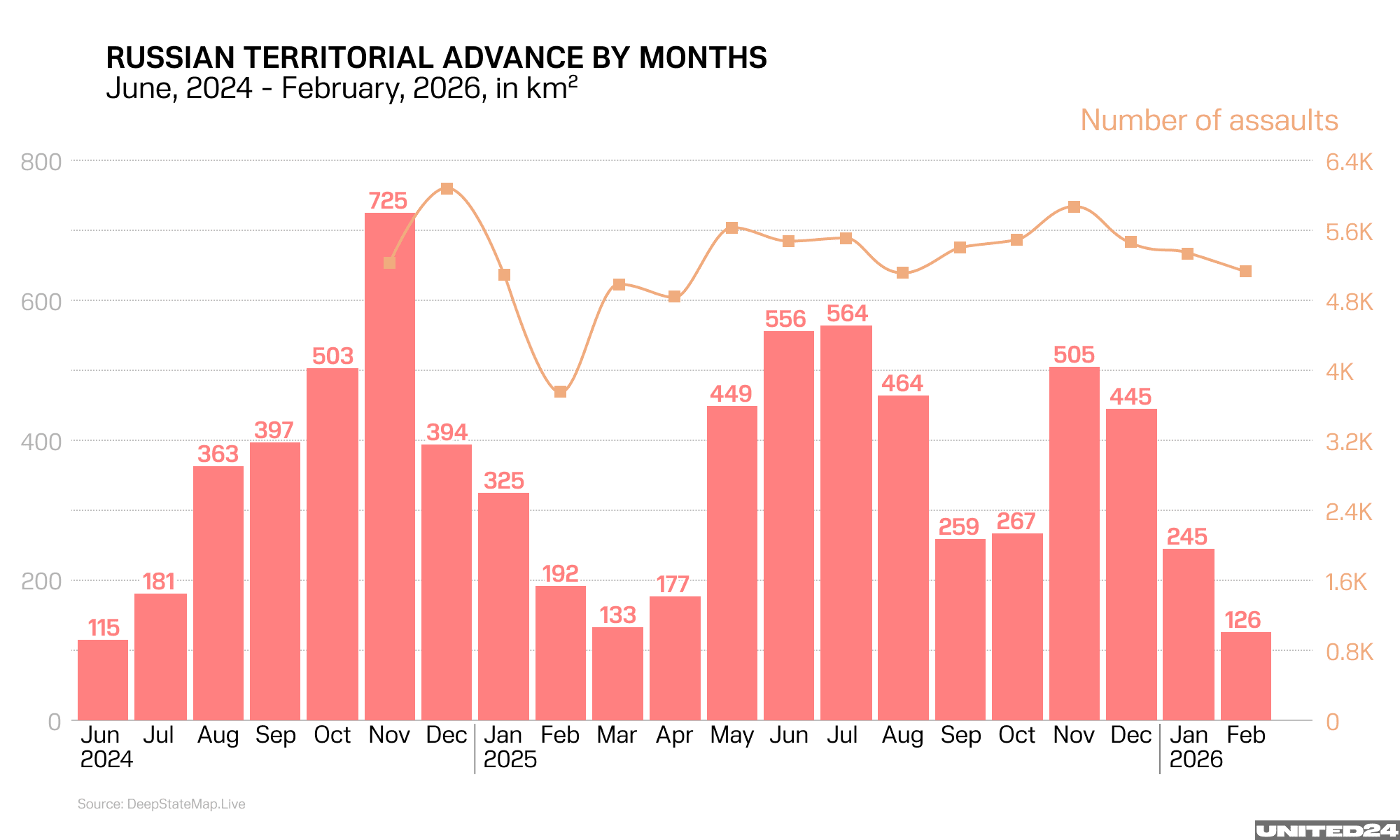
In February, Russian forces captured just over 120 square kilometers of territory.
Ukraine regained control of 285.6 square kilometers (110 square miles).
“For the first time since 2024, when we conducted the Kursk offensive operation, our troops in a single month have restored control over a larger area of Ukrainian land than the enemy managed to seize during the same period,” said Commander-in-Chief of the Ukrainian Armed Forces Oleksandr Syrskyi.
We bring you stories from the ground. Your support keeps our team in the field.
Overall, during the offensive operations, Ukrainian forces have reclaimed more than 400 square kilometers (155 square miles) of territory. Some estimates even mention 450+ square kilometers. Part of the operation and some villages returning under Ukrainian control are not being publicly discussed because the operation is still ongoing.
Almost the entire Dnipropetrovsk region, where Russian forces began entering in the summer of 2025, has been liberated. There have also been notable successes in the Oleksandrivka direction and in the offensive toward Huliaipole. Ukrainian forces have also achieved success in the Donetsk region.

“Despite constant attempts by the enemy to infiltrate deeper into our positions, units of Ukraine’s Armed Forces are holding the designated lines and, in certain sections of the front, are carrying out their own active offensive actions,” Syrskyi explained regarding the situation in the Donetsk region, declining to provide further details.
Preparing for spring
In Ukraine, its offensive operations are not described as a large-scale “counteroffensive.” Rather, they are a way to reclaim the initiative that previously belonged to Russia. Both Syrskyi and Defense Minister Mykhailo Fedorov have stated this directly. By imposing their own rules, Ukrainian forces gain an advantage.
For example, active offensive operations near Kupiansk in the second half of 2025 eliminated the possibility of a Russian advance on Kharkiv. The offensive in the Dnipropetrovsk and Zaporizhzhia regions also helped stop Russia’s advance there.
This is also part of preparations for Russia’s offensive campaign planned for the first half of 2026. By pushing back Russian forces, Ukraine gains more time to properly prepare its defenses and also reduces Russia’s offensive potential.
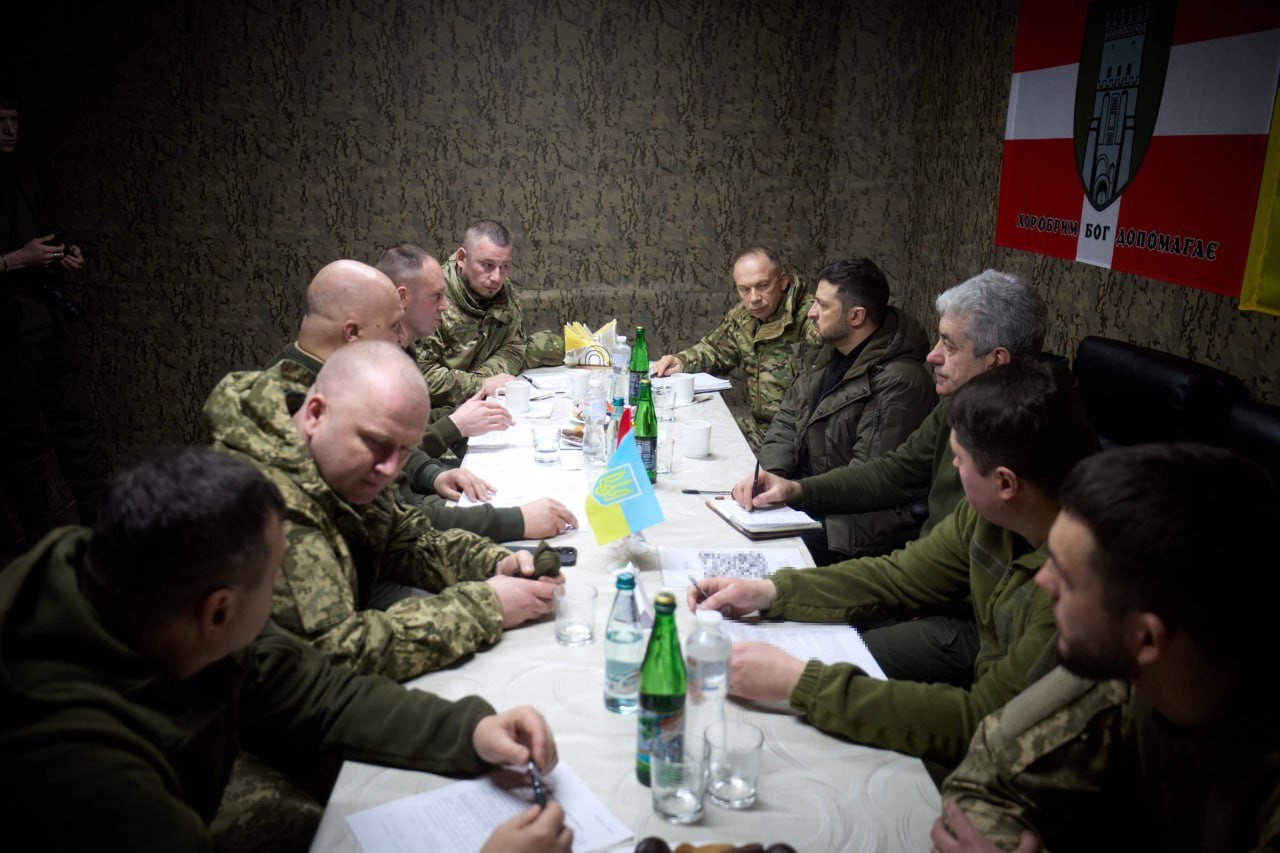
Over the past month, there has been an 18% decrease in Russian FPV drone usage in February, likely an effect of Ukrainian strikes on enemy drone arsenals, which occur on a regular basis.
The winter of 2025–2026 proved difficult for the Russian army. Over three months, more than 90,000 Russian soldiers were killed. In February, the area of newly captured territory was the smallest since June 2024, and Russian advances were minimal. Russia has still failed to capture Pokrovsk or advance in Kostiantynivka.
Donetsk region, Russia’s main target
The Donetsk region remains the Kremlin’s primary objective. At the beginning of March, however, President Volodymyr Zelenskyy filmed a video standing in the central square of Druzhkivka, demonstrating to the world that the city remains Ukrainian — and that simply giving up these territories because Moscow wants them would be a crime.
The agglomeration of four major cities—Kostiantynivka, Druzhkivka, Sloviansk, and Kramatorsk—remains an impregnable fortress for the Russian army. Capturing these territories would take years if Russia maintains the pace of its 2025 offensive. Whether that will happen is still too early to say.
Meanwhile, Ukraine is preparing new operations.
“There will be something the enemy does not expect,” said Major General Oleksandr Komarenko, head of the Main Operational Directorate of the General Staff.
The General Staff is not disclosing details but notes that offensives against Russian positions can come from several directions—they are simply waiting for the right moment.
Ukraine’s broader strategic goal is to inflict 50,000–60,000 Russian killed and wounded each month. At that level of losses, Russia would be unable to replenish its army—and therefore unable to conduct assault operations.
Discuss this article: