- Category
- War in Ukraine
Operation Interflex: A Rare Look Inside Britain’s Replica of Ukraine’s Battlefield
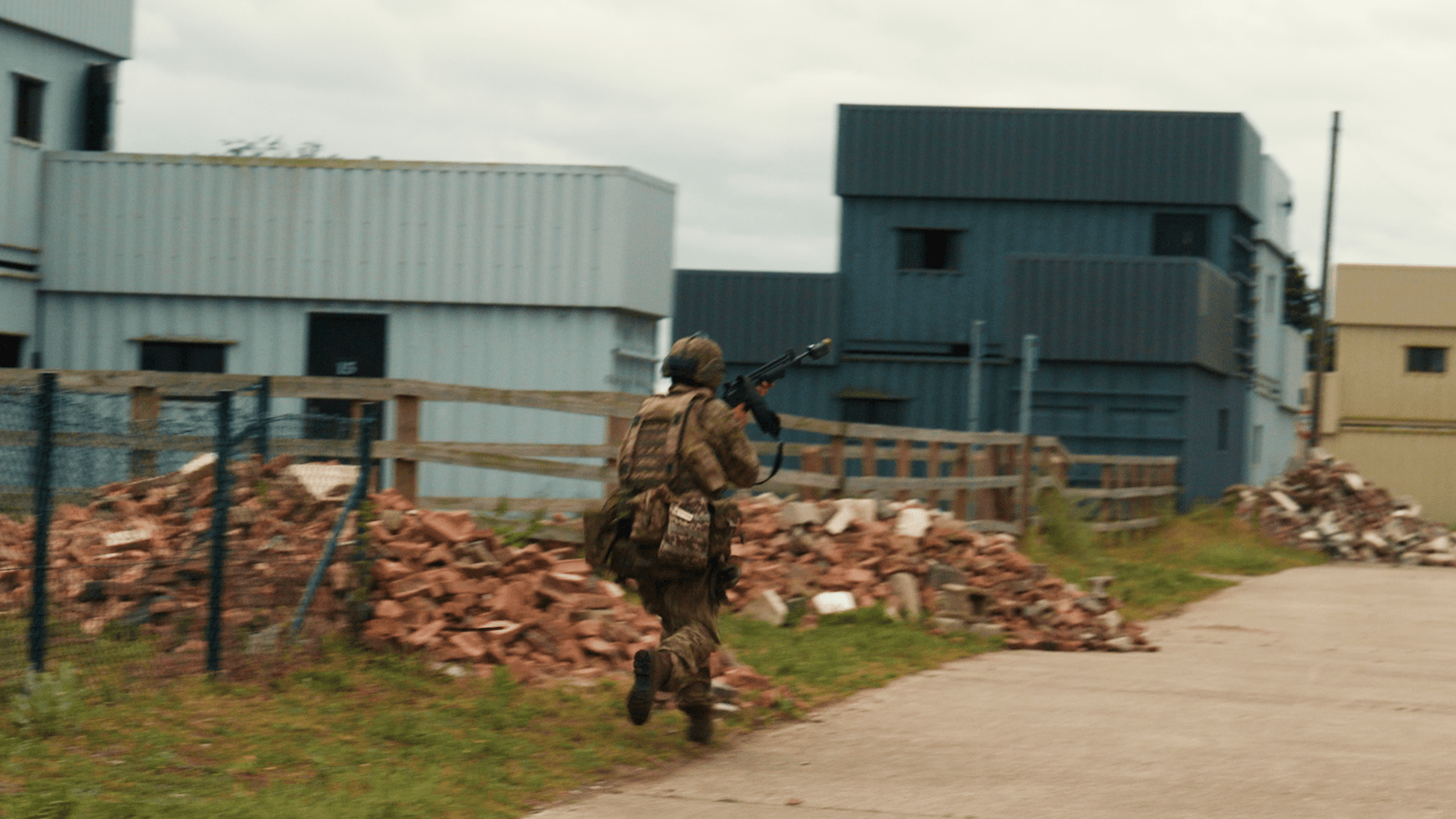
The smoke clears, the gunfire stops, and the exercise ends. For Ukrainian soldiers, the war continues. We went inside Operation Interflex, the UK’s military training mission, where Ukrainian troops prepare for the frontline through some of the most realistic combat training outside Ukraine.
 Prefer U24 Media on Google
- Authors

-46f6afa2f66d31ff3df8ea1a8f5524ec.jpg "Photo of Jess Daly")
At a secret location in the East of England, UNITED24 Media was given rare behind-the-scenes access to Operation Interflex, a UK-led multinational military training mission established to support Ukraine’s Armed Forces in their fight against Russian aggression.
Before heading out to the training grounds, we received a detailed safety briefing, a reminder of the seriousness of the environment, yet there were small touches of British humour, including a framed photo of President Zelenskyy sitting beside the coffee table.
When the mission launched in 2022, its primary objective was to transform civilians into soldiers. Four years later, with Ukraine's armed forces now possessing extensive combat experience, Operation Interflex has evolved to meet the changing needs of the battlefield.
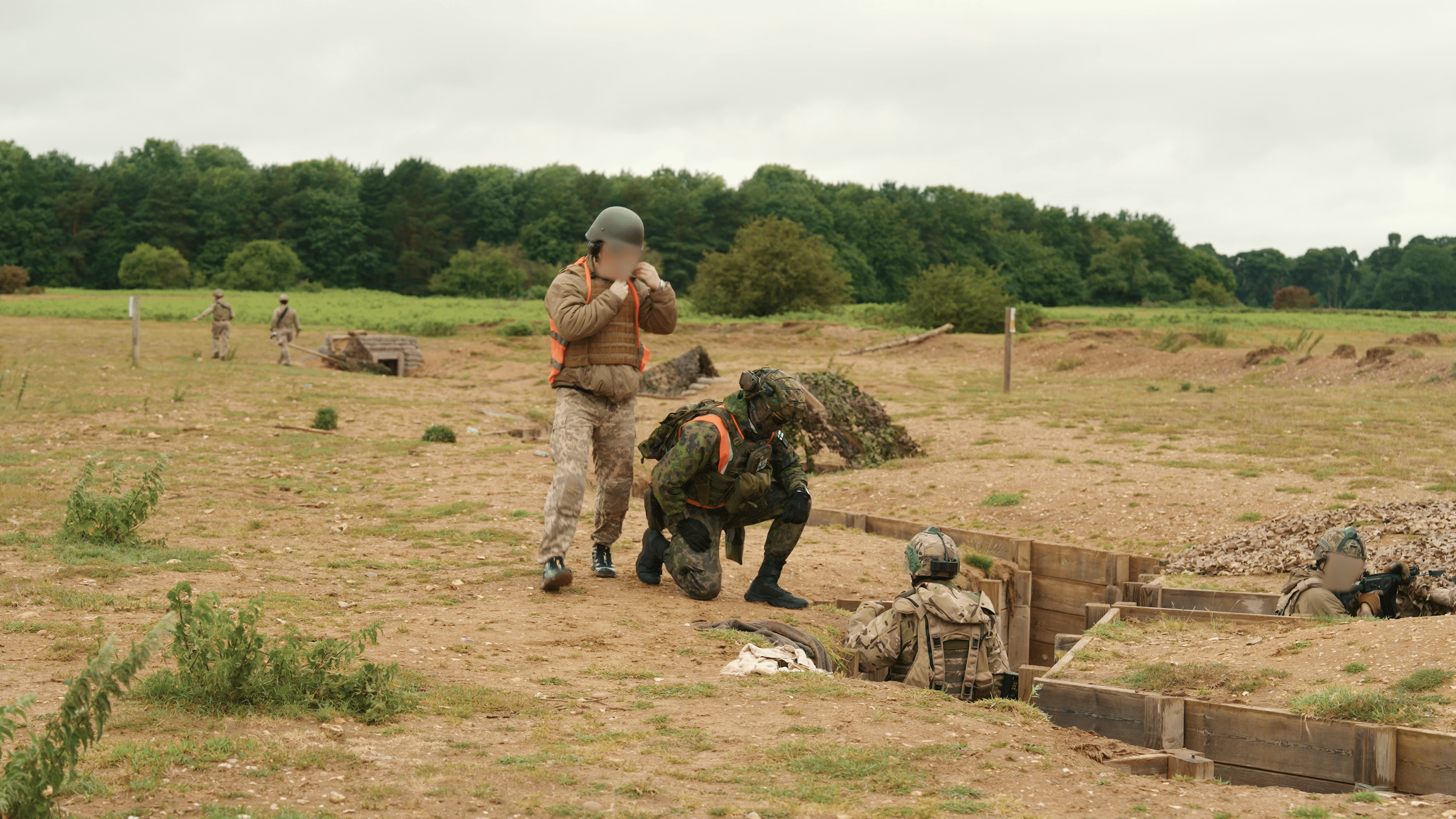
At the request of the Armed Forces of Ukraine, the programme now focuses on developing military leadership and delivering advanced courses, including the Section Commanders Battle Course and the Platoon and Company Sergeants Course. Operation Interflex follows an earlier mission called Operation Orbital, which started back in 2015 after Russia illegally attempted to annex Crimea the year before.
We were behind the scenes of the final exercise of their training, just days before the Ukrainian troops would head back to the frontline. After five weeks of intense preparation, this final exercise was their last opportunity to put everything they had learned into practice—a final test before returning to the realities of war.
Inside Operation Interflex
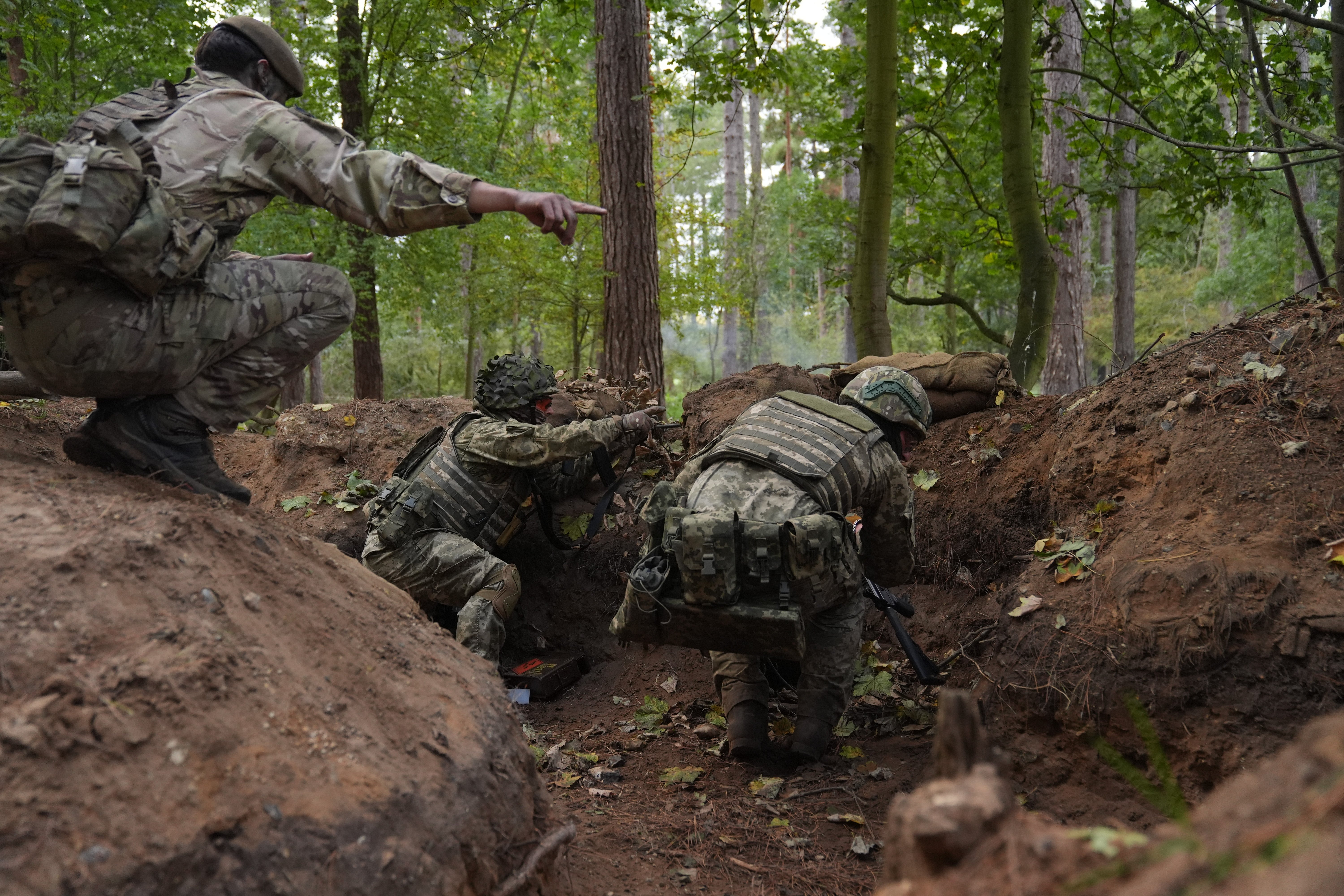
The training was divided into two key scenarios: an urban village and trench warfare. In both cases, the Ukrainian troops served as assault units, practising offensive and defensive operations while adapting to the chaos of modern combat. Operation Interflex brings together personnel from 13 allied nations in support of Ukraine, and on this day, Norwegian and Australian troops were present, taking on the role of the Russian enemy during the exercise.
“Russians follow a very linear command structure,” Harry , a British Army Captain on Operation Interflex, explained. “They're very rigid in their tactics, so we can learn what their tactics are supposed to be and simulate that as best we can.”
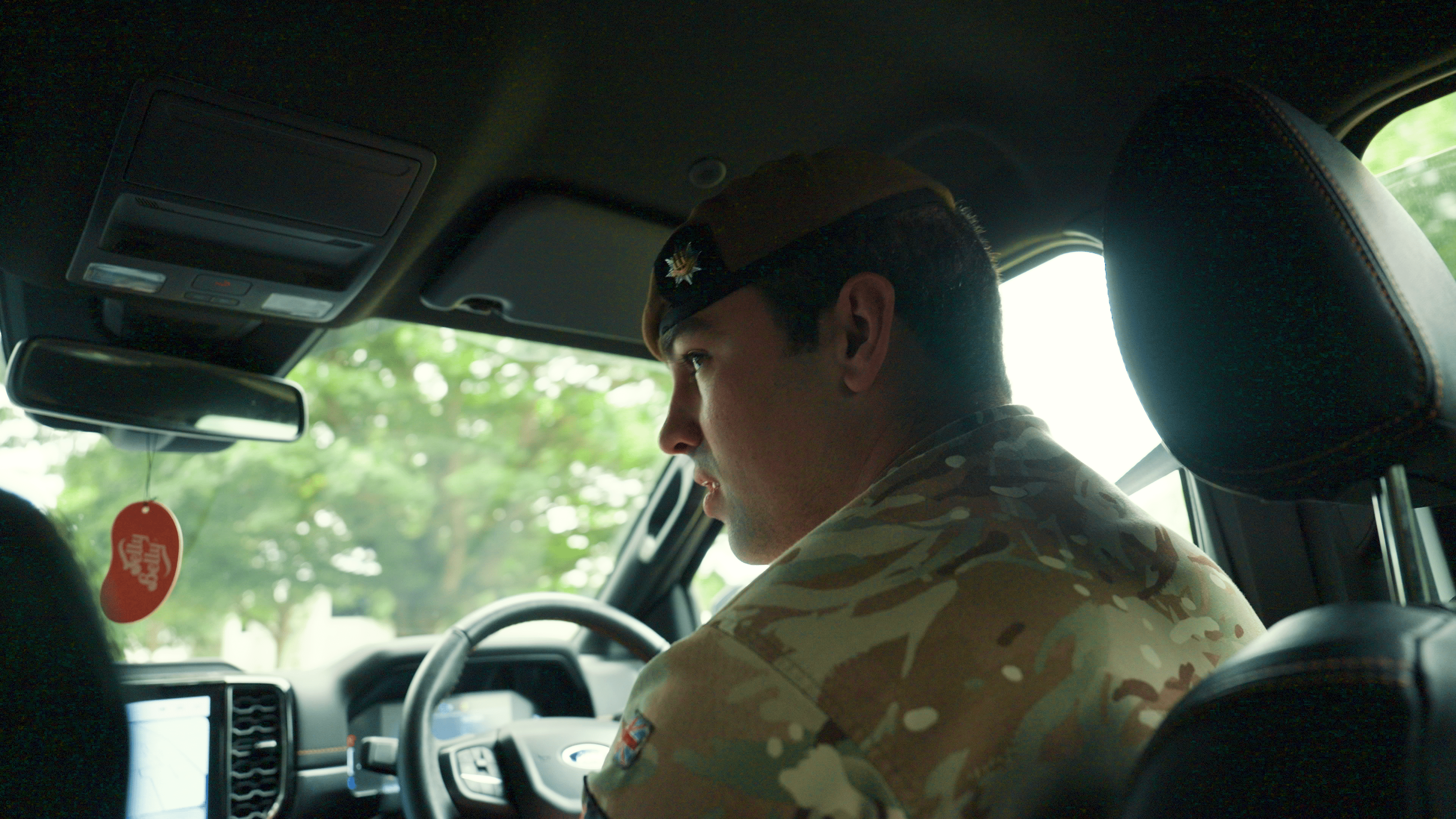
As we made our way towards the training area along the uneven, winding road, we were warned about the intensity ahead. The exercise was designed to replicate the unpredictability of the battlefield, where noise, confusion, and split-second decisions become part of survival.
“We rely quite heavily on our Ukrainian counterparts to provide us with the information and the training on what we need to be teaching, so we can focus and direct the training we're delivering to be as relevant as possible”, Harry said. “There'll be noise, there'll be smoke, you'll have drones in the air, reflecting the messy urban environment.”
He was right.
Once parked and equipped with safety gear, we began walking towards the training troops as fighter jets circled overhead. The sound alone was enough to create some tension.
“Ukrainians have talked a lot about the impact of noise”, Harry explained, “it can really trigger something for them, so we always try and inform and prepare them for what's going to be involved in the scenario, whether it be the noise from drones or fighter jets above. We also have psychologists who can jump in where needed.”
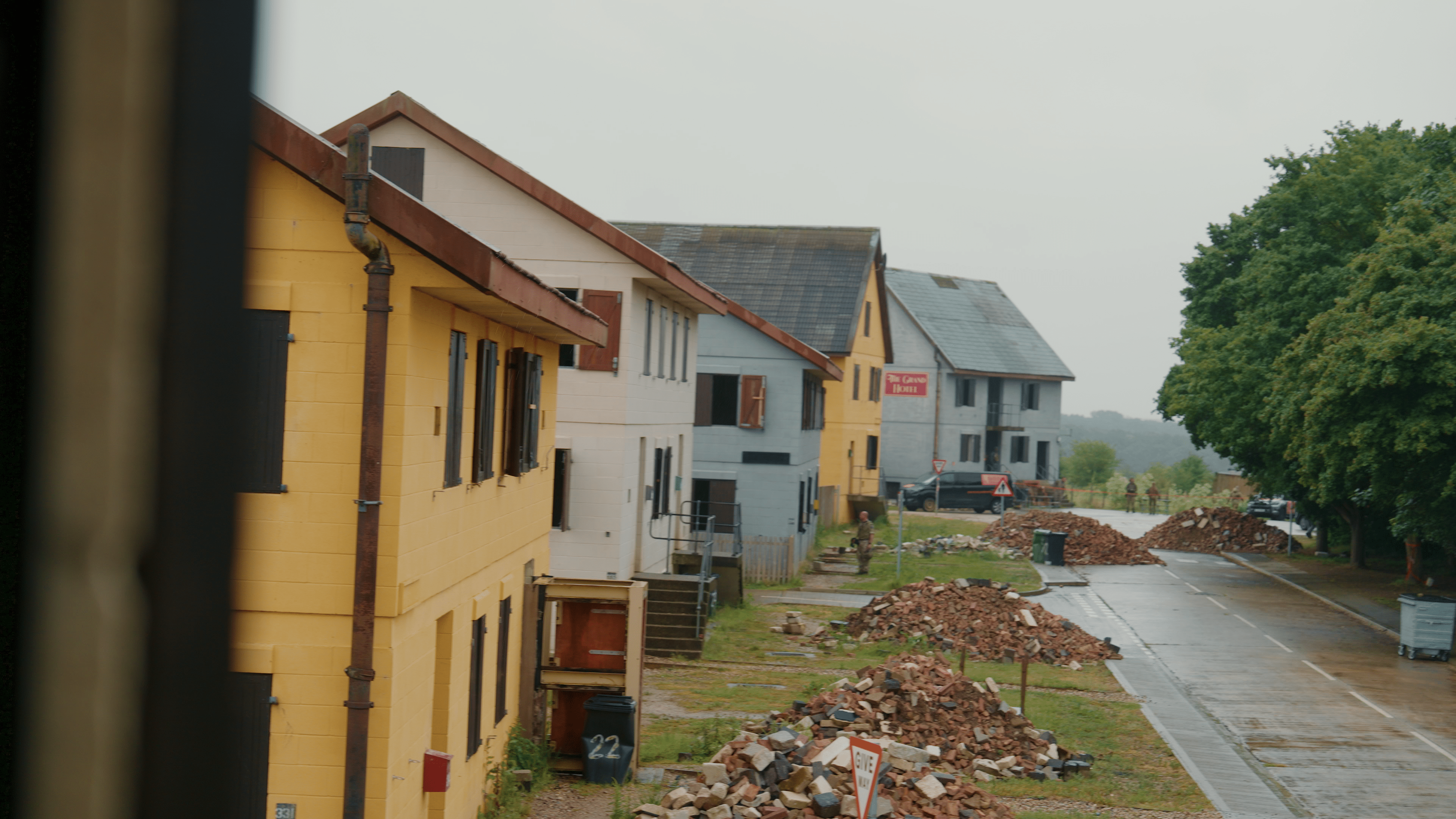
The urban village was unlike anything I had seen before: a mock hotel, post office, shops, and even a fake speed camera standing along the road. Over the years, Harry told us, the training area has been continuously adapted to replicate the environments that troops encounter on the battlefield.
While the buildings themselves remain empty, their exteriors have transformed over time. They have shifted from German-style triangular roofs resembling Soviet-era East Germany in the 1950s, to structures inspired by Afghanistan, and now increasingly resemble Ukrainian urban villages.
Pointing towards the mock hotel, I asked Harry: “How many stars is this hotel and does it include breakfast?”
“Half-star, no breakfast,” he laughed.
Where training meets the frontline
Muzzles of the assault rifles poked out of the glassless window frames, and low, quiet Ukrainian voices echoed through the empty buildings around us. We could barely see the Ukrainian troops, just outlines, lurking in the shadows of the buildings as they prepared for battle.
Their objective was to advance through the village, clearing buildings one by one while facing fire from the opposing force. Every movement had a purpose, and every decision had consequences.
Then, the assault began.
The shouting of Ukrainian troops, the cracks of assault rifles, the buzzing of drones overhead, and the smell of smoke mixed with the weight of ballistic gear immediately took me back to Ukraine. It was a strange feeling, a sense of both comfort and discomfort, familiar yet completely out of place.
Explosions sounded from every direction. Smoke grenades filled the streets with thick green clouds. Ukrainian soldiers shouted and reacted to simulated injuries as drones moved above them and gunfire erupted from every corner.
Inside the buildings, British Army veterans played the role of casualties, including amputees who had lost limbs in previous conflicts. The level of detail was striking. One casualty actor had simulated blood running from his limb and dripping onto the floor—of course, part of the exercise, but for a moment, a reminder of the everyday reality faced by Ukrainians.
An estimated 90,000–120,000 Ukrainians have lost limbs as a result of Russia’s aggression.
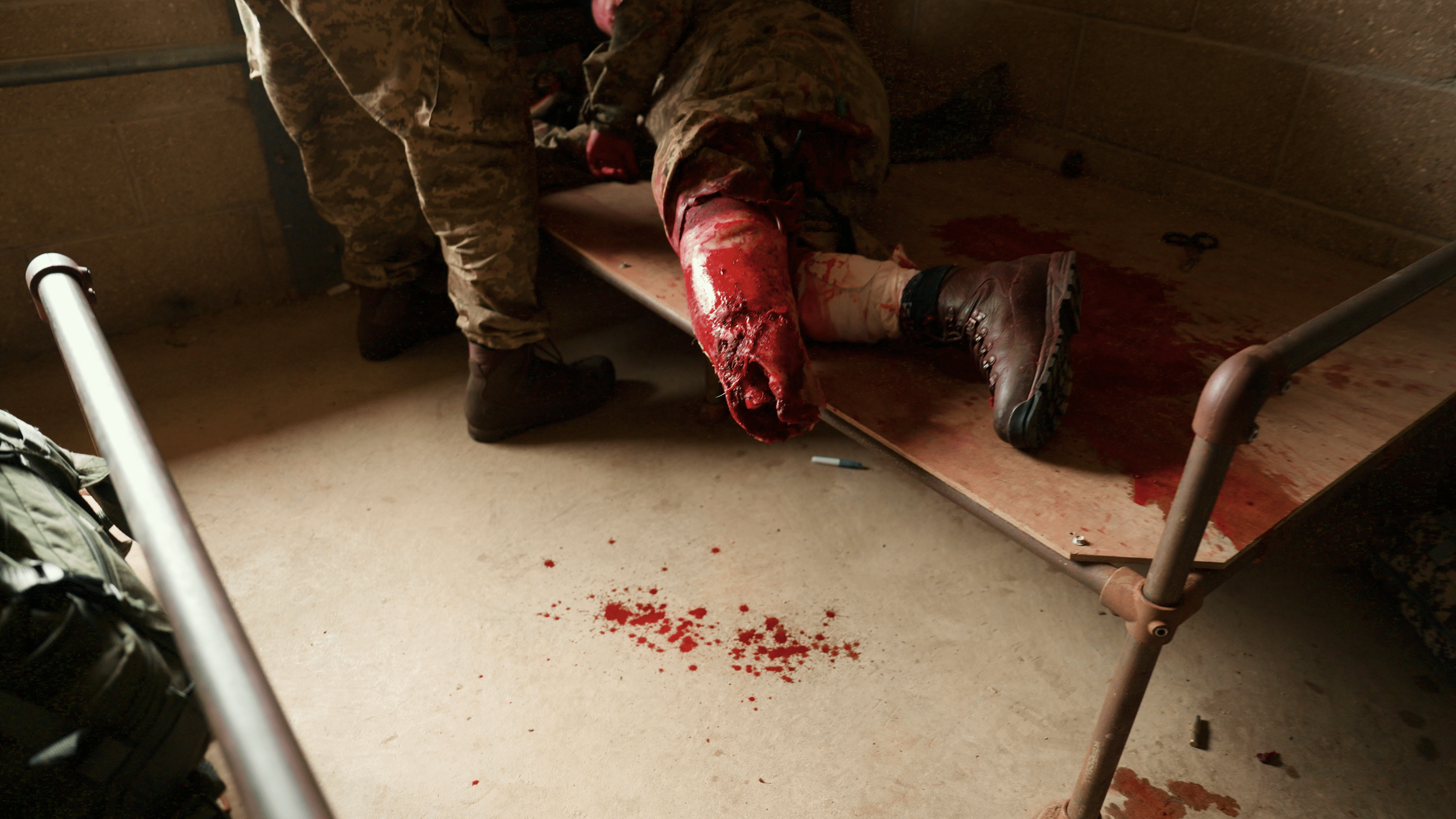
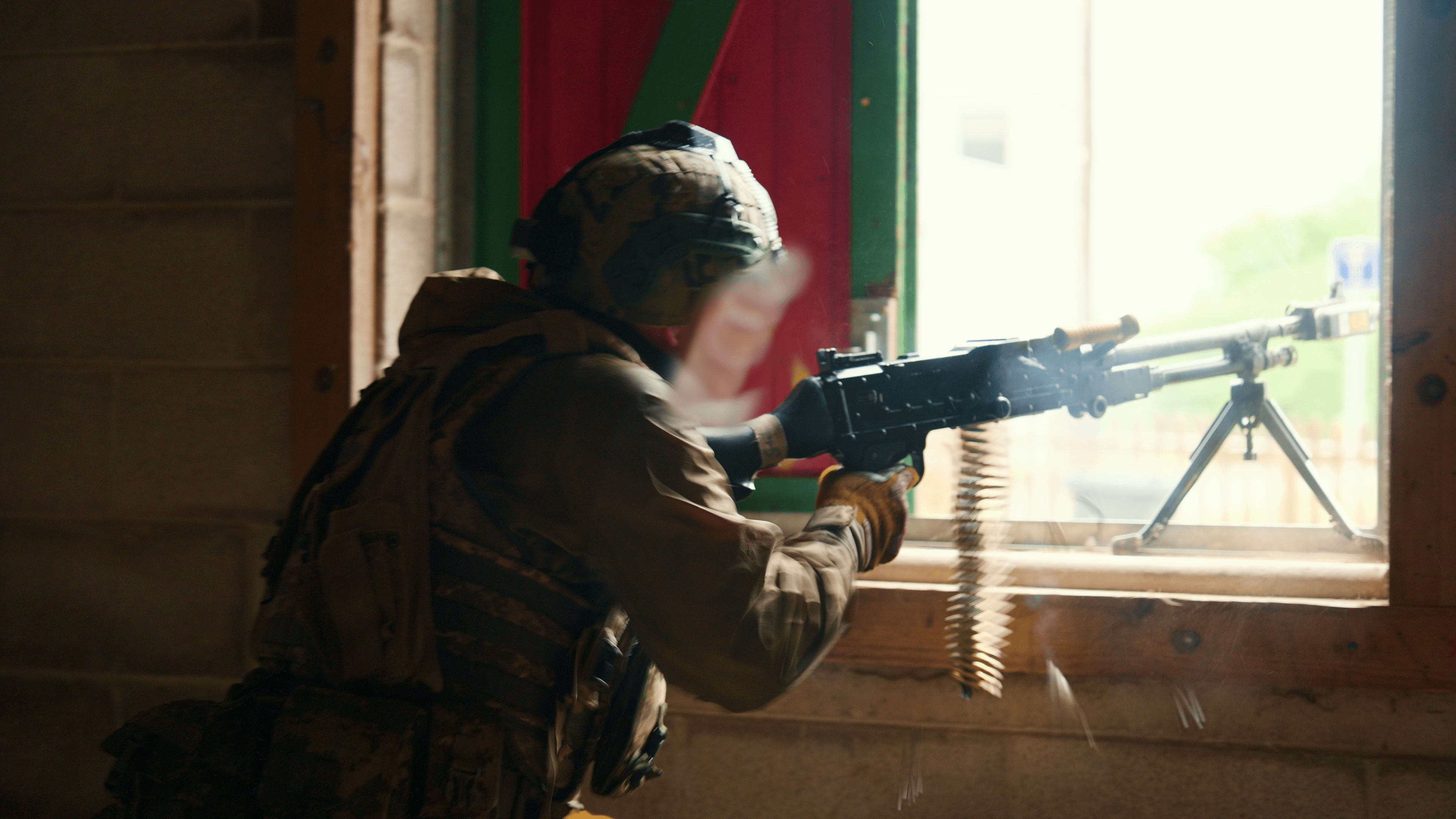
Operation Interflex is designed to replicate battlefield conditions as closely as possible, preparing Ukrainian troops before they return to the frontline. The training incorporates trip wires, crack grenades that simulate the sound of explosions, and machines designed to recreate the sounds of different weapon systems, including artillery and mortars.
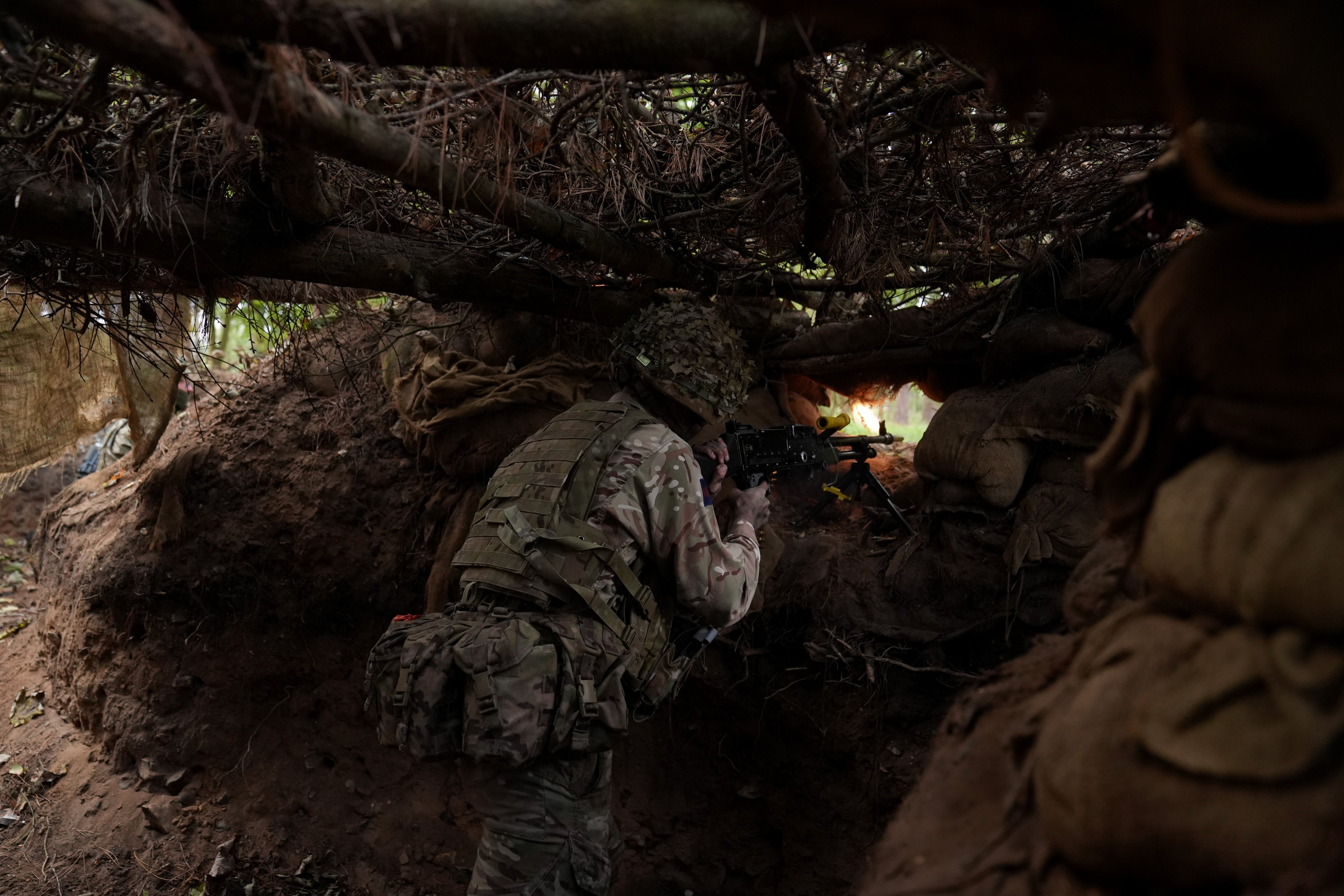
As we moved alongside the troops from building to building, we came across soldiers firing a machine gun, as the troops fed through the blank rounds, the sound cut through me.
In the same building, another group of Ukrainian troops was simulating the capture of an enemy soldier. Hands bound and blindfolded. This part of the training, Harry told us, is also vital, as Ukraine ensures to abide by International Humanitarian Law when handling prisoners of war. This is their chance to put all that they know into practice. As the captured troop moaned, the Ukrainian gave him some water.
Even knowing it was training, the intensity of the moment felt very real.
Drones, a sound that stays with you
Drones have become central to training at Operation Interflex. While they have been used in warfare for years, Russia’s full-scale invasion of Ukraine has seen them deployed on an unprecedented scale. Ukraine can now produce up to 10 million of them a year, and they have become one of the defining weapons of the modern battlefield.
Russian forces use drones to drop a range of munitions, from grenades to heavier warheads and chemical agents. At Operation Interflex, drones are incorporated into training scenarios to replicate the threats Ukrainian soldiers face on the frontline. Flour is used to simulate chemical, biological, radiological, and nuclear (CBRN) threats, while water balloons replicate ammunition drops.
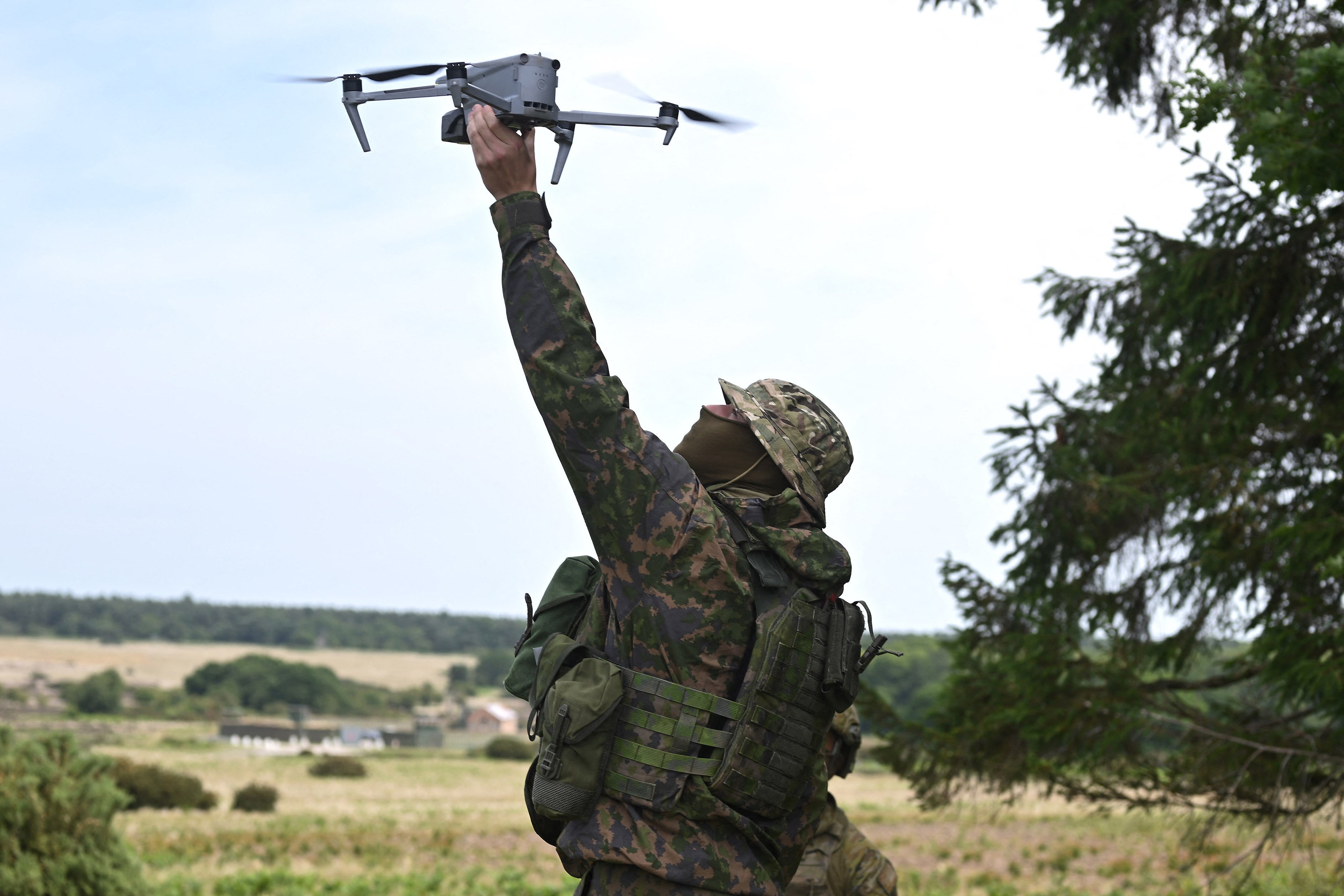
As we moved through the exercise, drones flew overhead from every direction. Even though I had left Ukraine more than a year ago and was back home, and even though I knew this was only a training exercise, the sound of the buzzing still made me tense.
The sound stays with you.
2026, the year of the UGVs
Unmanned ground vehicles, or UGVs, were another key focus of this year’s training. Like drones, these machines are becoming an increasingly important part of modern warfare. Ukraine plans to double the number of UGVs on the battlefield this year, and they are expected to play a growing role in the years ahead.
These systems are no longer limited to transporting equipment or clearing mines. Increasingly, they are being adapted with electronic warfare capabilities, radar systems, and even weapons such as missiles and mortars, bringing new possibilities to the front line while reducing the risks faced by soldiers.
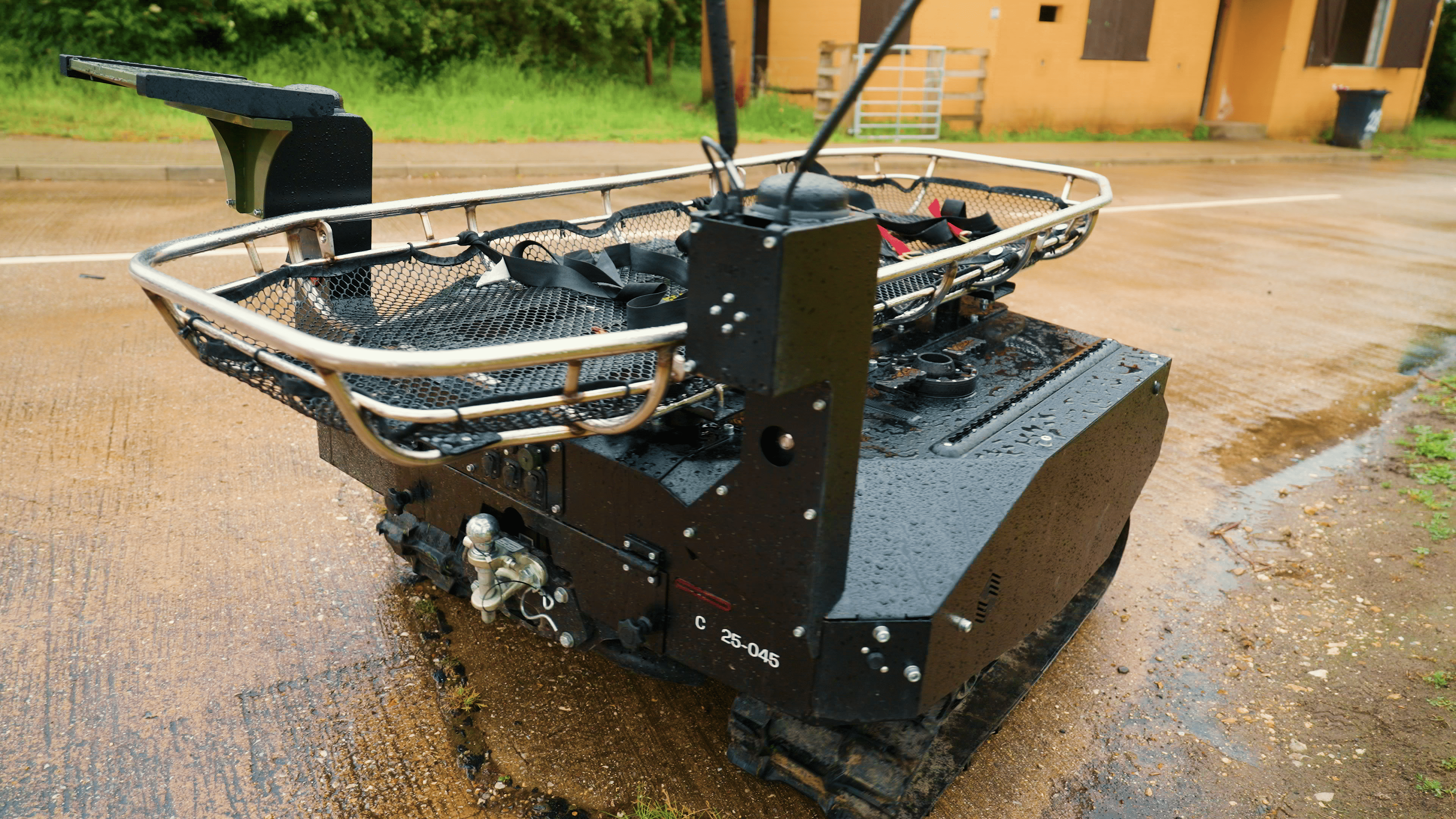
The Gereon UGV, manufactured by ARX Robotics, was part of the exercise. The system is already being used in Ukraine, with hundreds deployed to support Ukraine’s battlefield operations.
During the training, simulated casualties were loaded onto the UGV and transported to an evacuation point, replicating the role these machines play on the front line. For Ukrainian forces, UGVs are becoming a crucial tool for casualty evacuation and logistics, allowing soldiers to move supplies and evacuate wounded personnel while limiting exposure to danger.
When the training ends, the war continues
The troops continued moving from building to building, applying everything they had learned over the previous five weeks. After hours of movement, noise, and chaos, the battlefield suddenly fell silent again.
The shouting faded. The gunfire became distant. Only quiet conversations and the occasional crack of a rifle remained.
Then, it was time for lunch. For Ukrainians on the front line, there is no pause.
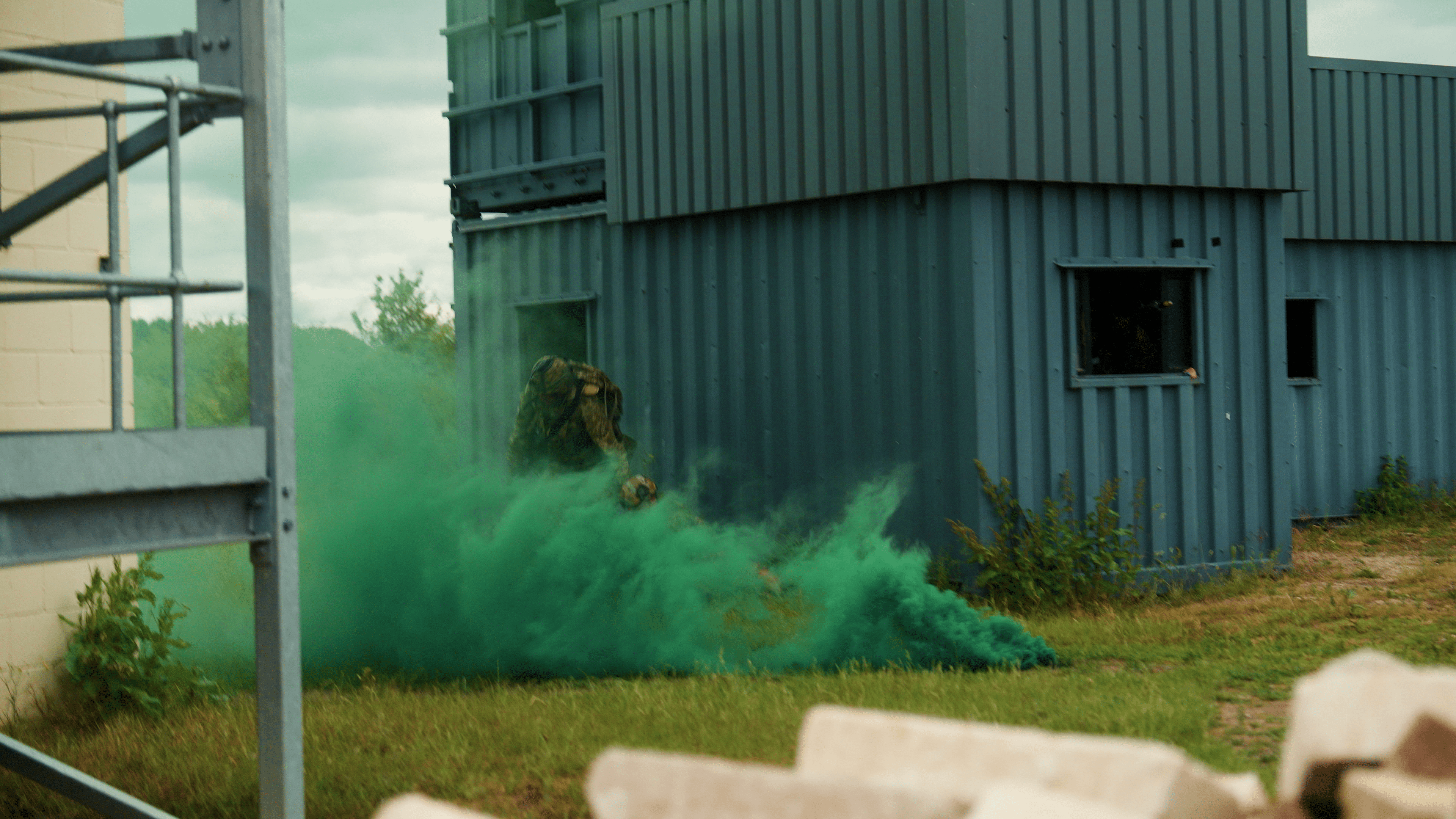
Later that afternoon, the training shifted to trench warfare. This time, the Ukrainian troops were defending their position, holding the line and preparing for a potential attack. There was less movement, less noise, but the tension remained. The soldiers stayed alert, ready to respond if the scenario changed.
A pretend body lay in one of the trench dugouts with what I assume was animal offal spilling out of the body, the stench was horrendous.
As the day came to a close, we said goodbye to the Ukrainian soldiers we had met. Watching them leave, I felt a mixture of emotions: pride, sadness, and a heavy sense of dread.
Because while the training was over, the war was not.
In just a few days, these soldiers would return home—to a country still fighting for its survival, to cities still under attack, and to a battlefield where the realities they had just simulated were waiting for them.
For Ukraine’s soldiers, the fight for freedom continues. And for the nations standing beside them, so does the commitment to support them.
Discuss this article:

-c439b7bd9030ecf9d5a4287dc361ba31.jpg "Photo of Katherina Popilnichenko")