- Category
- War in Ukraine
Russia Cannot Ensure the Safety of Its Most Important Aircraft
 Prefer U24 Media on Google
- Authors

-206008aed5f329e86c52788e3e423f23.jpg "Photo of Oleksandr Moiseienko")
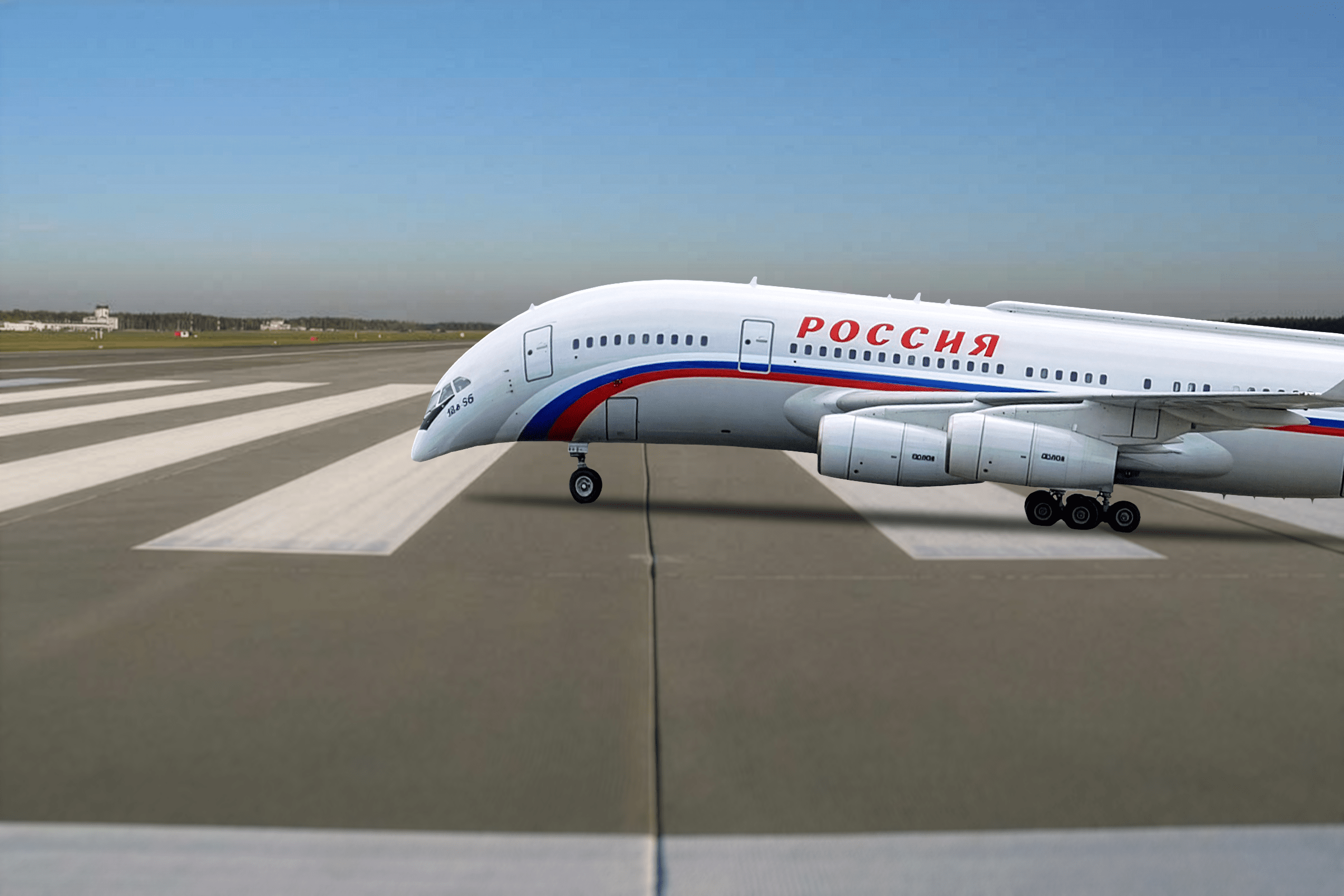
For years, Russian authorities have insisted that sanctions have failed to seriously affect key sectors of the economy and the defense industry. However, internal documents from Russian state institutions obtained by United24 Media reveal a very different reality: Russia is gradually losing the ability to safely operate and maintain its most important aircraft, including those used to transport the country’s top leadership.
Despite the fact that Russia has poured tens of billions of dollars into its aviation sector, the documents show a steady degradation of the entire industry. Shortages of components affect not only foreign-made aircraft, but also Soviet- and Russian-designed models. This is not about isolated incidents or temporary difficulties. The documents indicate that these problems are already systemically manifesting during flight operations.
Evidence of this can be found in a series of materials concerning the Special Flight Detachment “Russia” (SLO “Russia”). This is a state aviation unit responsible for transporting the President of the Russian Federation, members of the government, senior officials, and foreign delegations. In practical terms, it is Russia’s equivalent of Air Force One—the country’s most privileged aviation operator, with priority access to funding, resources, and technical support.
The documents obtained by journalists are internal service memoranda and reports prepared in 2024–2025 for government meetings and interagency discussions. They were not intended for public release and contain direct assessments of the technical condition of aircraft, the progress of import substitution programs, and statistics on actual equipment failures.
The most significant among them is a report by the Technical Control Service (OTK) for the third quarter of 2025, which records the number of technical failures on state-operated aircraft, including those that occurred directly during flight.
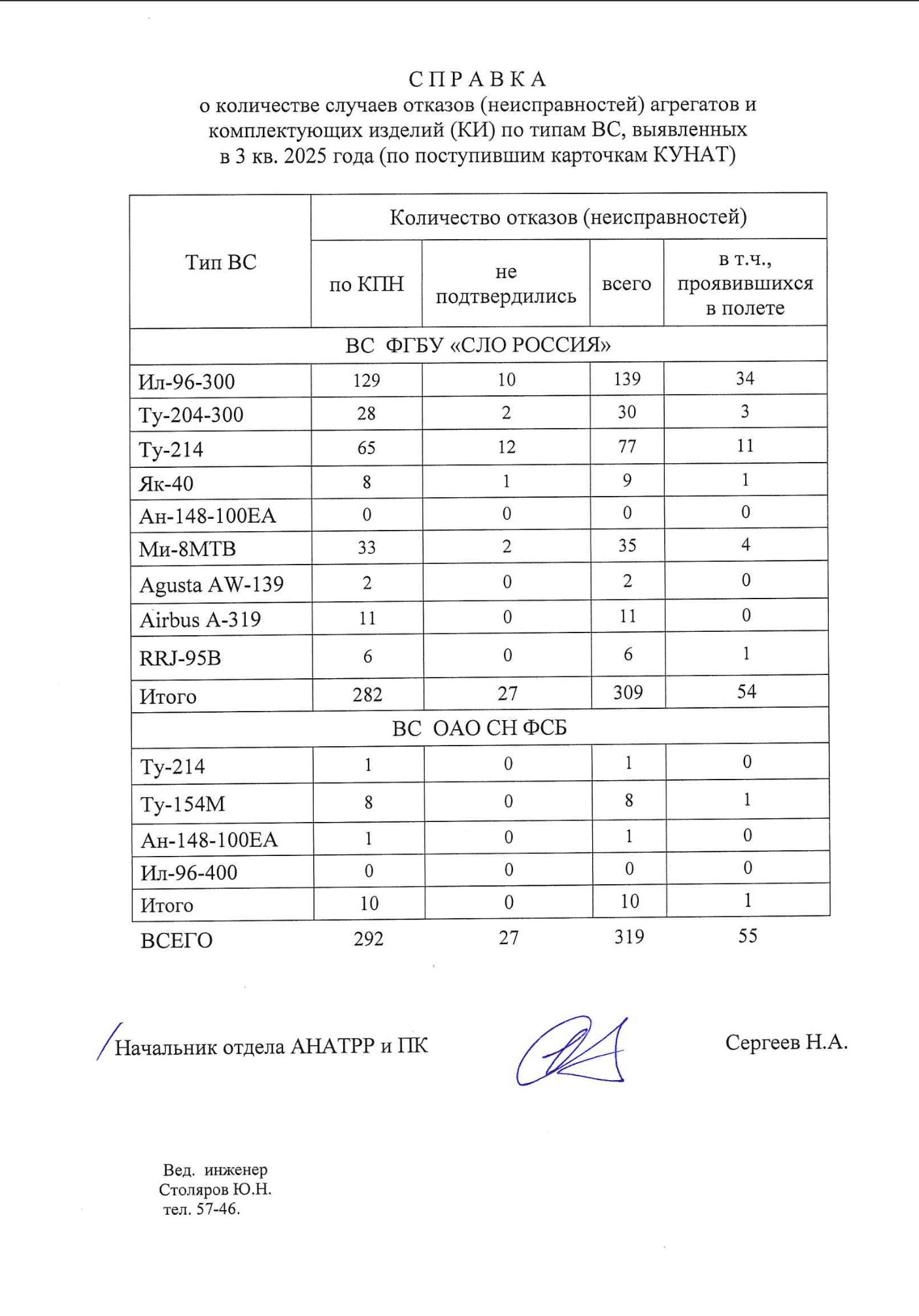
According to this report, 319 technical failures were recorded over just three months, 55 of which occurred during flight.
Number of technical failures in Q3 2025
Aircraft type | Total failures | In-flight failures |
Il-96-300 | 139 | 34 |
Tu-214 | 77 | 11 |
Tu-204-300 | 30 | 3 |
Yak-40 | 9 | 1 |
Mi-8MTV | 35 | 4 |
Total | 319 | 55 |
The highest number of incidents occurred on aircraft operated by SLO “Russia”. These are not auxiliary or regional aircraft—they are planes used to transport the country’s top leadership.
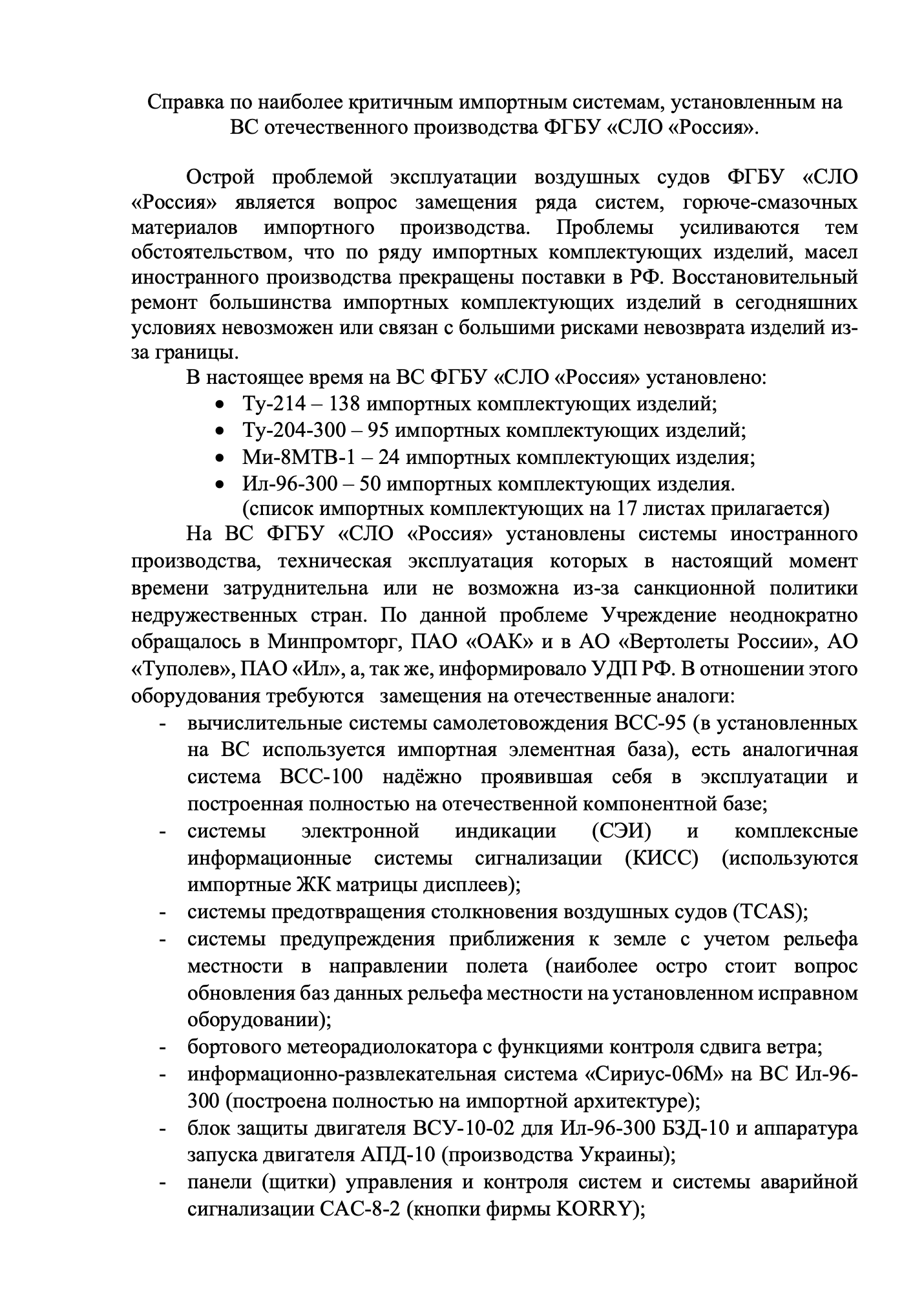
Internal memoranda directly explain the reasons behind the growing number of failures. The primary cause is critical dependence on imported aviation systems, which, after the start of Russia’s full-scale war and the introduction of sanctions, were left without spare parts and service support.
These systems include:
navigation systems and ground proximity warning systems
weather radars
satellite communications
onboard computing systems
emergency and rescue equipment
The documents explicitly state that restorative repairs for most imported components are impossible, and that sending them abroad for repair carries a high risk that the equipment will not be returned.
A separate set of documents focuses on import substitution programs—and this is where the core problem becomes evident. Formally, such programs exist, but in real-world operation they either do not work or have not been brought to a usable state.
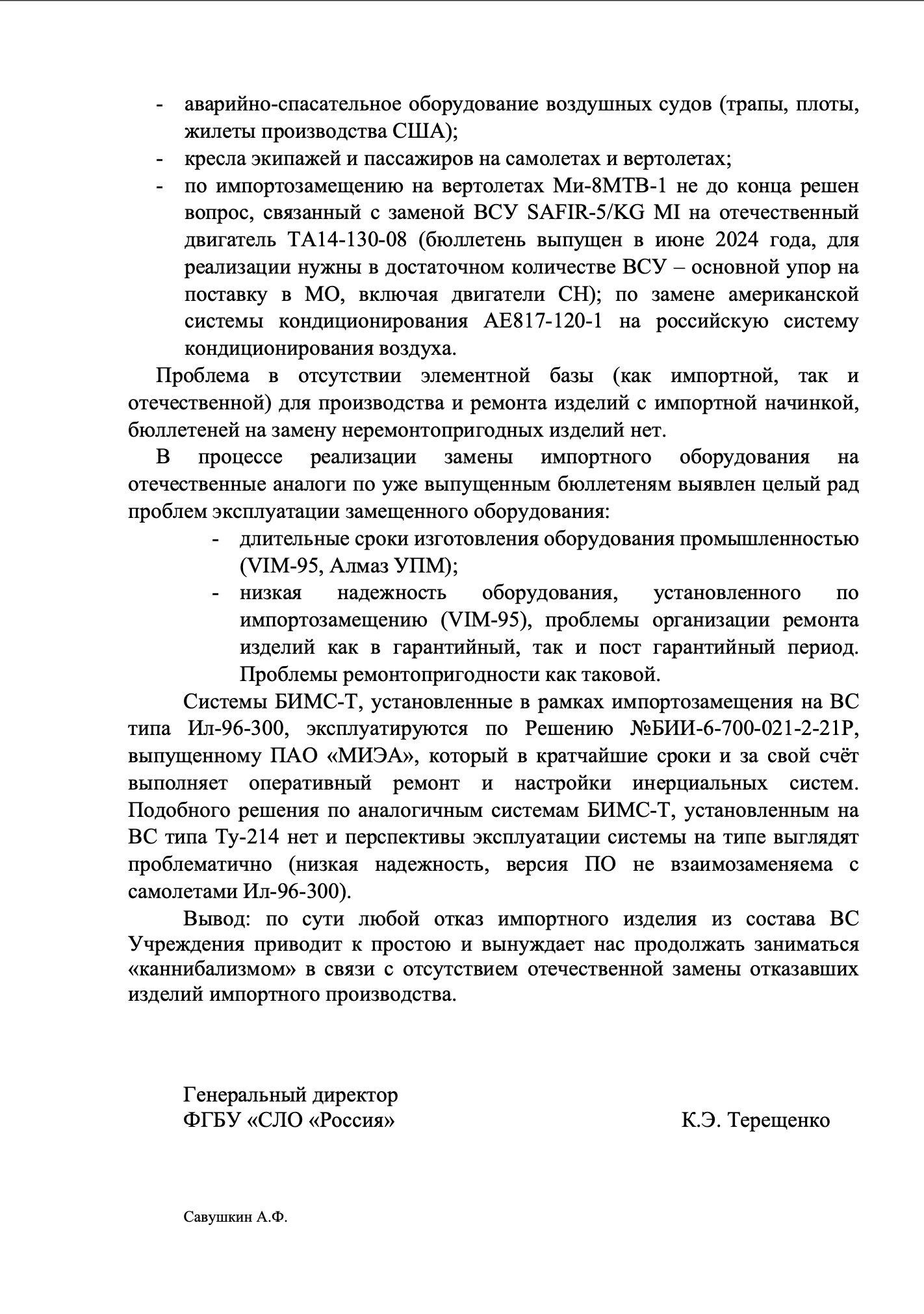
Critical aviation systems without full replacement
System | Origin | Actual status |
Ground proximity warning system | USA | No certified analogue |
Weather radar | USA | No spare parts or repair |
Satellite communications | USA | Critical import dependence |
Onboard computing systems | Mixed | Partial, incomplete substitution |
Emergency and rescue equipment | USA | Replacement blocked |
Hydraulic components | USA / EU | Supplies halted |
Even in cases where Russian manufacturers claim to have developed domestic analogues, the documents point to other barriers: lack of certification, missing operational documentation, or insufficient industrial capacity for mass production.
As a result, a clear cause-and-effect chain emerges: imported systems gradually fail, replacement or repair is impossible, import substitution does not provide workable solutions, and overall reliability declines. The consequence is a growing number of failures occurring directly in the air.
These are not isolated technical malfunctions or random events. The documents demonstrate a structural breakdown of Russia’s ability to sustain complex aviation systems without access to Western technologies.
Aviation is among the most technologically complex industries. If Russia cannot guarantee safety even for its most privileged fleet, the implications extend far beyond VIP transport. The same problems affect military aviation, air defense systems, and other high-tech components of Russia’s defense industry.
Sanctions do not cause an immediate collapse. But as these documents show, they gradually undermine maintenance, reliability, and safety—quietly, systematically, and irreversibly. And even the Kremlin’s most important aircraft are no longer an exception.
Discuss this article:


-c439b7bd9030ecf9d5a4287dc361ba31.jpg "Photo of Katherina Popilnichenko")