- Category
- War in Ukraine
Russia Floods Front Lines in Ukraine With 20+ Types of Ground Robots
 Prefer U24 Media on Google
- Authors


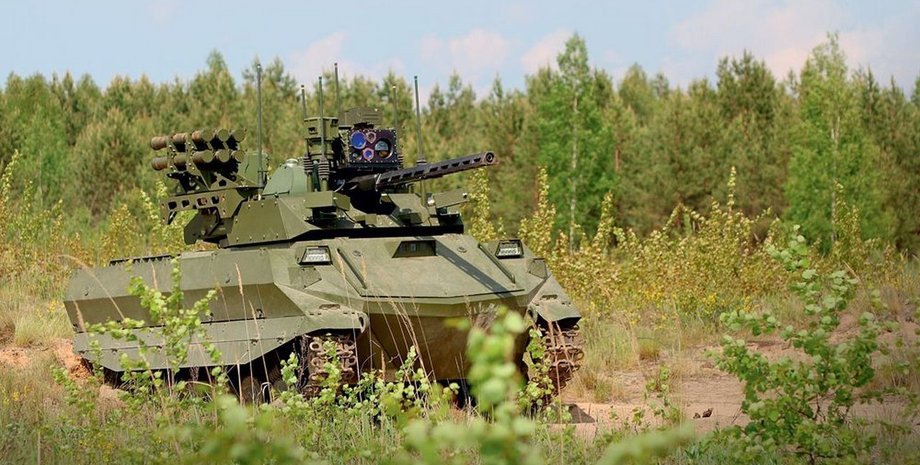
Russian forces are using at least 20 types of ground-based robotic systems on the battlefield in Ukraine, reflecting a shift toward wider deployment of unmanned platforms.
We bring you stories from the ground. Your support keeps our team in the field.
According to Ukrainian analytical center StateWatch on May 1, analysts identified 32 models of Russian ground robotic systems, with confirmed manufacturers for 29 of them. “At least 20 types of ground robotic systems have been recorded in combat use against Ukraine,” the report states.
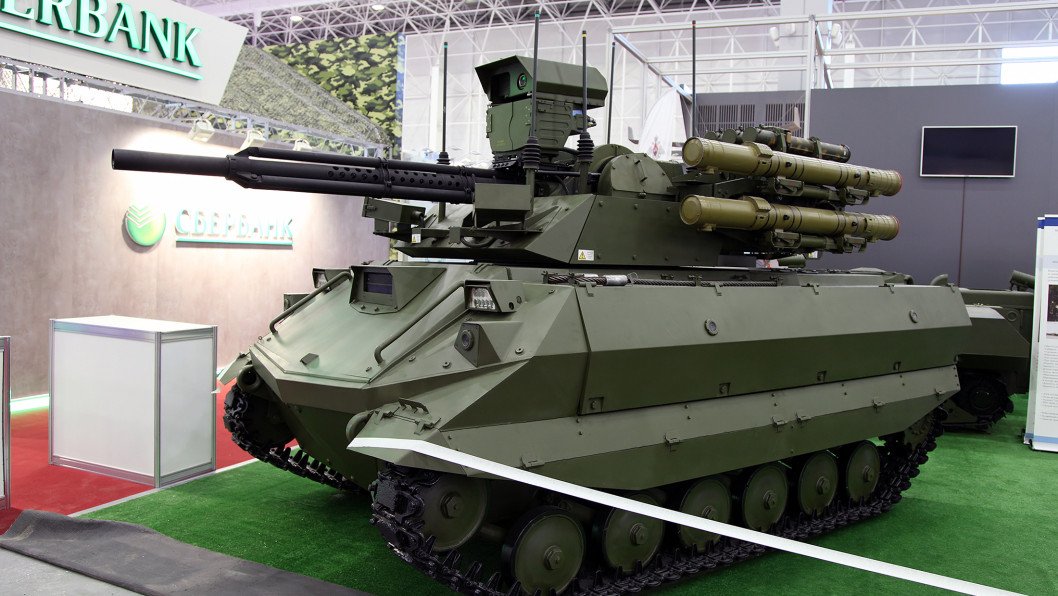
The findings indicate a change in Russia’s approach since 2022. Systems such as Uran-9, Platforma-M, Marker, and Nerekhta, previously showcased as experimental or demonstration platforms, are now being used in operational roles on the front line.
Russian NRTK “Omich-2” unmanned ground vehicle, designed for logistics and support roles on the battlefield. The system reportedly weighs 650 kg, carries up to 350 kg, and operates for ~40 minutes with a range of up to 20 km. #DroneWars #Autonomous#Russia #UGV #Robotics #UGV pic.twitter.com/pZcF3F347s
— Drone Wars (@Drone_Wars_) April 11, 2026
According to StateWatch, these systems are primarily deployed for logistics, casualty evacuation, reconnaissance, and fire support. Analysts link the growing reliance on ground robots to the emergence of a so-called “kill zone”—a 10–15 km strip along the front line heavily covered by FPV drones, where traditional vehicle movement has become increasingly vulnerable.
The report highlights a structural shift in production. “The key change is that the industry has moved from state-owned defense plants to private companies and public-private partnerships, reaching serial production in 2024–2026,” the analysts note.
Among the most widely used systems are Courier, Varan, Impuls, and Omich/Omich-2, which are reportedly supplied to Russian forces in batches ranging from dozens to hundreds of units.

According to StateWatch, development of new systems is supported by Russia’s Foundation for Advanced Research—often compared to the US DARPA—with additional involvement from civilian and military universities.
Despite frequent references to artificial intelligence, the report notes that fully autonomous systems have not yet been fielded. “The transition to a full-fledged ‘war of robots’ has not yet taken place: despite active discussions about artificial intelligence, all machines used on the front remain remotely controlled,” the report states.
The analysis also points to a critical dependency on Chinese components, including electric motors, batteries, controllers, cameras, and communication modules. Supply chains for ground robots significantly overlap with those used for aerial drones.
Earlier, reports emerged that Russian forces were fielding an improvised multiple-launch rocket system mounted on a tracked ground robotic vehicle.
The system, reportedly named “Kultivator,” is said to be operated by the separate unmanned systems regiment Burevestnik. The Kultivator system consists of a tracked unmanned ground vehicle equipped with two UB-16-57 aviation rocket pods. Each pod contains 16 launch tubes for S-5 unguided rockets, allowing for a total salvo of 32 rockets.
Discuss this article:
-9a7b3a98ed5c506e0b77a6663f5727c5.png)


-c439b7bd9030ecf9d5a4287dc361ba31.jpg "Photo of Katherina Popilnichenko")

-111f0e5095e02c02446ffed57bfb0ab1.jpeg "Photo of Roman Kohanets")