- Category
- Latest news
Russia Unveils Robotic Mortar Platform After Getting Shredded by Ukrainian Ground Drones
 Prefer U24 Media on Google
- Authors


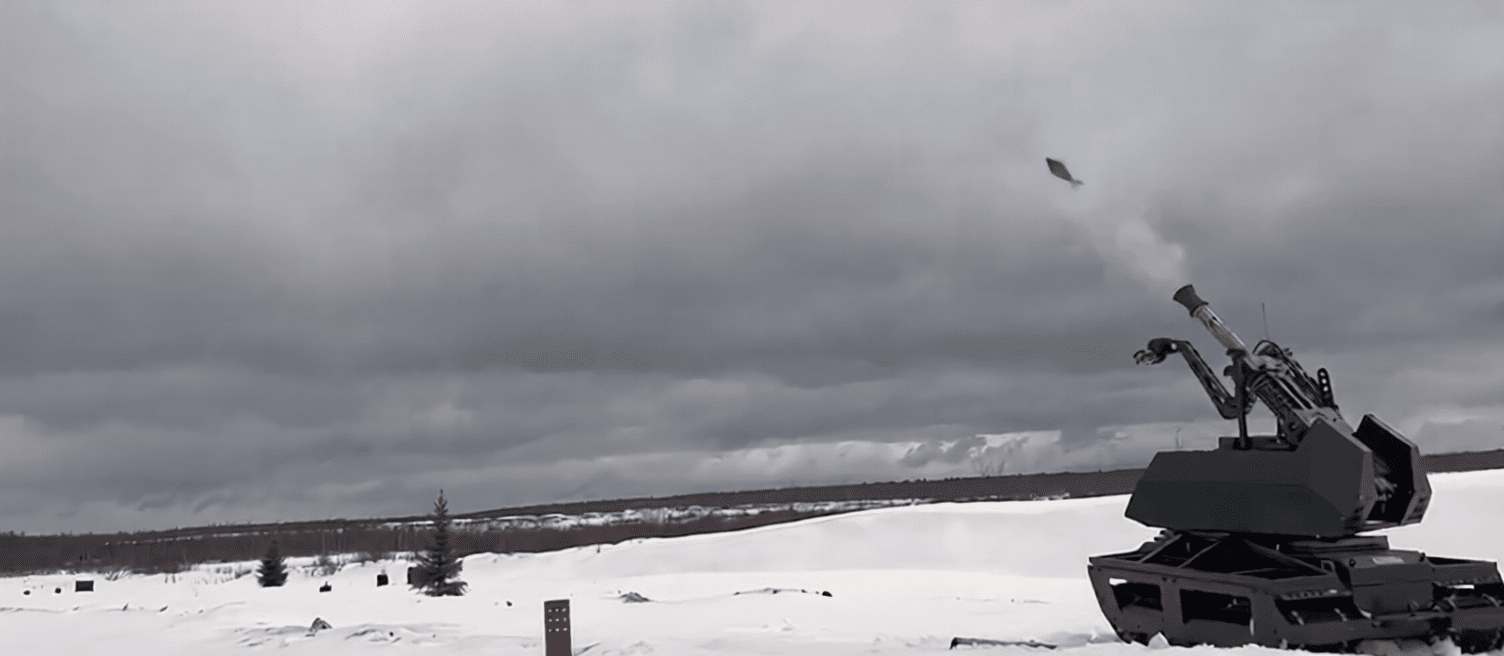
Russia has released new footage showing live-fire trials of an unmanned ground combat system known as “Kuryer,” equipped with a previously undisclosed automated mortar module called “Bagunlnik-82,” according to Defence Blog on April 6.
The video, published by the NRTK channel, which focuses on Russian ground robotics development, captured the tracked vehicle operating a rotating turret that integrates both an 82mm mortar and an automatic loading system.
We bring you stories from the ground. Your support keeps our team in the field.
After each shot, a mechanical arm reloads the weapon in roughly five seconds, suggesting the platform could maintain a sustained rate of fire without exposing a mortar crew to counter-battery strikes.
The Bagunlnik-82 module had not been publicly identified before the footage release. Defence Blog notes that the system may be based on the 2B24, a lightweight 82mm mortar already in Russian service and suitable for vehicle integration due to its compact design.
🚨 Facing mounting losses, Russia tests the “Kuryer” robotic mortar system—an unmanned vehicle firing 82mm rounds with an autoloader, reloading in seconds without a crew on site. pic.twitter.com/lo8R5oY3Nc
— Ivan Khomenko (@KhomenkoIv60065) April 6, 2026
However, it remains unclear whether the weapon is an adaptation of existing systems or an entirely new design developed specifically for the Kuryer platform.
The Kuryer itself is a tracked unmanned ground vehicle, part of Russia’s broader push into robotic warfare systems known as unmanned ground combat complexes. Mounting the mortar in a rotating turret—rather than a fixed forward-facing configuration—allows the system to engage targets across a wider arc without repositioning, an advantage in both offensive and defensive fire missions.
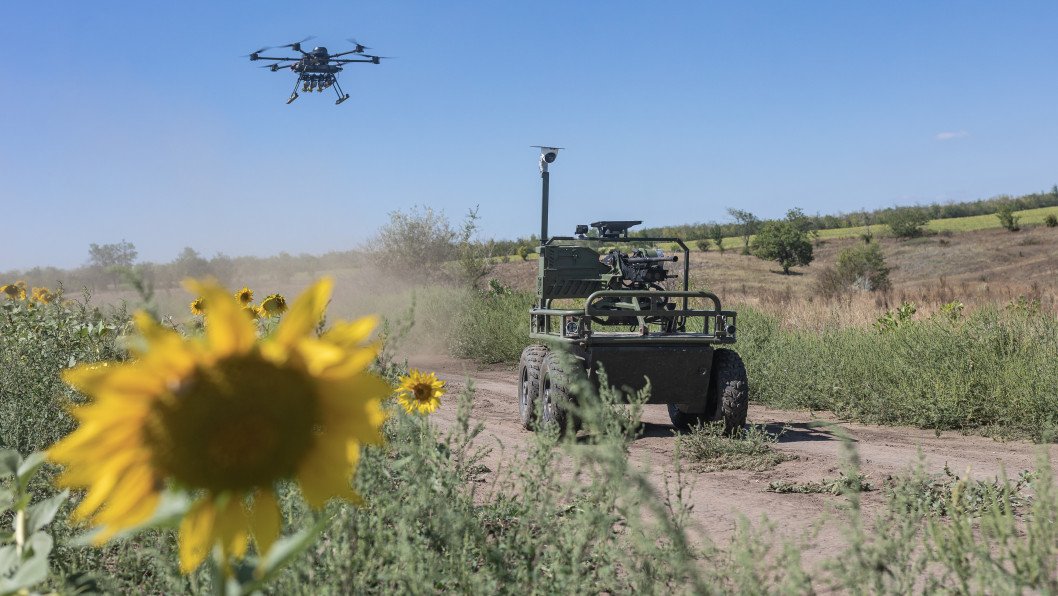
Ukraine was the first to debut the ground combat drones at scale. There are multiple reports of Ukrainian robot assaults on Russian positions, which resulted in losses on the Russian side. In some cases, Ukrainian robots even capture Russian infantrymen, trying to attack the Ukrainian positions during counterattacks.
What sets this system apart from earlier Russian ground robots is the integration of an autoloader. Previous platforms that have been demonstrated publicly have typically carried machine guns or anti-tank guided missiles, which do not require complex reloading mechanisms.
Incorporating an automated loading arm into a compact mortar turret represents a more advanced engineering step, and the footage indicates the system has reached at least a functional prototype capable of conducting live-fire operations.
According to Defence Blog, the operational appeal of such a system lies in eliminating one of the most vulnerable elements on the battlefield—the mortar crew. Traditional 82mm mortar teams are exposed during deployment, firing, and relocation, making them prime targets for rapid counter-battery fire once detected.

A robotic platform capable of firing, repositioning, and continuing operations without personnel at the launch site could significantly reduce those risks. It also opens the possibility of deploying indirect fire systems in positions that would be too dangerous for human crews to occupy.
Russia has increasingly prioritized unmanned systems throughout the war in Ukraine, where high casualty rates and the growing lethality of the battlefield have accelerated the push toward automation. As noted by Defence Blog, both sides have sought ways to reduce personnel exposure while maintaining combat effectiveness.
It remains unclear whether the Kuryer system equipped with the Bagunlnik-82 will move beyond testing into serial production or frontline deployment.
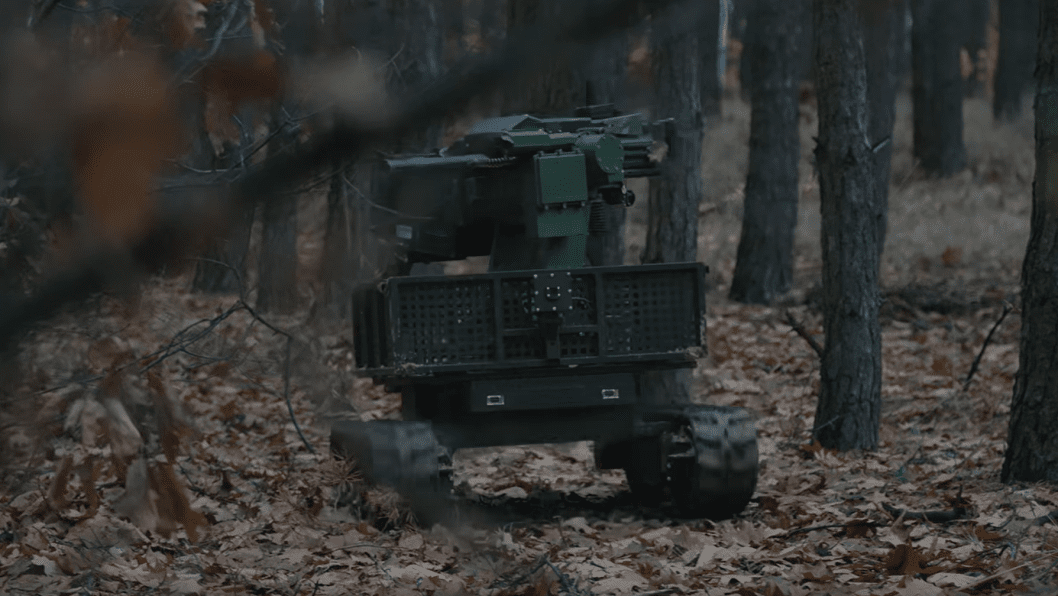
Earlier, reports emerged that a Ukrainian defense technology company was planning to develop a new ground-based robotic combat system armed with a 30mm cannon.
The system is expected to operate effectively at ranges of up to 4–5 kilometers, a capability that would place it well beyond earlier generations of Ukrainian ground robots.
The company intends to begin formal development of the project in 2026, starting with the creation of detailed technical requirements for the platform.
Discuss this article:
-4a56a6b482ec132402c16ef6fcabf9a2.png)