- Category
- Latest news
Russia’s Latest Battlefield Innovation Is a Rocket-Firing Robot Built From Old Pods
 Prefer U24 Media on Google
- Authors


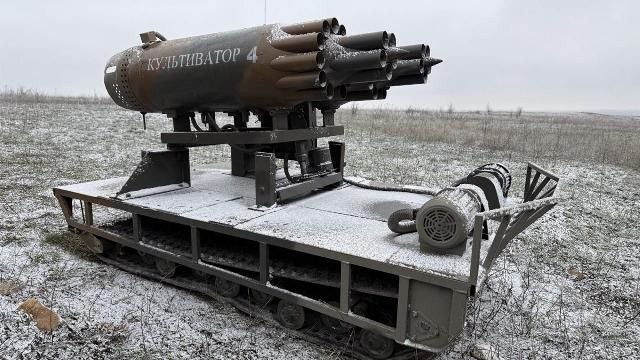
Russian forces are now fielding an improvised multiple-launch rocket system mounted on a tracked ground robotic vehicle, according to Ukrainian defense media outlet Defense Express on February 19.
The system, reportedly named “Kultivator,” is said to be operated by the separate unmanned systems regiment Burevestnik.
We bring you stories from the ground. Your support keeps our team in the field.
The platform represents the latest iteration of Moscow’s battlefield improvisation — combining aviation rocket pods with unmanned ground systems in an attempt to create a remotely operated rocket artillery asset.
The Kultivator system consists of a tracked unmanned ground vehicle equipped with two UB-16-57 aviation rocket pods. Each pod contains 16 launch tubes for S-5 unguided rockets, allowing for a total salvo of 32 rockets.
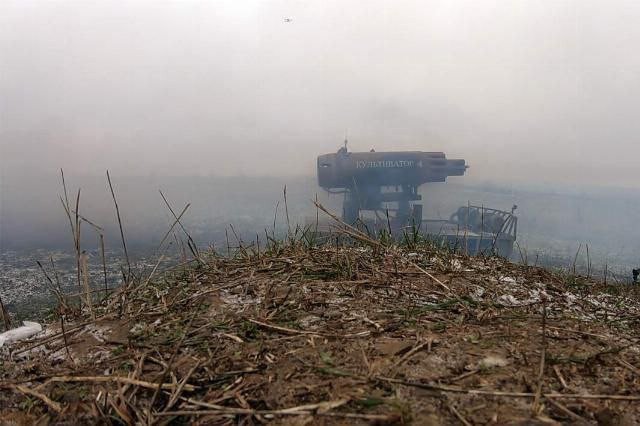
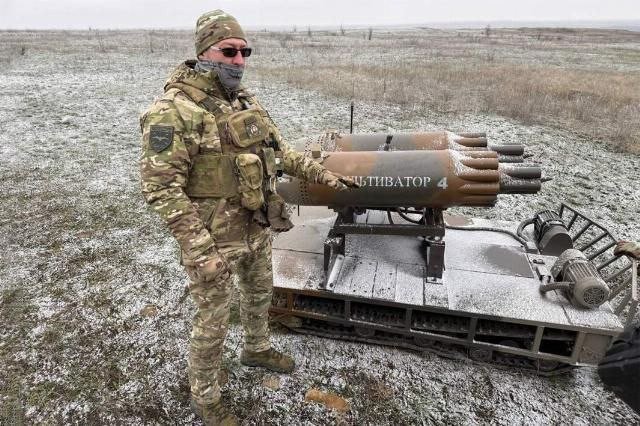
Russian sources claim an effective firing range of around 2 kilometers, with a maximum range approaching 4 kilometers.
The concept mirrors earlier Russian attempts to create improvised rocket systems by mounting aviation pods such as UB-32 launchers onto armored vehicles. Some previous variants combined rocket pods with other weapons systems, producing hybrid battlefield platforms.
Defense Express notes that mounting the rocket system on a ground robotic vehicle offers certain tactical advantages. The unmanned platform can move closer to contested areas while keeping operators at a relatively safe distance.
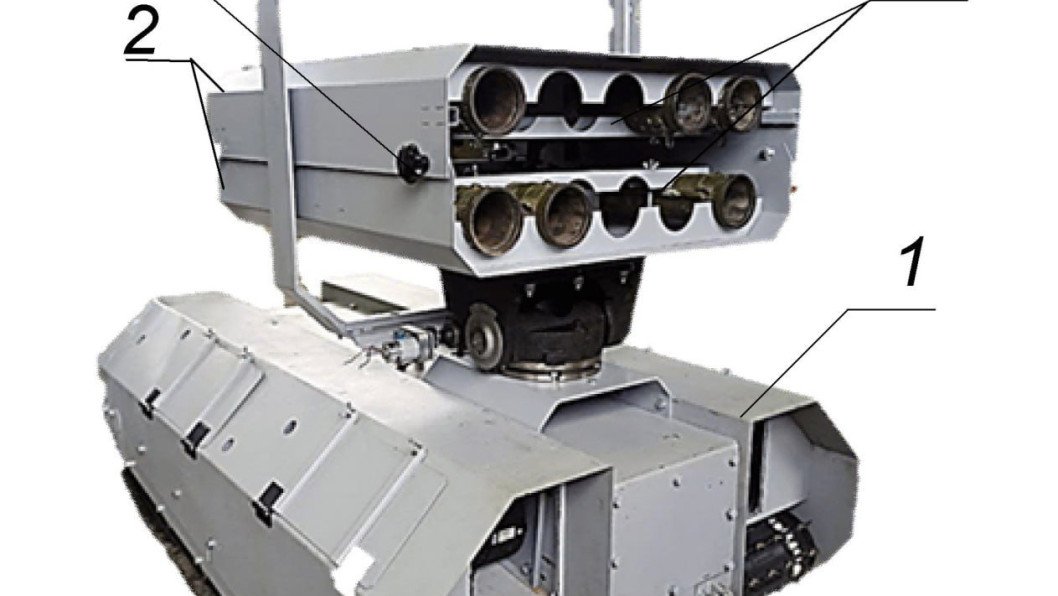
Recent Russian ground robots have been fitted with metal cage structures and camouflage netting in an effort to protect them from FPV drones. Similar protection could potentially be applied to the Kultivator system.
However, the reliance on unguided S-5 rockets limits accuracy. To be effective, such systems must operate relatively close to the front line—placing them within range of artillery, counter-battery fire, and Ukrainian drone strikes.
Ukrainian forces have also experimented with mounting aviation rocket pods on tracked vehicles and ground robotic platforms, including demonstrations by units such as the 93rd Mechanized Brigade in previous years.

Earlier, Russia began testing an experimental anti-drone protection system based on rapidly rotating cables.
The prototype, reportedly assembled within Russia’s 70th Motor Rifle Regiment, was filmed in Russian state television footage and is said to be undergoing trials within the temporarily occupied parts of Ukraine’s Zaporizhzhia region.
Discuss this article:






-c439b7bd9030ecf9d5a4287dc361ba31.jpg "Photo of Katherina Popilnichenko")