- Category
- Latest news
Russia Tests Experimental “Rotating Cable” System Against Ukrainian Drones
 Prefer U24 Media on Google
- Authors

-72b63a4e0c8c475ad81fe3eed3f63729.jpeg "Photo of Cyril Barabaltchouk")
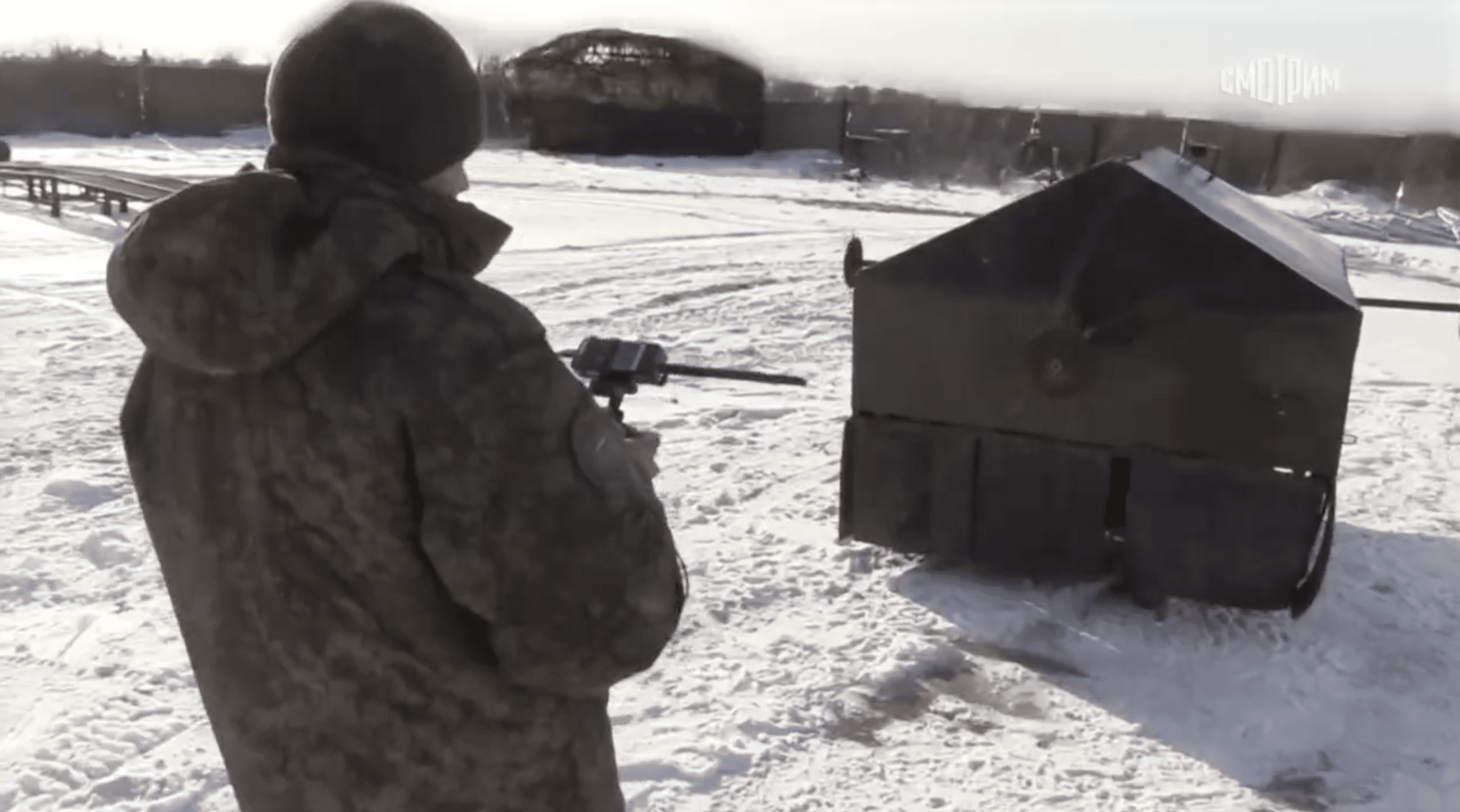
Russia has begun testing an experimental anti-drone protection system based on rapidly rotating cables, according to Defense Express, citing Russian media.
The prototype, reportedly assembled within the Russia’s 70th Motor Rifle Regiment, was filmed in Russian state television footage and is said to be undergoing trials within the temporarily occupied parts of Ukraine’s Zaporizhzhia region.
We bring you stories from the ground. Your support keeps our team in the field.
The system appears mounted on a small ground robotic vehicle, seemingly built specifically to test the concept, Defense Express wrote.
The idea is simple in theory: high-speed spinning cables act as a mechanical barrier, striking or deflecting incoming FPV drones before impact. Russian outlets described it as a “fan-style” defense, a concept that has circulated in Russian patents since at least late 2023, with a modified version registered again in May 2025.
Defense Express notes that cables may offer practical advantages over rigid blades, including lower weight and reduced risk of damage when contacting the ground. However, the mechanism requires significant internal space and raises questions about how well it would protect the vehicle’s upper surfaces.
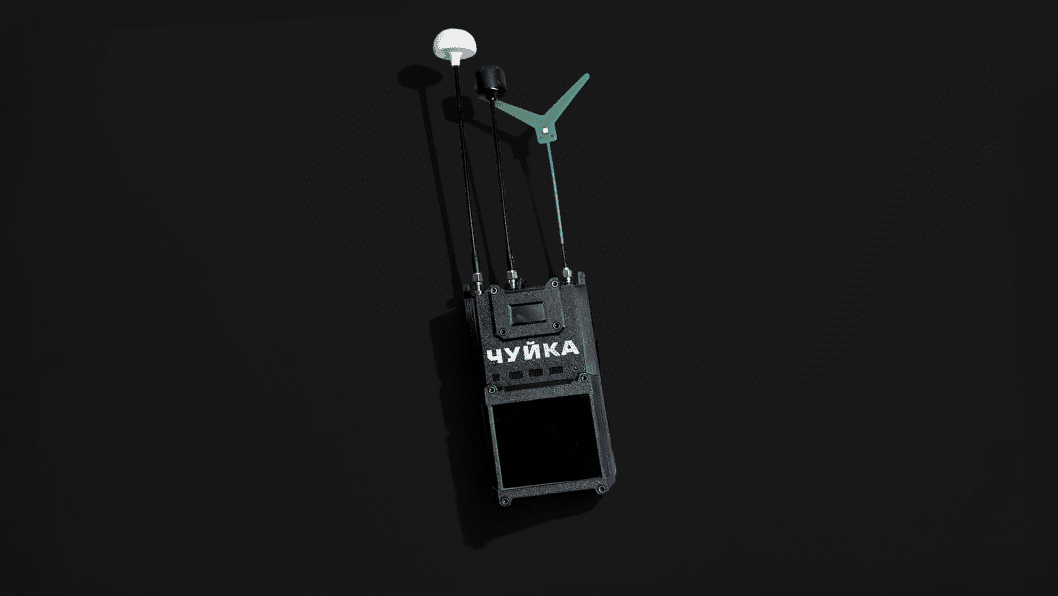
Separately, the Ukrainian defense firm First Contact, in collaboration with a German partner, had previously delivered a new batch of mobile electronic warfare systems to the Armed Forces. The FC.K is a tactical platform designed to detect and jam drone control links and video feeds. Mounted on a Kozak-5 armored chassis, the system allows crews to operate from a remote workstation, ensuring their safety during missions.
Footage of the Russian anti-drone cable prototype shows it moving only across flat terrain, leaving uncertainty about performance in real battlefield conditions, where vegetation, uneven ground, and obstacles could entangle the cables or limit effectiveness.
Defense Express concludes that despite the unanswered technical challenges, Russia is likely to continue pursuing improvised counter-drone solutions, and further experimental designs may emerge in the near term.
Earlier, in a series of coordinated drone strikes, Ukraine’s military intelligence agency (HUR) targeted and destroyed multiple components of Russia’s short-range air defense network and radar systems across the frontline.
Operatives from the special unit “Prymary” conducted attacks against Russian anti-air systems and surveillance radars during cold weather operations, successfully striking six key assets.
Discuss this article:
-4a56a6b482ec132402c16ef6fcabf9a2.png)

-404494d5a8efc7d69cc95de5faa987fd.webp "Taufiq Muhammad, an Indonesian national recruited into the Russian military and killed during his first combat engagement in Ukraine’s Donetsk region. (Source: HUR)")