- Category
- War in Ukraine
With This Ukrainian Tech You Can Spy on Russian Drones
Ukraine is revolutionizing defense with low-cost signal detectors, allowing Ukrainian soldiers to intercept the live video feed of incoming Russian FPV drones before they reach their target, protecting troops, journalists, and civilians.
 Prefer U24 Media on Google
- Authors

-554f0711f15a880af68b2550a739eee4.jpg "Photo of Lucile Brizard")
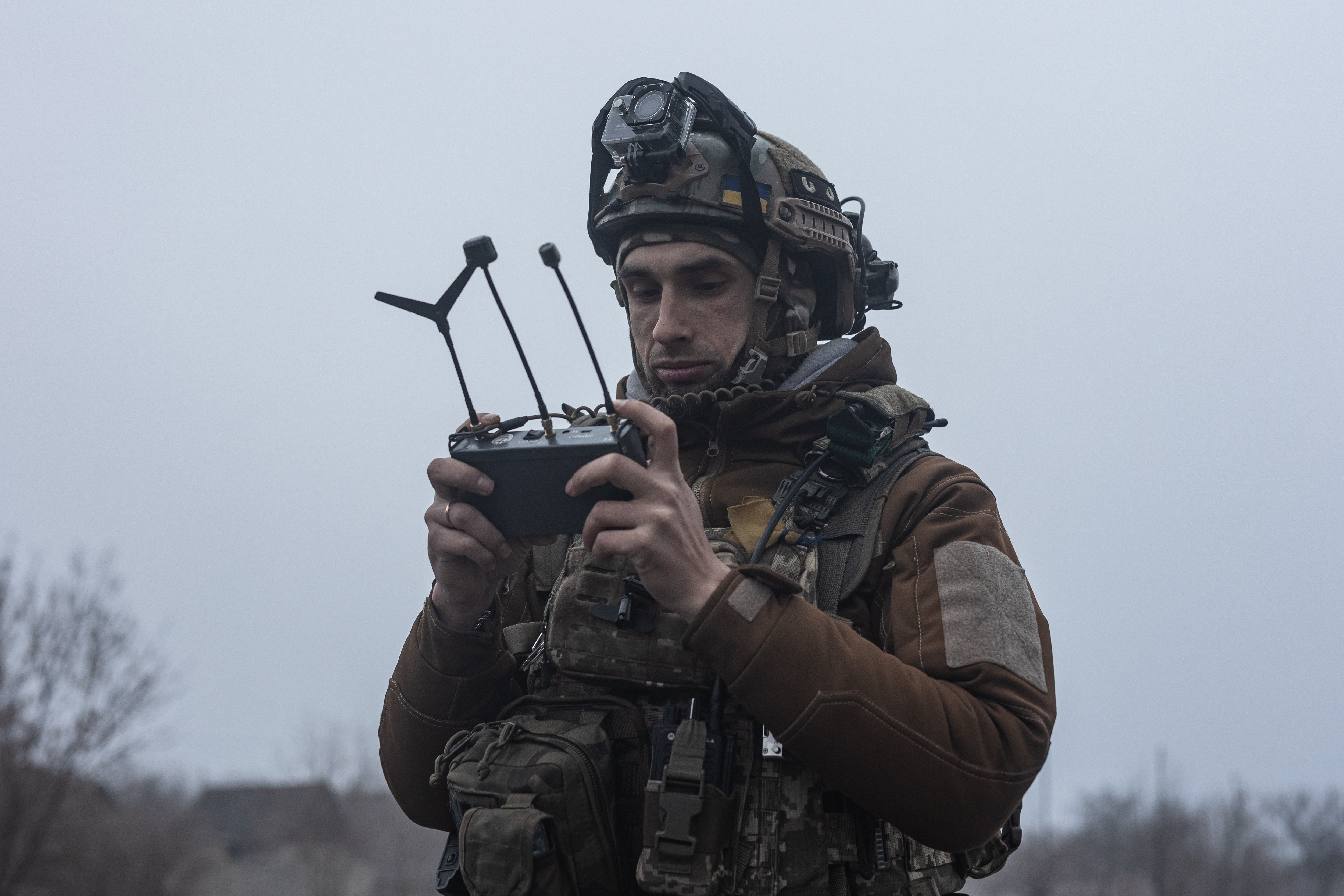
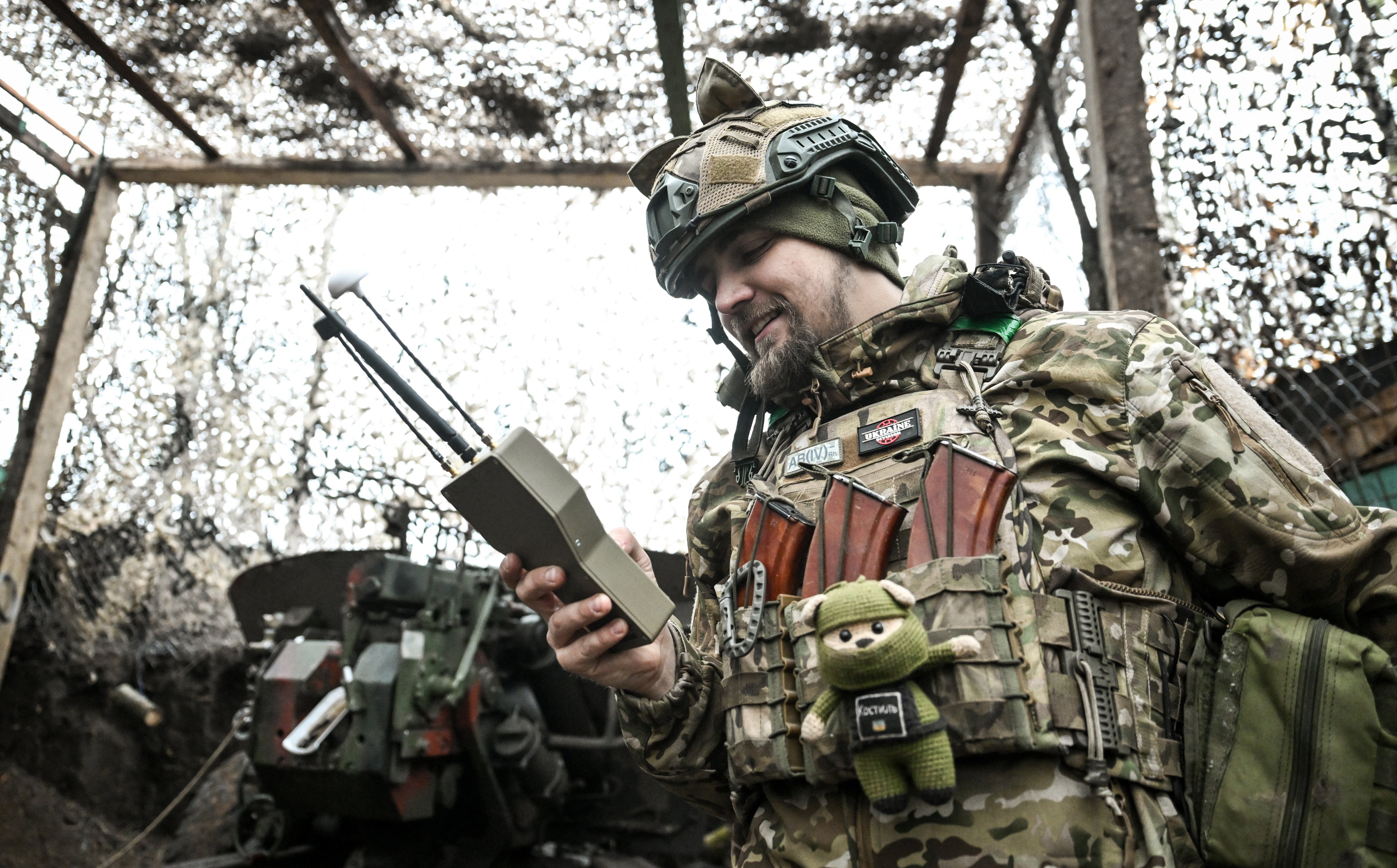
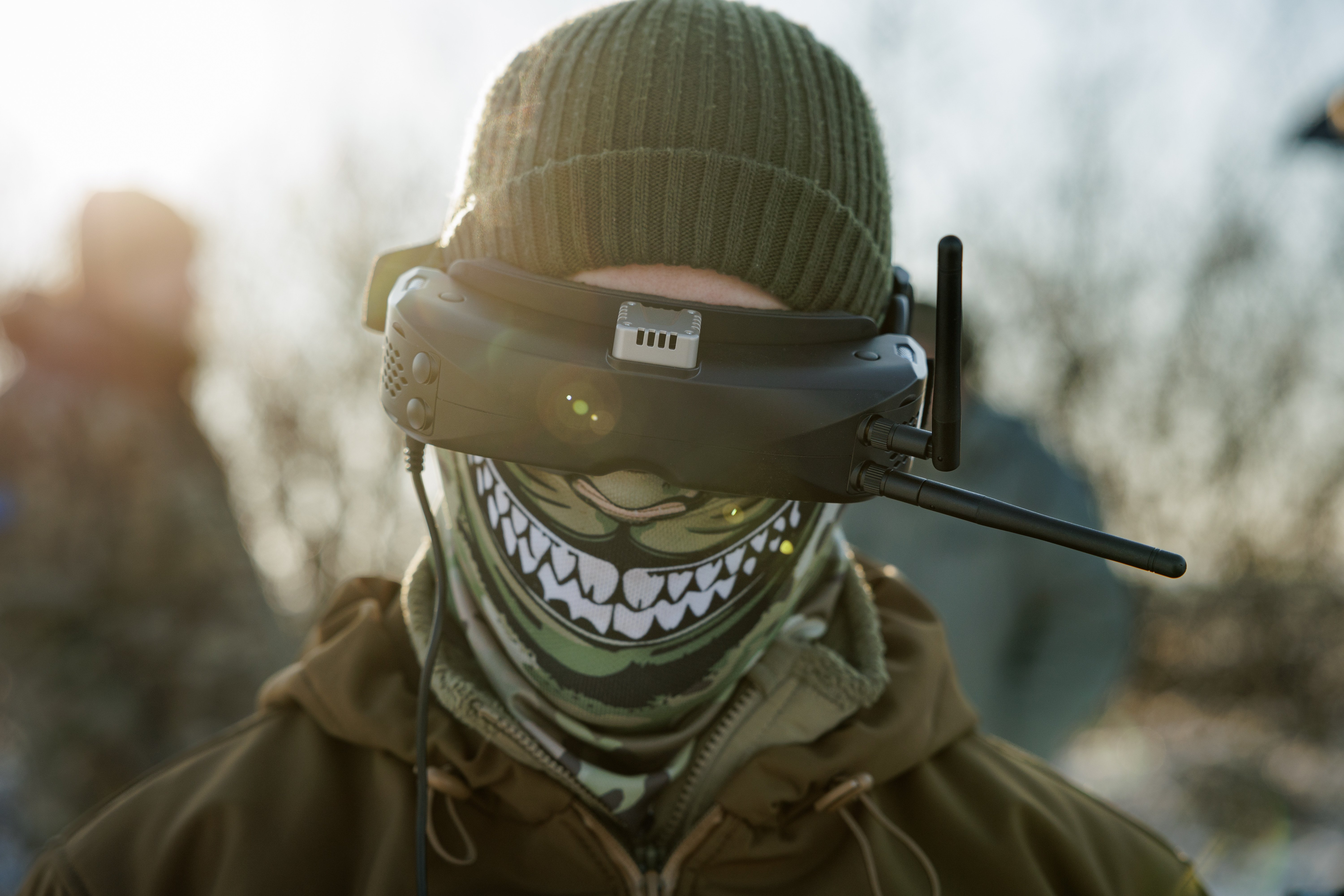
Before the danger even appears on the radar, signal detectors, known colloquially as “drone-detectors”, can intercept and view live FPV video feeds in real time, allowing Ukrainian soldiers to see exactly what the Russian drone targeting them sees. This device became an indispensable tool both for Ukrainian soldiers and civilians.
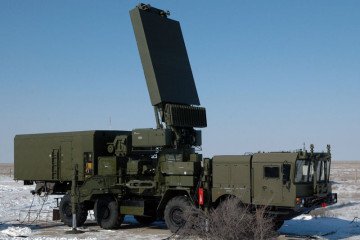
Not exclusive to Ukraine, Russia made “Bulat” drone detectors that have been brought to the temporarily occupied Kherson region, officially for energy workers. Local reports suggest they are intended for military use. The signal detectors like ZORKO (“sharp-sighted” in Ukrainian) and Chuika (colloquially, “intuition” in Ukrainian) are the Ukrainian counterparts to Russian FPV signal detectors like the “Bulat.”
Ukraine’s signal detectors’ capabilities
Zorko
ZORKO signal detector, developed by the Ukrainian company Stinex, is a portable device that scans frequencies commonly used by FPV drones to transmit video, allowing operators to intercept the drone’s live feed.
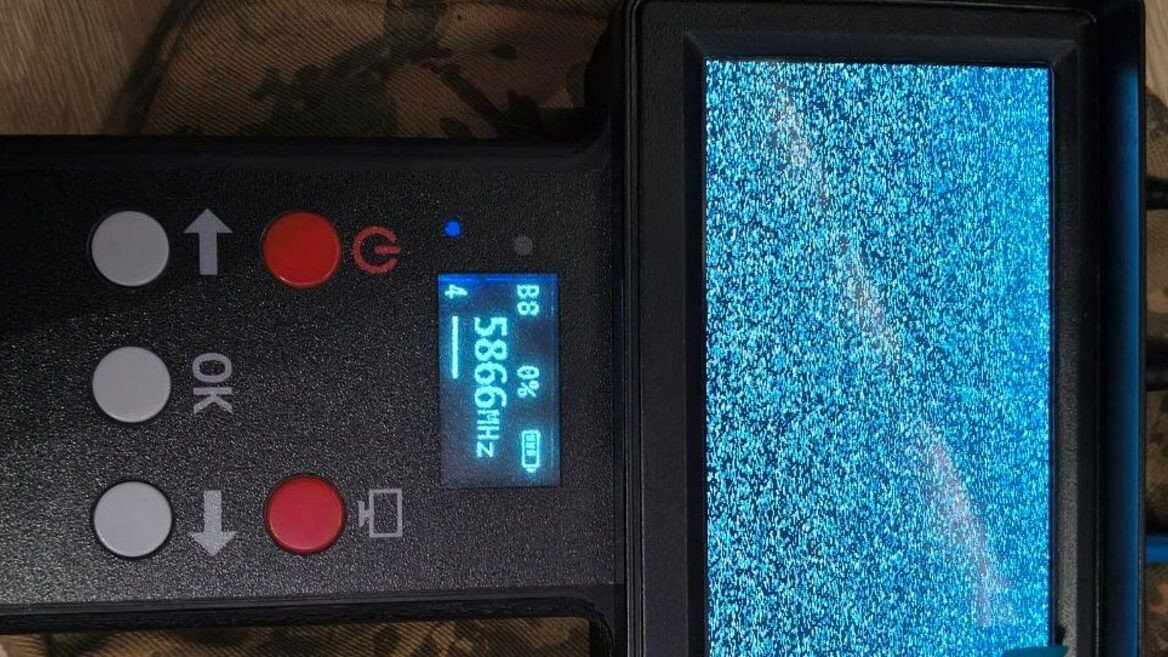
The system is designed to enhance situational awareness and enable a rapid response to incoming UAVs, protecting personnel, infrastructure, and military equipment. It works by detecting signals within the 1.2 GHz, 3.3 GHz, and 5.8 GHz frequency ranges, which are typical of FPV drone transmissions.
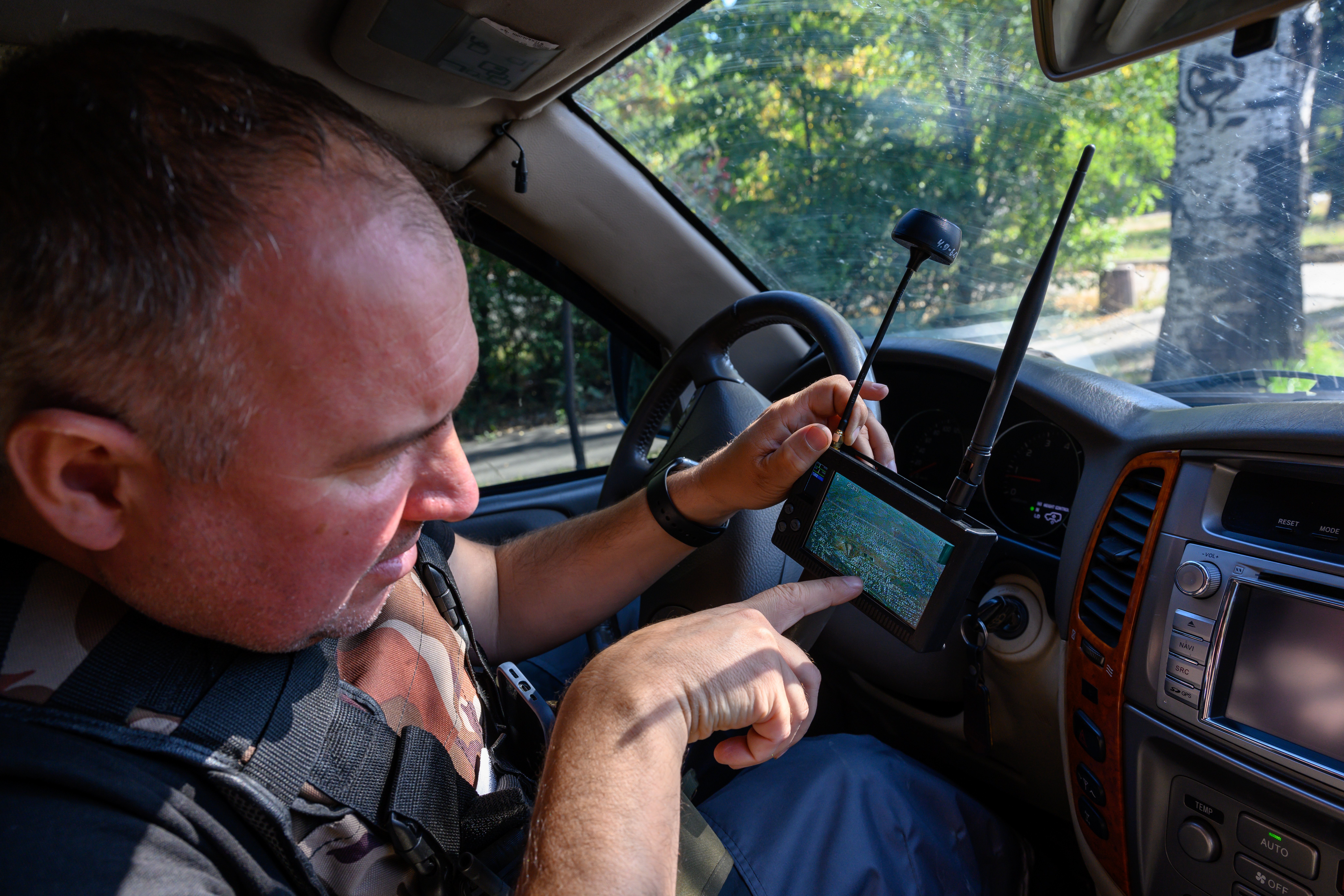
The ZORKO’s compact design—without external antennas—makes it easy to carry and deploy, whether on a soldier’s backpack, belt, or vehicle. It operates for 6 to 8 hours, ensuring long-term patrol capability. Furthermore, its ability to display the intercepted video stream on dual screens, coupled with an adjustable audio alarm system, simplifies decision-making during combat, even under the most difficult conditions. The device is protected against dust and water (IP54 rating), making it suitable for field deployment.
Chuika
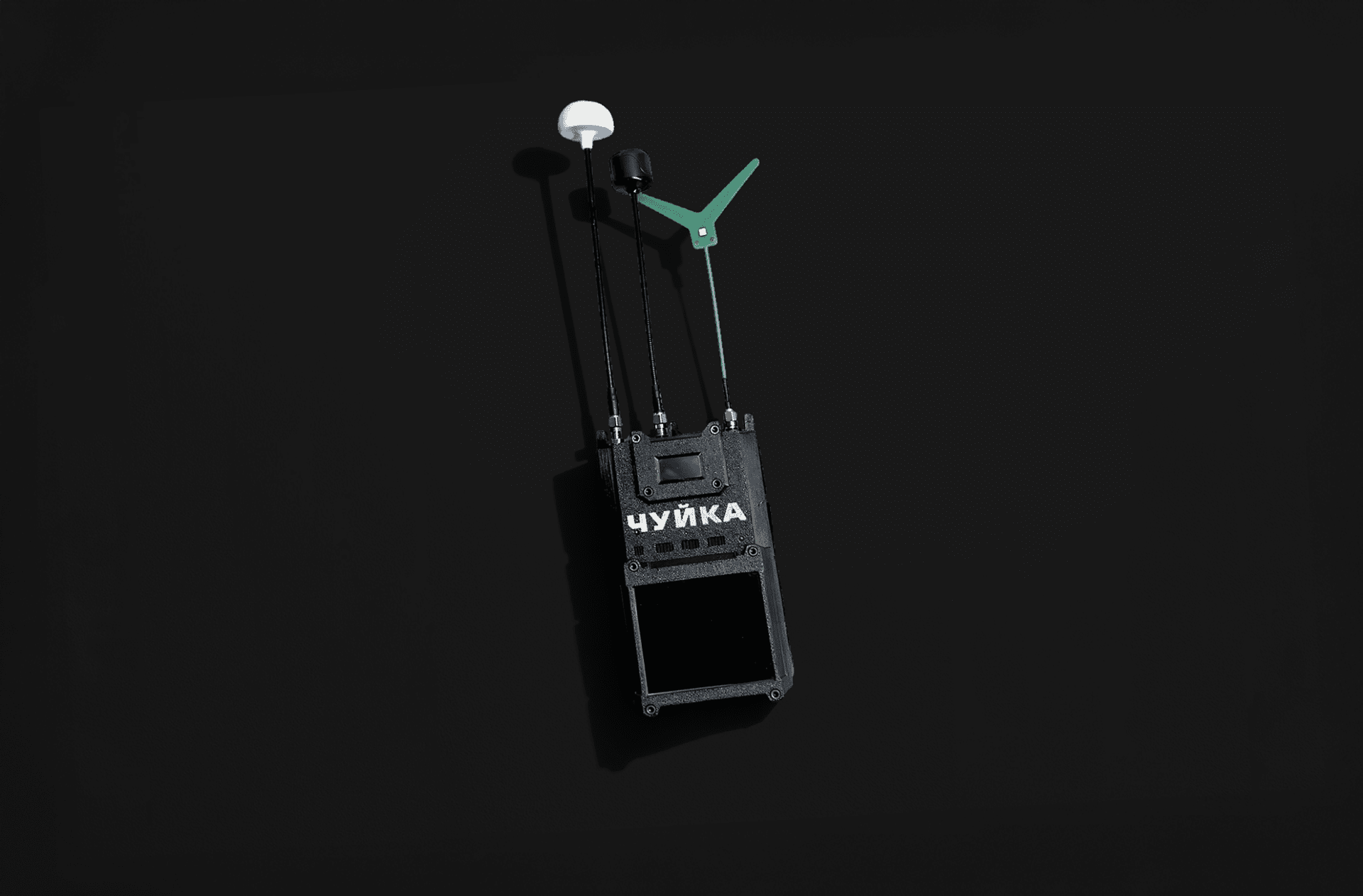
The Chuika 3.0 is a video signal detector designed to counter Russian drones transmitting analog FPV video feeds. Produced by Odesa-based BlueBird Tech and developed under the Brave1 defense tech cluster, the device intercepts analog signals from FPV drones, allowing users to view the operator’s screen in real time.
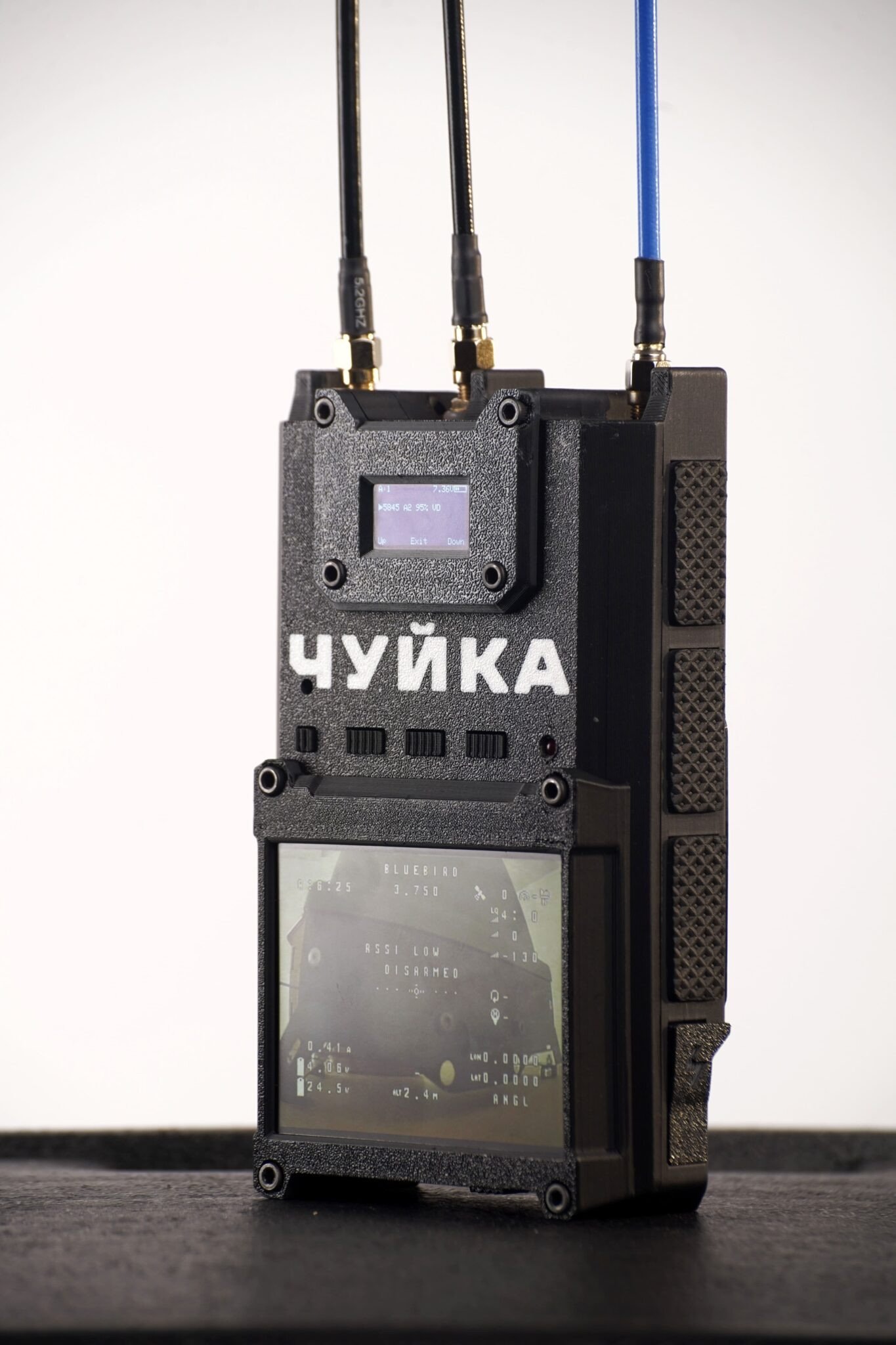
“Our adaptation strategy is built upon a tight feedback loop with personnel on the front lines,” BlueBird told us, stressing that the Ukrainian battlefield evolves at lightning speed. “We prioritize constant communication with military units, treating their real-world experience and specific requests as the primary driver for our R&D.”
However, BlueBird recognizes that the Russian forces frequently shift to custom or non-standard frequencies to bypass electronic countermeasures: “We identify these shifts almost immediately. Once a new frequency trend is confirmed, our engineering team can adapt our hardware solutions within a one-month timeframe, ensuring that our detectors remain relevant against emerging threats.”

The system has a detection range of up to 4 kilometers (2.4 miles), with an alert system that intensifies as a drone approaches. Chuika scans across multiple frequency bands (900–1680 MHz, 3060–3700 MHz, and 4990–6000 MHz) and displays up to three signal sources simultaneously.
The software can intercept encrypted signals, and updates are based on battlefield feedback. A next-generation version, Chuika 4.0, is under development with an expanded range and networked capabilities. Ukraine also introduced the Tsukorok (sugar) detector, a passive system that monitors radio emissions from drones without emitting signals itself.
Ukraine’s defense against FPV drones and the gap in electronic warfare
These types of detectors, including the Chuika 3.0 and OKO-3 (“eye” in Ukrainian), are now integral to Ukraine’s electronic warfare (EW) capabilities, providing invaluable support in the ongoing battle against Russian drones.
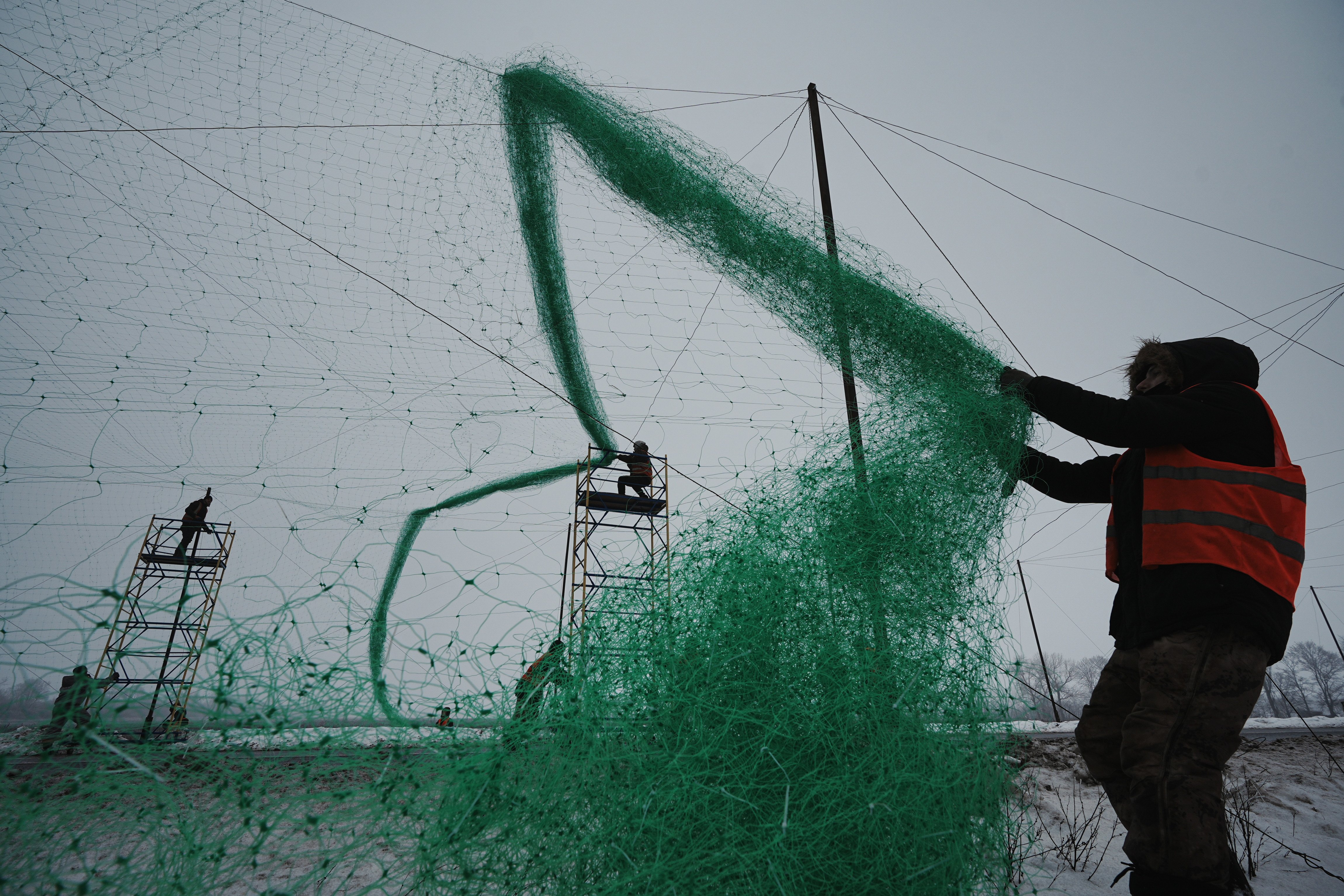
While these devices represent significant advancements in Ukraine’s defensive technology, they also highlight a critical gap in EW coverage. As drones evolve to bypass traditional EW defenses, such as frequency jamming and signal interference, Ukrainian forces must continuously adapt their systems to stay ahead of Russian innovations. This battle between offensive drone technologies and defensive EW systems remains a rapidly shifting arms race, with Ukraine striving to catch up while developing cutting-edge countermeasures.
Experts note that the primary challenge isn’t a lack of technology but the speed of deployment and integration.
Journalists trained to use drone detectors
In a non-military context, journalists in Zaporizhzhia were trained to use the Chuika drone detector, a crucial tool for detecting FPV drones, through a training session organized by the Zaporizhzhia Center for Journalist Solidarity. The device requires no configuration—users simply turn it on to begin detecting drone signals.
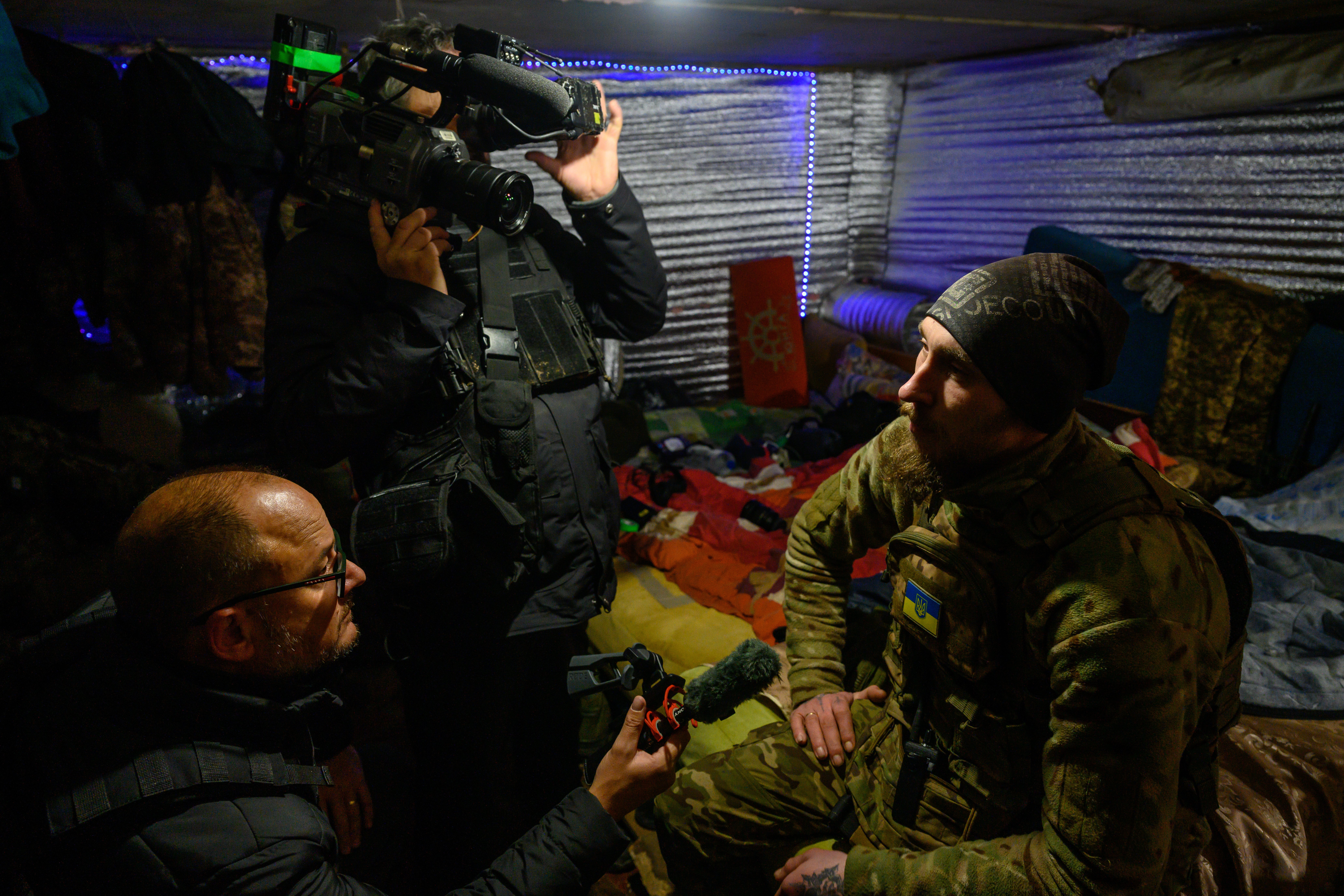
Oleksiy Lozytsky, a rescuer from the Municipal Special Paramilitary Emergency Rescue Service (KSVARS), led the training, sharing tips with the journalists on how to optimize the device’s effectiveness.
For journalists, especially those in frontline areas, such detectors offer vital situational awareness, with Valeria, a local reporter, noting the device’s potential to save lives. Journalists like Inna Hohoi of the Ukrainian channel Inter TV expressed gratitude for the training, stating they would take the device with them when working in high-risk locations. The Chuika is available for temporary borrowing at the Zaporizhzhia Center as part of an initiative to support media workers during this particular inflection of the war.

As Russian drone attacks become an increasing threat, tools like the Chuika are proving vital for ensuring journalists' safety on the frontlines.
To give an example, Oleg Petrasiuk, a communications officer with the 24th Separate Mechanized Brigade, shot down a drone on October 23, 2025, that had turned back toward him and a reporter, Daphne Wesdorp. The attack occurred while the pair was documenting a church previously hit by Russian forces.
Such attacks have become more frequent, as evidenced by the deaths of journalists in Kramatorsk, Druzhkivka, and other areas. According to Ukrainian officials, Russian forces deliberately target media workers, an act that is being investigated under international law.
Ukraine’s evolving EW strategy
To fully protect Ukrainian forces, EW capabilities must be scalable, rapidly deployable, and integrated into a multi-layered defense system. The Mirage and Azimuth EW systems, being developed by Ukrainian company Kvertus, represent the next step in this direction, promising a broader, more adaptable defense network to protect soldiers on the ground.
Incorporating these low-cost, high-impact systems into Ukraine’s military strategy is essential to counter the growing threat from Russia’s increasing use of FPV drones. As the war progresses, the effectiveness of Ukraine’s EW systems will depend on how quickly they can evolve and be deployed to the front lines, ensuring that these technological advancements continue to provide critical protection.
The integration of new systems, ongoing training, and continual innovation in the face of new threats will be key to Ukraine’s success in maintaining an edge in this high-tech battle.
Discuss this article: