- Category
- War in Ukraine
Ukraine’s Defense Tech Boom: $129M Raised in 2025, 2x Growth Over 2024
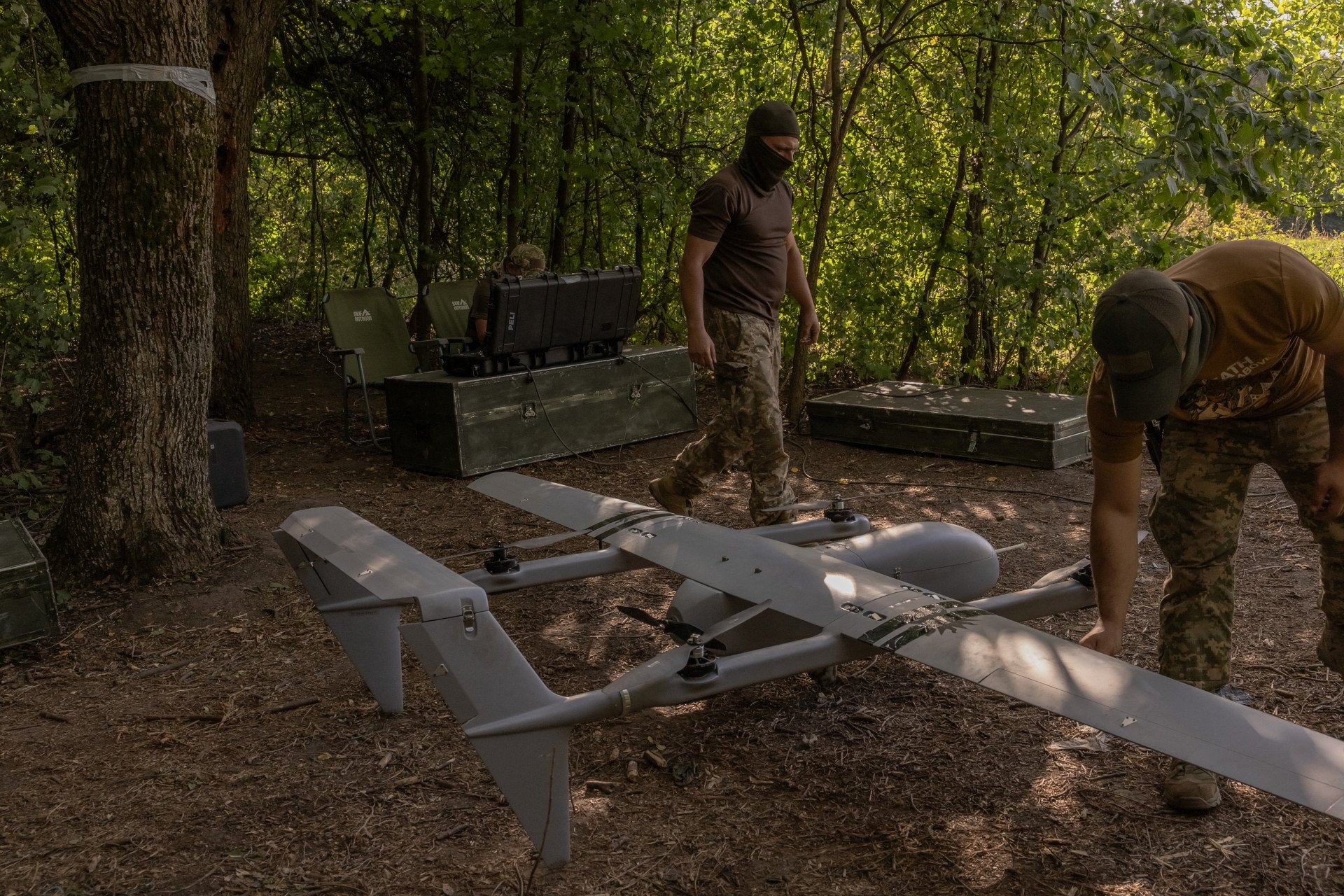
In 2022, when Russia launched its full-scale invasion, Ukraine had just a handful of drone companies. Today, there are several hundred in drones alone. Across roughly a dozen DefenceTech subsectors, investments now run into the tens of millions of dollars. And that’s only what’s publicly visible.
 Prefer U24 Media on Google
- Authors

-29a1a43aba23f9bb779a1ac8b98d2121.jpeg "Photo of Illia Kabachynskyi")
Each year, the Ukrainian investment fund AVentures publishes its proprietary research on the country’s startup ecosystem. Its DealBook project compiles key deals and investments in Ukrainian startups or projects with Ukrainian founders. Since the start of the full-scale war, Defense Tech has become a major focus.
We bring you stories from the ground. Your support keeps our team in the field.
Ukraine’s defense startup ecosystem emerged as a response to the Russian army’s numerical and material superiority. Technology partially offset that advantage and later even gave rise to a broader concept: that wars should be fought by robots, not people. Launched in 2023, the Brave1 defense cluster helped small teams secure grants to turn MVPs into working products, pass testing, and reach real-world deployment.
The sector has grown explosively in just four years. By December 2025, drones had irreversibly eliminated more than 33,000 Russian troops. Uncrewed maritime drones are destroying Russian ships in the Black Sea, ground-based robotic systems are capturing Russian soldiers, and interceptor drones are shooting down Shahed drones.
Investment growth has followed. In 2023, the sector attracted less than $10 million in investment. A year later, it received just over $15 million, plus more than $40 million in grants. In 2025, the situation changed dramatically.
Investment in Defense Tech
In September 2025, Ukrainian Defense Tech startup Swarmer, which develops software for drone swarms, announced it had raised $15 million from Ukrainian and US funds. Officially, this is the largest single investment ever disclosed in Ukrainian Defense Tech; previously, startups had not raised sums of this magnitude.
Overall, Ukrainian Defense Tech raised $129 million in 2025.
Sources at UNITED24 Media caution that these figures should be treated carefully: they include only publicly known investments and grants distributed by Brave1.
“A significant share of investment happens in stealth mode,” one source said. “Manufacturers are concerned about their production facilities and don’t want to attract unnecessary attention from the Russians.”
Still, information about one major deal did reach the press. UAE-based defense group EDGE is targeting the acquisition of a 30% stake in Fire Point, a manufacturer of long-range drones and missiles. The deal could be worth more than $700 million, valuing the company at over $2 billion. Publicly, this would be Ukraine’s first near-unicorn (the deal has not yet closed). Privately, there are already other Ukrainian businesses of similar scale. UNITED24 Media sources suggest that EDGE approached several other large Ukrainian defense startups with similar proposals.
Ukrainian companies are also investing heavily in themselves. A state-approved profit margin of up to 25% allows companies to generate profits and reinvest them into R&D and expanded production capacity. These sums are not counted as investments, but they still amount to hundreds of millions of dollars in private capital flowing into the industry.
Foreign investors are also increasingly active in Ukraine. Former Google CEO Eric Schmidt is investing through the D3 fund, into which he has reportedly committed at least $10 million of his own capital. US funding has also come through MITS Capital. Teams from Central Europe and the Nordic countries are also involved. Ukrainian defense companies have partnerships with German and Danish firms, including Quantum Systems and Terma.
The interest is easy to understand. Ukraine today is a real-world testing ground for technology—not a laboratory environment far removed from reality. The battlefield is highly intense, with electronic warfare systems and constant attacks from both sides. Recreating such conditions artificially is almost impossible.
Grants as a tool for scaling the industry
Ukraine’s Defense Minister Mykhailo Fedorov says that only public-private cooperation can succeed. That is why Brave1 distributes grants to private teams capable of creating the best weapons or technological solutions. Depending on the project, grants range from tens of thousands of dollars to millions for missile development. The more teams involved, the stronger the competition and the faster weapons can be produced.
For example, UNITED24 Media previously reported on the “Palianytsia” project — a rocket drone developed in just a year and a half. This pace now defines the entire sector. Several Ukrainian teams are simultaneously developing interceptor drones, competing to demonstrate the highest effectiveness of their solutions.
At the same time, grants are a catalyst, not a cure-all. A product must prove useful to the military before it is adopted. To support this, a kind of “Amazon for weapons” has been created: the Brave1 Market. There, military units can independently choose which weapons to order. If drones from one company fail to deliver results, the military can switch to another supplier—or order more of the systems that actually work. Crucially, procurement decisions are made not only by the state but also by the soldiers who directly use these systems.
Grants helped accelerate the industry, but today it already operates by its own rules. The newsroom is aware of several potential mergers, with new large investment rounds ahead. Swarmer, mentioned above, is considering a possible IPO. The industry is maturing: former garage projects are becoming large-scale manufacturers, preparing to go global.
Discuss this article: