- Category
- Interview
Why Russia’s War for Minds May Be Its Best Weapon—An Interview with a Spanish Colonel
 Prefer U24 Media on Google
- Authors

-56360f669cb982418f455a4b71d34e4e.jpeg "Photo of Manuel Rodriguez")
Europe has invested billions in tanks, aircraft, and cyber defense. But another domain is often overlooked: cognition. In this interview with Spanish Colonel Juan Bustamante, we explore how Russia’s doctrine of information warfare leverages disinformation and polarization to reshape the battlefield.
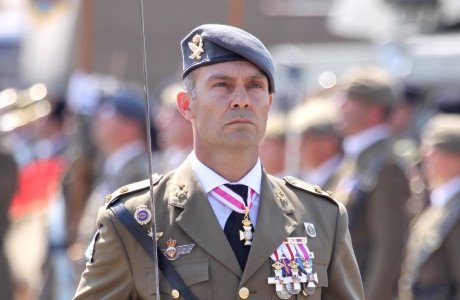
“There is no longer a rear guard.”
With that blunt warning, Bustamante describes a battlefield where civilians are no longer spectators but targets, and where Russia’s doctrine of information warfare seeks not to conquer territory, but to conquer minds.
In this interview, we explore how disinformation and polarization are weaponized to fracture democratic cohesion from within.
Who is Juan Bustamante?
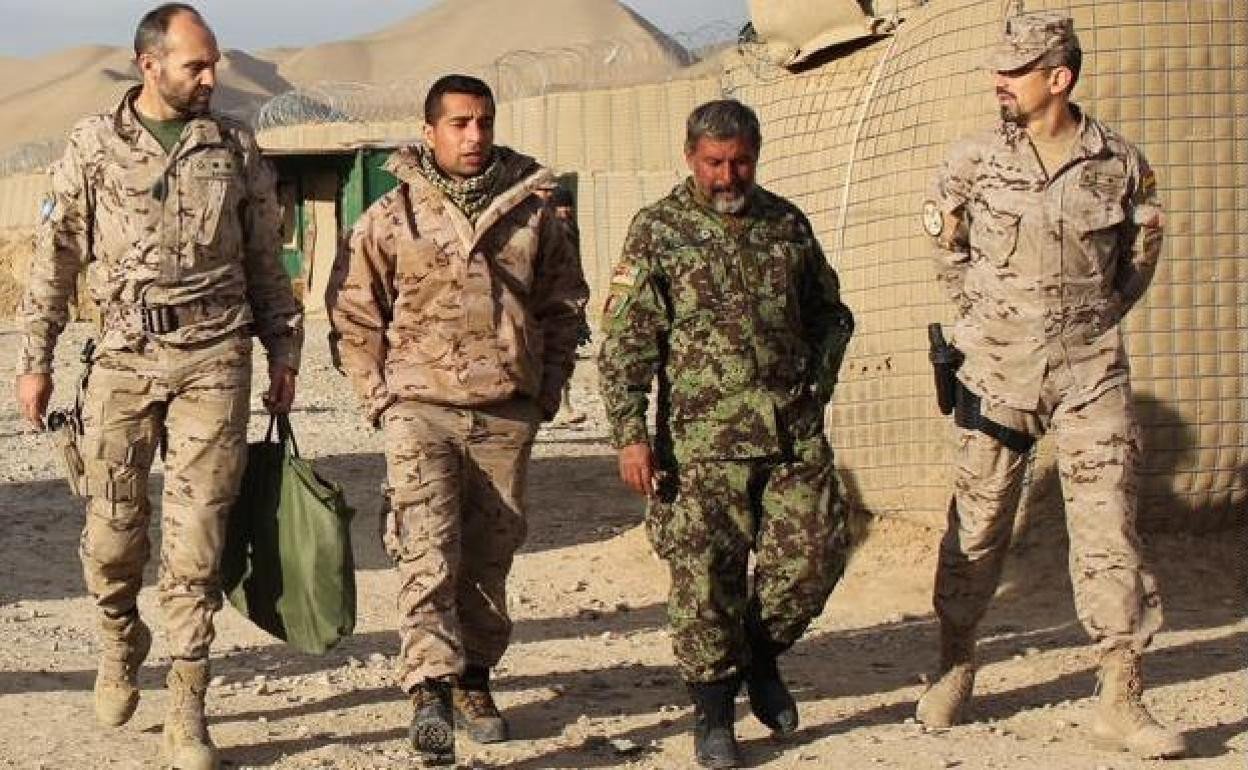
Ex-Chief of the Strategic Communication Section (J9) at the Operations Command of the Defense Staff (now reservist), Bustamante is a military officer with extensive experience who has served in international missions from Bosnia to Afghanistan, and who has dedicated much of his career to understanding and combating the new threats of the 21st century.
His book "Afghan Dispatches," a compilation of emails written during his mission as an advisor to the Afghan army in Badghis province, marks a milestone in Spanish military literature for its frankness, humor, and analytical depth.
But his analysis of cognitive warfare—the fifth domain of operations that joins land, sea, air, and cyberspace—is what makes him an especially relevant voice in the current context, where disinformation has become the preferred weapon of autocratic regimes to destabilize Western democracies.
Current events sadly prove him right. In February 2026, UNITED24 Media documented how Russia intensified its information war: the bot network "Matryoshka" launched a massive disinformation campaign using the Epstein files to fabricate false accusations against Macron and Ukrainian children, impersonating Western media and spreading it across X, Telegram, and other platforms. This is precisely what Colonel Bustamante has been warning about for years: a war that seeks not to conquer territory, but to conquer minds.
The battlefield in people’s minds
"It's incredible how the cognitive domain has been ignored," Colonel Bustamante says. "There's barely any study of how decisions are made, how information and perception influence decision-making. Information warfare seeks to modify the human behavior of civilian and military populations."
His warning goes beyond simple persuasion or classic propaganda. Russia’s real objective is to intervene in the collective mind to condition political and social will: to force the adoption of ideas that, over time, push society to accept and promulgate decisions contrary to national interests and the well-being of the people themselves. It's about "changing the way you think, how you act, how you decide," he says.
Most disturbingly, this new type of conflict knows no borders or uniforms. Unlike traditional warfare, where there were clear boundaries between combatants and civilians, between one's own territory and the enemy's, in information warfare, "There is no longer a rear guard," Bustamante says. "The population is the target. The goal is not to occupy physical territory, but to conquer minds."
When European unity becomes inconvenient, disinformation goes so far as to make a simple tissue look like drugs.
— Élysée (@Elysee) May 11, 2025
This fake news is being spread by France’s enemies, both abroad and at home. We must remain vigilant against manipulation. pic.twitter.com/xyXhGm9Dsr
Actors like Russia have perfectly understood this dynamic and have turned it into their main strategic tool, says Bustamante.
Russia is the country that uses cognitive warfare without limits the most. The most autocratic countries use it more because they go directly for the effect. It's much cheaper than maintaining soldiers: giving whatever information they want, affecting our information, adding a manipulation charge.
Juan Bustamante
Spanish Colonel
Their method doesn't consist of imposing a single truth, but of "confusing, generating noise, dividing" to weaken democratic institutions from within, exploiting their own freedoms.
Bustamante also adds a particularly disturbing idea: total polarization makes a society more fragile. "If you're in the gray areas, in nuance, you're less predictable," he says. "But when everyone is in black or white, your reactions are predictable, and that generates greater fragility." This polarization feeds on a central tension of democracy: unlimited tolerance collides with the need for security.
"What is democracy's weak point? I tolerate everything as long as what you're thinking doesn't affect my security. When I notice my security is wavering, then I say: wait, wait, wait."
Juan Bustamante
Spanish Colonel
Then, any threat—real or imagined, verified or a rumor—that endangers our fragile state of well-being is seen as something that must be destroyed.
“We stop thinking with a sense of reason, and start acting out of fear and paranoia,” he says. Russia deliberately exploits that crack by sowing a constant sense of threat through networks and disinformation campaigns: "My security hangs by a thread. I feel insecure because a non-existent danger is created."
The result is an increasingly intolerant and radicalized society, where the political adversary stops being someone you disagree with and becomes an enemy to be destroyed, says Bustamante.
"Now, as soon as we see a person, a minister, if you feel like it, who is contrary to your ideology, we don't take even 15 seconds to destroy what they're saying with childish arguments," he laments. This is also accelerated by confirmation bias, amplified by algorithms that lock people in ideological bubbles, says Bustamante: "I feel very comfortable listening to or reading certain things because they coincide with my way of thinking. When you read or hear things very different from what you think, it drives you crazy. And that didn't happen before.”
But perhaps most alarming is the asymmetry of institutional capacity that Bustamante identifies. While Russia has organizations like the Internet Research Agency (IRA)—the famous "troll farm"—composed of entire groups of people professionally dedicated to large-scale informational manipulation, operating with coordination, resources, and clear objectives, on the Western side, the response is fragmented, reactive, and lacks strategic coordination. "There is no comparable structure in the West," he says. "We don't even understand what a cognitive defense structure should look like. We would need something like a cognitive joint command: a structure capable of analyzing how you're attacked, planning responses, and measuring the effectiveness of both our own and the adversary's efforts."
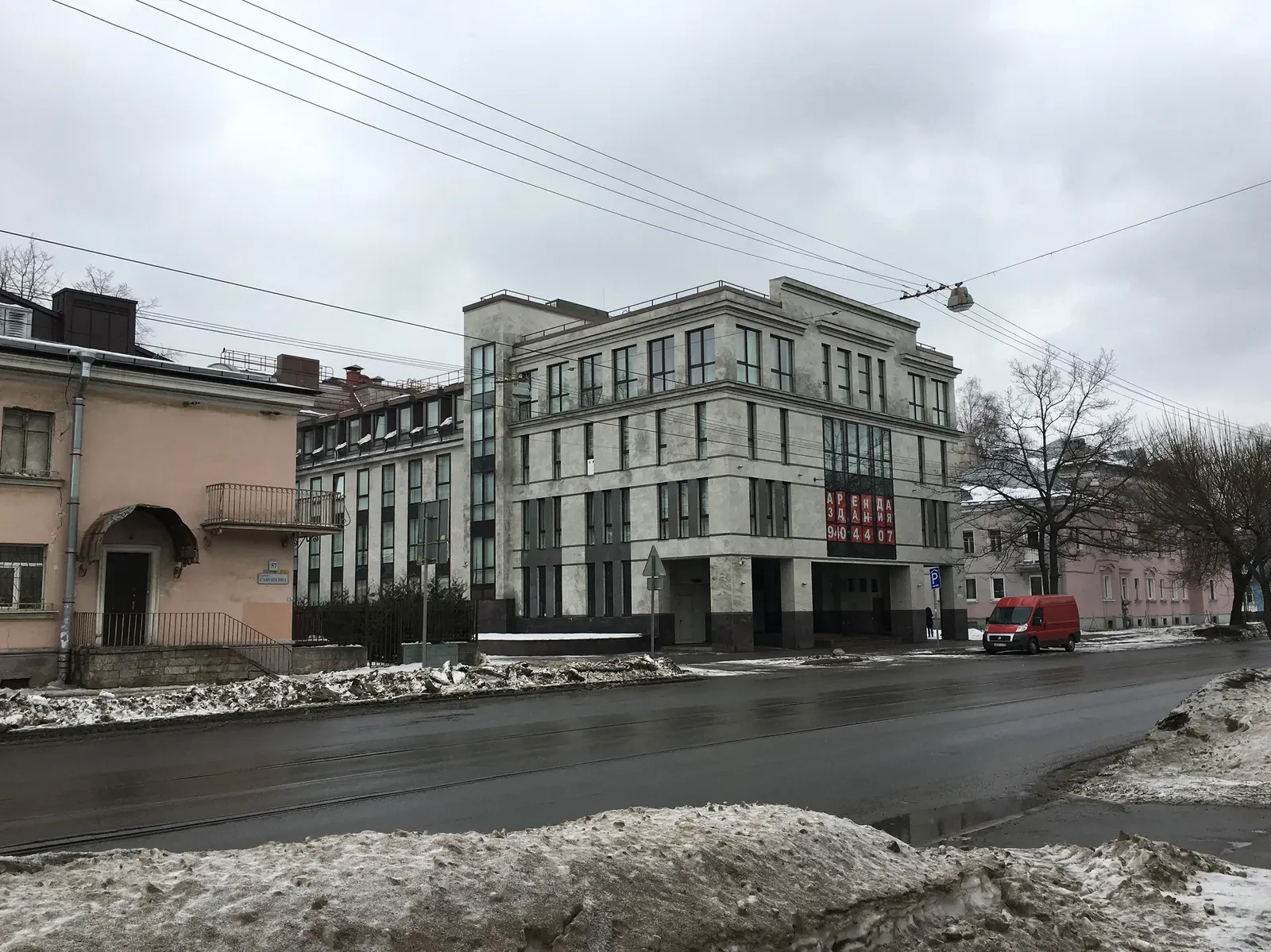
The problem, Bustamante explains, is both mathematical and strategic: "If there's no structure, there's no way to respond effectively. Out of 100 disinformation attacks, you only respond to two. It's useless."
Each isolated response requires analyzing the context, creating a counter-narrative, and planning how to deploy it. Without institutional coordination, without a clear doctrine, without dedicated resources, it's a battle lost from the start. A strategy cannot be designed; there is no cohesion of efforts, and therefore, people cannot defend themselves effectively. "We should be doing exercises on how to respond to this, how to calibrate our responses against disinformation. We cannot afford not to know how to do it," he argues urgently.
The mechanics of polarization: hypocognition, security, and democracy's weak point
When asked why these tactics are so effective, Bustamante turns to concepts from neuroscience and cognitive psychology to explain Western vulnerability. The problem, he points out, begins with the constant hyperinformation to which we are exposed. "We live in a state of hypocognition," he explains. "We know everything superficially. We have four clear ideas about each topic, but nothing deep."
This superficiality makes us especially vulnerable to messages that exaggerate or simplify problems, because they are much easier to assimilate in our overloaded mental processing. Hyperinformation, in turn, "depends on hyperconnectivity," Bustamante notes. The "infinite scroll" of social media is not innocent: it's a deliberate strategy to keep us in a state of permanent superficiality, where sensationalist headlines substitute for deep analysis.
The resulting polarization is not an accidental side effect; it is the fundamental strategic objective. "NATO's weak point is social cohesion," Bustamante explains. "They seek essential polarization: it simplifies and divides. The more nationalist you are, the less pro-alliance you will be."
We bring you stories from the ground. Your support keeps our team in the field.
Beyond the military sphere, this polarization doesn't just create a tense political climate; it also erodes social cohesion. When public debate is reduced to simple and emotional messages, the ability to share minimal diagnoses and sustain broad agreements is lost. In that context, any crisis is interpreted in identity terms, distrust intensifies, and bonds between groups within each country weaken.
The European Union is especially vulnerable because its strength depends, to a large extent, on cooperation and trust between states and societies. If a nationalist, confrontational logic is imposed, the EU ceases to be perceived as a common project and becomes an object of suspicion or rejection. Polarization, therefore, not only internally fragments countries but ealso rodes solidarity and joint decision-making, weakening the European alliance at its core.
The colonel cites Ukraine as a paradigmatic example of how maintaining internal cohesion is a constant battle against coordinated disinformation campaigns. In that context, President Zelenskyy is forced not only to lead on the military front, but to constantly reaffirm the legitimacy of his government and the solidity of his alliances. His constant communication with the Ukrainian citizenry and Western partners is not an accessory political gesture but a strategic necessity. The Russian strategy not only seeks to discredit the Ukrainian government, but to fragment Western support, sowing doubts about the usefulness of aid, corruption, and the cost of maintaining support. And it does so systematically and professionally.
Faced with this somber panorama, Bustamante doesn't resign himself to fatalism. His prescription for combating hyperinformation and confirmation bias is clear, though demanding: dedicate less time to "infinite scrolling" and more to reading extensive articles, even if they require intellectual effort.
You have to select. Spend an hour with your mobile, half an hour with a news program and read a newspaper that has somewhat long articles. What we can't do is what we call the infinite scroll. Keep going and keep reading headlines.
Juan Bustamante
Spanish Colonel
But Bustamante goes beyond mere time management: he proposes something even more difficult in these polarized times: cultivating intellectual empathy, recognizing that "the one who thinks differently doesn't always get it wrong, that out of 100 things a minister says, well maybe 10 aren't so bad, even if they're contrary to your ideology."
Education, the true vaccine
Throughout the conversation, a recurring theme emerges: education in critical thinking as the only sustainable defense against informational manipulation. Bustamante doesn't believe in magical technological solutions or exhaustive state regulations that could threaten freedom of expression. His proposal is more fundamental and long-term: "We have to educate in school, in discussions with friends, and in the way we inform ourselves."
He recognizes this is an uphill battle, especially when "there are very strong actors, even Facebook and big companies that have an interest in polarizing." These platforms benefit when our behavior is predictable because that data has more commercial value for advertisers and other actors who pay for access to information about our habits, preferences, and vulnerabilities.
But Bustamante also identifies a more immediate and practical defense, particularly relevant for organizations and companies: internal communication. This is the most neglected tool and, paradoxically, the most effective against reputational crises and disinformation attacks.
"When you have a reputational crisis and weakened internal communication, it's a super permeable situation for all this to happen," he warns. He explains that with the proliferation of remote work and videoconferences, organizations are losing internal cohesion, making them more vulnerable. "Remote work has become more common, but real internal communication is lacking. There must be team cohesion." The conclusion is clear. A good manager cannot lead from an office; they lead from the trenches with their workers.
He shares his own experience commanding the Spanish Cavalry Regiment No. 11 as a practical example of this philosophy:
When I commanded a regiment, every month I had a meeting with the 650 soldiers in the regiment. 650 soldiers! [...] Because they have to know what you're like, because that cuts off rumors, because that cuts off disinformation, because with that they start trusting you. If there isn't that communication, everything is permeable.
Juan Bustamante
Spanish Colonel
Bustamante’s leadership philosophy is clear and applicable beyond the military sphere: a good leader must "have clear objectives and motivate people to achieve those objectives," and all this requires constant, transparent, and direct communication. The trust generated through this communication acts as a vaccine against disinformation, creating a resilient social fabric that is not easily penetrated by false or manipulative narratives.
Cognitive sovereignty in times of informational war
Bustamante’s warning is clear and urgent: if we don't develop the cognitive defenses necessary to navigate the ocean of information in which we live, if we don't cultivate the ability to discern between what is true and false, between rigorous analysis and sensationalist headlines, we will be, in his own words, "dumbed down." It's not a rhetorical exaggeration but a sober assessment of the threat.
Perhaps the most alarming aspect of this conversation is the revelation that the West lacks the institutional structures to defend itself effectively on this new battlefield. While adversaries like Russia have built complete systems dedicated to cognitive warfare, Western democracies continue to respond in a fragmented and reactive way, like someone trying to put out individual fires while unaware that the entire forest is ablaze.
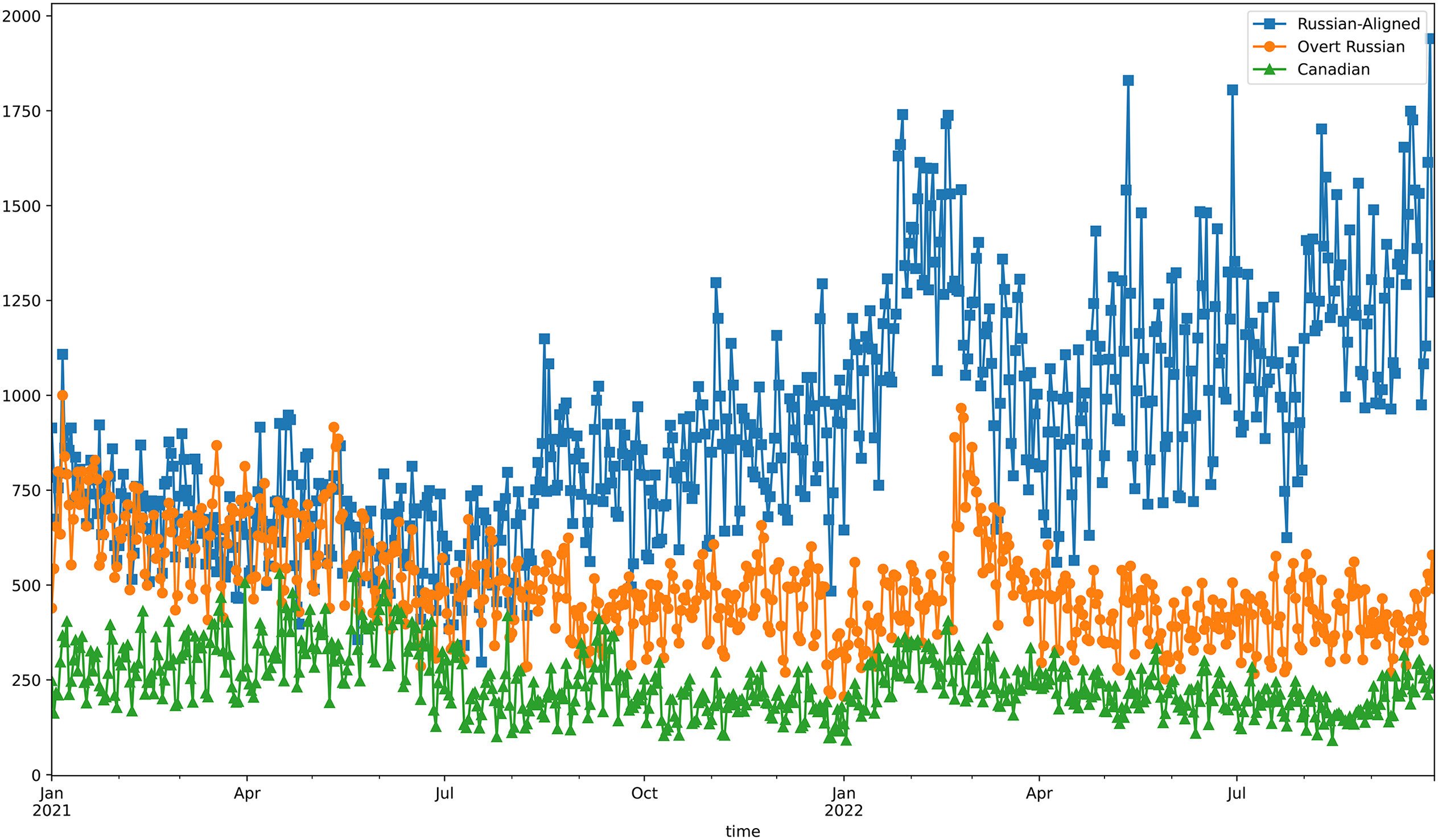
In an era where information is power and disinformation is a weapon of mass destruction of social cohesion, voices like Colonel Bustamante's remind us that the best defense is not technological or legislative, but profoundly human: thinking critically, reading with depth, genuinely listening to the other, and maintaining the ability to doubt, even our own most deeply rooted certainties. It is, ultimately, a call to recover our cognitive sovereignty in a world that constantly—and with increasing sophistication—tries to strip it from us.
The question that remains after this conversation is disturbing: do we, as democratic societies, have the political will and intellectual discipline to build the defenses we need before it's too late? Or as Colonel Bustamante himself would say: "We cannot afford not to know how to do it."
Discuss this article:
-9a7b3a98ed5c506e0b77a6663f5727c5.png)


-930ed56b9d4c7f0232c62eddea7edc08.jpg "Ukraine’s Mindset Has Changed Faster Than Most of Europe—What 35 Years of Data Show")
-d6c21a19c8fd931d512b5818298453c4.jpeg "Maryna Starodubska")
-29a1a43aba23f9bb779a1ac8b98d2121.jpeg "Photo of Illia Kabachynskyi")

-554f0711f15a880af68b2550a739eee4.jpg "Photo of Lucile Brizard")