- Category
- War in Ukraine
Russia’s Drone Hunt for Journalists Grows—We Spoke to the Ukrainian Officer Who Saved a Dutch Crew

Russia’s drone war against civilians in Ukraine is growing deadlier, with direct strikes increasingly targeting journalists even 20 to 30 kilometers from the frontline.
 Prefer U24 Media on Google
- Authors




The sky is clear, too clear for comfort in the frontline city of Kostiantynivka. The ominous buzzing of a Russian drone is getting louder and closer over the deserted square of Kostiantynivka’s church.
“Come to the church!” yells the press officer to a passerby, while firing a volley of shots at the drone. After a few misses, the drone explodes in the trees in front of the church, offering the media team inside the destroyed chapel a few minutes of relief.
A cat makes its way through the debris of a church in the Ukrainian city of Kostiantynivka, Donetsk region. Just like many surrounding towns and villages, it is suffering from daily attacks. Russia strikes with aviation, missiles, artillery, and drones, dragging out its terror… pic.twitter.com/RjeZanpumz
— MFA of Ukraine 🇺🇦 (@MFA_Ukraine) October 19, 2025
When the Russian drone turned back
“Kostiantynivka is a dangerous place,” tells us Oleg Petrasiuk, a photographer turned communications officer of the 24th Separate Mechanized Brigade named after King Danylo, who shot down the drone and prevented an attack on a journalist on October 23 in Kostiantynivka, Donetsk region.
That day, Petrasiuk was guiding Daphne Wesdorp, a reporter for the Dutch outlet Het Nederlands Dagblad, to a church that Russia had hit earlier in the war. Wesdorp, who previously wrote for UNITED24 Media on Russia’s drone campaign against civilians in Ukraine, brings years of frontline reporting to the assignment.
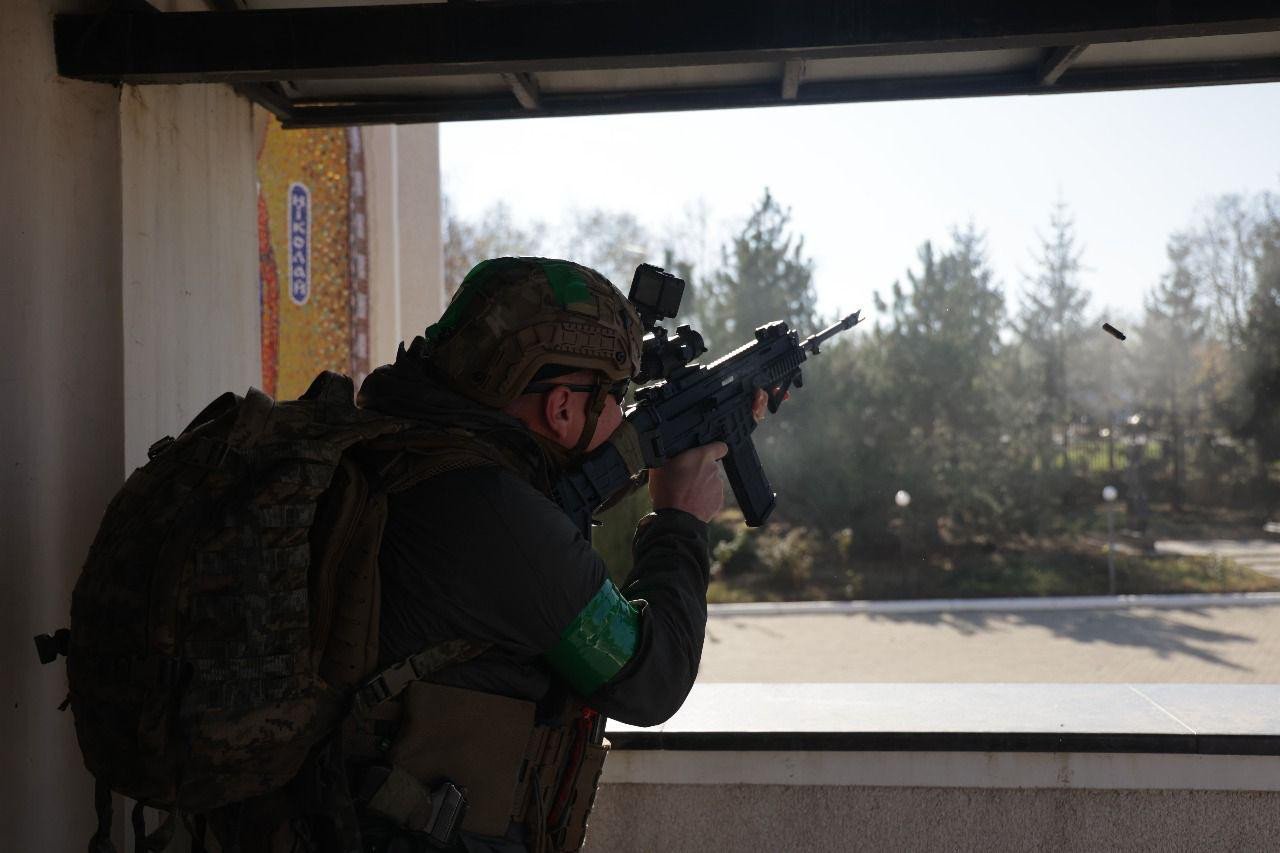
“We were entering the church and heard the sound of a drone that was passing along the road,” says Petrasiuk. “I waited a few seconds—we usually open fire when a drone passes you, so it can't see you. It is much safer.”
Then, suddenly, the drone started to turn back. “Nobody knows what is in the pilot’s mind,” says Petrasiuk. “Obviously, a dangerous situation. I immediately opened fire.”
“I can confirm that the drone pilot was 100% targeting us,” says Petrasiuk. “They could target any civilian or military target. I was pretty sure that I could shoot it down because it was too close and the drone was very slow. These fiber-optic drones are quite slow.”
Fiber-optic drones are almost impossible to detect—but sometimes you “can hear it flying in advance,” says Petrasiuk, depending on where you stand—downhill or uphill. This one, in particular, was shot down with an assault rifle. “It was too far away for a shotgun—around 50 meters,” he says. Soldiers sometimes use shotguns to bring down low-flying FPV drones, but at that distance, a rifle was the only option.
The media doesn’t visit Kostiantynivka too often, says Petrasiuk. “Such cases happen regularly because Russian forces are flying drones along the road looking for the target.”
The press officer confirms that Russians frequently employ the so-called “ambush tactic.”
Instead of flying drones from their positions, the Russians are hiding them near roads and waiting for Ukrainian troops or civilian vehicles to pass by to attack their target. This recurring tactic is deadly efficient, as soldiers or evacuation teams don’t have time to react—but when a soldier hears a drone flying by, reaction time becomes critical.
“Sometimes I just hear it and it appears,” he says. “If it is very fast, the pilot can hardly see you. Your first reaction when you hear the drone—take cover.”
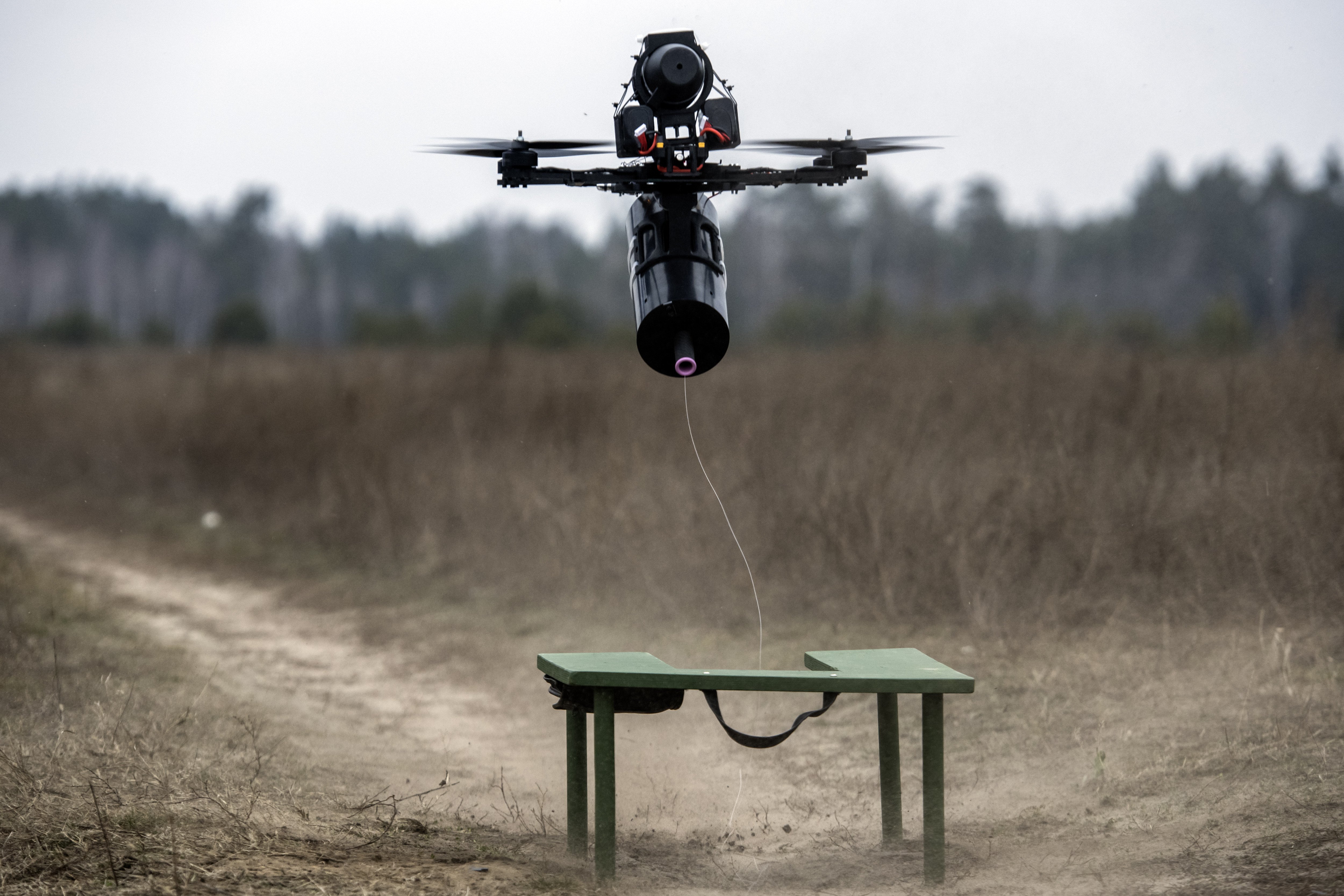
The other issue is detecting drones. With fiber-optic ones, soldiers simply can’t see them on radio frequency because they fly without it. Ukrainian troops have to play it by ear and shoot them down as soon as they hear the ominous buzzing sound.
“We don’t fly fiber-optic drones inside the city—Russians do,” Petrasiuk says.
Russian pattern of targeting the press
This recent attack was not an isolated case. When the Russian strikes came, it was not on a tank or command post, but on a press car.
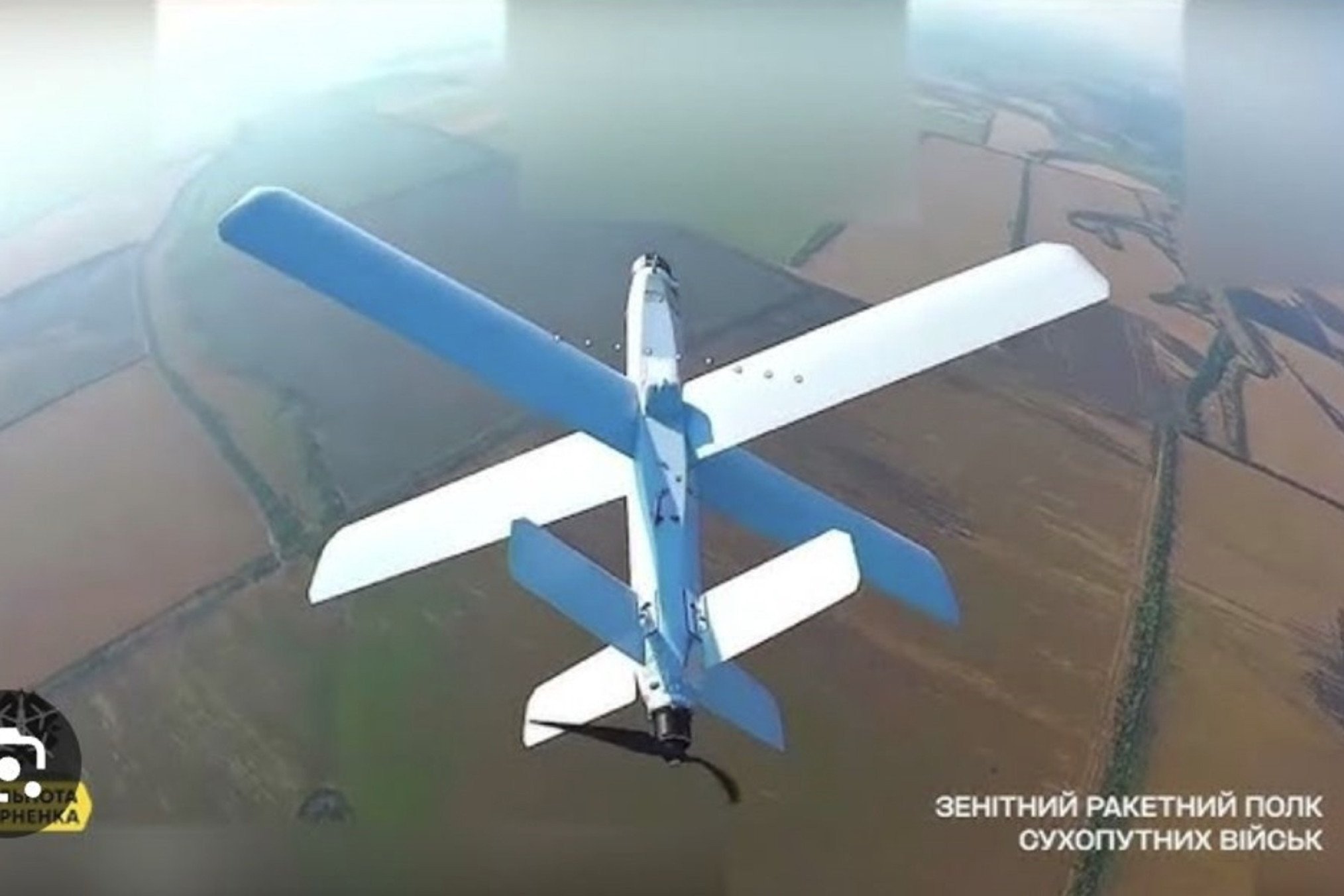
“This attack happened on the same day when journalists in Kramatorsk were killed,” says Petrasiuk. That day, a Russian Lancet drone killed Freedom TV crew Olena Hubanova (known professionally as Alyona Gramova) and cameraman Yevhen Karmazin, targeting their vehicle parked at a gas station in Kramatorsk, Donetsk region, about 20 kilometers (12 miles) from the frontline, and wounding another reporter on the team. Both journalists were covering life in the Donetsk region—a place they had called home.
In a similar Lancet drone strike, a Welt reporting team came under Russian attack while filming with a Ukrainian air-defense unit in eastern Ukraine, roughly 25–30 kilometers behind the frontline, journalist Ibrahim Naber wrote on Facebook on October 28. The drone killed one Ukrainian soldier, Kostiantyn, and seriously injured another. Naber’s producer, Ivan, underwent surgery after the attack, while cameraman Viktor Lysenko and Naber sustained minor injuries. The team had been conducting an interview with the soldiers moments before the drone hit. Naber said they were clearly marked as journalists at the time.
In early October, a Russian FPV drone hit the car of French photojournalist Antoni Lallican and Ukrainian reporter Hryhorii Ivanchenko near Druzhkivka, Donetsk region. Lallican was killed, and Ivanchenko later had his leg amputated.
For years, cities like Kramatorsk and Kostiantynivka were considered relatively safe for press teams working just behind the front. However, as Russia expands its range of drones and ramps up its deliberate strikes on civilians, those assumptions have begun to collapse.
Ukraine’s human rights ombudsman Dmytro Lubinets called the attack “further evidence of Russia's systemic war crimes against civilians.” President Volodymyr Zelenskyy said Russia’s strategy is to “silence all independent voices reporting about Russia’s war crimes in Ukraine,” saying during an October 23 press conference in Brussels that “since the start of the full-scale war, Russia has killed 135 media workers.”
“Journalists are not targets; they must be protected,” said Paris-based organization Reporters Without Borders (RSF), commenting on Russia’s Kramatorsk strike.
RSF and Ukrainian human rights organization Truth Hounds earlier reported that Russia has struck hotels and hostels in Ukraine known to host journalists at least 31 times since 2022, killing or injuring dozens.
A United Nations inquiry has concluded that Russian forces are deliberately using drones to harass and attack civilians living near the frontline in Ukraine, forcing thousands from their homes—actions that constitute a crime against humanity. Investigators found evidence of civilians being chased over long distances by camera-equipped drones. These individuals were often attacked with explosives or incendiary devices as they desperately sought shelter. Russian forces also reportedly use FPV drones to launch a “safari” attack on Ukrainian farmers, with operators chasing agricultural machinery in the fields.
Ukraine’s Prosecutor General has opened an investigation into the Kramatorsk attack under the Ukrainian criminal code, which pertains to the “violation of the laws and customs of war.” France has done the same for Lallican’s death. Under international law, journalists are civilians and must be protected. Yet, as of October 2, 2025, more than 800 Russian crimes against journalists and media have been recorded. At least 26 Ukrainian journalists remain in Russian captivity.
Anyone is a Russian target
Petrasiuk’s brigade is stationed on the front line in Chasiv Yar, a city repeatedly targeted by Russian artillery and drones. Kostiantynivka is one of its flanks. His team often coordinates access for foreign reporters who want to document life in frontline towns that remain under Ukrainian control.
“Sometimes we work with journalists on civilian stories because there are few opportunities to take them with us to our positions,” he says. “So we decided to take part in all those media processes and escort journalists on civilian stories, even if they don’t visit our positions.”
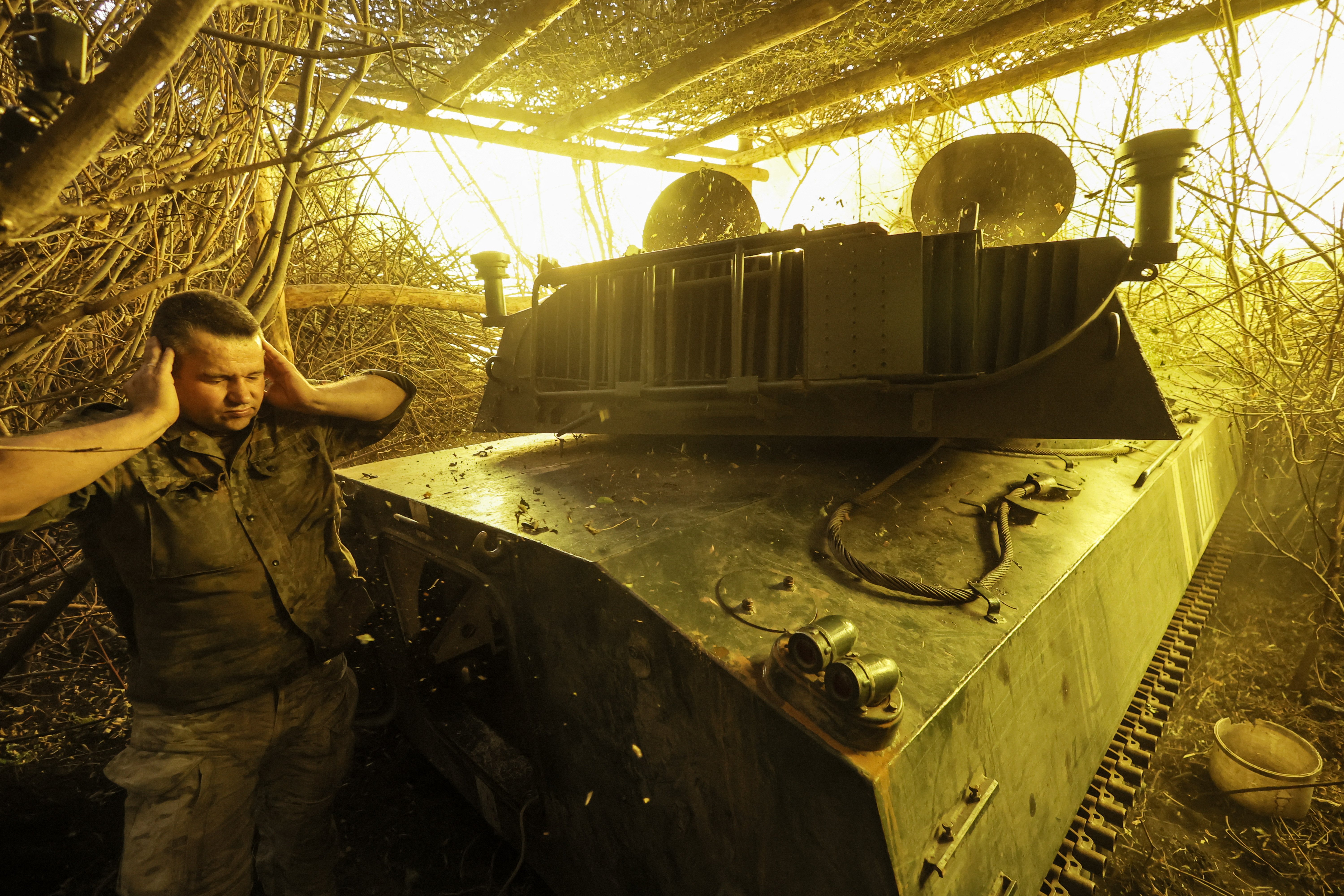
For Petrasiuk, who had his photos published in numerous media outlets before becoming a press officer, escorting reporters is not just a duty but a way to protect witnesses in a war that often erases them.
“We want to support the journalistic community. It's part of our work,” says Petrasiuk, citing many civilian targets from the journalist side, similar to Lallican. “This is just a small story of success this month.”
But he makes clear that for anyone near Kostiantynivka, danger is constant. “Russian forces target any kind of living person they can get,” says Petrasiuk. “It’s confirmed by a big number of civilian targets. Every single man or woman in Kostiantynivka is a possible target. That’s why we are asking them to evacuate.”
Discuss this article:
-9bd5e1532102621f8fb1c4ba871a3171.png)

-c439b7bd9030ecf9d5a4287dc361ba31.jpg "Photo of Katherina Popilnichenko")

-29a1a43aba23f9bb779a1ac8b98d2121.jpeg "Photo of Illia Kabachynskyi")