- Category
- Life in Ukraine
After War Turned Their Fields Into Frontlines, Ukraine’s Farmers Return to Reclaim Them
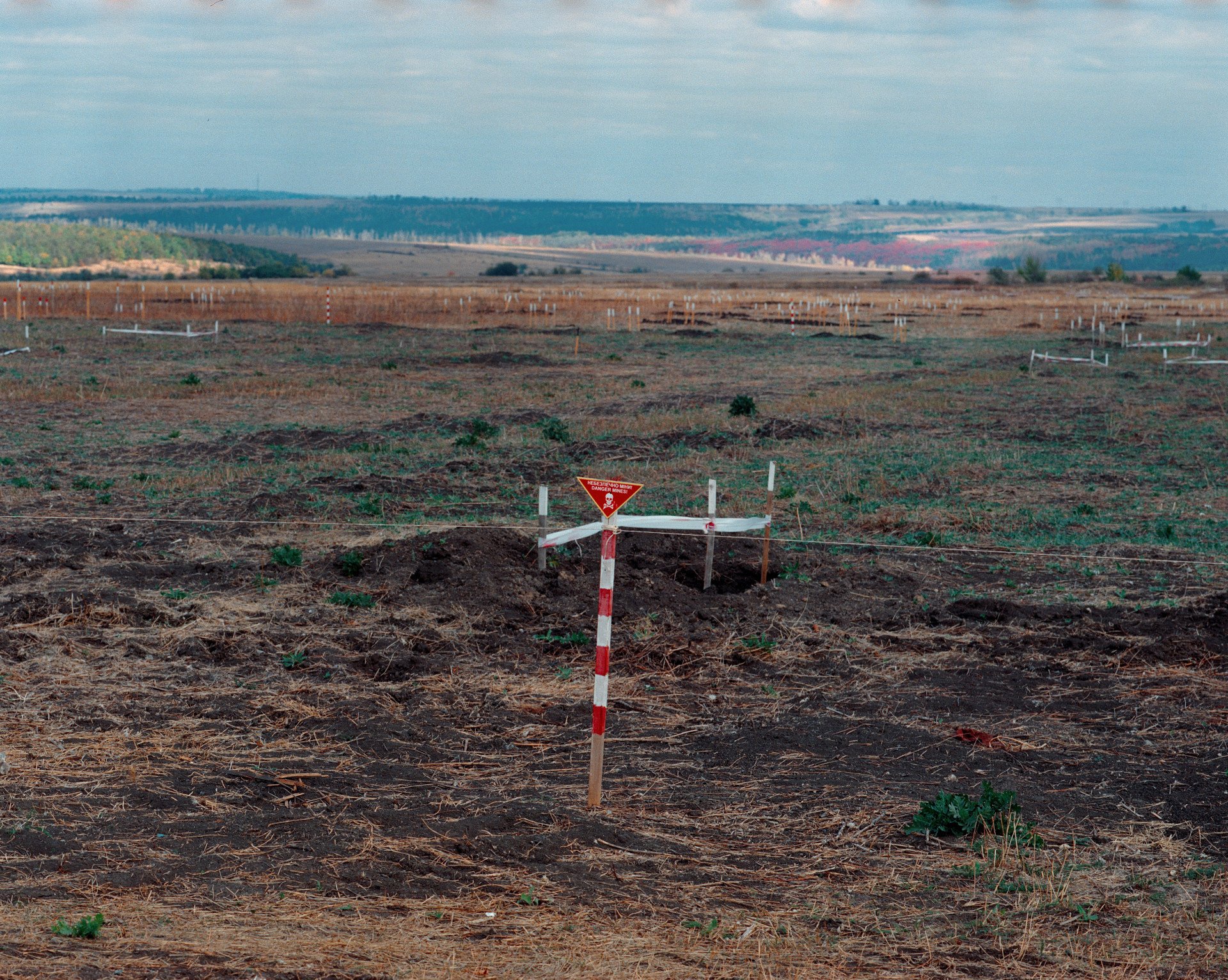
Ukraine’s black soil is fertile and forgiving. It has fed nations, outlasted ideologies, and survived occupation. But even the finest earth has its limits. Across Ukraine, the land that once sustained villages turned into the frontline: mined, scorched, and contaminated. Three years of war have driven people from their homes and forced Ukrainians from their motherland. As farmers return home to mined fields, what was once a livelihood has become an act of endurance and a form of resistance.
 Prefer U24 Media on Google
- Authors


-0666d38c3abb51dc66be9ab82b971e20.jpg "Photo of Josh Olley")

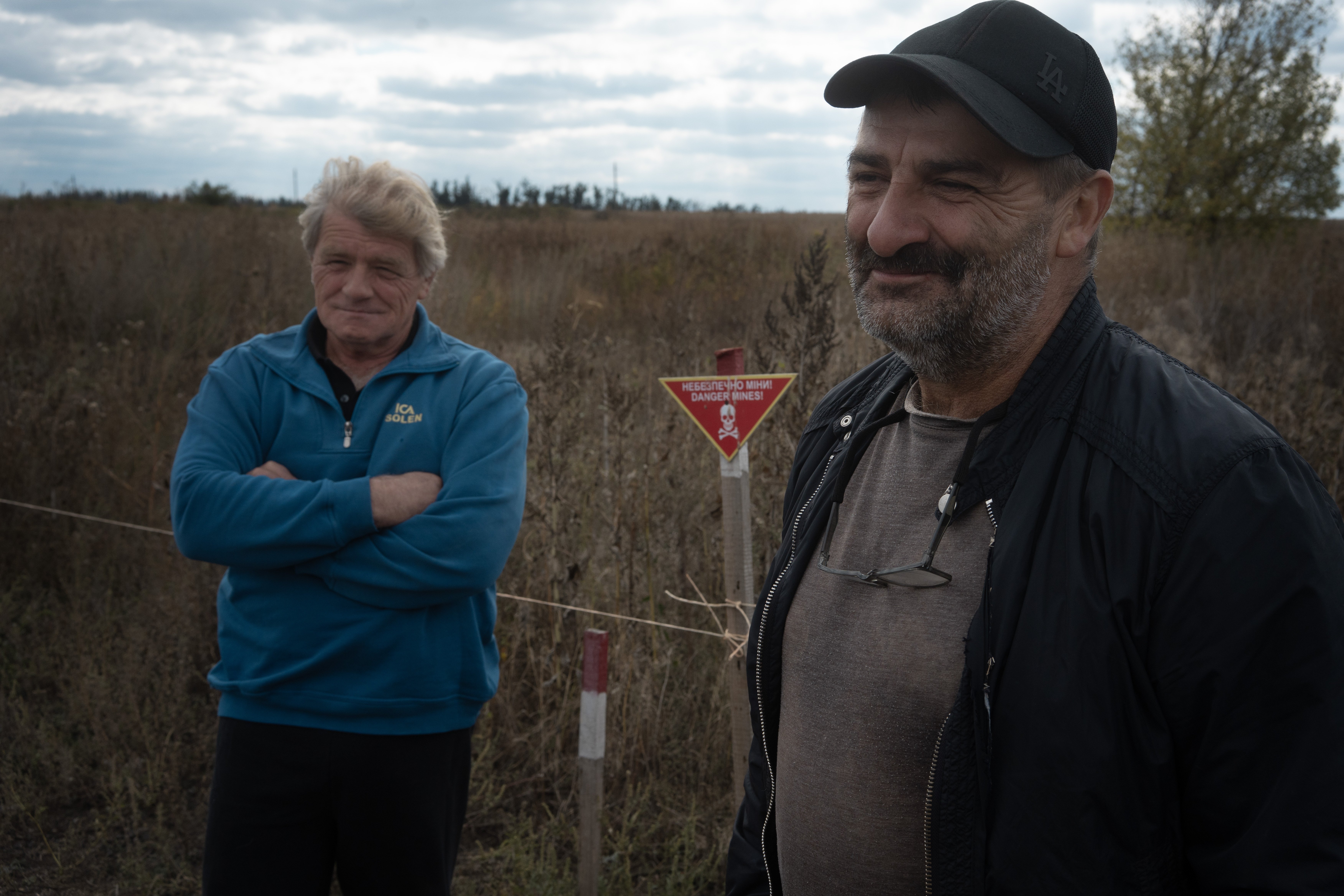
“We are farmers,” says Valerii, overlooking his fields now marred by mines, standing next to his brother, Yurii. “We worked our own land, by ourselves. We didn’t have hired help; we helped each other.” That work—quiet and habitual—was their life, up until the full-scale invasion. Valerii stands talking to me with one hand nonchalantly resting on the distinctive yellow and red triangular sign signifying mines, Yurii next to him, his hands wrapped around a cigarette. “Farming is our job, it’s our life, we were born here,” Valerii gestures to the fields around us, “there is no field we have not worked”.
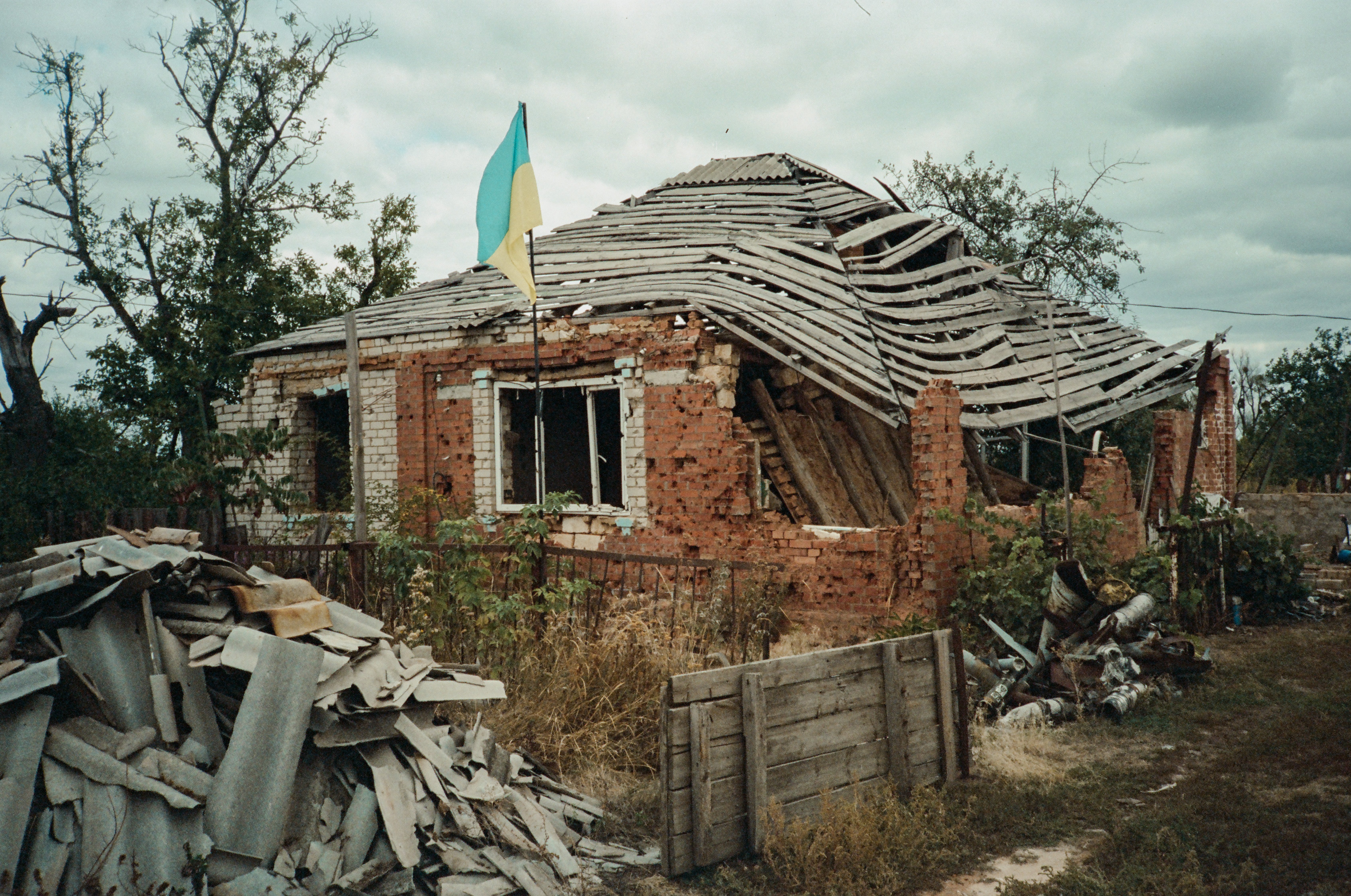
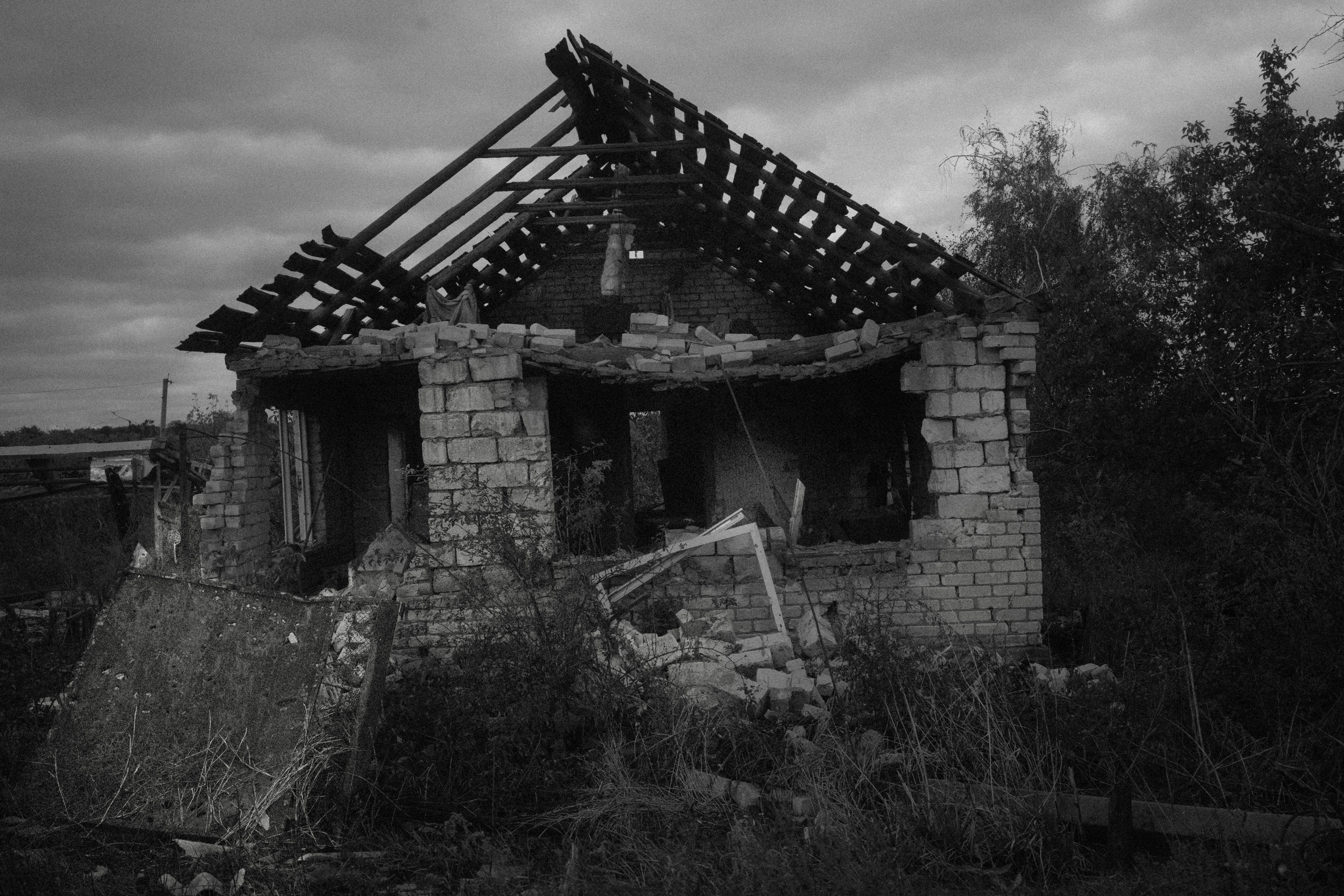
The full-scale invasion started in February 2022, and the two brothers left in March as Russian forces occupied Dovhenke—where their farm is—and the surrounding area. In the autumn of the same year, the brothers returned home, but the house was a pile of bricks, and everything from the television to the combine harvester had been destroyed or stolen. “Only the basement remained as it was before the invasion.”
The brothers got to work, demining the area around their home themselves, making safe pathways, and clearing a patch of land to start growing. With their livelihood taken away and equipment set alight, their biggest challenge was money. “It was hard to find the money to buy what we needed to work with. We have the best soil in Ukraine: the problem is not working the land, it’s finding the money to buy what we need to work it.” Yurii and Valerii built a new tractor by combining the working parts of two destroyed tractors and sold what remained for scrap metal. After some time, the plots were surveyed by the Fondation Suisse de Déminage (FSD) under a UN World Food Program and FAO project, and the FSD is now in the process of clearing three polygons.
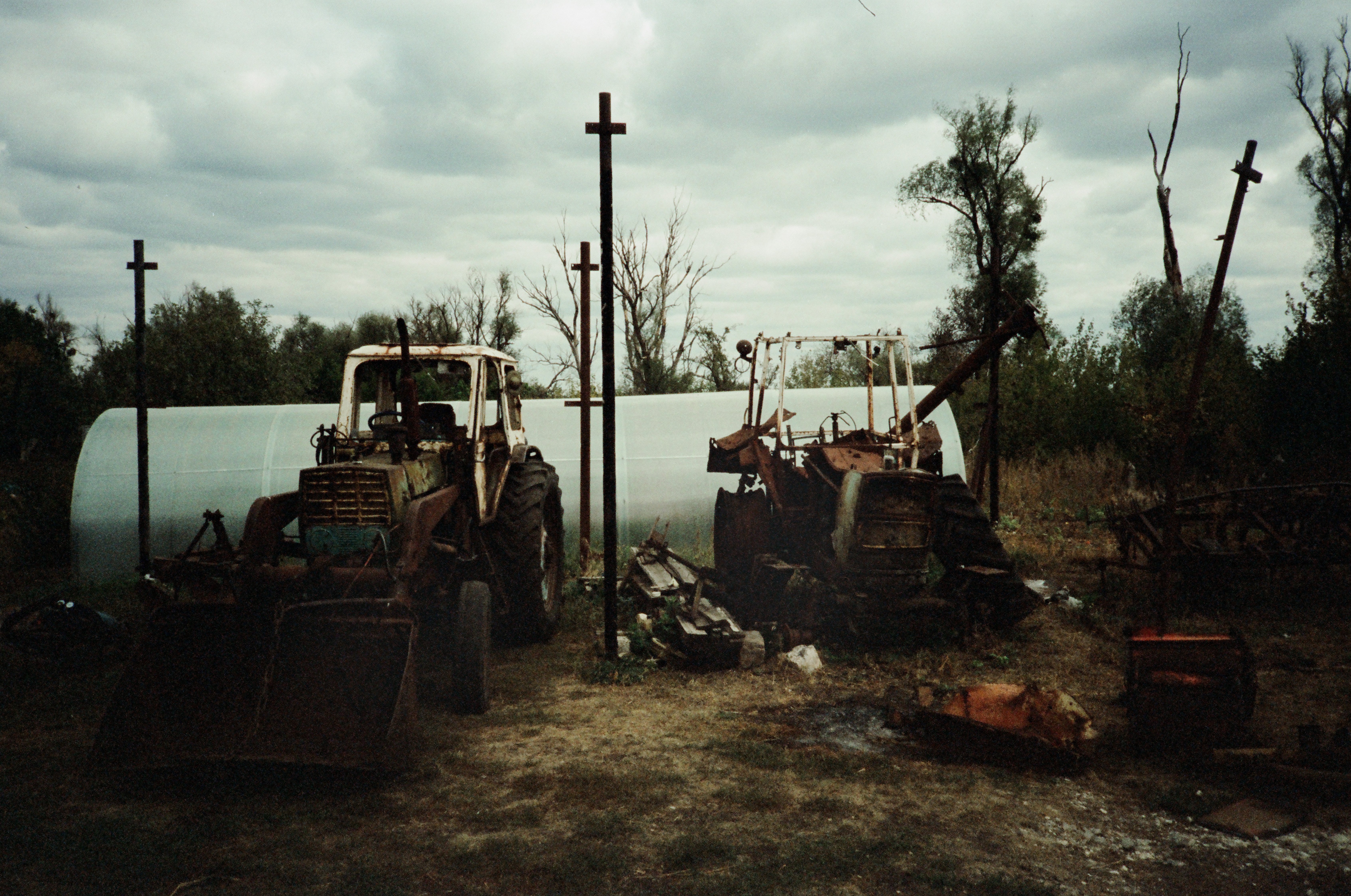
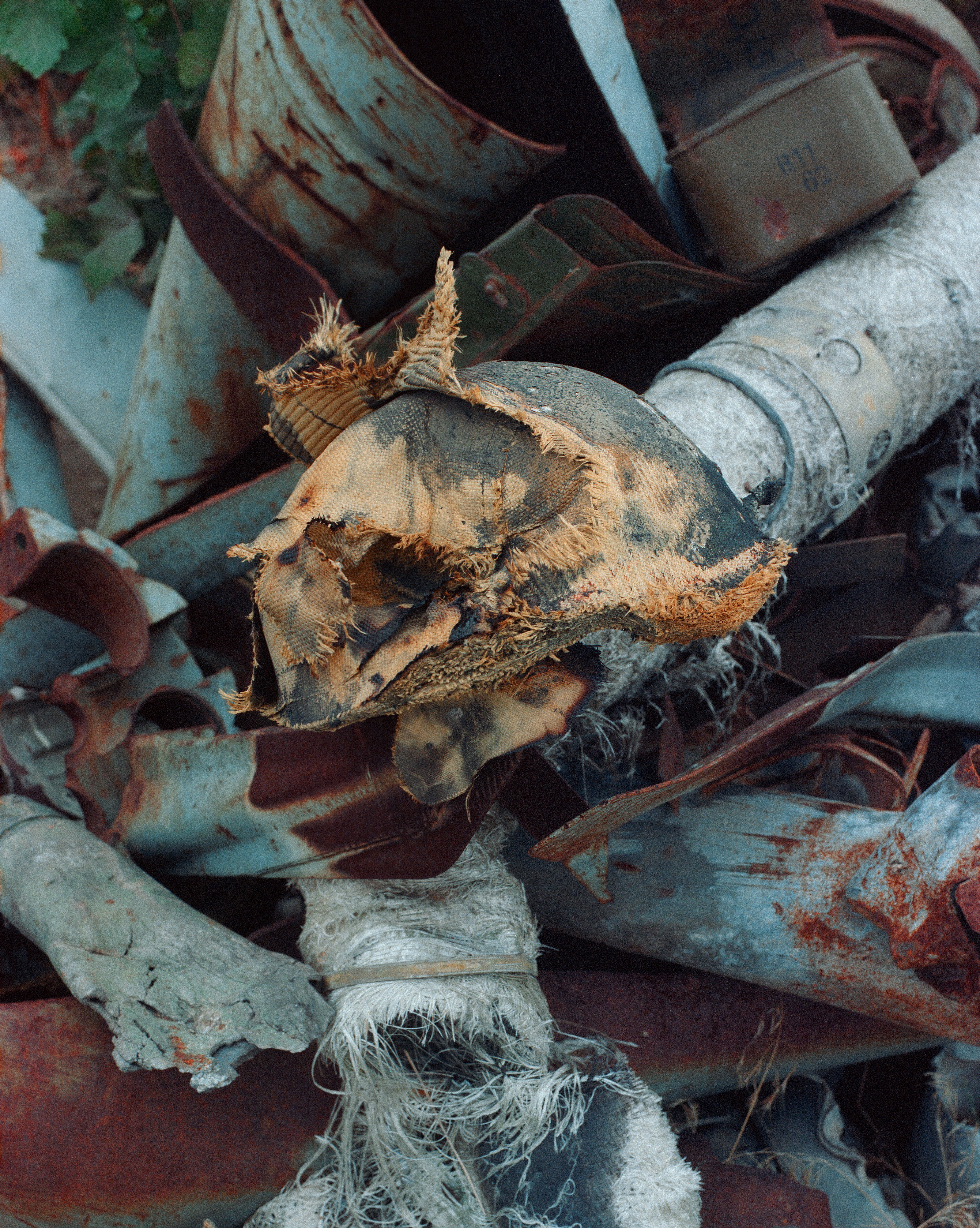
The damage is visible, but the long-term effects are harder to measure. Years of war have contaminated vast areas of agricultural land with unexploded ordnance, debris, and heavy metals. They complain that the land is not what it once was. “The soil is burnt out, it has become like sand, all of the minerals have gone. I noticed with last year’s potato harvest—the soil seems contaminated. I don’t know what they dumped here.” Around the craters left by shells, nothing grows. “Many farmers who had normal soil said that nothing grows in the area around the craters, or if it does, it grows poorly,” Valerii tells us of the lost biodiversity. “When we returned, there were no bees, the cattle got sick, and all of the stray cats had disappeared.”
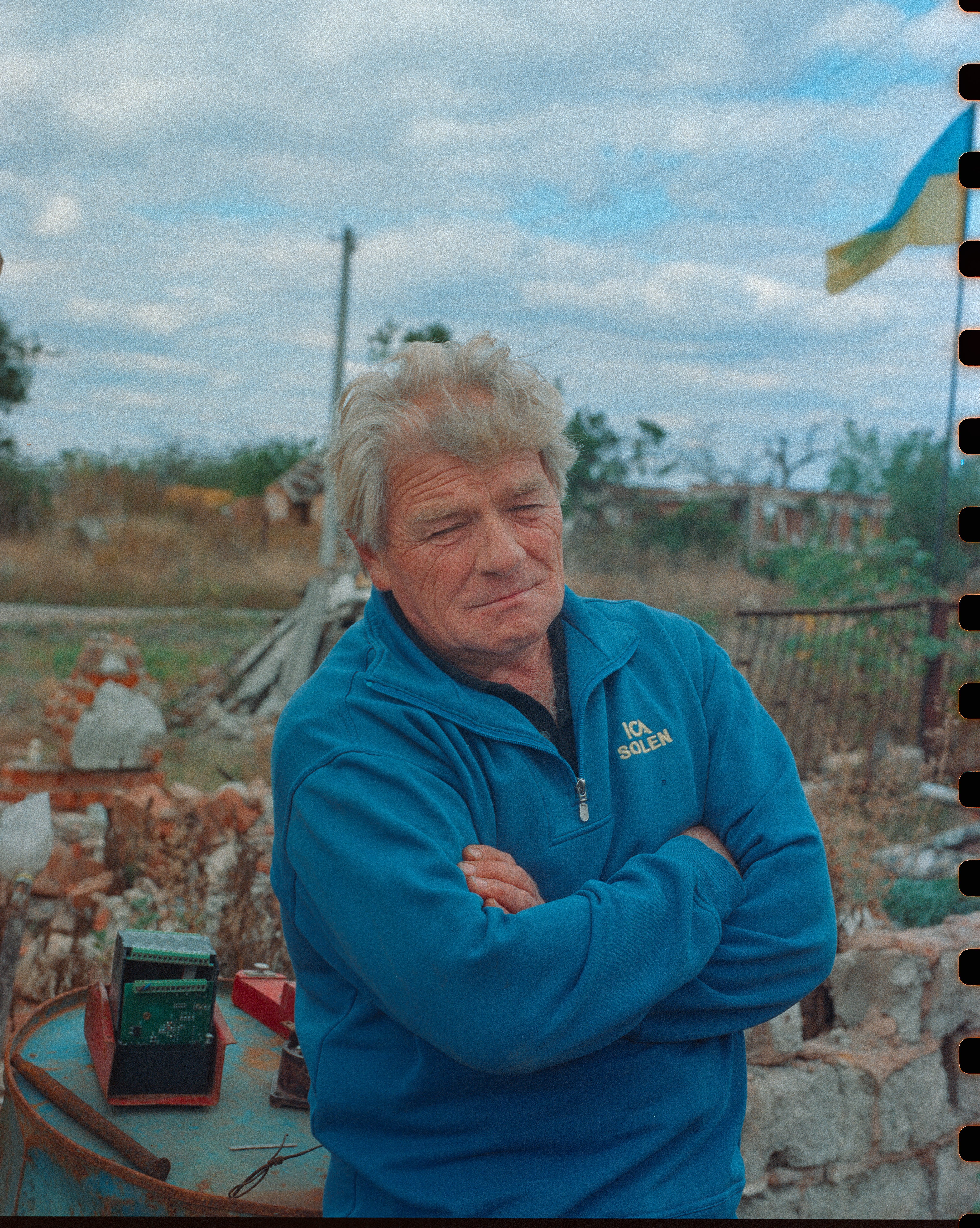
Beside the heap of bricks that was once their home, a Ukrainian flag has been staked into the ground, a gesture of defiance amid the debris. Inside the warmth of their temporary pre-fabricated home just next to it, the brothers tell me that the wind carries the sound of war in their direction some days, a reminder of their uncertain reality. Yet despite everything, the brothers continue to fight for the land they grew up on by doing what they do best: farming.
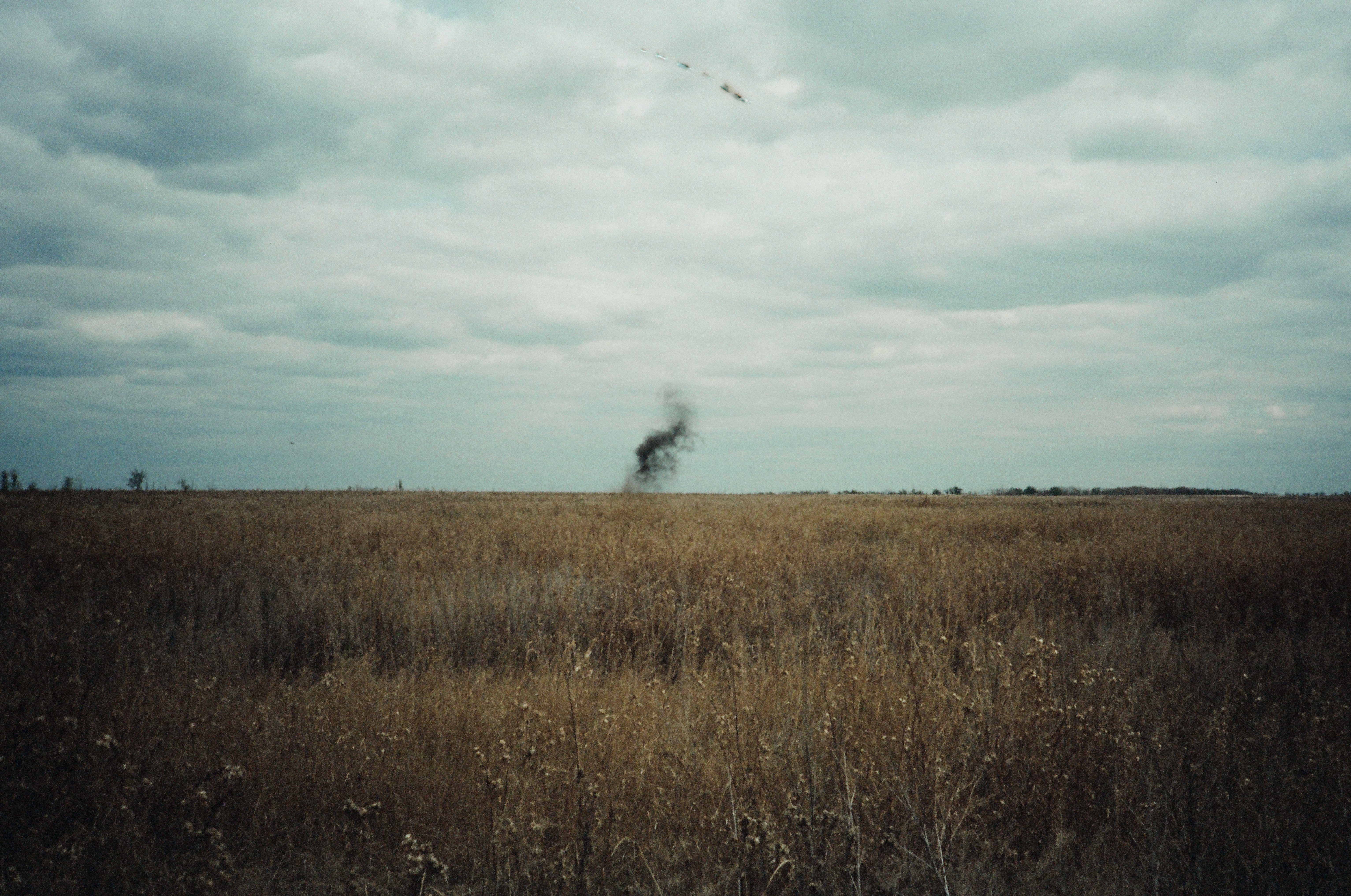
Further south, on another stretch of black soil, I meet Maryna, her husband, and their young daughter on their plot in Andriivka. The fields around us are dotted with men in protective gear, working not to cultivate the land but to clear it. Every so often, there’s a dull thud in the distance—another mine destroyed.
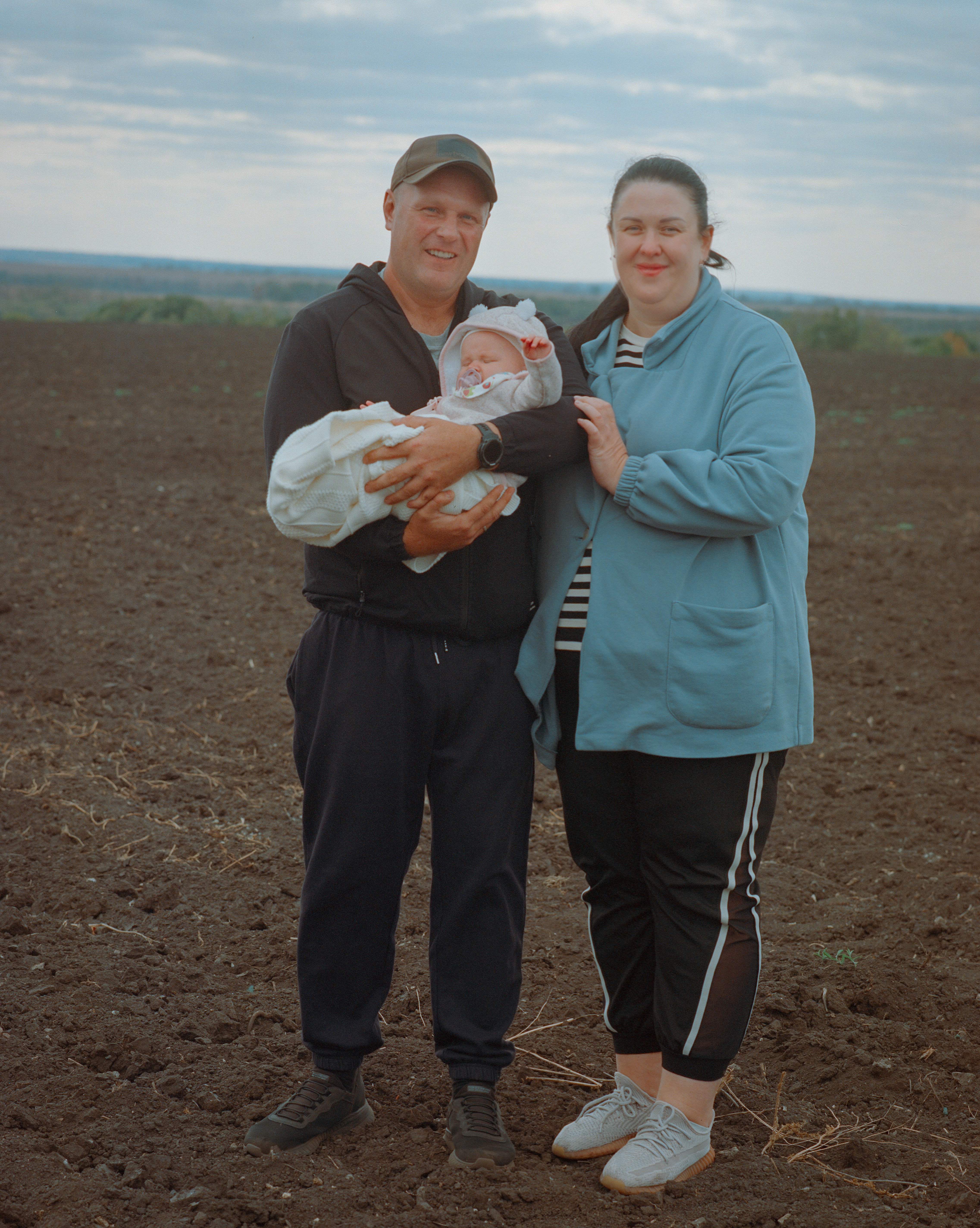
The dark, dense soil beneath our feet has been a part of Maryna’s family since she was a child. “At that time, we were exclusively involved in vegetable growing,” she says. Everything they planted made its way onto the kitchen table. “We grew everything and we used everything; what grows on your own land always tastes better than what you buy.” Whilst warming the feet of her daughter, born in the spring of 2025, Maryna recalls memories of life on the farm. “We don’t have imported equipment; we have ordinary Soviet equipment without navigators, so we bought one. My father, who was 74 at the time, would drive the tractor, and I’m next to him working as a navigator.”
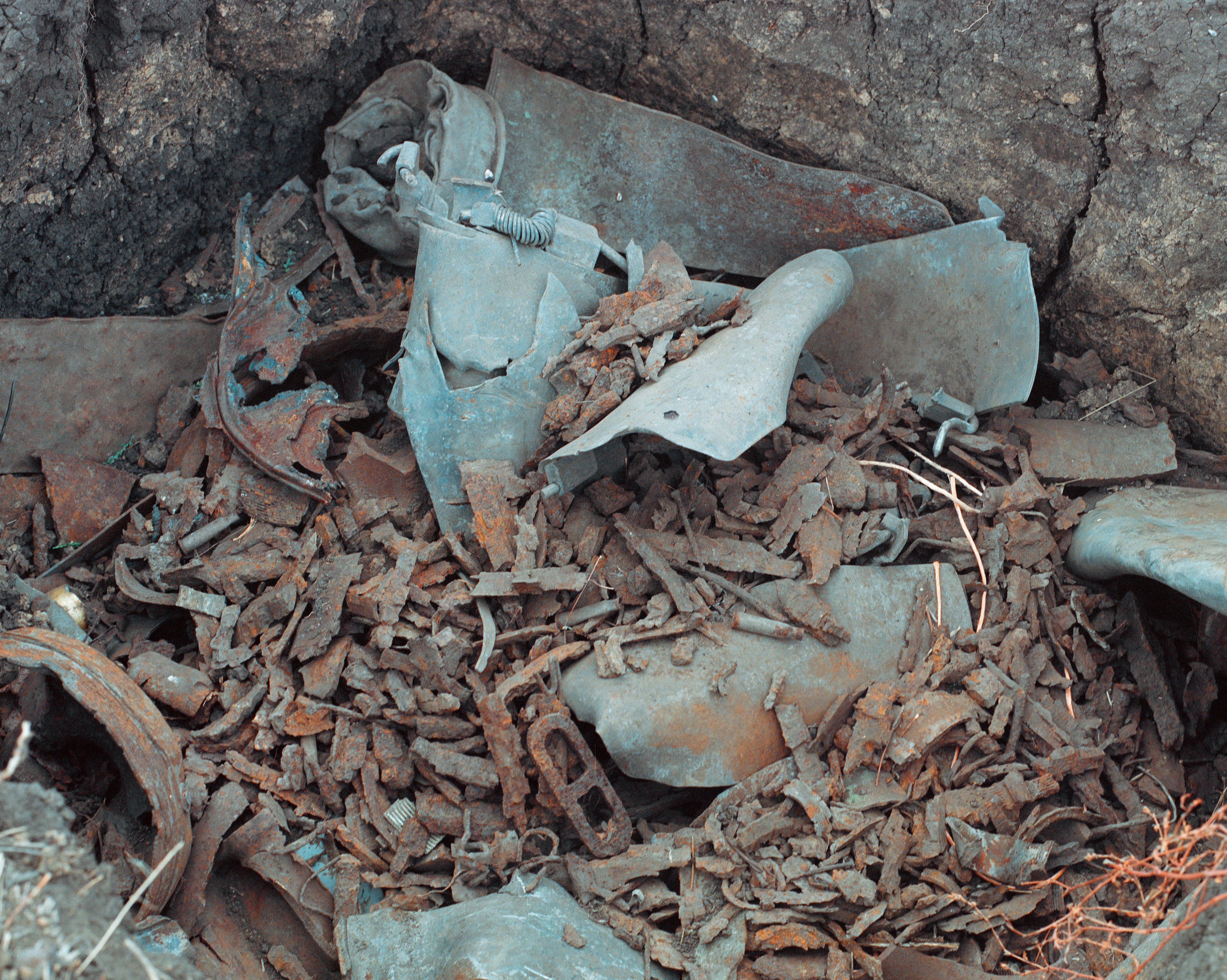
When the full-scale invasion began, the familiar rhythms of farming were fractured abruptly. They were under occupation for four months and eight days. During that time, the village was cut off from power, gas, water, and the rest of Ukraine. And so Maryna and her family left, leaving everything behind apart from the cat. When she talks about returning to her land, her voice brightens with something deeper than optimism. “Even the smell of the earth when you work is a pleasure. Some go to jobs to earn money: you get paid, and go home without any satisfaction. But in the field, there’s a special atmosphere, a special smell: the smell when you come onto the field, the smell of the sunflowers as they ripen, the smell of the fallen leaves. When we came back, the only thing we wanted was to experience that smell again.” Looking out over the landscape, she tells me about the first time she returned: “When the tractor drove in, the smell of the earth and the mown grass brought tears to my eyes.”
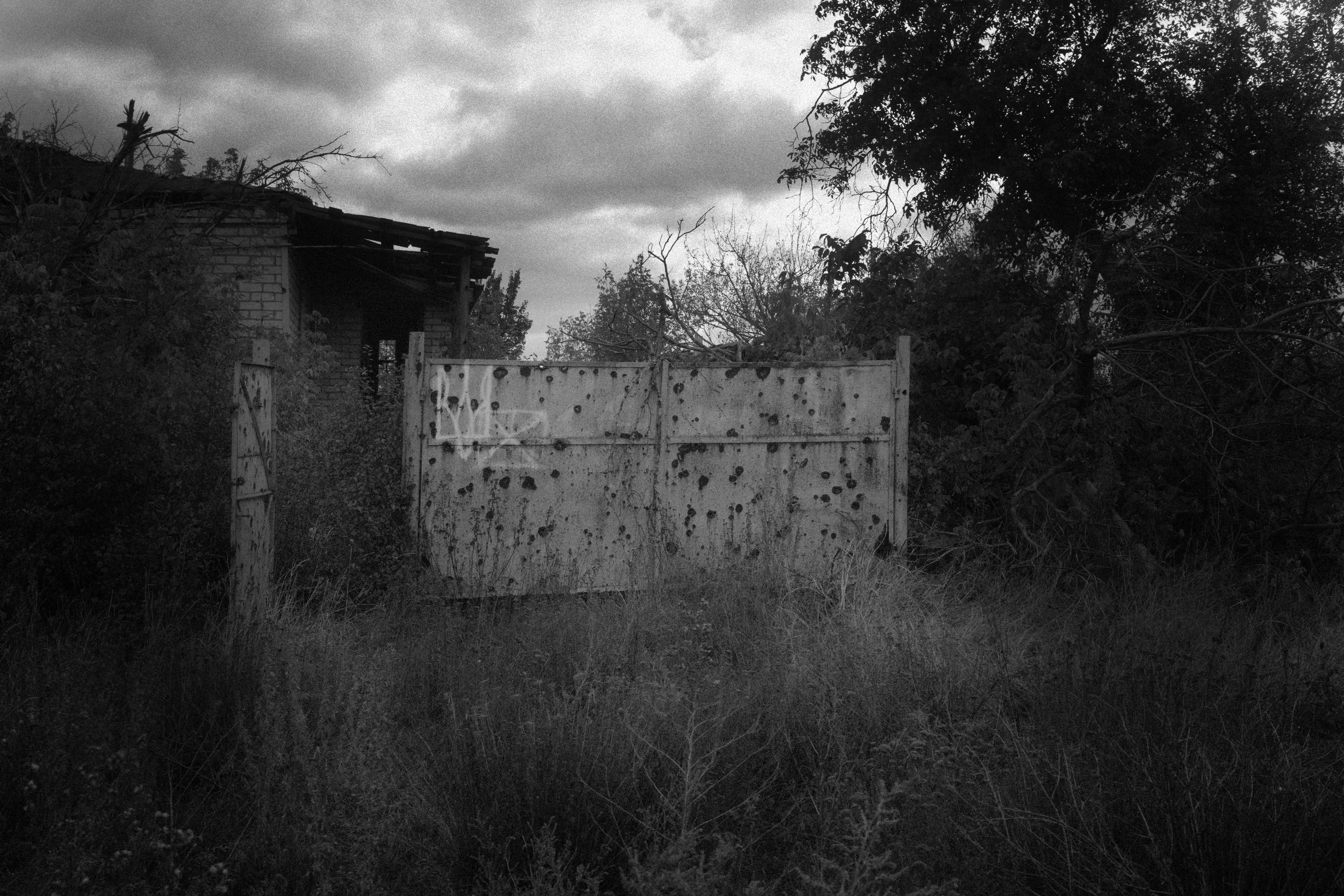
Shortly after their return, the FSD conducted a non-technical survey under the UN WFP and FAO demining project, and the clearing began. The conversation shifts to the state’s role. “The state was eager to allocate funds—it’s incredible. They have already paid 4.5 million hryvnias to clear the land. But you have to understand the other side to it too. They cleared the land for us in July, and we have to pay taxes from July onwards. That means that even if we don’t grow anything, we are still charged; we still have to pay. I believe that those who have just cleared land of mines should be exempt from paying taxes for at least a year to make our work much easier.”
Small farmers have been hit hard by the war. Everything they worked hard to accumulate—equipment, infrastructure, grain reserves—was stolen or damaged, which meant rebuilding from the ground up. When asked what she thinks would help small-scale farmers get back onto the fields, Maryna tells me, “We don’t expect much from the state. The most important thing is that they don’t introduce new taxes.” Taking a deep breath, she adds, “The most important thing is for the war to end, and then we can work.”
Across the country, farmers like Yurii, Valerii, and Maryna are piecing their lives back together. Their stories aren’t only about loss, though there is plenty of it, but about an unbreakable bond with the land. In years to come, Ukraine’s recovery will be measured not only in revived cities and rebuilt infrastructure, but in how much life and productivity return to its soil. One day in the not-so-distant future, the bees will come back, the sunflowers will bloom, and the fertile fields that make up more than half of Ukraine’s territory will once again be worked by farmers.
Discuss this article:

-24deccd511006ba79cfc4d798c6c2ef5.jpeg "Photo of Louis Beaudemont")

-554f0711f15a880af68b2550a739eee4.jpg "Photo of Lucile Brizard")