- Category
- War in Ukraine
Russia Is Running Low on Drone Parts—So It’s Recycling Captured Ukrainian UAVs
 Prefer U24 Media on Google
- Authors


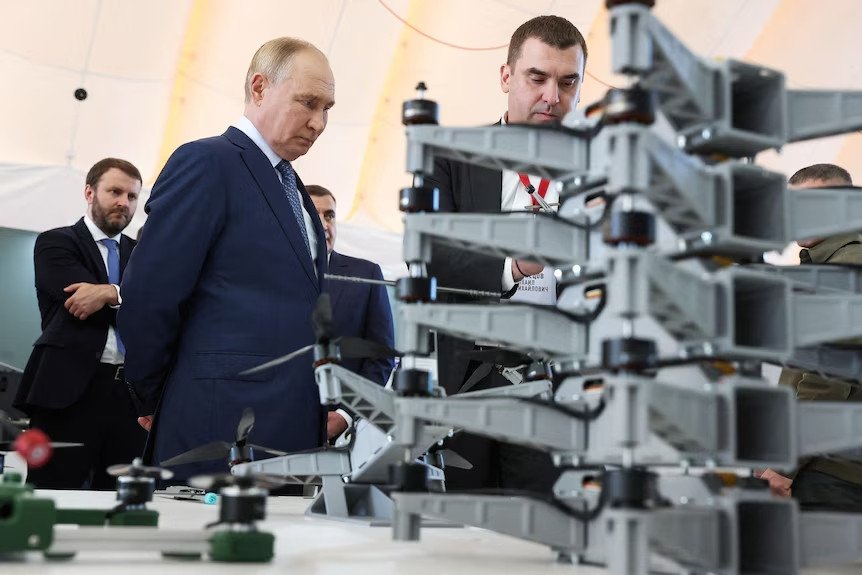
A Russian military laboratory is reportedly assembling hundreds of FPV drones each week using parts stripped from captured Ukrainian UAVs, according to a Russian officer cited by state news agency TASS on May 20.
The laboratory, which is said to operate within Russia’s Battlegroup South in the temporarily occupied Donetsk region, reportedly produces around 300 to 400 combat FPV drones every 15 days.
We bring you stories from the ground. Your support keeps our team in the field.
According to the officer, the workshop recycles components from approximately 1,500 captured Ukrainian drones to maintain that output.
The officer said it usually takes five to six captured Ukrainian UAVs to assemble one operational Russian drone.
“I can say that in 15 days, two weeks, on average, our lab assembles about 300-350, maximum 400 drones. We have to sift through 1,500 Ukrainian drones to assemble 300-400 of ours,” he said.
The recycled components reportedly include printed circuit boards, motors, and other usable parts taken from Ukrainian drones intercepted by Russian anti-UAV systems.
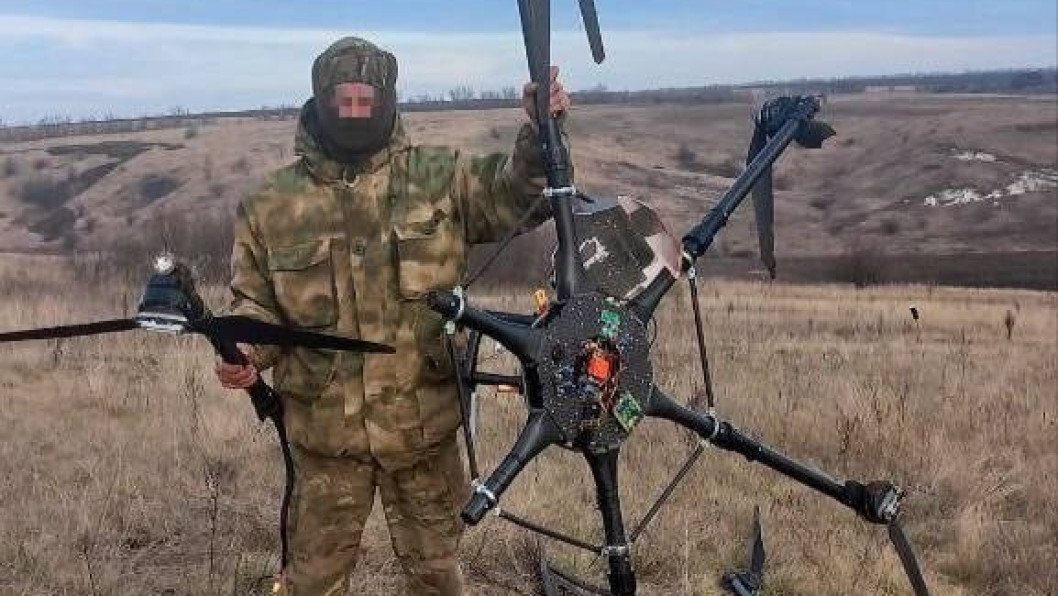
The officer described the facility as operating like a small assembly line. Some specialists disassemble captured drones, others update firmware, while another group assembles finished FPV systems and trains pilots to use them.
Russian forces launch more than 1,000 attack UAVs per week at Ukrainian targets, according to various estimates. If the reported production figures are accurate, recycled Ukrainian drones may be helping cover roughly a quarter of that demand.
Ukraine has repeatedly accused Russia of evading Western sanctions to obtain critical drone components, including motors, microchips, and specialized materials used to produce propellers.
Russian forces have also reportedly deployed field 3D printers near the battlefield to manufacture certain drone parts locally when normal logistics channels are too slow or unreliable.
Earlier, Russia acknowledged that it is lagging behind Ukraine in the field of heavy unmanned aerial vehicles, a gap that Moscow now says it is working to close.
Discuss this article: