- Category
- War in Ukraine
Spanish-Speaking Fighters in Ukraine: Latin America and Spain Backing Kyiv on the Front Lines
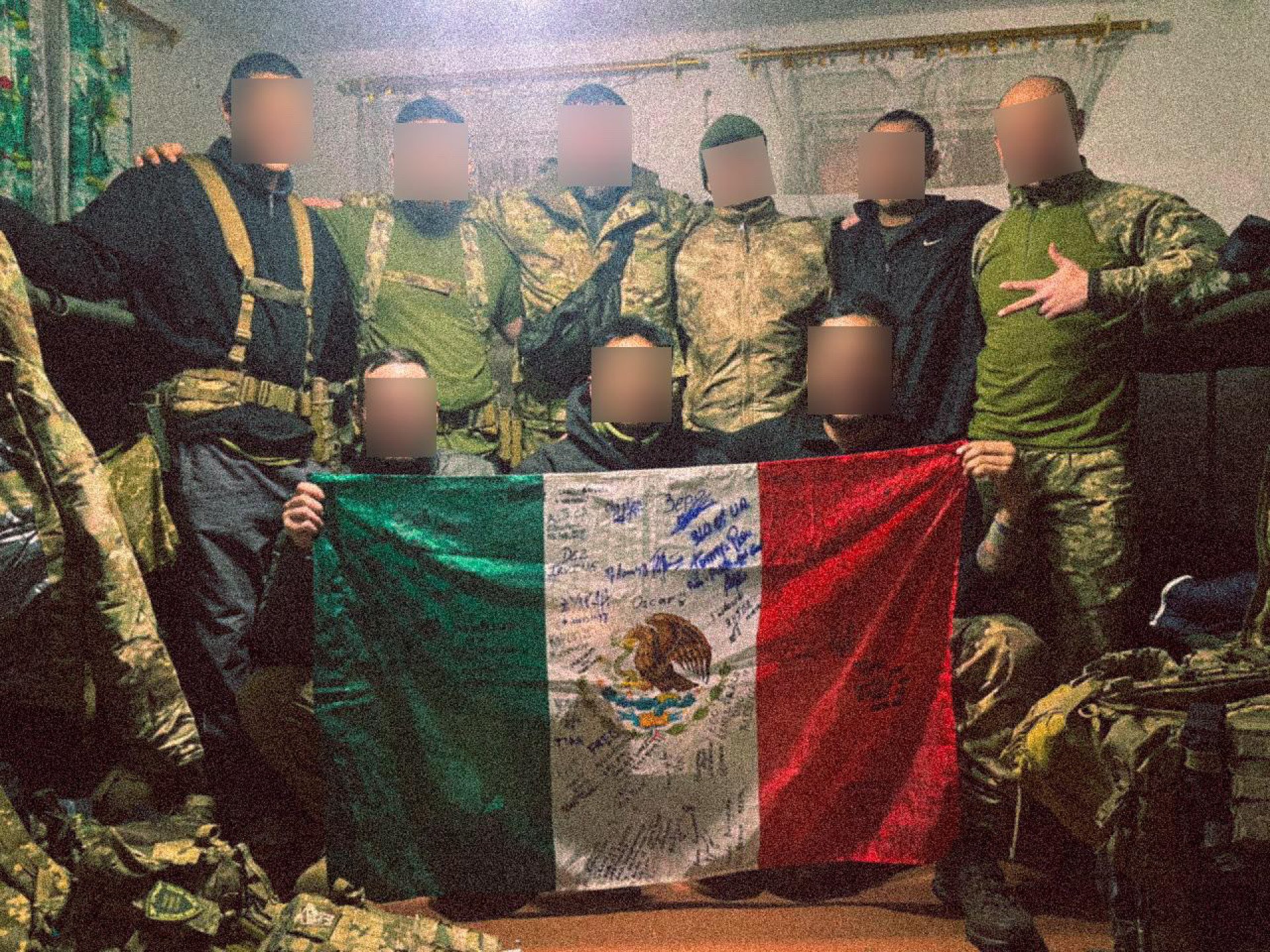
During the first days of the full-scale invasion in 2022, the International Legion of Ukraine was associated with volunteers from the United States, the United Kingdom, and Poland. Today, that reality has changed: the most visible foreign presence on the Ukrainian front is predominantly Spanish-speaking, especially from Latin America.
 Prefer U24 Media on Google
- Authors


Colombians top the list by a wide margin. A UNITED24 Media report from February 2026 put the figure at approximately 7,000 Colombians serving in various Ukrainian formations, making them the largest national group of foreign volunteers in the country. They have joined the International Legion, mechanized brigades, reconnaissance units, and drone teams, and their experience fighting guerrillas, paramilitaries, and cartels in their home country translates remarkably well to the small-unit warfare being waged in Donbas.
We bring you stories from the ground. Your support keeps our team in the field.
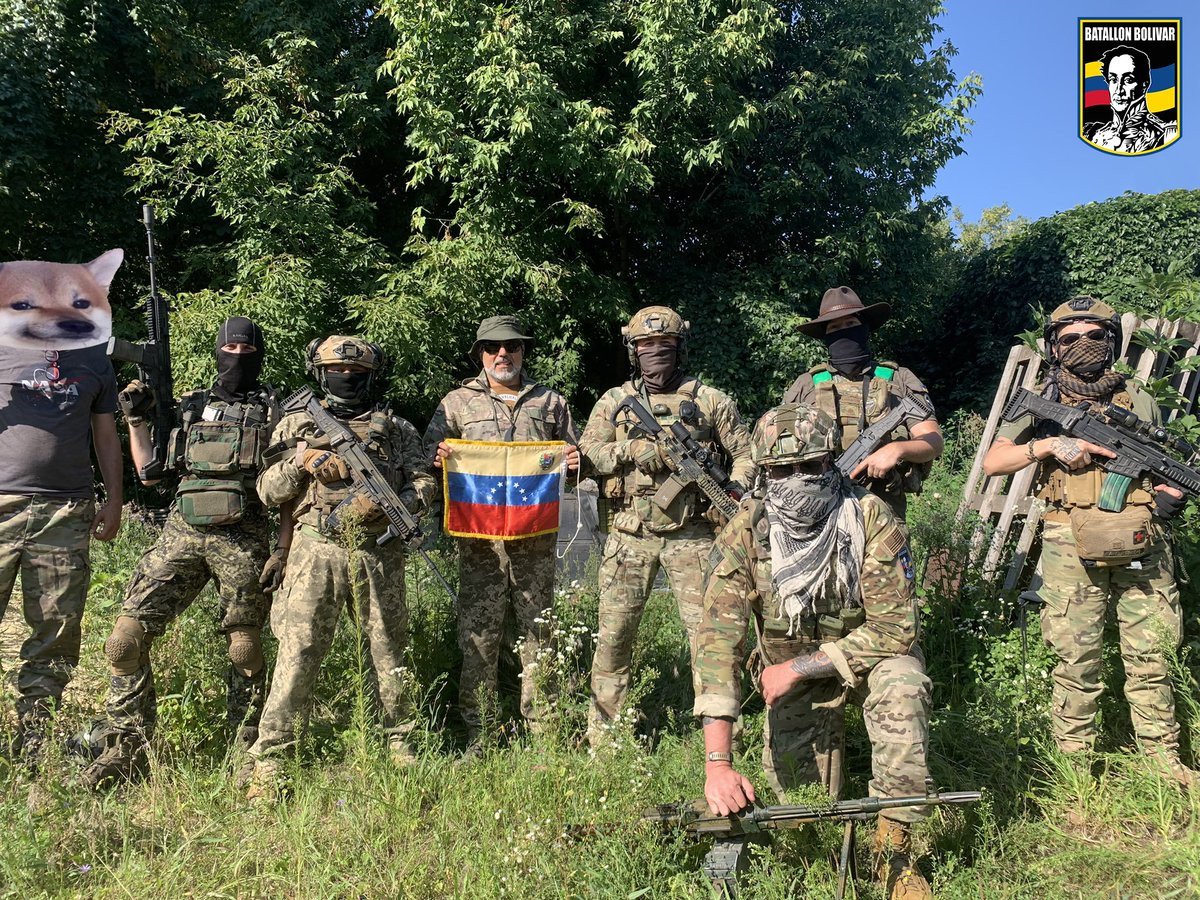
Alongside them is a smaller but politically significant unit: the Bolívar Battalion, formally established in August 2023 and named after Simón Bolívar. It is commanded by a Venezuelan, José David Chaparro Martínez, and comprises volunteers from Venezuela, Colombia, Ecuador, Argentina, Brazil, Spain, and Peru, along with some Ukrainians, Americans, and Australians. Its stated mission is not only combat but also counter-narrative. As the battalion itself describes it, part of its work involves refuting Russian propaganda in Spanish, Portuguese, Italian, French, and American English media outlets, where such narratives have found unusually fertile ground. Spain has also sent its own volunteers, though their numbers are in the dozens rather than the thousands.
Not Mercenaries: Debunking Russian State Media Narratives About Foreign Fighters in Ukraine
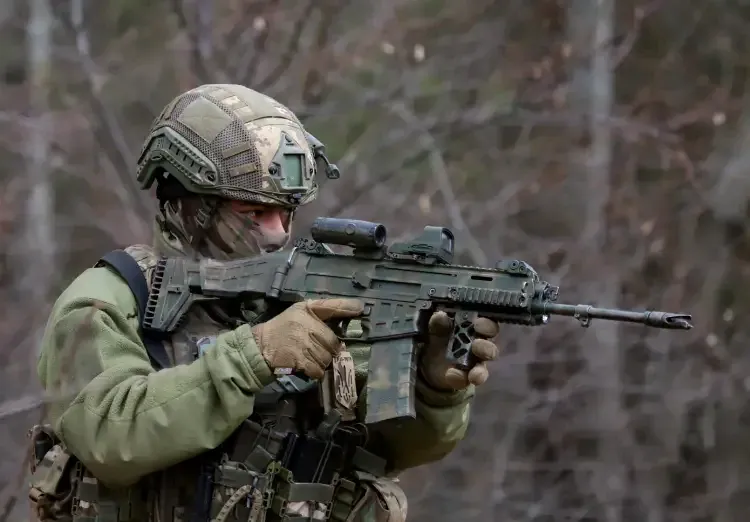
This distinction deserves to be repeated, because the Russian state media works very hard to erase it. Foreign volunteers in the Legion are not mercenaries. They are legally serving members of the Armed Forces of Ukraine, enlisted under a formal contract, with ranks, pay scales, and the same rights and duties as any Ukrainian soldier in the same position. They are subject to Ukrainian military law. They wear Ukrainian uniforms. They answer to Ukrainian command. Ukraine’s Ministry of Defense has explicitly pointed out exactly this: foreigners who enter through the Legion become official members of the Ukrainian service, not contractors.
That distinction matters. Mercenaries fight for whoever pays them; legionnaires fight for a country that has formally enlisted them, under a legal framework that the Ukrainian parliament has repeatedly updated to strengthen it. The comparison some commentators have drawn with the International Brigades that went to Spain in 1936 to fight Francisco Franco is imperfect, but the underlying impulse is the same. People who are not obligated to volunteer do so anyway, because they believe the outcome matters beyond the borders of the country being invaded.
How Ukraine Is Securing and Monitoring Its Entry Points
The Legion has had to contend with real infiltration attempts, and it's worth being honest about both the problem and the response. In the summer of 2025, Mexico's National Intelligence Center sent a confidential memo to the Security Service of Ukraine (SBU), warning that some Mexican volunteers had enlisted not to defend Ukraine, but to acquire first-person view drone skills that could be taken back to the cartels. The concern quickly escalated. A joint SBU-HUR investigation extended to Colombian nationals and ended up identifying specific cases: a Mexican volunteer operating under the alias Eagle 7 who had enlisted in March 2024 with a false Salvadoran identity, and at least three former FARC members who entered with forged Panamanian and Venezuelan documents.
The response has been serious. Ukrainian authorities strengthened their cooperation with Interpol and the US Drug Enforcement Administration (DEA) to cross-reference volunteer data with international criminal records. Polish, Bulgarian, and other European authorities launched parallel investigations into Latin American private military companies that had been funneling recruits into the Legion, discovering that several had links to arms trafficking, human trafficking, and document forgery. The SBU created a unit dedicated to monitoring what one official described to Intelligence Online as exportable military knowledge: not just drone tactics, but the broader range of skills that criminals might seek to acquire through Ukrainian training. According to Ukraine’s Ministry of Defense, selection procedures for foreign recruits have been reviewed, with particular scrutiny of applicants from regions with a significant organized crime presence.
What Ukraine Really Offers to Foreign Volunteers Joining the Fight
The salary follows the standard Ukrainian military pay scale and is deposited in hryvnias into a local bank account. The Legion's own figures indicate approximately $550 per month for rear-echelon duty, around $1,100 per month for duty in a classified hazardous area, and up to about $4,800 per month during an active combat deployment.
Wounded soldiers receive free medical care through the Ukrainian military healthcare system, in addition to disability compensation adjusted to the severity of the injury. The families of fallen soldiers receive a one-time payment of 15 million hryvnias, approximately $365,000 at the current exchange rate. If a soldier is declared missing in action, their salary continues to be paid to their family until an official death certificate is issued.
The contract lasts three years and is automatically renewed, but foreign volunteers can terminate it on their own initiative after six months, provided they are not on active combat deployment. The Legion does not handle visas or flights. Getting to Ukraine is the volunteer's responsibility.
Regarding citizenship, the landscape has changed significantly. The Ukrainian parliament passed Law 9585 in August 2024, which establishes a phased pathway: first a temporary residence permit, then an immigration permit, and finally, Ukrainian citizenship. A valid military contract is sufficient legal grounds for being in Ukraine, so a separate residence permit is not required during service. After approximately three years of service, a volunteer becomes eligible for an immigration permit, which is a prerequisite for naturalization, rather than citizenship itself. President Zelenskyy has presented this as a matter of fairness. One important condition remains: Ukraine does not currently recognize dual nationality, meaning that becoming Ukrainian requires renouncing one's original nationality.
How Spanish-Speaking Volunteers Can Contribute Beyond Combat in Ukraine
The Legion makes it clear that its greatest current need is for infantry, specifically riflemen. That's where most volunteers end up. It also makes it clear that many specialized positions, including those in the Ukrainian Air Force, air defense, logistics, most medical specialties other than combat medic, and legal, administrative, or surgical roles, require fluency in Ukrainian, effectively closing them off to most newly arrived Spanish speakers. What does remain available is relevant, and probably undervalued:
Combat medics. Of all the medical positions, this is the only one that explicitly does not require knowledge of Ukrainian. Paramedics, nurses, former military doctors, and civilian emergency personnel from Latin America and Spain are exactly the type of candidates the Legion has been trying to attract.
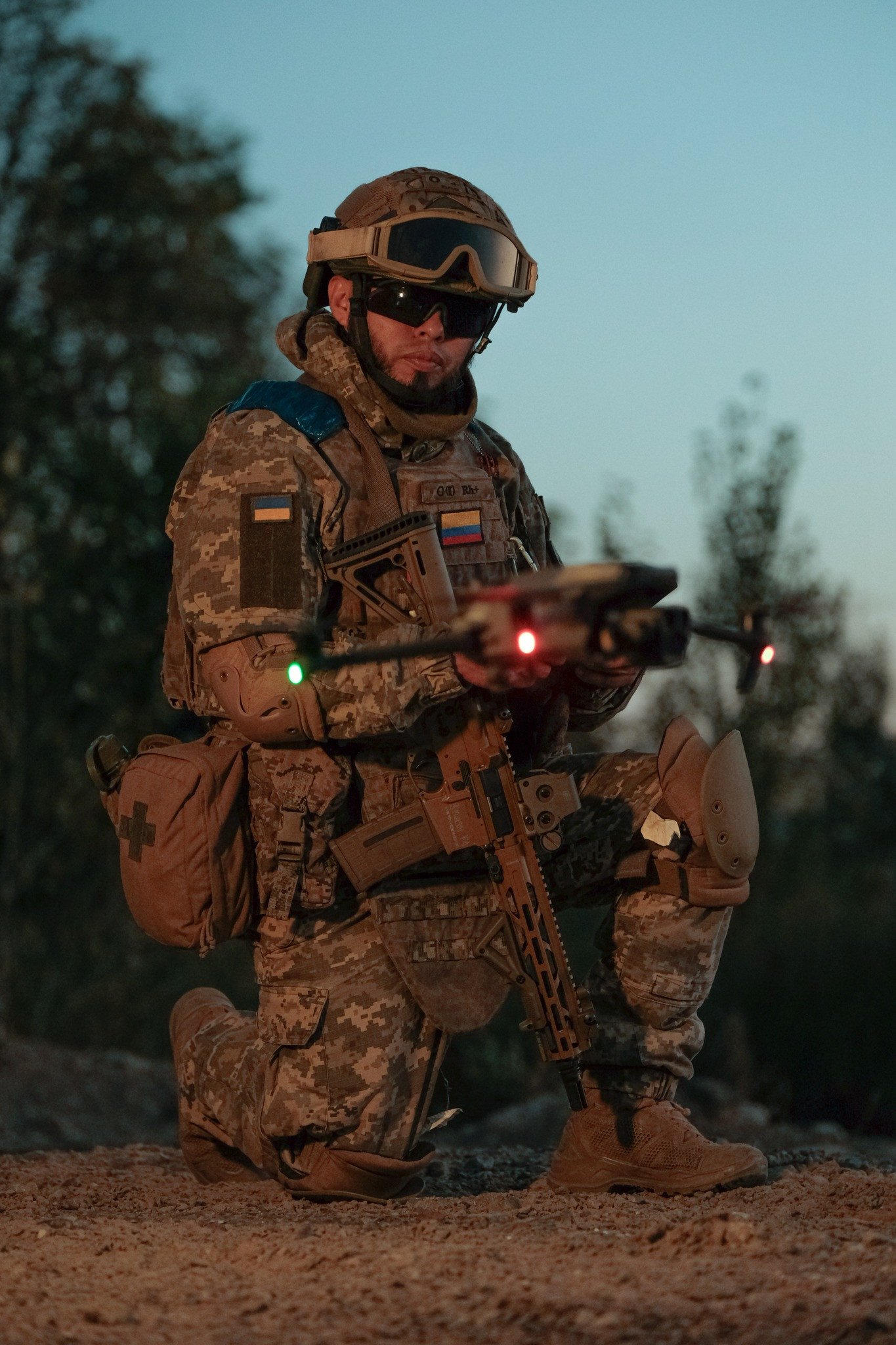
Drone operators. First-person view (FPV) drone warfare has become a central element of how this war is actually being fought, and Colombian volunteers, in particular, have been mentioned in reconnaissance and drone operation roles. Prior experience helps, but it is not essential. The training is comprehensive.
Translators and interpreters. This is perhaps the most overlooked and poorly staffed position within the Legion's structure. A report by the Kyiv Independent in late 2025 described how Legion units have had to incorporate English and Spanish translators so that Spanish-speaking volunteers can receive comprehensive instructions before each mission. A Foreign Legion representative quoted by the information portal Visit Ukraine separately acknowledged that the number of Ukrainian officers who speak Spanish, French, or Portuguese is very limited, and that this bottleneck directly restricts how many volunteers from those regions the Legion can absorb.
A volunteer who is fluent in Spanish and English or Ukrainian, especially with military vocabulary, has experience in radio protocol, and remains calm in high-pressure environments, is truly valuable. The position encompasses on-the-ground interpretation during briefings and operations, translation at the recruitment and training levels, communications between Latin American volunteers and the Ukrainian command, and the production of Spanish-language materials for the Bolívar Battalion's counter-narrative mission. All applicants must also pass the infantry qualification.
Firefighters, rescue specialists, and law enforcement. The Legion's own recruitment materials explicitly mention these profiles as valid alternatives to military experience. Given the large number of former military personnel, police officers, and security professionals in Latin America and Spain, this represents a significant pool of talent.
Specialized technicians, IT specialists, engineers, and medics. Volunteers are accepted through alternative application channels and assigned to rear-guard support roles. The assignment depends on the needs of the receiving unit on the day the volunteer arrives.
Anti-disinformation. The Bolívar Battalion has made this an explicit part of its mission, and it is a position in which a Spanish-speaking volunteer with experience in journalism, communication or media can contribute without being on the front line every day.
An Honest Assessment: Realities of Joining Ukraine’s War Effort
The participation of foreign nationals in the Ukrainian army is, on the whole, one of the most interesting political aspects of the war. Countries whose governments are officially neutral, including Colombia, Brazil, Mexico, and Argentina, have nonetheless allowed thousands of their citizens to fight. Spain, whose government has been a staunch supporter of Ukraine, has sent a few dozen. The volunteers who go don't do it for the money. They don't do it for citizenship, which is years away and requires giving up the passport they already have. They don't do it for the thrill, because any excitement a first-person drone strike might offer dissipates about two seconds after the first one hits you.
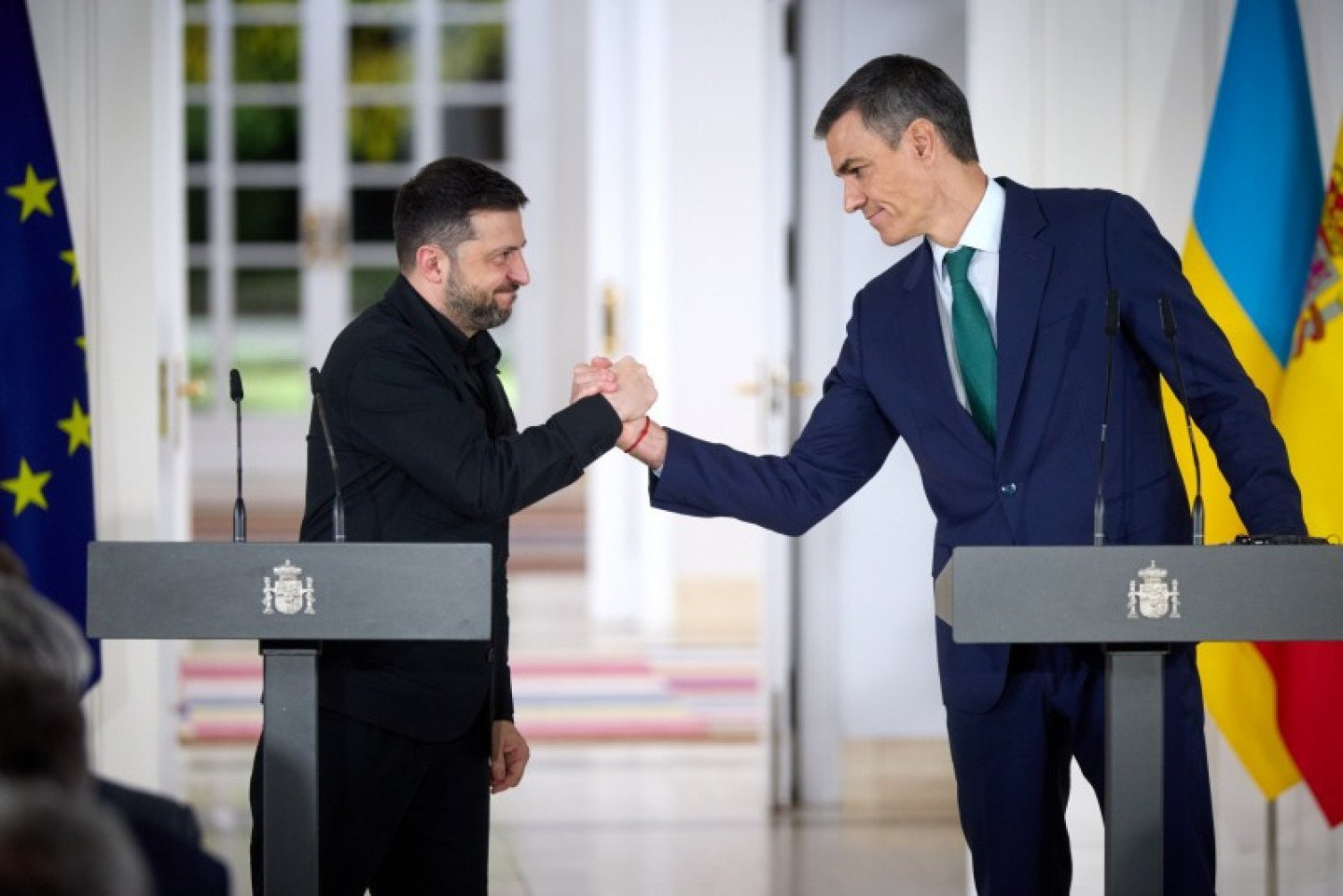
They come because they believe something about this war that isn't often spoken aloud in their home countries. Any honest account of what Ukraine is and how it is defending itself must include them.
And for anyone reading this from a Spanish-speaking country wondering if their skills would be useful even without being an infantryman: yes, certainly. The Legion's public line is that its greatest need is riflemen. The quieter truth is that it also urgently needs translators, medics, drone operators, communications personnel, instructors, and anyone who can bridge the language gap between the Ukrainian command and the Latin American volunteers already on the ground. That gap, more than any shortage of willing fighters, is what most limits how much good the Legion's foreign contingent can actually do.
Discuss this article:


-c439b7bd9030ecf9d5a4287dc361ba31.jpg "Photo of Katherina Popilnichenko")