- Category
- Life in Ukraine
Foreigners Who Fought for Ukraine May Finally Get the Long-Awaited Dual Citizenship
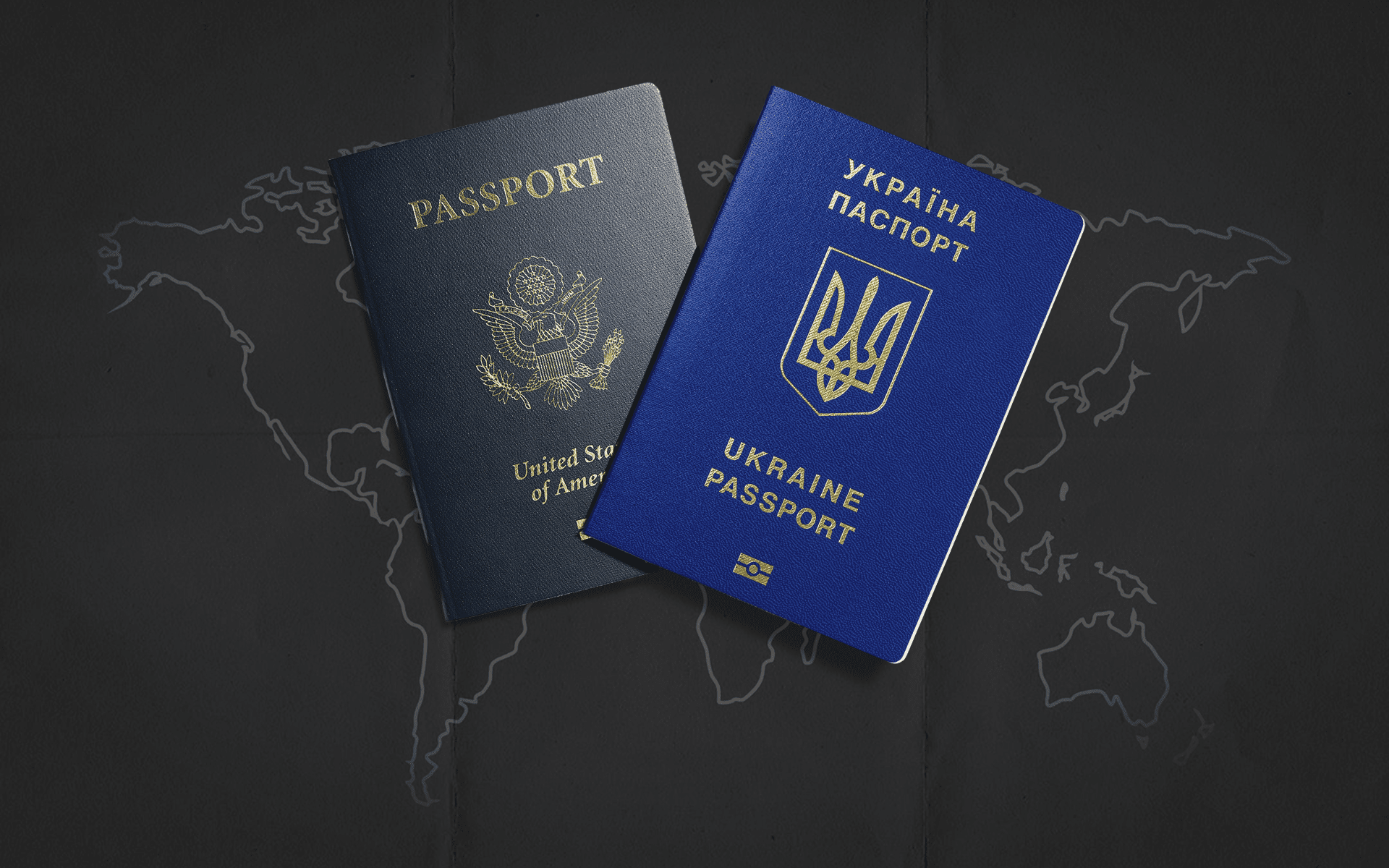
In June 2025, Ukraine passed its first-ever law to legalize multiple citizenships. This move could finally offer foreign fighters like Devon and James Fensom a legal path to stay in the country they risked their lives to defend from the Russian invasion.
 Prefer U24 Media on Google
- Authors


When Ukrainian President Volodymyr Zelenskyy took office in 2019, dual or multiple citizenship was already part of his political vision. The initiative was originally aimed at reconnecting with Ukraine’s historic diaspora, especially in countries like Canada and the United States.
After Russia launched its full-scale invasion in 2022, the focus expanded to include another group—displaced Ukrainian citizens who had fled the war.
“The first priority of a new law is to ensure that all Ukrainians currently outside the country, around ten million people, can retain their citizenship, along with their children born abroad,” told us Petro Zalizniak, an attorney and managing partner at Zalizniak & Associates, a Ukraine-based immigration consulting firm.
I have promptly signed the documents passed by the Verkhovna Rada of Ukraine — the law on multiple citizenship, the ratification of the Agreement on the Establishment of the Special Tribunal for the Crime of Russian Aggression Against Ukraine, and Ukraine’s withdrawal from the…
— Volodymyr Zelenskyy / Володимир Зеленський (@ZelenskyyUa) July 15, 2025
But as the war stretches into its fourth year, another category is becoming increasingly visible—foreigners who came to fight for Ukraine and stayed. Some arrived with no plan beyond the next battle. Now, they are trying to build lives in the country they defended.
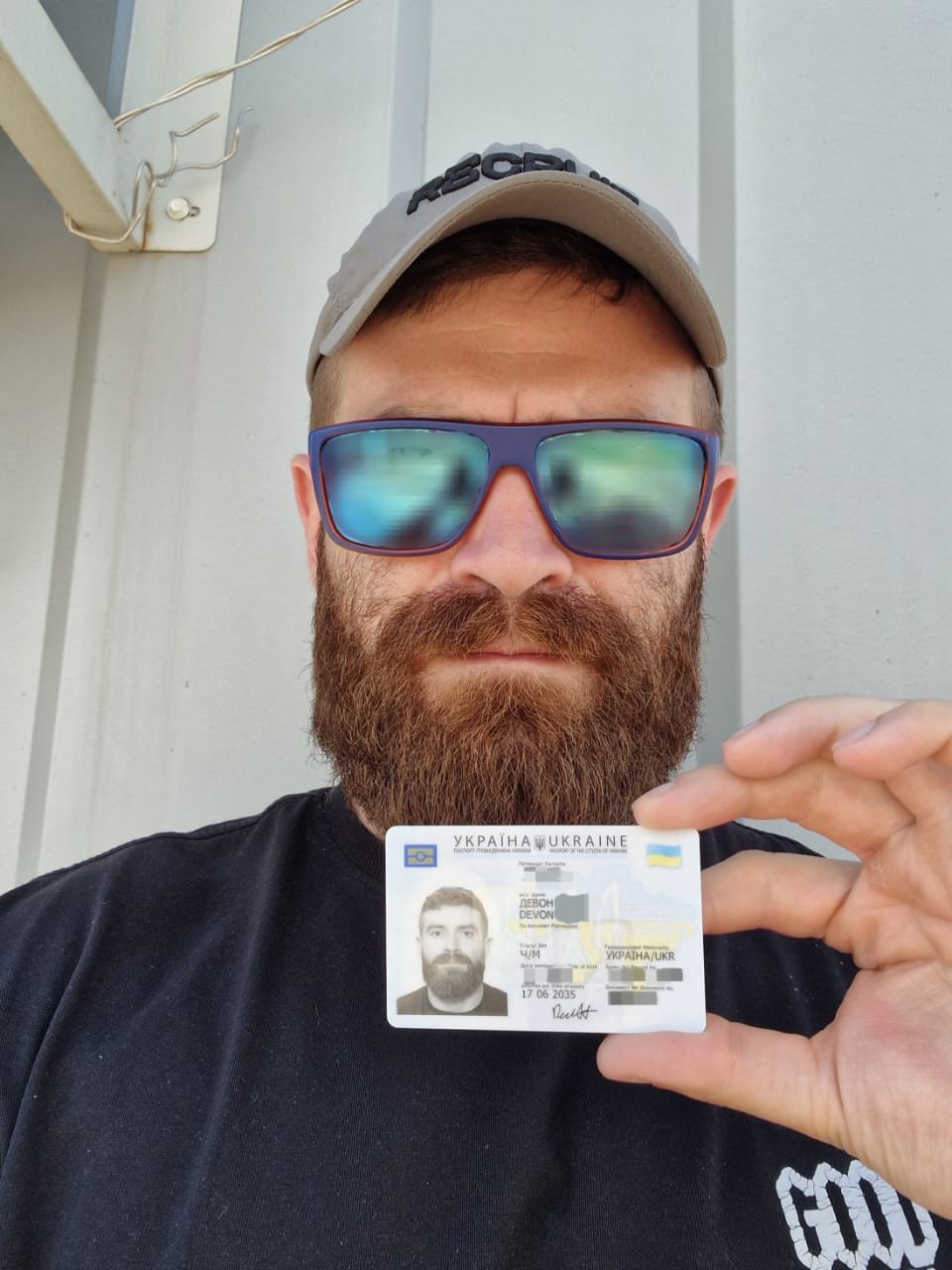
“I’m here to stay,” says Devon, a former combat medic in Ukraine’s International Legion. “I fought and bled alongside Ukrainians. It’s home.”
Devon, an American (last name withheld for privacy reasons), is one of the few foreign fighters who has already received a Ukrainian passport. But the road there wasn’t simple. Like many others, he once faced an impossible choice—commit fully to Ukraine and renounce his past, or wait in limbo, hoping the law would change.
The new law, set to come into force in six months after its official publication, could make that path easier. While the system remains imperfect and full of delays, experts say the political intent is clear.
“The government genuinely wants to help these soldiers,” says Zalizniak. “They’re trying to create simplified procedures, but it doesn’t always work smoothly.”
From soldier to citizen
Devon, a former member of Ukraine’s International Legion, arrived right after Russia’s full-scale invasion began in 2022. He served in Sievierodonetsk and other front-line positions.
After an intense operation, where he lost his commander and fellow soldiers, Devon received a state-issued award signed by the president—an honor that, under Ukrainian law, overrides all other citizenship requirements.
“That award started the process,” he says. “It was a fast track. We were told we didn’t need to meet the usual five-year residency or language criteria.”
Still, at the time, Ukraine didn’t formally recognize multiple citizenship. Devon and his fellow soldiers were asked to sign a document promising to renounce their original citizenship within two years. For many, that was a step too far, especially so early in the war, when the future felt uncertain.
“We didn’t know how this war would go,” he says. “I wasn’t ready to give up my US citizenship. My family—my sisters, my grandparents, my nieces—they’re all back home.”
A year later, with multiple citizenship legislation moving forward and the war dragging on, the offer came again. This time, Devon accepted. He completed the application process, submitted fingerprints, background checks, and waited. In July 2025, he picked up his Ukrainian ID.
Now, he lives in Kyiv. He no longer wears a uniform, but he trains soldiers as a tactical medic and plans to build his life here.
“Here I have a girlfriend,” he says. “She is super Ukrainian and wants nothing to do with anything but Ukraine. I also do my best to learn the language. My life is here now.”
Two paths to citizenship
For now, foreign nationals seeking Ukrainian citizenship face a narrow legal path. According to Petro Zalizniak, two frameworks regulate the process. The first is the existing Law on Citizenship of Ukraine (2001); the second is legislation, often misreported as the “law on dual citizenship,” though it has not yet come into force.
“There is no such thing as a law on multiple citizenship,” explains Zalizniak. “What we have is legislation amending several existing legislative acts to allow people to acquire and retain Ukrainian citizenship.”
Under current law, foreigners can qualify for citizenship primarily through three years of official military service, but only within certain units: the Ukrainian Armed Forces, the National Guard, and the State Special Transport Service.
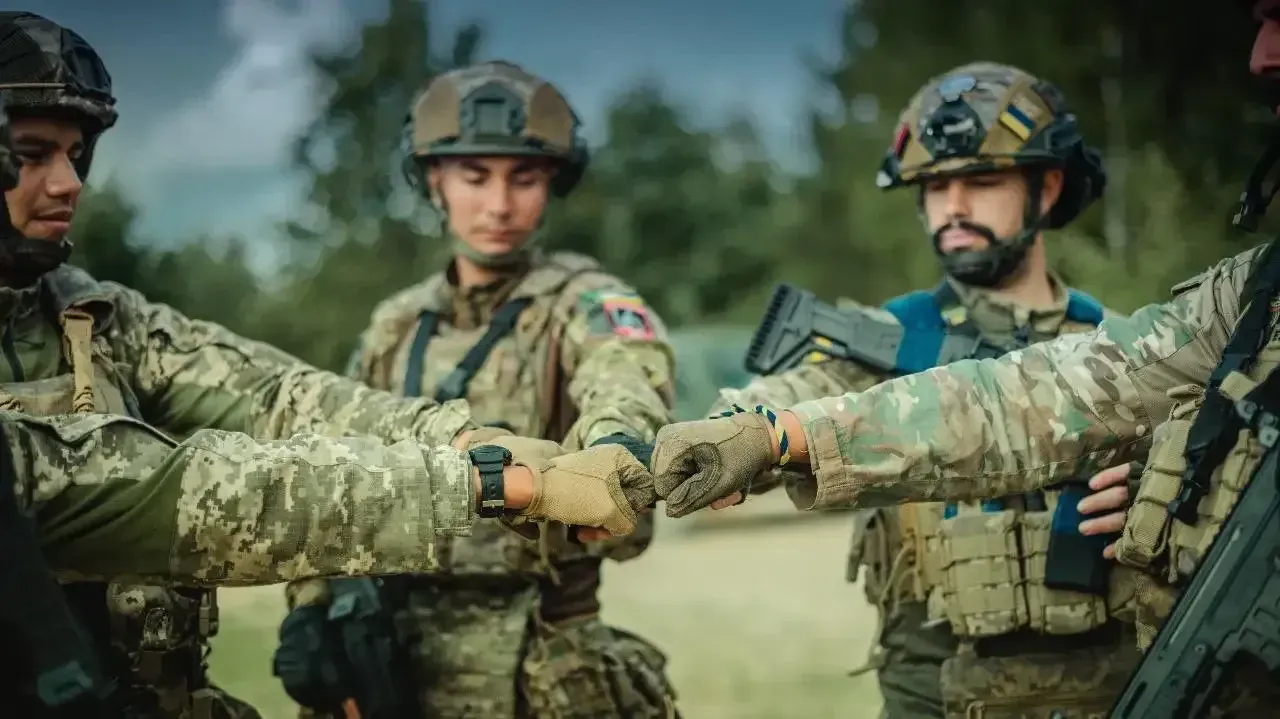
Even those who have been severely injured in combat or who volunteered in other roles do not qualify unless they were formally enlisted in these structures.
“There are foreign volunteers who’ve lost limbs for Ukraine,” Zalizniak says. “But because they weren’t officially in the military, they don’t meet the legal criteria. That’s hard to explain to someone who risked their life for your country.”
Other legal pathways include:
Receiving a state award, such as the one Devon received, which waives most standard requirements.
Being medically discharged due to a combat injury.
Being deemed a person of exceptional merit or of state interest to Ukraine—a vague provision that gives the president personal discretion in granting citizenship.
“These are called evaluative terms in legal language,” Zalizniak notes. “There’s no fixed definition for ‘exceptional merit’ or ‘state interest.’ Such information is not public, particularly during wartime. It’s a way to give the president flexibility, but it also creates a lack of transparency.”
🇺🇦 Ukraine Passes Law on Dual Citizenship
— Shaun Pinner (@olddog100ua) June 19, 2025
Parliament has approved dual citizenship a major step toward uniting 60M+ Ukrainians worldwide.
The law:
✔️ Recognizes diaspora roots
✔️ Allows dual citizenship for kids born abroad
✔️ Offers citizenship to foreign defenders
✔️ Excludes… pic.twitter.com/TdszBldX2W
What would the new law change?
The legislation, passed in June 2025, introduces key simplifications. It shortens the required military service period from three years to one year for those who signed their contracts during wartime. It also waives several general requirements: applicants don’t need proof of legal income or immigration status, and they no longer have to live in Ukraine for five years before applying.
Still, the path isn’t automatic. Applicants must pass exams on the Ukrainian language, Constitution, and history, or sign a declaration promising to do so.
“You can begin the process now,” Zalizniak says, “but without finalized procedures from the Cabinet of Ministers, it’s still unclear how this will work in practice.”
Waiting in legal limbo
James Fensom, a UK veteran who joined Ukraine’s International Legion in late 2022, served on and off for over a year and a half. After frontline combat, he transitioned to a role in a presidential brigade. Today, he works in Kyiv for a cybersecurity company that provides training and equipment to the Ukrainian Armed Forces and security services.
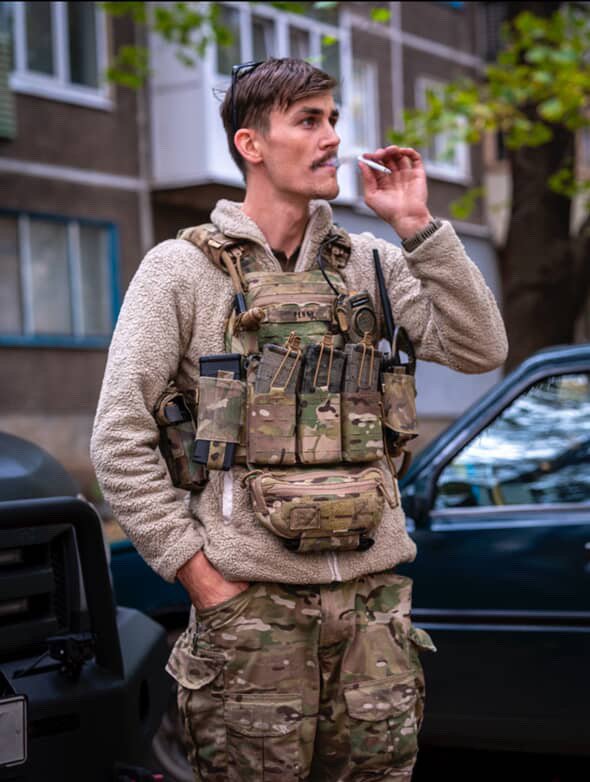
“All in all, I’ve served about a year and a half,” James says. “But I had breaks in between, like many foreign fighters do.”
He’s no longer in uniform but still works to support Ukraine. Like many others, he’s trying to build a life here. “This is home now,” he says.
Yet legally, he’s in a grey zone. James is currently waiting on a work permit, but has already overstayed his 90-day visa exemption. He’s also applied for a combat veteran certificate (UBD), which could exempt him from some visa fees and serve as supporting documentation in a future citizenship application. But as of now, nothing is guaranteed.
“You talk to three lawyers, and they all tell you something different,” he says. “So I’ve just got a lawyer watching things for me. Maybe when the law actually kicks in, it’ll be clearer.”
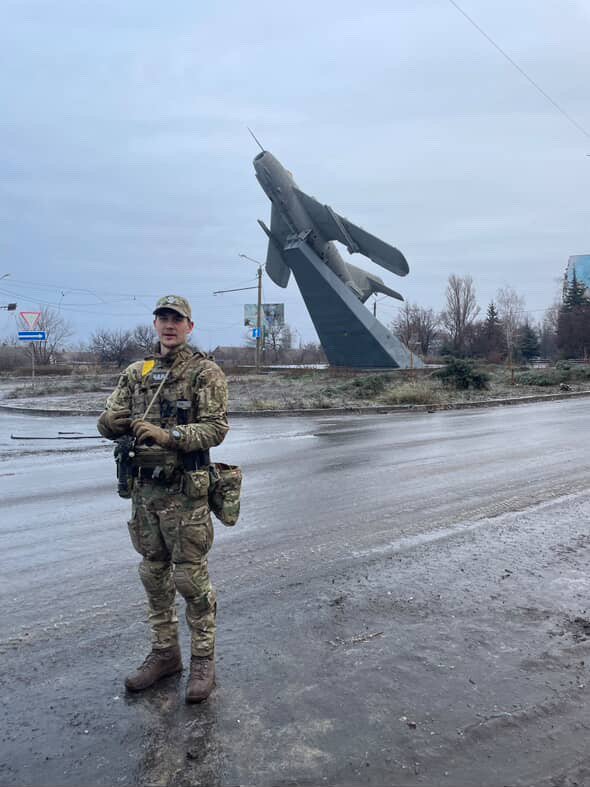
James’ case sits at the intersection of old rules and new possibilities. Under the current legal system, he may have to wait five years on a residency permit to apply for citizenship, just like any civilian foreigner. But under the new law, once it takes effect, military service of one full year during martial law may be enough to qualify.
Still, there are questions. James had breaks in his service, as many volunteers do. Would those gaps disqualify him?
“In theory, the one-year rule should apply,” says Zalizniak. “But we don’t know how strictly the Migration Service will interpret it. If someone served six months, then another six months later—should that count? Common sense says yes. But this is a bureaucratic system. There’s always a risk that ambiguity works against the applicant.”
For now, James remains patient as he waits for the new law to take effect. Meanwhile, the government is working on implementation procedures.
Our embassies must support Ukrainians abroad and to preserve the connection of all our people with Ukraine. We recently adopted a law on multiple citizenship and have begun its implementation. We will gradually determine the list of countries with which corresponding procedures…
— Volodymyr Zelenskyy / Володимир Зеленський (@ZelenskyyUa) July 21, 2025
The logic behind the limits
The system is not perfect, and for many, it is frustratingly slow. But the caution is not accidental. As Zalizniak explains, Ukraine must protect itself from misuse.
“There are people from countries with high emigration risks, who view Ukrainian citizenship as a shortcut to Europe,” he says. “That’s why lawmakers insisted on meaningful time thresholds: one year, even three. It’s to make sure the system is not exploited by those who see Ukraine not as a home, but as a stepping stone into the EU.”
The Ukrainian passport, once relatively limited in power, has dramatically increased in value since the country signed a visa-free agreement with the European Union back in 2017. Today, because of the war, it grants access to work, residency, and even social protections across the EU. That, Zalizniak argues, makes it a prize and a potential target for abuse.
“That’s exactly why the process has to be taken seriously,” he says.
Devon adds that obtaining citizenship also means becoming part of the system. He no longer qualifies for tax-free military payments and is now fully under Ukrainian law, with the same responsibilities as other Ukrainians. That, he says, is worth considering when thinking of obtaining citizenship.
“It’s not going to happen overnight,” Devon says. “It takes months, sometimes even years, for the paperwork to go through. So do it for the right reasons.”
Devon doesn’t romanticize the process. He has experienced firsthand how slow and chaotic the bureaucracy can be, having lost his immigration file twice. But he still believes the rules make sense. And that citizenship, in any country, should come with weight.
“Citizenship should mean something,” he says. “And it does for me.”
Discuss this article:


-111f0e5095e02c02446ffed57bfb0ab1.jpeg "Photo of Roman Kohanets")
-07c046f037cabcd54fb44b5253b3733d.jpg "“Bathing” (2021), an 80 × 60 cm artwork by Ukrainian artist Mariia Drozdova. (Source: Art From Ukraine/Instagram)")


-c439b7bd9030ecf9d5a4287dc361ba31.jpg "Photo of Katherina Popilnichenko")