- Category
- War in Ukraine
UK to Retrofit Donated Weapons for Ukraine With British Sensors, Guidance and EW Systems
 Prefer U24 Media on Google
- Authors

-72b63a4e0c8c475ad81fe3eed3f63729.jpeg "Photo of Cyril Barabaltchouk")
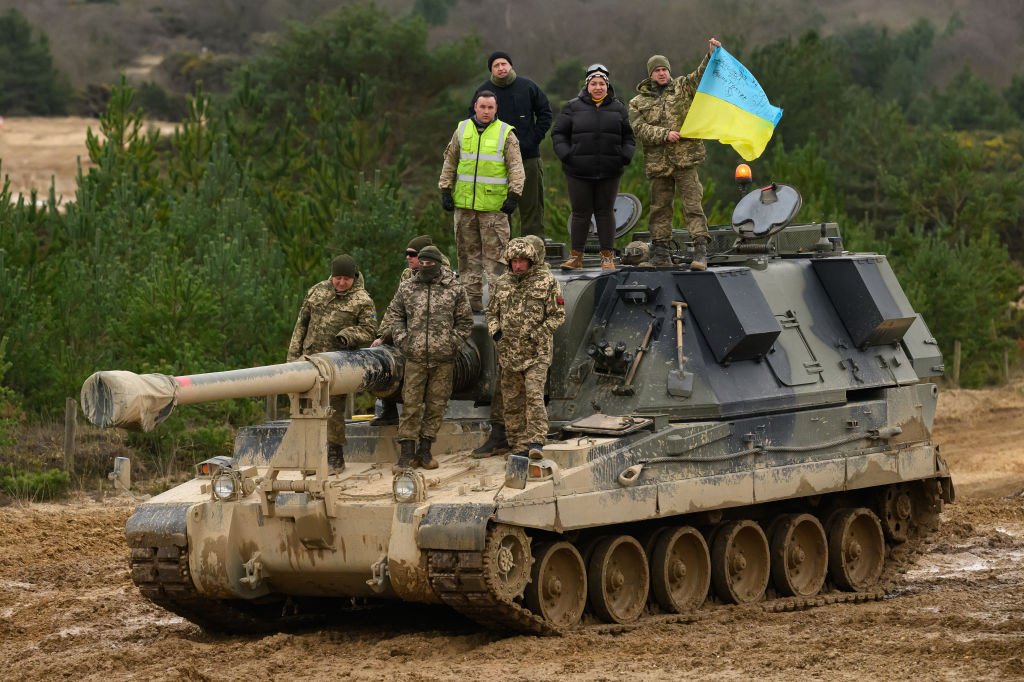
Britain plans to retrofit British military technology onto weapons and equipment donated to Ukraine by other countries, while accelerating long-range and air-defense support ahead of winter, UK Defence Journal reported on October 15.
Prime Minister Andy Burnham outlined the plan during talks with Ukrainian President Volodymyr Zelenskyy at Downing Street. The two also discussed Russia’s continuing attacks on civilians and energy infrastructure following US President Donald Trump’s call for an energy ceasefire, according to the UK government.
We bring you stories from the ground. Your support keeps our team in the field.
According to UK Defence Journal, Burnham stated that Britain would continue developing battlefield solutions for Ukraine, including fitting British capabilities onto equipment supplied by other partners.
The approach could involve integrating British sensors, seekers, fuzes, datalinks, or electronic warfare systems with donated hardware. Ukraine has received equipment from more than 50 countries, ranging from Soviet-era systems to modern Western weapons produced to different technical standards.
UK Defence Journal noted that many donated systems lack the communications, guidance, or targeting equipment needed to operate effectively within modern battlefield networks. Retrofitting British components could allow older or incompatible platforms to be integrated more effectively into Ukrainian combat operations.

Burnham and Zelenskyy also discussed accelerating long-range defensive support before winter. Britain intends to continue diplomatic efforts aimed at increasing international supplies of military equipment to Ukraine, the report noted.
The talks also covered a new British package of Lightweight Multirole Missiles designed in part to counter Russia’s growing use of jet-powered drones.
UK Defence Journal highlighted the Geran-3, a jet-powered version of the Iranian-designed Shahed-136 design, as one of the threats driving demand for faster interception systems. The drone’s higher speed reduces the time available to detect and engage it compared with propeller-driven Shaheds.
Lightweight Multirole Missiles are built by Thales in Belfast and can be used against aerial targets including drones. Production is now running at four times its 2022 level, with £100 million ($132.6 million) committed to further expansion, according to the UK Defence Journal.

Britain has already pursued a similar integration model through Stone Cloak, a compact electronic warfare system designed to prevent Russian air defenses from tracking drones. UK Defence Journal reported that the system is produced under a British contract, while its intellectual property has been transferred to Ukraine for domestic mass production.
Britain had already announced a £45 million ($59.7 million) surface-to-air missile package for Ukraine and committed £1.6 billion ($2.12 billion) to deliver more than 5,000 Lightweight Multirole Missiles over four years. Of the new package, £10 million ($13.3 million) is being accelerated to meet Ukraine’s winter air-defense needs.
Discuss this article:
-9a7b3a98ed5c506e0b77a6663f5727c5.png)




-111f0e5095e02c02446ffed57bfb0ab1.jpeg "Photo of Roman Kohanets")