- Category
- Defense Tech
How Does Ukraine Stop Russia’s Deadly Jet Drones Flying at 600 KM/H?
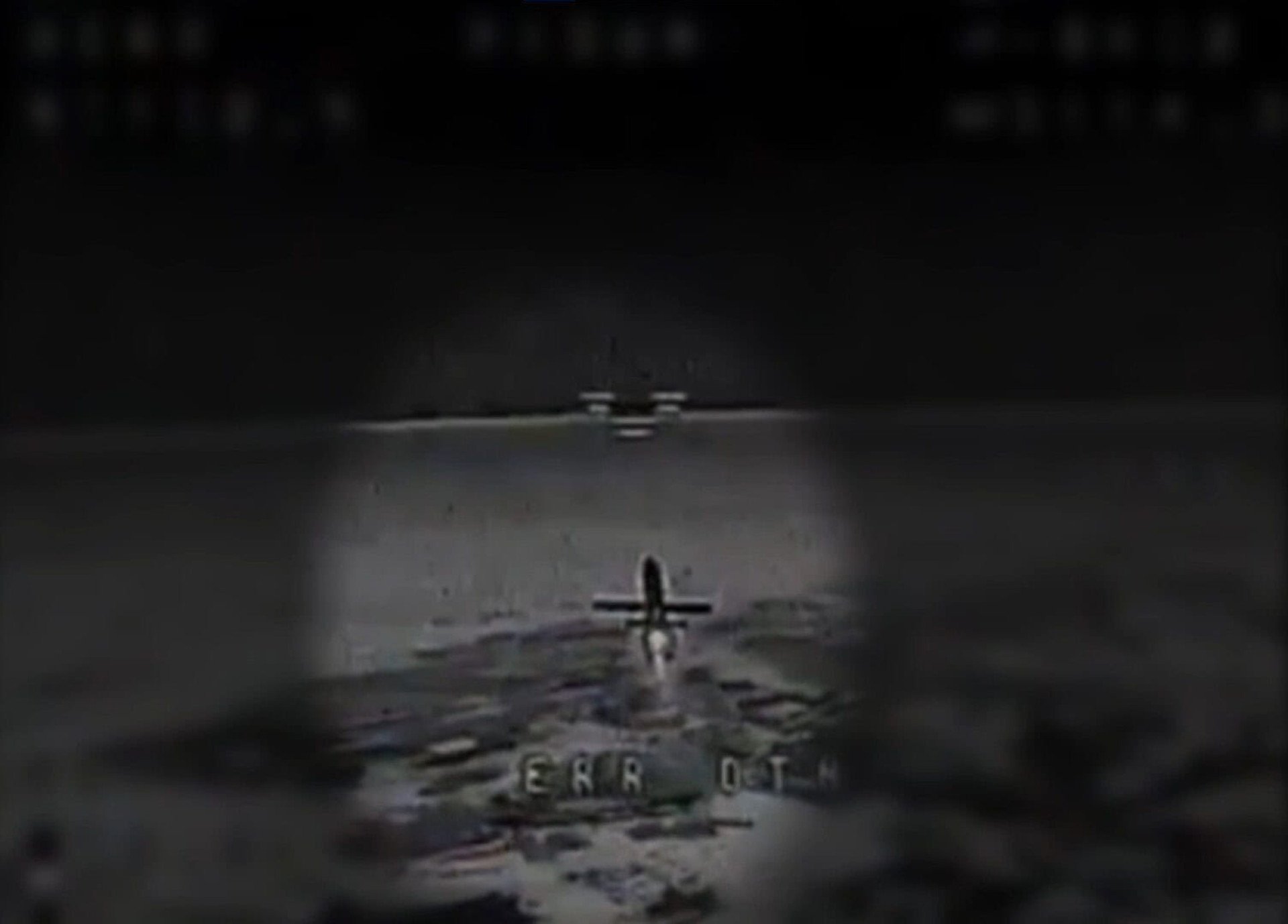
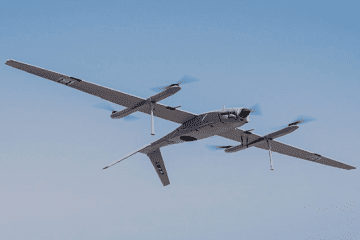
By now, you may have heard of Russia’s Geran-4 and Geran-5, jet-powered drones capable of flying at around 600 km/h, roughly twice the speed of conventional Shaheds. Ukraine is building interceptors to catch them, but at those speeds, human reaction time is also becoming the limiting factor.
 Prefer U24 Media on Google
- Authors


Among the most prominent drones plaguing Ukraine’s rear are Russia’s Geran-4 and Geran-5, which are around twice as fast as gasoline-powered counterparts. Their reported top speeds of 500 km/h (311 mph) and 600 km/h (373 mph), combined with their maneuverability and ability to operate at higher altitudes, have given Russia a new advantage over Ukrainian air defenses.
Conventional propeller-driven Shahed-type drones had become a relatively manageable threat to Ukraine’s air defense units, with interception rates over 90%. However, compared with newer jet-powered systems, the same units are neutralizing only about 55–57%.
Currently, there is no band-aid solution for the jet drone threat. Ukrainian air defense teams use Soviet-era air defense guns and shoulder-fired surface-to-air missiles, and have even implemented AI-assisted turrets in recent days. Meanwhile, the air force scrambles fighter jets in Ukraine’s rear, firing expensive air-to-air missiles to eliminate their distant cousins.
Report from SSU Head Oleksandr Poklad. There is a good result from the Security Service’s military counterintelligence in defending against jet-powered “shaheds.” A new interceptor drone has been developed and has already been successfully deployed. Step by step, we are moving… pic.twitter.com/cIFp7mThwf
— Volodymyr Zelenskyy / Володимир Зеленський (@ZelenskyyUa) September 19, 2026
In R&D labs spanning Ukraine’s military and private defense industries, engineers are rushing to develop and scale a jet-powered countermeasure. One of the first encouraging results came from an interceptor used by the SBU, a jet-powered delta-winged drone that successfully chased down and destroyed the faster Geran-5. Ukrainian officials have not publicly identified who designed the system, while Zelenskyy has said several teams and manufacturers are now working on similar interceptors.
Unboxing Russia's jet-powered Gerans
Slower gasoline-powered Shaheds are increasingly hunted by comparatively cheap Ukrainian interceptor drones. Russia’s response has been to update and mass-produce faster Geran designs, with Ukrainian reporting estimating production of the Geran-4 and Geran-5 at roughly 3,000 units per month by September 2026.
A recent Radio Free Europe/Radio Liberty investigation offered a rare look inside one of those systems after reporters and Ukrainian specialists dismantled a largely intact Geran-4. The teardown showed a Russian weapon heavily reliant on imported propulsion, communications, navigation, and electronic components, including technology produced in China, the United States, Switzerland, and elsewhere.
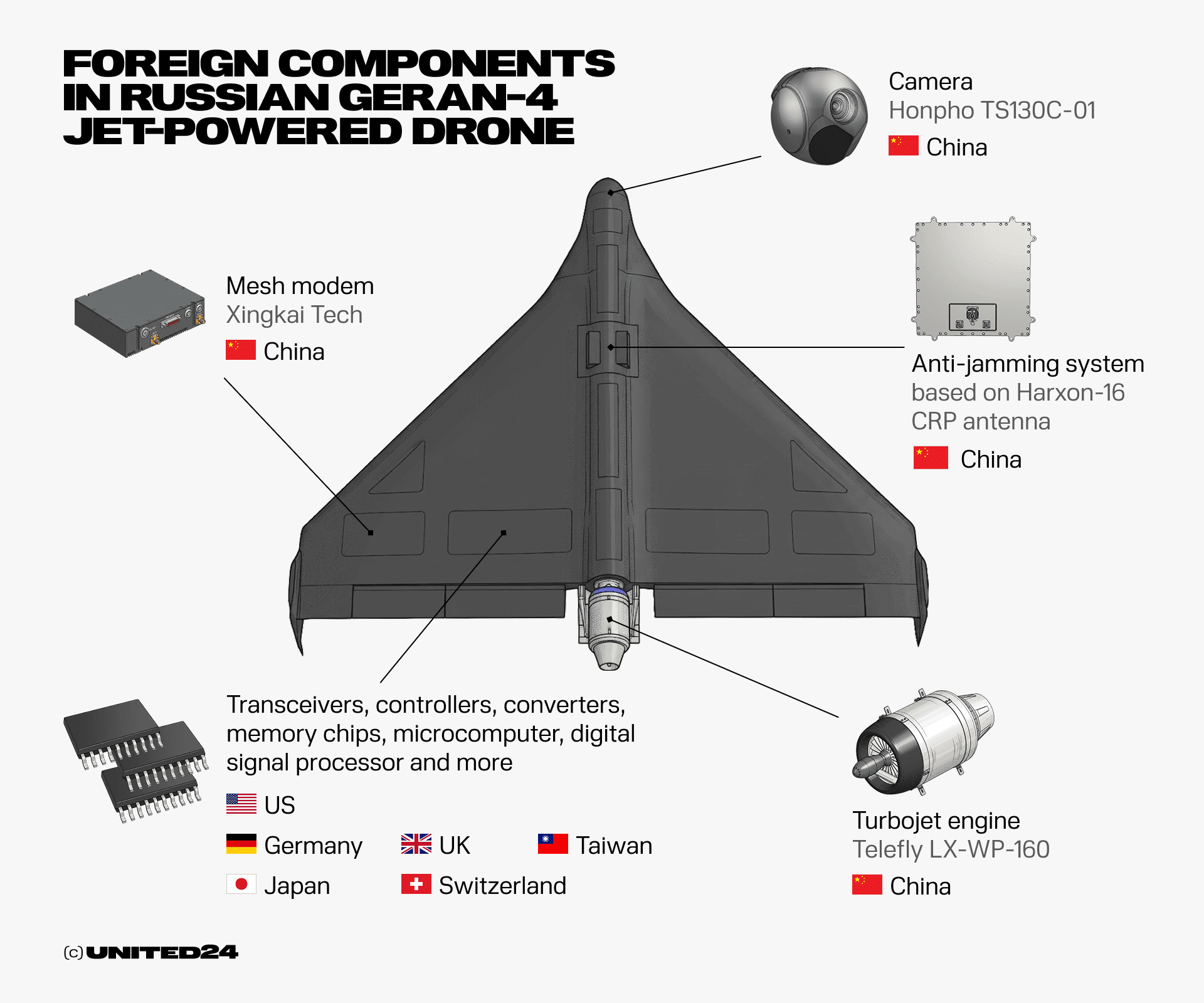
At the center of the drone is a Chinese-made Telefly LX-WP-160 turbojet engine, replacing the piston engine and rear propeller found on conventional Shahed-type drones. But the Geran-4 is more than simply a faster Shahed: it also carries advanced optics and a communications suite designed to keep the drone connected deeper into its flight.
-8a4f2909bd0ef7bd15e5baecedbfa2f9.webp)
The drone reportedly carries a day-and-night camera, a Chinese mesh-network modem, cellular communications hardware, and a 16-element CRPA antenna paired with the NASIR anti-jamming system. Together, these systems can help transmit data and commands over long distances while making satellite navigation more resistant to Ukrainian electronic warfare.
Russian drones are still largely built around foreign technology; the sheer amount of foreign components clearly alludes to that. Many parts are acquired through sanctions circumvention—a tactic Russia has relied on throughout the war.
Ukrainian intelligence has identified components from Texas Instruments, Micron, Analog Devices, STMicroelectronics, and other foreign manufacturers inside Geran-4 systems, alongside Chinese networking and propulsion hardware.
Only the airframe and warhead largely bear a “Made in Russia” stamp; by and large, Russia remains the final stop in the supply chain, where it assembles mostly foreign-made components into a finished drone and sends it out for use.
Some parts of the supply chain are beginning to become localized. Russia has started introducing its own TRD-200 turbojet in newer Geran-4s, but even that “Russian-made” engine is assembled at the Alabuga plant from Chinese-made parts.
How Russia’s jet-powered drones are affecting Ukraine
Ukrainian intelligence says Russia is now producing roughly 3,000 Geran-4 and Geran-5 drones per month. Their almost daily use on the capital is forcing the military to rely more heavily on fighter jets, shoulder-mounted rocket launchers, and traditional mobile air defense units to mitigate the chaos and damage they’re causing.
Kyiv has become a major focus of Russia’s attacks. If launched from Russia’s Oroyol Region, one of the more prominent sites, a jet-powered drone can theoretically reach Kyiv in just about an hour, maneuvering past air defenses on its 500km (311 miles) journey.
Residents have accepted it as a part of daily life, with intermittent explosions and outgoing fire from anti-air guns enveloping the city.
Between August 27 and September 27th, the capital has endured more than 235 air raid alerts lasting a combined 261 hours—more than ten full days spent under threat in just a month.
The human cost has been substantial. Over roughly the same month-long period, Russian attacks on Kyiv killed around 29 people and injured approximately 228, Ukrainian officials reported, while repeated strikes damaged residential buildings and other civilian infrastructure.
The Guardian estimates that Ukraine’s economy loses roughly $45 million for every hour spent under air raid alert, as businesses close, public transport is disrupted, and large gatherings are restricted where adequate shelter is unavailable. Over the past year, the country has also sustained an estimated $10 billion in damage from Russian attacks.
Countering Russia’s new drones
The arrival of jet-powered Gerans did not exactly come as a surprise to Ukraine’s defense sector. In conversations with people familiar with the topic going back to early 2025, as the first generation of interceptor drones was beginning to appear at conferences and demonstrations, one question kept coming up: how fast can it go? More specifically, could it reach 600 km/h (373 mph)?
At the time, that number was largely a benchmark for a threat still on the horizon. Most Ukrainian interceptors were being built to chase conventional Shaheds traveling at roughly 180–200 km/h, and even some of the fastest systems publicly demonstrated in early 2026 topped out around 400–450 km/h.
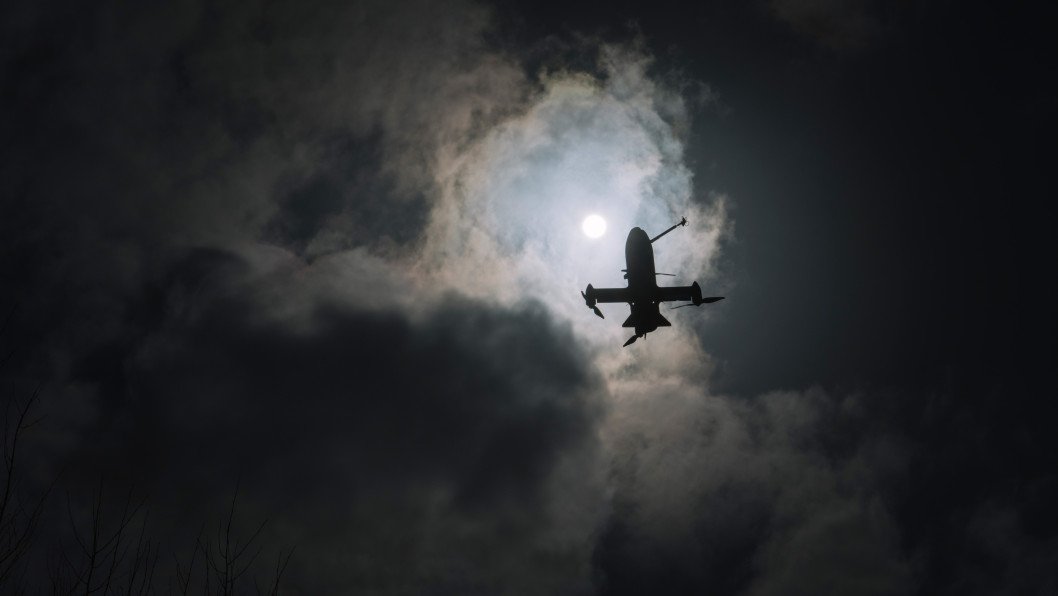
Russia has now effectively moved the benchmark exactly where developers feared it eventually would go, reaching speeds that can outmaneuver the now ubiquitous quadrocopter interceptor drone.
On a positive note, progress is already visible. In August, Ukraine’s Defense Ministry announced that the Alexa Spatium, described as the country’s first interceptor built primarily to engage jet-powered Shaheds, had entered the hands of Ukrainian forces.
A month later, President Volodymyr Zelenskyy said another new interceptor had already been successfully used against jet-powered drones, while Ukrainian operators have since published footage of SkyFall’s upgraded P1-SUN JetKiller destroying a Geran-5.
All the while, manufacturers are being asked to design, test, and scale a new generation of interceptors while factories and infrastructure remain under threat from the same Russian missile and drone campaign they are trying to counter.
How 600 km/h is changing drone interception
At least 20 Ukrainian manufacturers are working with the Air Force on jet-powered interceptor drones, Ukrainian Air Force Deputy Commander Yurii Cherevashenko said. Of those, 14 had begun test flights, six had achieved some success in intercepting Russian jet drones, and three had shown promising results.
Several private Ukrainian manufacturers are now working on the same problem. TAF Industries told UNITED24 Media that its own jet-powered interceptor is under development and has already completed successful tests at high speeds, although the company says mass production is still some way off.
Other Ukrainian interceptor systems capable of reaching between 400 and 600 km/h (249–373 mph) have already passed testing, received NATO Stock Numbers and entered service, said TAF PR manager Uliana Verstiuk.
But simply building a drone capable of reaching 600 km/h does not solve the problem. If an interceptor and an incoming Geran are closing on one another at a combined 700–900 km/h (435–559 mph), Verstiuk says a pilot may have only one or two seconds to make the final correction and hit the target.
At these speeds, human reaction time itself becomes an issue.
That is why much of the next stage of development is centered around AI or “automated terminal guidance,” as Verstiuk explains.
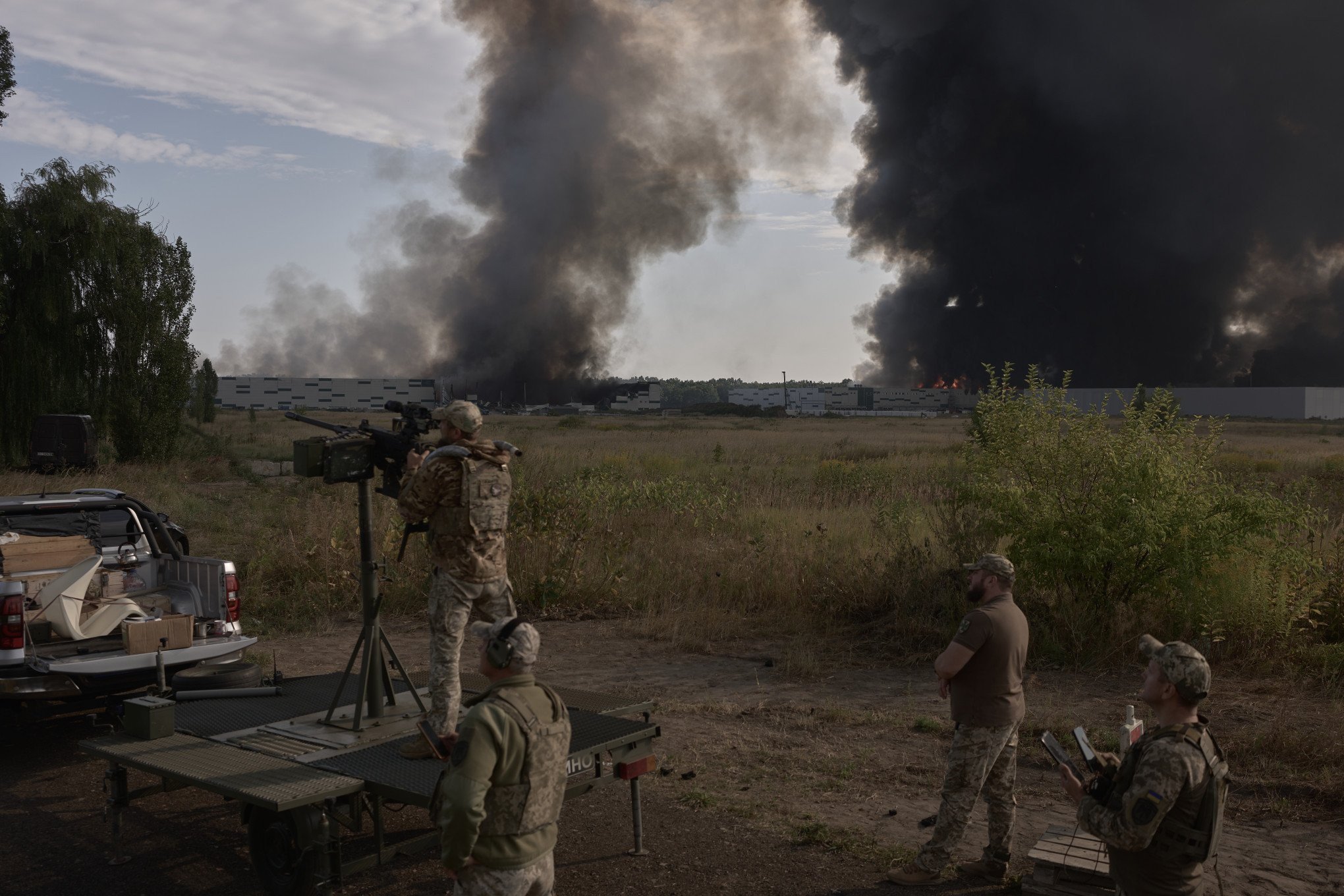
Ukrainian interceptor teams are increasingly working with computer vision systems that can take over during the final approach, acquire the target, and guide the interceptor through the last moments before impact.
Another layer of the problem is that the interceptor has to know what it is about to hit. Developers are therefore working not only on terminal guidance, but on systems capable of recognizing and confirming an enemy aircraft before committing to an interception—a process that may also have to happen within seconds.
TAF describes the solution as a “multi-level AI architecture combining target recognition and terminal guidance”.
Considering the rapid pace of innovation on both sides, it's safe to say Russia is unlikely to stop at 600 km/h. Reports have warned of Russia’s intentions to push drone speeds into the 700-800 km/h range before current interceptors go into mass production. Cherevashenko also warns that the Air Force is preparing for Russian jet drones to reach speeds of 800–900 km/h, although such speeds have not yet been recorded.
This leaves Ukraine’s defense sector with the tough task of keeping an eye on the future while keeping up with the demand of current threats.
Discuss this article:






-6ff4efaedd2092e0205aad37f9e7b98a.jpg "Illustrative image. US F-16 and Polish MiG-29 over Poland, 2005.")