- Category
- War in Ukraine
Russia’s Jet-Powered Shahed Drones Can Hit 600 KM/H. Ukraine Is Scaling Up Ways to Take Them Down

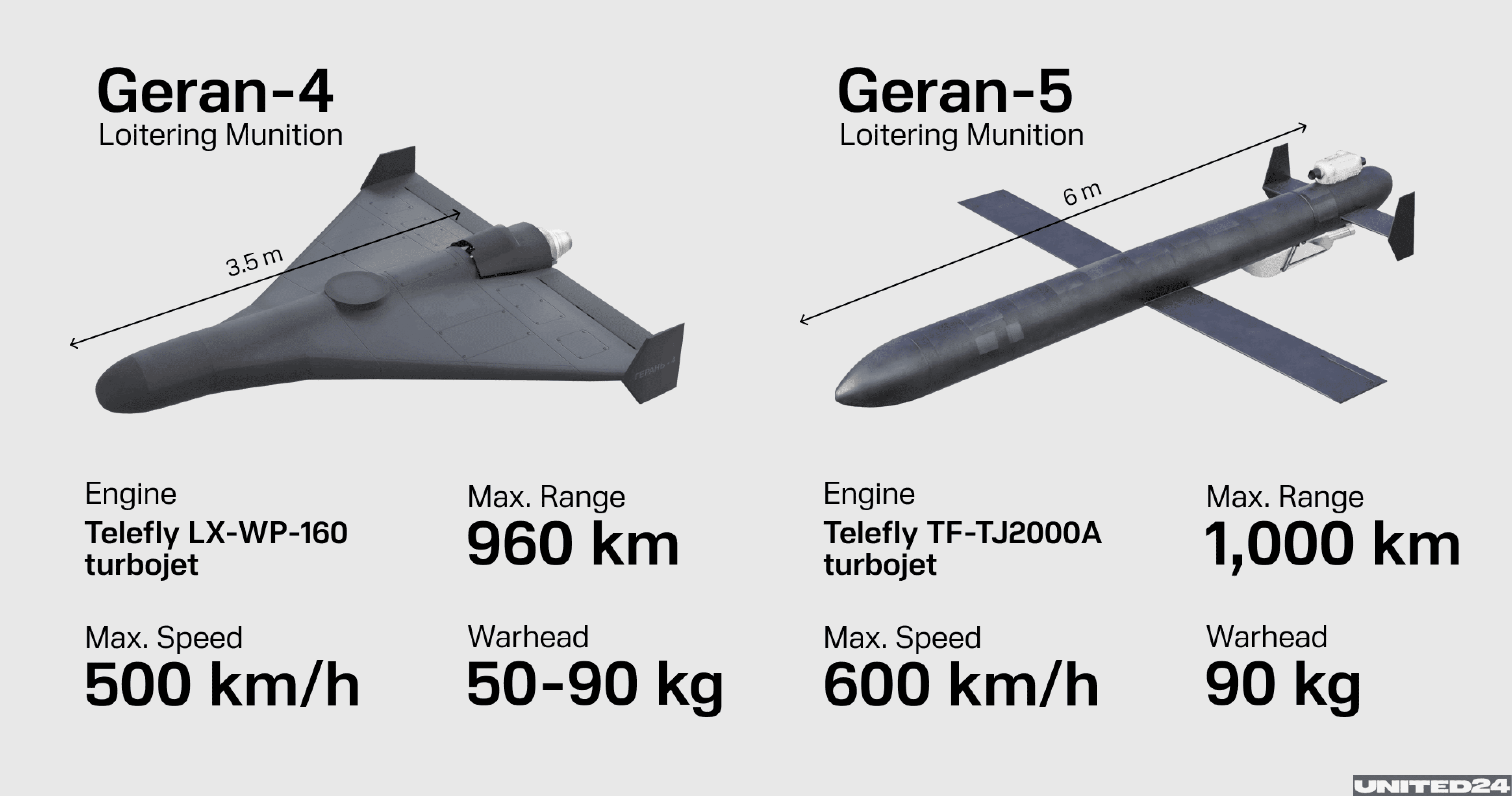
Russia’s jet-powered Shaheds are emerging as one of Ukraine’s biggest air defense challenges. Capable of reaching 600 km/h, they demand new countermeasures, even as Ukraine intercepts more than 90% of conventional Shaheds. Kyiv is now expanding its layered defenses to keep pace with the evolving threat.
 Prefer U24 Media on Google
- Authors


-29a1a43aba23f9bb779a1ac8b98d2121.jpeg "Photo of Illia Kabachynskyi")

In mid-October, Ukrainian Defense Minister Yevhenii Khmara met with journalists to discuss the biggest challenges currently facing the ministry and share its plans for the future. Due to the sensitive nature of some of the topics discussed, UNITED24 Media cannot disclose everything, but we are publishing some of the most noteworthy points.

Countering Russia’s jet-powered drones
Ukraine’s response to Russia’s aerial threats is built around a layered defense system, as no single type of weapon is sufficient to protect the country’s airspace.
Ukraine currently employs a broad range of systems, including surface-to-air missile systems, man-portable air defense systems (MANPADS), electronic warfare systems, teams operating interceptor drones, and short-range air defense systems. These are supplemented by an aviation component that includes Mirage and F-16 fighter jets.
Recently, Kyiv residents also saw large-caliber turrets being used against jet-powered UAVs. Ukraine already has hundreds of these systems in service.
One of the challenges is intercepting jet-powered Shaheds, which requires interceptors capable of operating at higher speeds. Ukraine has already successfully deployed interceptor drones against jet-powered UAVs. In one combat engagement, a unit used five Bars interceptors to destroy five aerial targets—a 100% success rate. Turrets are also proving effective.
All successful approaches are being studied and scaled up, with additional specialists and units being brought into the effort. At the same time, surface-to-air missile systems and MANPADS are also demonstrating their effectiveness.
The Defense Ministry is simultaneously working to supply interceptor drones, aircraft, and ammunition for them, anti-aircraft missiles and artillery systems, turrets, electronic warfare systems, and other solutions.
Aircraft remain one of the most effective means of shooting down jet-powered Shaheds. The Defense Ministry is working to increase the availability of F-16s for combat duty. One of the bottlenecks is aircraft maintenance, and the relevant capabilities are now being expanded.
“The effectiveness of our aviation continues to improve thanks to the skill of our pilots and better coordination,” Ukrainian Defense Minister Yevhenii Khmara said. “As a result, our aircraft now use fewer munitions per aerial target. We plan to improve this figure further.”
Mirage fighter jets are also being used to intercept aerial targets. For both platforms, maintaining sufficient ammunition reserves to cover several months of operations is critical.
The ministry says it is closely monitoring the evolution of Shahed drones and is aware that their speeds could potentially increase to 800 km/h in the future.
“We are already working on ways to counter the next generation of threats,” the ministry added.
Another persistent problem is Russia’s ballistic missile threat. Existing and potential supplies of missiles for ballistic missile defense are insufficient to fully counter it. The ministry’s objective is not to wait for major long-term contracts, but to identify available stocks held by Ukraine’s partners as quickly as possible and accelerate their transfer to Ukraine.
Targeting Russian missile launchers and drone infrastructure
Defending Ukraine’s airspace is only one part of the strategy. Ukraine aims to act asymmetrically and seize the initiative.
In the case of ballistic missiles, this means targeting Russian launchers. In September and early October, Ukraine’s Defense Forces struck eight launchers used for ballistic missile attacks: three were destroyed and five damaged. This affects the frequency of ballistic missile launches and forces Russia to operate more cautiously.
The same approach applies to countering the UAV threat. Ukraine is targeting the entire chain: production and components, sanctions, manufacturing facilities, warehouses, training and launch sites, command posts, and UAV crews.
Strikes on this infrastructure do not completely stop Russian attacks, but they reduce their effectiveness, force the enemy to rebuild infrastructure, and require it to form new teams to replace those that have been eliminated.
Countering Russian guided aerial bombs also involves destroying Russian aircraft and airfield infrastructure.
Expanding Middle Strike and Deep Strike drone operations
The Defense Ministry is currently working to increase the number of Middle Strike capabilities and scale them up to the corps level, says Khmara.
This is intended to improve units’ ability to systematically operate in Russia’s operational depth, primarily targeting enemy UAV crews, command posts, logistics, air defense systems, radars, electronic warfare systems, and other assets that support Russian military operations.
The effectiveness of Middle Strike drones is already clear. We previously covered the importance of this component of the war through the example of Operation Vivaldi, showing how this type of drone helped disrupt enemy logistics and supply lines and ultimately became one of the factors that led to the loss of Russian positions.
-e29925be9ebc1a8f717a4acbc6580b6c.png)
Deep-strike operations, meanwhile, have produced an economic impact: since these operations began, 51% of Russia’s oil refining capacity has been put out of operation. Ukraine’s objective is to continue striking targets that provide the Kremlin with resources to sustain its war against Ukraine. The challenge is to increase effectiveness and improve the ability to penetrate Russia’s layered air defenses.
Ukraine has already struck the Omsk oil refinery, located 2,500 kilometers from the border, twice, and has hit the country’s 11 largest oil facilities.
For Ukraine, deep strikes are a form of asymmetric response to Russian attacks.
Ukrainian arms exports
Finally, the discussion also touched on Ukrainian arms exports, an area the government and the Defense Ministry are currently working on.
“The needs of the Defense Forces remain the absolute priority,” Khmara said. “Products may be exported only when they exceed those requirements and do not create risks for supplying the Ukrainian military.”
Arms exports are also expected to become an additional source of funding for the defense sector. A mechanism is being developed under which a portion of export revenues would be directed toward the needs of the Defense Forces. Such a mechanism would enable additional funding for the Ukrainian military, including the procurement of more weapons.
Discuss this article:
-9a7b3a98ed5c506e0b77a6663f5727c5.png)



-e179e0599ae687118e91fd783379c19f.png "Footage showing a Ukrainian FP-1 drone strike on a Russian drone workshop and storage facility in the Donetsk region. (Source: 7th Air Assault Corps of the Armed Forces of Ukraine)")