- Category
- War in Ukraine
Ukraine Shifts Drone Strategy to Target Hard-to-Replace Russian Energy Components
 Prefer U24 Media on Google
- Authors

-72b63a4e0c8c475ad81fe3eed3f63729.jpeg "Photo of Cyril Barabaltchouk")
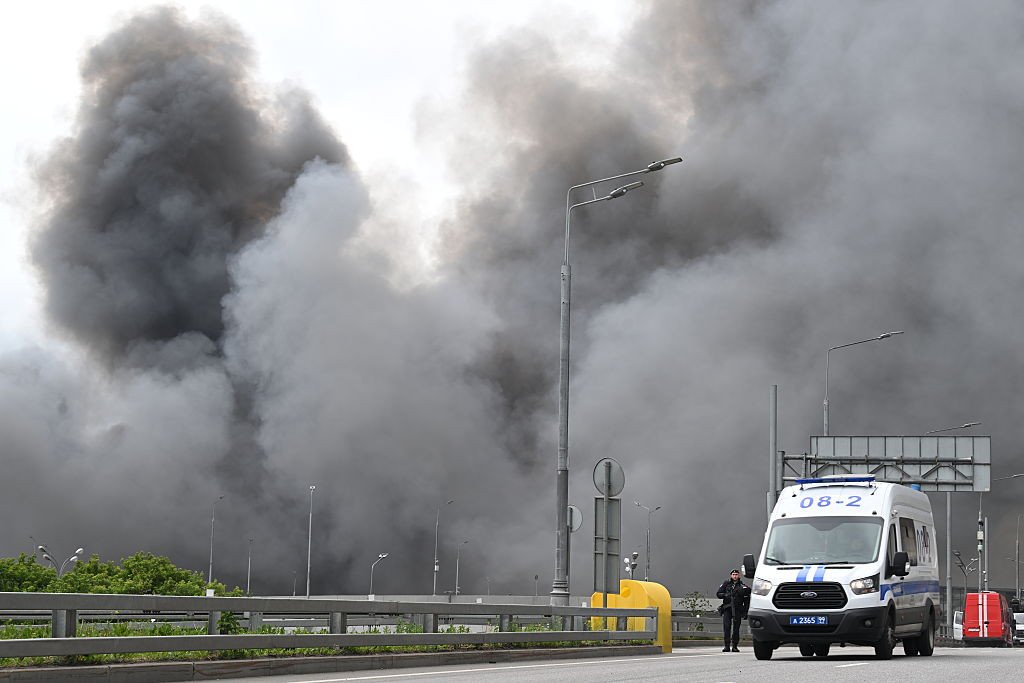
Ukraine has recalibrated its long-range drone campaign against Russia’s energy industry, shifting from broad attacks on oil refineries to precision strikes targeting critical, hard-to-replace industrial components, the Financial Times reported on July 30.
Rather than seeking to ignite surface fires or destroy fuel storage tanks, Ukrainian military planners, drone operators, and energy specialists aim to prolong operational outages and maximize repair costs for Moscow.
We bring you stories from the ground. Your support keeps our team in the field.
Before launching deep-strike missions, drone units receive technical briefings from industry experts who identify specific pipelines, fractionation towers, and essential processing connections that would take the longest time to replace, the Financial Times wrote.
The strategic pivot follows instructions from Ukrainian President Volodymyr Zelenskyy to newly appointed Commander-in-Chief Mykhailo Drapatyi and acting Defense Minister Yevhenii Khmara to expand deep-strike operations behind enemy lines. Khmara emphasized that Kyiv intends to “move the war on to the aggressor’s territory as much as possible” by exerting continuous “shock and technological pressure on Russia,” according to the Financial Times.
-5b9bb1d42a6ea3f8375dd1da8095f27a.jpg)
The execution of these deep-strike missions relies heavily on intelligence provided by the United States and France, which assists Ukrainian planners in mapping Russian air-defense deployments and plotting flight paths through coverage gaps, the Financial Times detailed.
Drawing on their detailed understanding of shared Soviet-designed energy architecture, Ukrainian planners treat the Russian energy sector as an interconnected system, identifying specific nodes where relatively small warheads can cause cascading operational disruptions.
To prevent facilities from resuming production, Ukrainian drone forces have adopted a tactic of repeatedly striking damaged critical equipment before or shortly after repairs are completed, the Financial Times noted.
-c8c41289508bacaf27f967683bdbe4cd.jpeg)
Andriy Zagorodnyuk, former defense minister and chair of the Centre for Defence Strategies , explained that this approach prevents fast reconstruction, while Ukrainian Unmanned Systems Forces Commander Robert “Magyar” Brovdi stressed that the ultimate goal is to dismantle the financial and logistical networks sustaining Russia’s military.
Brovdi noted that the strike zone now encompasses the European part of Russia—home to roughly 80 million people—and warned that attacks will escalate until the enemy’s fuel and military-industrial capacity is fully neutralized, according to the Financial Times.
Long-range Ukrainian drones have recently struck Russia’s Lukoil-Permnefteorgsintez oil refinery over 1,500 kilometers from the border, causing a fire at a major crude-distillation unit at the 13-million-ton facility.
Discuss this article:
In a Nutshell



-c439b7bd9030ecf9d5a4287dc361ba31.jpg "Photo of Katherina Popilnichenko")



-29a1a43aba23f9bb779a1ac8b98d2121.jpeg "Photo of Illia Kabachynskyi")