- Category
- War in Ukraine
Ukraine Strikes Defense Electronics Plant 1,000 km Inside Russia Using Flamingo Cruise Missile
 Prefer U24 Media on Google
- Authors


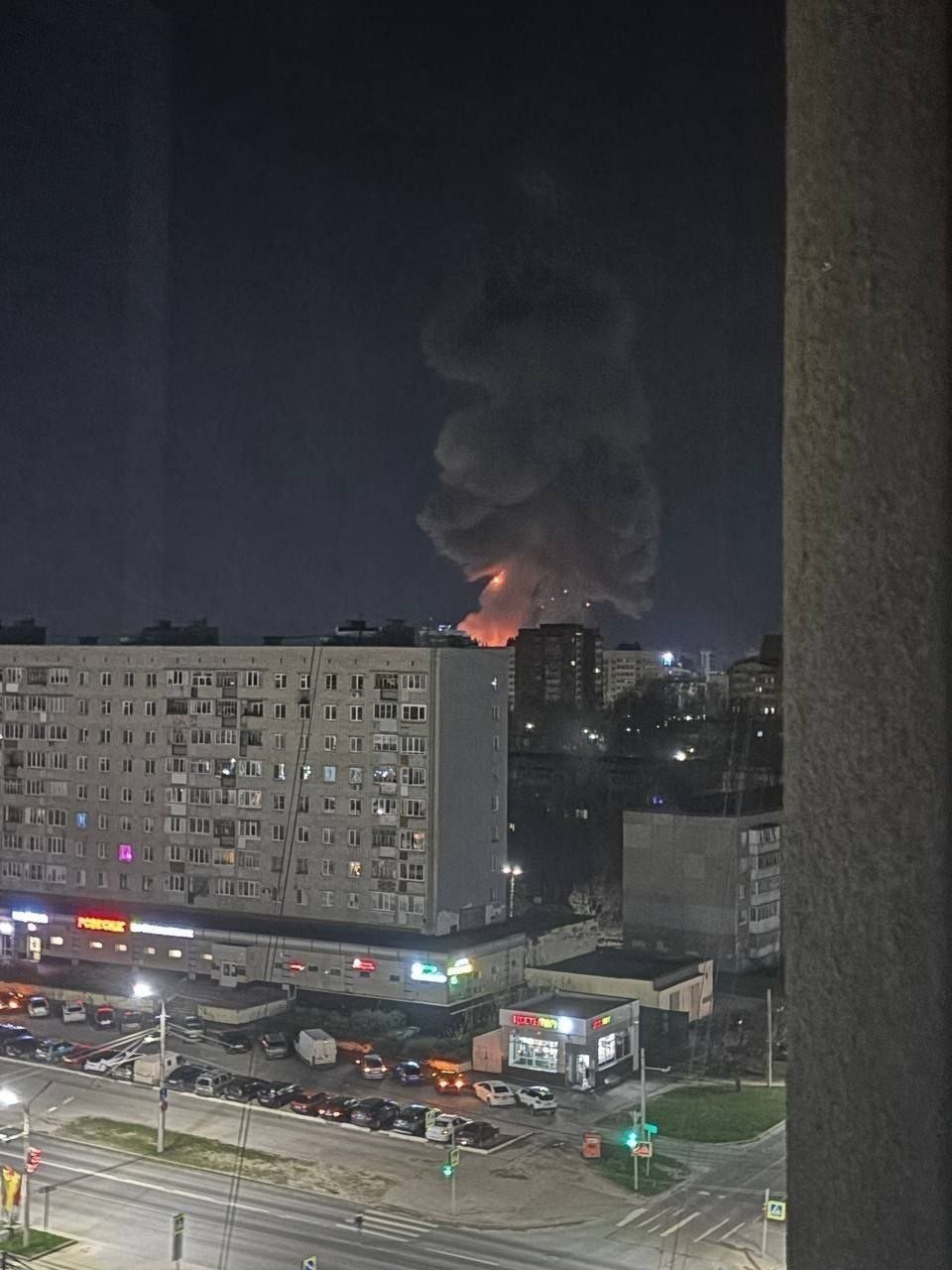
Ukraine’s Defense Forces struck the Russian defense enterprise “VNIIR-Progress” in the city of Cheboksary overnight on May 5, using a long-range cruise missile, followed by a second wave of drone attacks later in the morning.
We bring you stories from the ground. Your support keeps our team in the field.
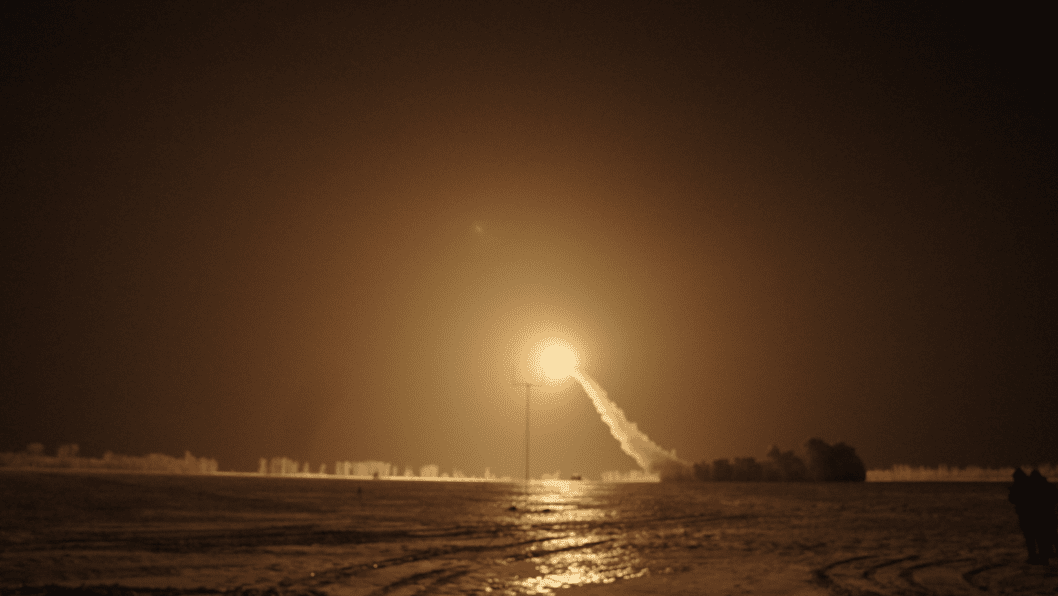
According to the OSINT monitoring group Exilenova+ and Dnipro OSINT, the initial strike was carried out with a Ukrainian FP-5 “Flamingo” cruise missile, which hit the facility and caused a large explosion and fire.
Video of the night attack by flamingos in Cheboksary, watch with sound. pic.twitter.com/I30BVkbAAX
— War Office (@Waroffice360) May 5, 2026
Local authorities confirmed that a missile threat had been declared overnight in the region, while air raid sirens were reported in the city.
Additional reporting from Astra indicated that missile alerts were issued across at least 18 regions of Russia during the night, with temporary flight restrictions imposed at multiple airports.
The outlet also reported that, for the first time, a missile threat warning was declared as far as the Khanty-Mansi autonomous region—approximately 2,000 kilometers from Ukraine.
Our long-range sanctions continue to provide an entirely just response to Russian strikes.
— Volodymyr Zelenskyy / Володимир Зеленський (@ZelenskyyUa) May 5, 2026
Last night, combat launches of F-5 Flamingo cruise missiles were carried out as part of the Armed Forces’ Deep Strike operation against several enemy targets, including military-industrial… pic.twitter.com/ndxnuIenyO
Visual evidence published by local residents and analyzed by OSINT groups appears to confirm damage to buildings associated with the plant. Footage circulating online shows a large blast followed by sustained fire at the site.
Later on May 5, Ukrainian long-range “Liutyi” strike drones conducted a second wave of attacks against the same facility, according to Astra. The head of the Chuvash Republic, Oleg Nikolayev, confirmed additional strikes in the city but did not specify the exact targets.
Exilenova+ reported that at least four drones were involved in the follow-up attack. Local authorities introduced temporary restrictions in the city, including partial road closures and a shift to remote learning for schools and technical institutions.
The “VNIIR-Progress” plant, located roughly 1,000 kilometers from Ukraine’s border, is part of the ABS Elektro industrial group and produces navigation and electronic components used by the Russian military.
These include GNSS receivers and antennas compatible with GLONASS, GPS, and Galileo systems, as well as “Kometa” modules widely used in unmanned aerial vehicles and precision-guided weapons, including Iskander-M ballistic missiles, Kalibr cruise missiles, and glide bomb kits.
The facility also manufactures electrical components such as circuit breakers, relays, and contactless modules supplied to the Russian Navy, including for nuclear-powered submarines of the Yasen-M class.
Ukraine’s “Flamingo” is a long-range cruise missile developed by the private Ukrainian company FirePoint as part of the country’s broader push to create domestically produced strike systems.
Designed for deep strikes, the missile is reported to have a range of up to 3,000 kilometers and is capable of carrying a large warhead, making it suitable for targeting high-value infrastructure far beyond the front line. Its development reflects Ukraine’s shift toward scalable, long-range capabilities that can operate independently of Western-supplied systems.
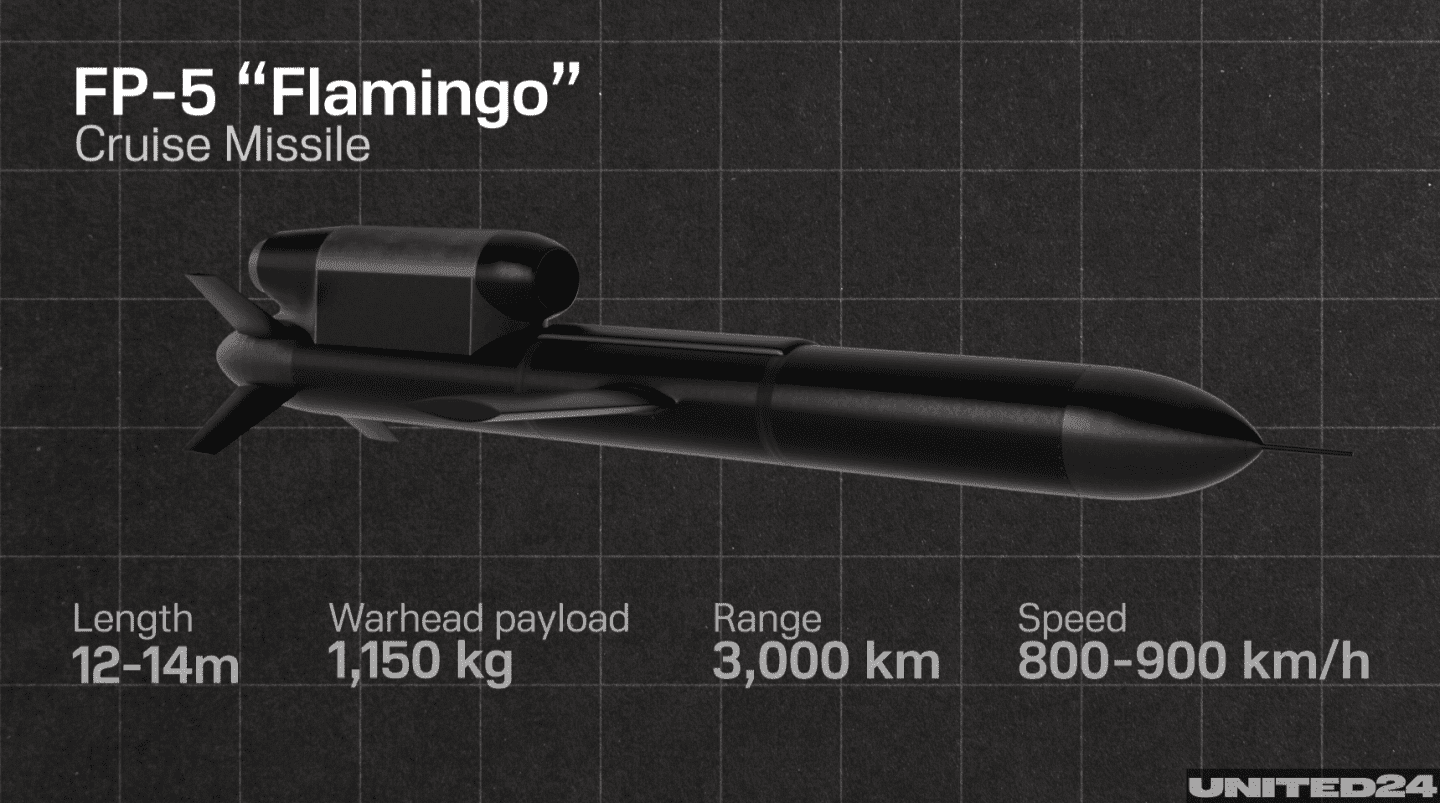
Flamingo is powered by a turbojet engine and can reach subsonic cruising speeds of approximately 850–900 km/h. It is designed to fly at relatively low altitudes to reduce detectability, following a profile similar to traditional cruise missiles but with an emphasis on cost-efficiency and simplified production.
Compared to legacy Western systems, the focus is less on high-end precision engineering and more on achieving mass deployment at a lower price point.
Earlier, Ukraine’s Unmanned Systems Forces (USF) said areas 1,500–2,000 km inside Russia are no longer a “peaceful rear,” highlighting the growing reach of Ukrainian long-range strikes.
USF commander Robert “Magyar” Brovdi stated that drone operations—now responsible for about one-third of enemy losses despite making up only around 2% of Ukraine’s forces—are increasingly targeting infrastructure deep inside Russia, particularly energy facilities linked to war financing.
Discuss this article:
-9a7b3a98ed5c506e0b77a6663f5727c5.png)

-6b3c58bbcf8c8f2f38775f349181b1ab.jpg "Recruits, supervised by instructors, cover a distance on Day Zero of Basic Military Training at the 118th Separate Mechanised Brigade of the Ukrainian Armed Forces on April 5, 2026. (Source: Getty Images)")