- Category
- World
Armenia Signs Historic US Strategic Partnership in Defiance of Russian Economic Pressure
 Prefer U24 Media on Google
- Authors

-72b63a4e0c8c475ad81fe3eed3f63729.jpeg "Photo of Cyril Barabaltchouk")
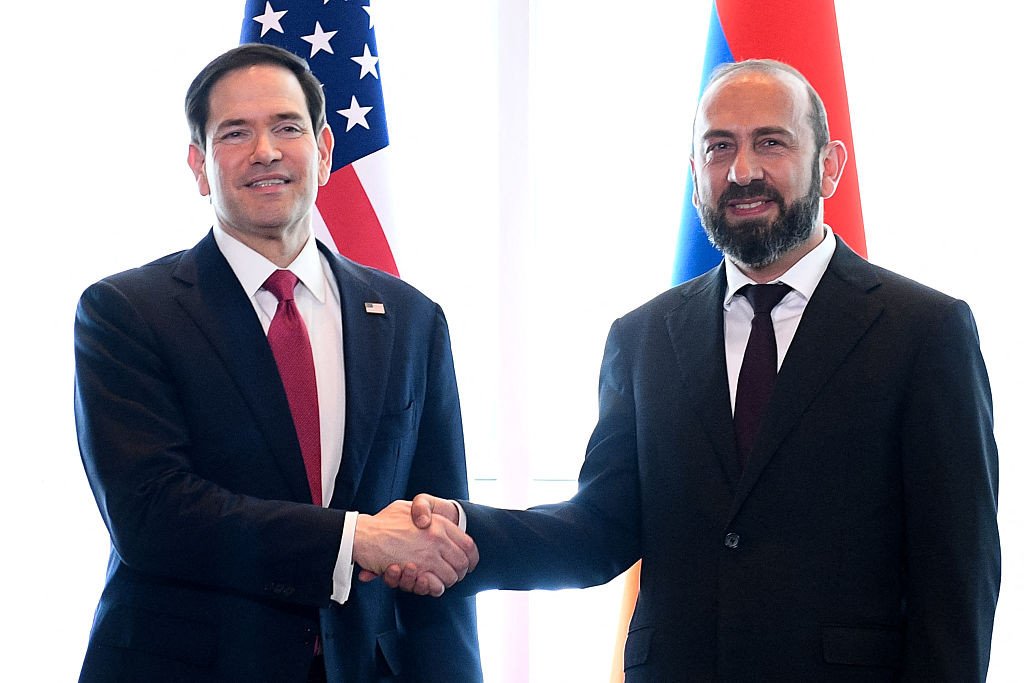
US Secretary of State Marco Rubio and Armenian Foreign Minister Ararat Mirzoyan signed a landmark strategic partnership agreement, solidifying a major Western pivot just two weeks before the South Caucasus nation heads to critical parliamentary elections, Reuters reported on May 26.
The high-stakes diplomatic visit happens amid economic retaliation from Russia, which has long treated Armenia as part of its exclusive sphere of influence.
We bring you stories from the ground. Your support keeps our team in the field.
Under Prime Minister Nikol Pashinyan, Armenia has diversified its foreign policy away from Moscow. The country launched an official EU accession process last year and recently drew the Kremlin’s ire by hosting a high-profile EU summit earlier this month, according to Reuters.
In response, Russia has weaponized its economic leverage, threatening to hike the prices Yerevan pays for Russian natural gas. Moscow also implemented an immediate import ban on Armenian flowers, mineral water, and brandy this week.
Reuters notes that the strategic partnership signed on May 26 seeks to insulate Armenia from Russian bullying ahead of the June 7 elections, which pit Pashinyan’s pro-Western Civil Contract party against a fractured coalition of pro-Russian opposition parties.
-7b3bcf6c7eee4cecabb73b381729aabd.jpg)
The TRIPP corridor & critical minerals
Beyond the overarching partnership, Rubio and Mirzoyan signed a framework agreement targeting Armenia’s rich mining sector—specifically iron, copper, and zinc.
“We are going to be able to work together to make sure that both of our countries, both of our economies, are going to have reliable access to these critical minerals,” Rubio stated during the signing ceremony, Reuters reported.
The diplomats also greenlit cooperation on a highly anticipated 43-kilometer (27-mile) transit corridor running across southern Armenia. Dubbed the “Trump Route for International Peace and Prosperity” (TRIPP), the route will provide Azerbaijan with a direct transit link to its Nakhchivan exclave and onward into Türkiye, Baku’s closest ally.
TRIPP stems from a preliminary peace framework reached in August 2025 to resolve decades of intermittent warfare between Armenia and Azerbaijan, though a formal comprehensive peace treaty has yet to be finalized, Reuters wrote.
The TRIPP corridor holds massive geopolitical value for Washington. By establishing a direct trade link between Europe and Asia that completely bypasses both Russia and Iran, the route secures a critical supply chain. It also directly aligns with US President Donald Trump’s stated interest in securing critical mineral deals with resource-rich Central Asian nations situated further east, according to Reuters.
The Kremlin’s economic pressure on Armenia follows a series of diplomatic disputes over Armenia’s Western pivot. Prime Minister Nikol Pashinyan had previously declined to attend the Eurasian Economic Union (EAEU) summit on May 28–29, citing the upcoming June 7 parliamentary campaign.
In response, Russian leader Vladimir Putin suggested Armenia hold a referendum on exiting the Moscow-led trade bloc to pursue EU membership, calling it a potential “mutually beneficial divorce.” Pashinyan rejected the framing, asserting that Armenia acts on interstate logic and will continue implementing legislation to deepen ties with the EU while maintaining its current EAEU obligations.
Discuss this article:



-c439b7bd9030ecf9d5a4287dc361ba31.jpg "Photo of Katherina Popilnichenko")