- Category
- World
Russia Prepares Full Control Over Book Publishing Under State Authority
 Prefer U24 Media on Google
- Authors

-c439b7bd9030ecf9d5a4287dc361ba31.jpg "Photo of Katherina Popilnichenko")
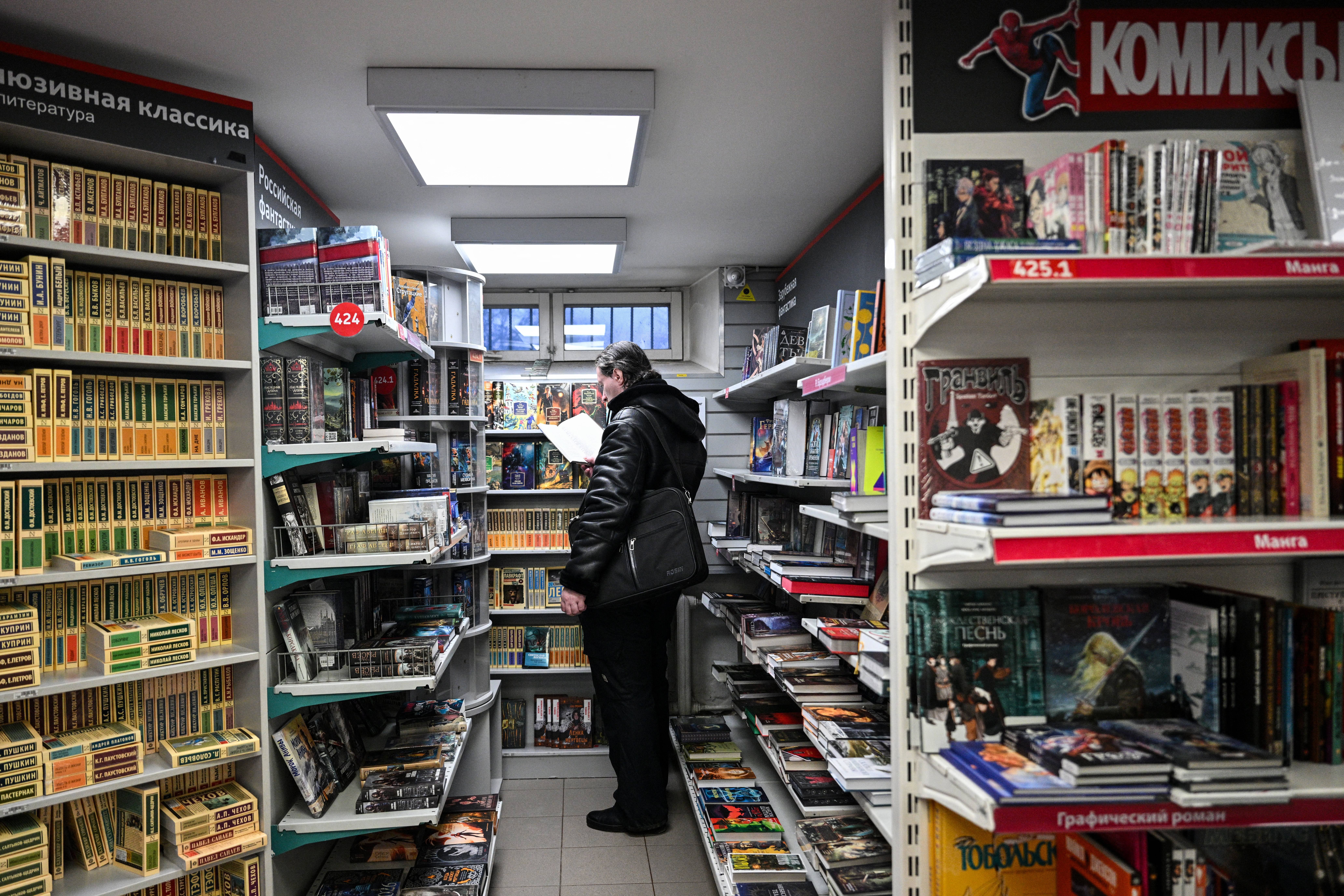
Russian authorities are preparing to grant the Expert Center under the Russian Book Union legal authority to conduct official state evaluations of literature to ensure compliance with national laws.
Vladimir Grigoriev, director of the state support department for print media and the book industry at the Ministry of Digital Development, stated that the initiative is currently being developed within the ministry, as reported by The Moscow Times on August 17.
We bring you stories from the ground. Your support keeps our team in the field.
While the center already conducts evaluations, its decisions remain advisory, meaning police and courts are not legally bound to enforce them.
The Expert Center was originally established in 2023 following a directive from Vladimir Putin as a self-regulation mechanism for the publishing industry.
Its advisory board consists of officials from Roskomnadzor, the Russian Historical Society, the Russian Military Historical Society, the Russian Orthodox Church, the Spiritual Administration of Muslims of Russia, the Federation of Jewish Communities, and federal universities.
Government agencies receive these assessments free of charge, whereas commercial publishers and digital distributors must pay for inspections. By June 2026, the center had completed nearly 100 evaluations, leading bookshops and publishers to remove multiple titles from sale despite the non-binding nature of the rulings.
Additional restrictions targeting drug propaganda resulted in the removal of tens of thousands of literary works, ranging from Giovanni Boccaccio's Decameron to novels by Stephen King and Haruki Murakami.
These regulatory measures have effectively banned significant portions of literature, exposing booksellers and publishing houses to administrative and criminal prosecution. Industry sources report that publishers now conduct internal pre-publication reviews to excise controversial content.
Editors systematically remove depictions of violence, references to illicit substances, discussions of suicide, and commentary regarding the Russian military, while references to sexual orientation and gender identity are scrubbed entirely.
Russian authorities have previously escalated their campaign to ban Telegram, with State Duma Deputy Oleg Matveychev comparing the platform to an “illegal migrant” subject to “deportation” for refusing to relocate its operations to Russia.
This rhetoric followed a series of massive outages across Moscow and St. Petersburg, which saw the messenger’s availability drop to 80% as regulators implemented “white list” systems to bypass VPNs and throttle mobile data.
Analysts described the disruptions as a finalized “rehearsal” for a total block, building on summer 2025 tests conducted under the state-controlled “sovereign messenger” law to effectively isolate the country’s digital space.
Discuss this article: