- Category
- Latest news
Kremlin Tightens Internet Grip, Drawing “Digital Concentration Camp” Criticism at Home
 Prefer U24 Media on Google
- Authors

-72b63a4e0c8c475ad81fe3eed3f63729.jpeg "Photo of Cyril Barabaltchouk")
Russian State Duma Deputy Mikhail Matveev has slammed the Kremlin’s intensifying internet censorship and VPN crackdowns as “hysteria” designed to build a “digital concentration camp,” The Moscow Times reported on March 31, 2026.
Matveev’s criticism highlights a growing rift within the Russian political establishment over the government’s approach to digital control. The deputy pointed to what he described as rampant hypocrisy among the ruling elite, noting that officials who publicly condemn foreign technology often rely on it behind closed doors.
We bring you stories from the ground. Your support keeps our team in the field.
“We have a lot of hypocrisy on the part of our authorities,” Matveev stated, citing examples of officials calling for bans on imports while carrying the latest iPhones, and those who label Telegram an “enemy” platform while simultaneously paying for its Premium subscription services.
He warned that these plans lack a long-term strategy and will eventually fail, adding that “when all this begins to fall apart, the people who came up with all this will step aside and pretend that they have nothing to do with it,” The Moscow Times wrote.
The deputy’s remarks come as the Russian Ministry of Digital Development confirms it is discussing the introduction of fees and fines for citizens who use VPN services to bypass state-mandated blockages. Minister of Digital Development Maksut Shadaev described the proposed measures as a “difficult compromise,” suggesting that while the government understands the potential consequences, “all other options are much worse.”
-50c64d019d3899de5677f8b898913418.jpg)
These discussions reportedly include a requirement for internet service providers to block access to major domestic “white-listed” platforms—such as Wildberries, Ozon, Yandex, VK, and Avito—for any user attempting to access them with a VPN enabled, according to The Moscow Times
Further tightening the digital leash, the Ministry has reportedly called on mobile providers to charge users for international traffic exceeding 15 GB per month. According to experts like Mikhail Klimarev, head of the Internet Protection Society, these drastic measures are a direct response to a record-breaking surge in Russian interest in censorship-circumvention tools, The Moscow Times reported.
As the state attempts to finalize its grip on the domestic web, the proposed restrictions threaten to cut off millions of Russians from essential domestic services if they choose to maintain their privacy or access restricted global information.
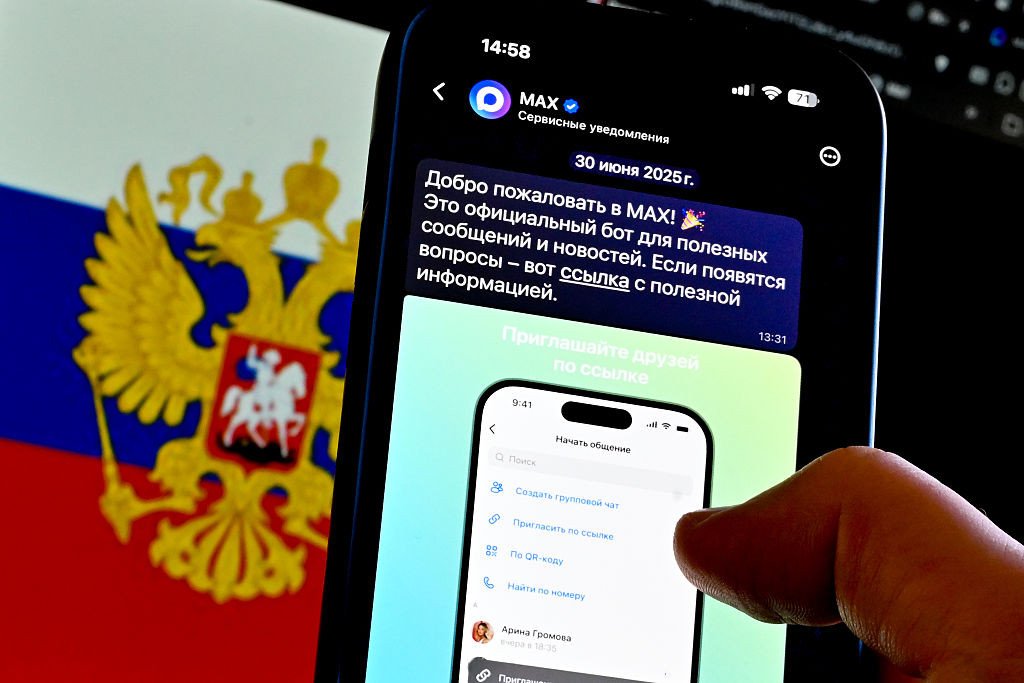
The current crackdown followed a series of “gradual restrictions” on Telegram that began in early February 2026, when Russian regulators started throttling download speeds and blocking voice calls nationwide. These technical disruptions were part of a broader state-led effort to force nearly 96 million users onto “MAX,” a new government-controlled messaging app developed by VK under the supervision of the FSB. By mid-March, massive outages were reported in Moscow and St. Petersburg, with authorities reportedly preparing for a total block of the platform by April 1, 2026, after designating it as a “hostile means of communication” during high-level security meetings.
Russian authorities have previously escalated their campaign to ban Telegram, with State Duma Deputy Oleg Matveychev comparing the platform to an “illegal migrant” subject to “deportation” for refusing to relocate its operations to Russia. This rhetoric followed a series of massive outages across Moscow and St. Petersburg, which saw the messenger’s availability drop to 80% as regulators implemented “white list” systems to bypass VPNs and throttle mobile data.
Analysts described the disruptions as a finalized “rehearsal” for a total block, building on summer 2025 tests conducted under the state-controlled “sovereign messenger” law to effectively isolate the country’s digital space.
Discuss this article:
-4a56a6b482ec132402c16ef6fcabf9a2.png)




-f8b795e6bf1d73fc2fdbfd74f5e7ea96.jpeg "Massive flames and thick black smoke rise from the Omsky Kauchuk chemical plant in Russia following a Ukrainian drone strike on October 24, 2026. (Source: Exilenova+)")