- Category
- War in Ukraine
How Ukraine Liberated 200 Sq Km in Its Fastest Push Since 2023—Disrupting Russia’s 2026 Plans
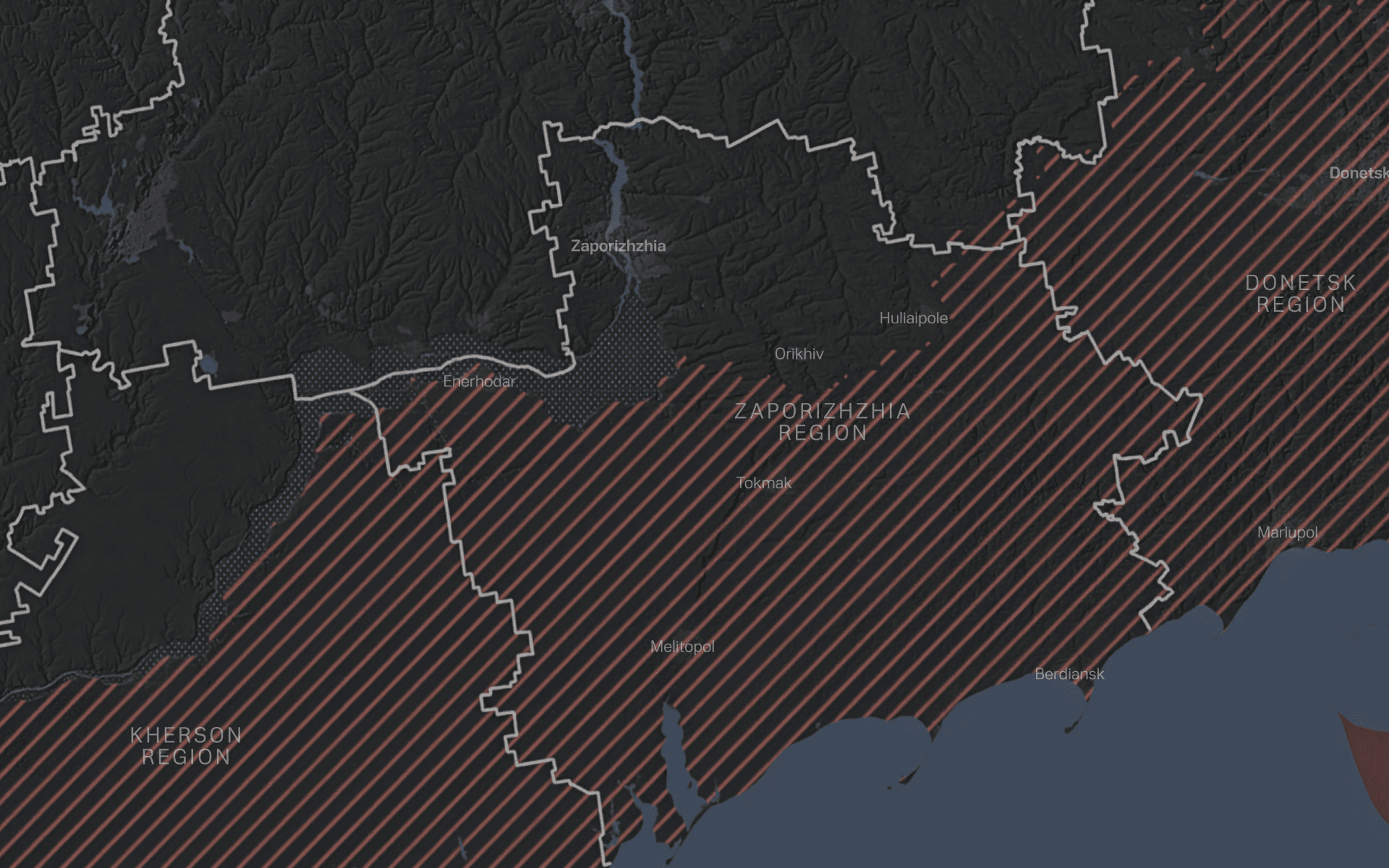
In just weeks, Ukrainian forces reclaimed territory in the southern Zaporizhzhia region that Russia spent months capturing, erasing nearly half of Moscow’s recent gains, and exposing critical weaknesses in Russian communications and logistics.
 Prefer U24 Media on Google
- Authors

-29a1a43aba23f9bb779a1ac8b98d2121.jpeg "Photo of Illia Kabachynskyi")
Commander-in-Chief of the Armed Forces of Ukraine General Oleksandr Syrskyi said he was working on the southeastern fronts, including visits to “a number of brigade and regiment command posts engaged in active combat operations along the Oleksandrivka axis and near Huliaipole.” Syrskyi confirmed that Ukrainian troops are conducting effective counteroffensive assault actions.
We bring you stories from the ground. Your support keeps our team in the field.
Active offensive operations have also been confirmed by Western observers, including the US-based think tank Institute for the Study of War (ISW), which reported the liberation of approximately 200 square kilometers of territory previously seized by Russian forces. Among the units participating in the assault were formations that had earlier successfully cleared the Dobropillia axis in the Donetsk region, where Russian troops had achieved a breakthrough in 2025.
The challenge along the Zaporizhzhia front is not only to push the Russian troops back, but also to prevent them from organizing another offensive. One of the Kremlin’s objectives for 2026 is an advance along the Zaporizhzhia–Orikhiv axis. Ukraine’s counteroffensive actions have cut off existing bridgeheads for such an assault, forced Russian troops back, disrupted logistics, and extended the depth of the kill zone further into Russian-controlled territory. Holding these areas will also require the Kremlin to redeploy reserves in this direction.
One reason behind the success of the offensive operations has been problems within the Russian military’s communications network. In January, Moscow lost access to Starlink systems after SpaceX disabled terminals used by Russian forces. Another factor has been Telegram, the primary messaging platform for Russian troops. Disruptions have affected its operation, and other messaging services—except state-approved ones—are already blocked in Russia. Without Starlink, Russian forces have been left without reliable frontline communications and without a viable alternative. This has disrupted coordination and halted offensive capabilities.
Ukraine is liberating its territory
One of the recurring themes in statements by Russian officials is the supposed inevitability of Russia’s capture of Ukrainian territory. While it is true that Russian forces continue to advance, the pace of those gains is striking in a negative sense: in just two weeks of fighting, Russia loses as many troops as it did over ten years in the Soviet-Afghan War, with at least one soldier killed for every five meters advanced.
After four years of full-scale war, Russia still has not captured the Donetsk region. It could take two more years—or even longer—to do so: the small city of Chasiv Yar has been holding out for more than 20 months.
The offensive in the Zaporizhzhia region demonstrates that Ukraine is capable of reclaiming its territory with partner support and sufficient weapons supplies. This is not an isolated example but part of a consistent pattern.
In 2025, Ukrainian forces quickly eliminated the Dobropillia salient, regaining nearly 170 square kilometers of territory in just a few weeks.
An even larger-scale operation took place in Kupiansk and its surrounding areas. The Ukrainian offensive began in September 2025, and over the following three months, Ukrainian forces cleared the city and a zone extending more than 10 kilometers around it. In total, more than 100 square kilometers were liberated.
Between December 2025 and January 2026, Russia managed to seize about 450 square kilometers of territory. Ukraine’s counteroffensive has already reclaimed roughly half of that area, including through the advance in Kupiansk. This underscores that Russia does not possess overwhelming superiority. Its offensive operations have limited capacity, and with sufficient weapons supplies to Ukrainian forces, they can be contained. How else can one explain the fact that an army of more than 700,000 Russian troops advances by roughly 200 square kilometers per month while sustaining losses comparable to the population of a small town?
Discuss this article:

-c439b7bd9030ecf9d5a4287dc361ba31.jpg "Photo of Katherina Popilnichenko")