- Category
- World
Germany Wants to Watch Russia’s Shadow Fleet. Its New Drone Ship Could Help Track It
 Prefer U24 Media on Google
- Authors


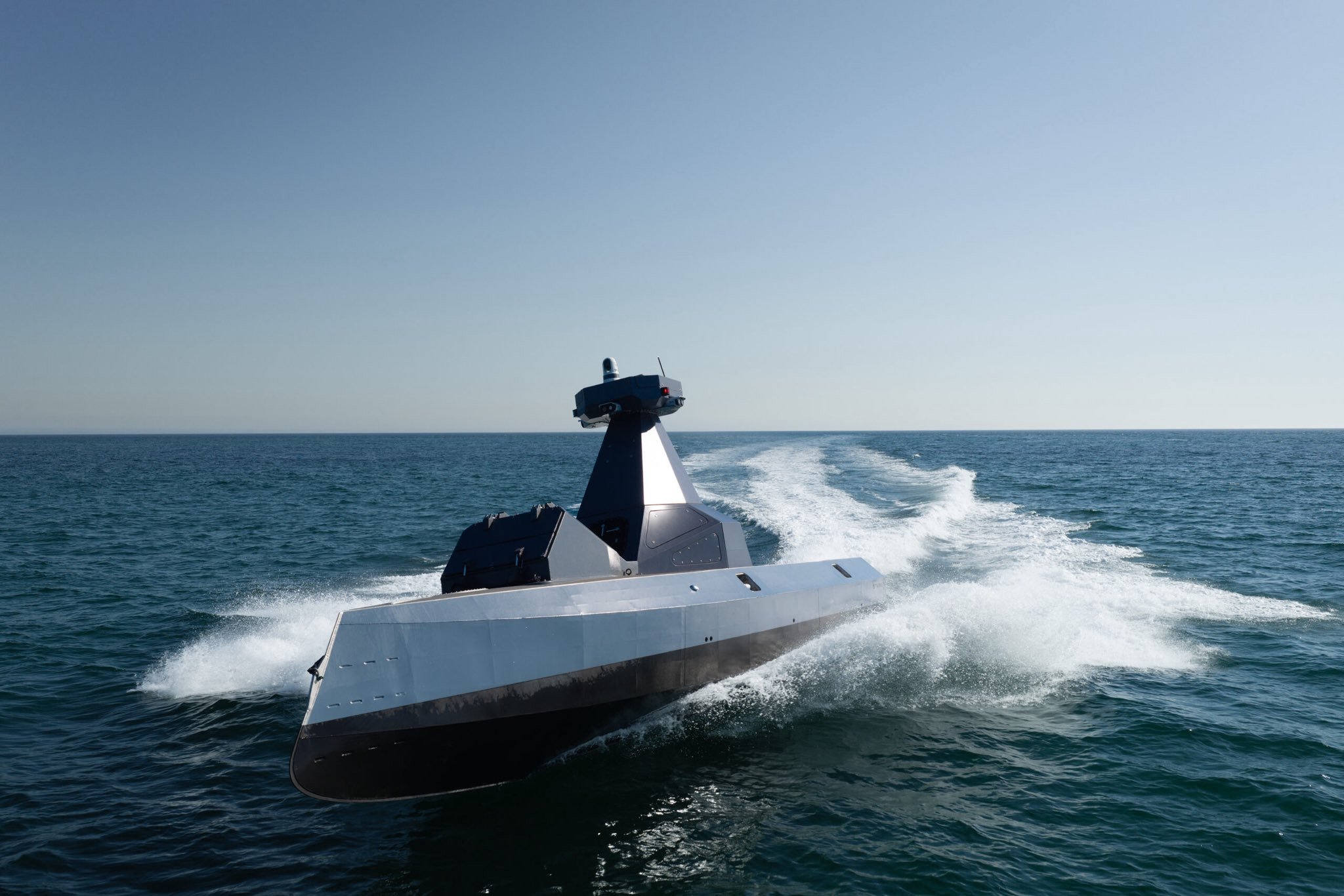
German defense technology startup Stark Defence plans to launch a new 24-meter unmanned surface vessel in 2027, designed to protect critical underwater infrastructure and monitor Russia’s shadow fleet in European waters, according to Bloomberg on November 3.
The Berlin-based company unveiled plans for the vessel, designated Vanta 24, during Bloomberg Tech London on November 3. The announcement comes as European countries increasingly seek autonomous maritime systems to strengthen naval security amid growing concerns over Russian activities.
We bring you stories from the ground. Your support keeps our team in the field.
Stark Defence CEO Uwe Horstmann said the new platform would offer a significantly cheaper and faster-to-deploy alternative to conventional crewed warships.
“Those are systems that cost a thousandth of the price of a manned frigate, which takes years to produce,” Horstmann said. Stark’s unmanned vessel can be deployed in a matter of months, offering a significant advantage in terms of deployment speed.
According to the company, the Vanta 24 will be capable of carrying payloads weighing up to 50 metric tons, including weapons such as missiles and cannons, while reaching speeds exceeding 40 miles per hour (64 kilometers per hour) without a crew onboard.
The vessel is intended to support maritime surveillance and security operations, particularly in European waters where concerns over Russian naval activity and threats to critical infrastructure have intensified.

Founded in 2024 as a manufacturer of strike drones, Stark Defence has already developed two smaller maritime vessels. The Vanta 24 represents a further expansion of its product portfolio as the company seeks to establish itself as a broader defense technology supplier.
Horstmann said the company's expansion beyond unmanned aerial systems had been part of its strategy from the beginning.
According to Bloomberg, in an earlier interview, Horstmann emphasized that expanding Stark’s operations beyond drone manufacturing was “always the ambition.”
“We need a new kind of defense company that is technology-first, software-first and believes in rapid innovation,” he stated.

The announcement comes as European governments increasingly focus on maritime security following a series of cyberattacks, drone incursions, and suspected sabotage incidents affecting critical infrastructure.
Particular attention has been directed toward Russia's shadow fleet, a network of vessels associated with Moscow that has raised concerns among European authorities.
Northern European countries have strengthened their focus on naval deterrence, while several governments have taken steps to counter Russian maritime activities.
According to Bloomberg, British forces boarded a sanctioned Russian oil tanker earlier this year, while the Netherlands recently proposed legislation introducing additional measures to intercept Russian vessels.
These developments have coincided with increased Russian submarine activity in European waters, adding to concerns about the security of undersea cables and other critical maritime infrastructure.
Horstmann said Stark Defence is developing its autonomous systems to address what he described as a “new potential battleground” in the Baltic and North seas, where difficult weather conditions, including high waves and freezing temperatures, present additional operational challenges.
Alongside the Vanta 24, the company is developing an electronic warfare sensor designed to detect transmitters and radar systems at distances of up to 100 kilometers (62 miles).

Stark is also working on a software platform intended to enable communication between unmanned aerial and maritime systems, with the potential to integrate weapons and equipment produced by other manufacturers.
Meanwhile, Russia has also been adapting its naval assets in response to the growing threat posed by unmanned systems.
On November 2, military observer and OSINT analyst Massimo Frantarelli shared photographs showing two Russian Baltic Fleet warships fitted with disruptive camouflage patterns and protective anti-drone netting.
The vessels, stationed at Russia’s naval base in Baltiysk in the Kaliningrad region, appear to have been modified to make them more difficult to identify and reduce their vulnerability to potential drone strikes.
Discuss this article: