- Category
- World
Gulf Oil Exports Climb Above Levels Seen Before the Iran War as Tankers Brave Attacks
 Prefer U24 Media on Google
- Authors


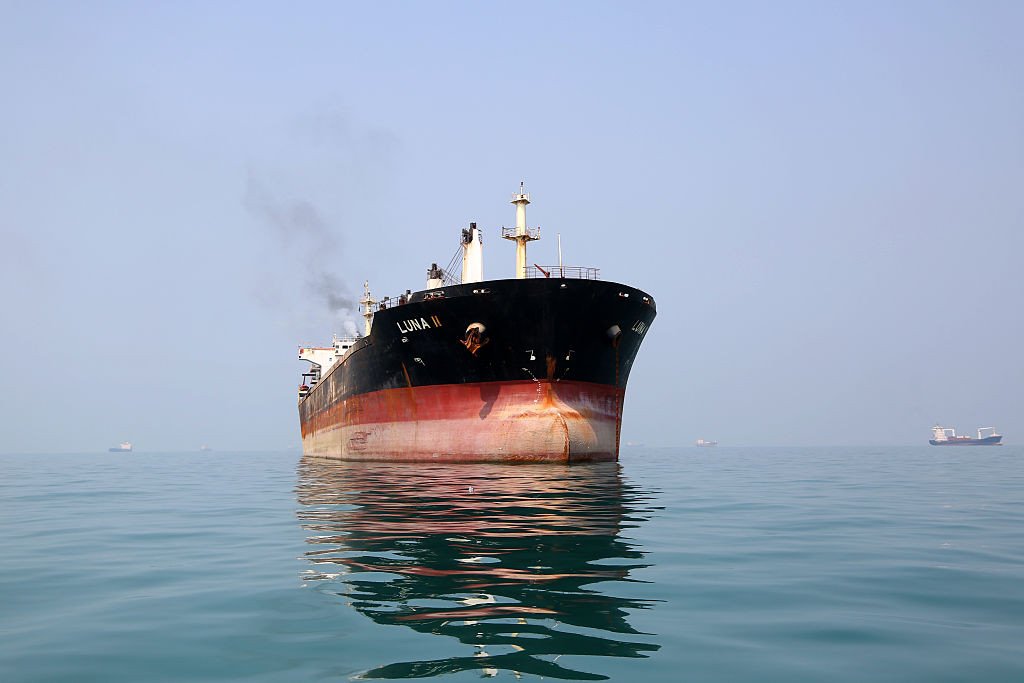
Persian Gulf oil exports have risen above prewar levels despite continued Iranian attacks in and around the Strait of Hormuz, as tanker operators accept higher risks in exchange for large profits, The Wall Street Journal reported on October 20.
Middle East oil flows, including shipments through Hormuz and alternative routes, averaged more than 24 million barrels per day in the week through October 18, according to Kpler. That surpassed the prewar level of 23.3 million barrels per day.
We bring you stories from the ground. Your support keeps our team in the field.
Oil moving through Hormuz itself, including offshore transfers in the Gulf of Oman, averaged about 14 million barrels per day, or roughly 82% of prewar volumes, The Wall Street Journal reported.
“The big picture is that the system for shipping through a dangerous Strait of Hormuz is now well-established and the risk appetite of those involved in exporting oil has risen,” Hamad Hussain, senior commodities economist at Capital Economics, told the Journal.
Saudi Arabia and the United Arab Emirates have also increased use of pipelines that bypass the strait. In September, about 40% of non-Iranian crude exports from the Gulf avoided Hormuz, compared with 17% before the war, according to Kpler.
The recovery in oil flows comes despite escalating attacks on shipping. Around 30 attacks on vessels have been reported in October, accounting for roughly 20% of all ships attacked during the war, according to figures cited by The Wall Street Journal.
“Iran is trying to reassert its blockade of the strait,” Christopher Long, a former British naval officer with Neptune P2P Group, told the outlet.
For traders and shipowners, the profits can outweigh the risks. Kpler estimated that traders can earn around $20 more per barrel reselling Iraqi crude than before the war, amounting to roughly $40 million on a supertanker cargo.
Crew members are also receiving large bonuses for dangerous voyages through the Gulf. Some seafarers have been offered two or three times their normal monthly salary, with one China-based staffing company offering up to $25,000 for a round trip, according to The Wall Street Journal.
“The volumes remain high despite rising attacks, because profits make it worth the risk,” Kpler crude oil analyst Homayoun Falakshahi stated.

Some shipowners have repositioned older vessels previously used to transport sanctioned Venezuelan and Russian oil into the Persian Gulf, where tanker rates have surged.
Many vessels are making short shuttle runs through the highest-risk areas. Tankers load oil inside the Gulf, pass through Hormuz under US air cover along the Omani coast, and often transfer cargo near Oman to ships heading for distant markets.
Iran’s Islamic Revolutionary Guard Corps has continued using drones, missiles, and small-boat tactics against shipping, The Wall Street Journal reported.
The Tanzania-flagged supertanker Loyalty, which previously transported Venezuelan crude to China, entered the Gulf twice since September to load Iraqi oil. On October 16, the tanker was struck by a rocket-propelled grenade launched from a small boat while carrying 2 million barrels of Iraqi crude.
The attacks have sharply increased transport costs. Freight for a supertanker carrying Gulf crude to China approached a record $37.37 per barrel, while war-risk insurance rose to as much as 10% of a vessel’s value from less than 3%, according to the report.
“In April, the problem was a shortage of crude. In October, it is the cost of moving it,” JPMorgan commodities strategist Natasha Kaneva stated.
Brent crude remained around $108 per barrel as traders continued to question whether the recovery in Hormuz shipments could be sustained if fighting intensifies again.
The extreme cost of moving oil through the region is also feeding a separate debate over sanctions on Russia-linked shipping. Earlier in October, the Trump administration considered allowing sanctioned shadow-fleet tankers to carry non-sanctioned oil, potentially returning vessels tied to Russia’s sanctions-evasion network to legitimate trade in an effort to bring down freight costs.
Discuss this article: