- Category
- World
Kazakhstan Tears Down Lenin Monument as De-Sovietization Efforts Expand Across Central Asia
 Prefer U24 Media on Google
- Authors


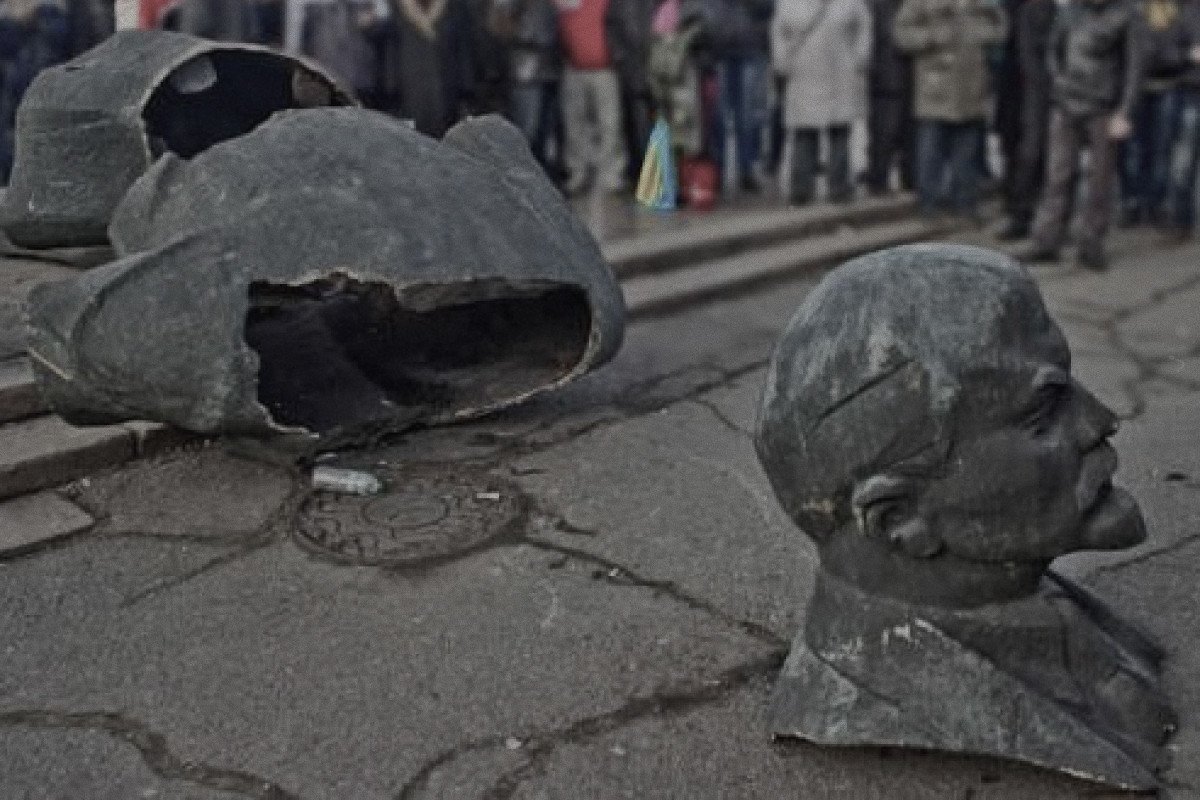
Authorities in Kazakhstan have removed a monument to Vladimir Lenin from the village of Kushmurun in Kostanay region as part of wider efforts to reduce Soviet-era influence across Central Asia, Ukraine’s Foreign Intelligence Service reported on October 29.
The monument was dismantled at the request of the regional administration after local residents collected nearly 400 signatures supporting its removal. Previous attempts to remove it in 2015 and 2022 had failed after opposition from supporters of the Soviet legacy.
We bring you stories from the ground. Your support keeps our team in the field.
The initiative group supporting the demolition linked Soviet rule directly to mass famine and political repression in Kazakhstan. Ukraine’s Foreign Intelligence Service noted that estimates of deaths during the Asharshylyk famine of the early 1930s reach as high as 2.3 million people, nearly half of Kazakhstan’s population at the time.
Some researchers have described the catastrophe as the “Kazakh Holodomor,” drawing parallels with the Holodomor in Ukraine.
Ukraine’s intelligence service stated that the removal of the Lenin monument and growing public discussion of Soviet-era repression have unsettled Russian political strategists because they challenge Moscow’s narrative of a prosperous shared Soviet past.

Russia presents itself internationally as the legal successor to the Soviet Union. The intelligence service argued that renewed attention to the individual histories of former Soviet republics, including famine, repression, and forced political control, undermines the mythology surrounding the Soviet period.
Similar de-Sovietization processes have intensified elsewhere in Central Asia, although their form differs between countries.
In Kyrgyzstan, calls for broader decommunization and derussification have grown during 2026. Uzbekistan has been described as a regional leader in this process, while Tajikistan has emphasized national identity and historical memory.
Turkmenistan has pursued its own model centered on national sovereignty within an isolationist and neutral foreign policy.
Despite those differences, Ukraine’s Foreign Intelligence Service assessed that de-Sovietization, decommunization, and derussification efforts across Central Asia share a common objective of reducing dependence on and influence from Russia.
The trend contrasts with Russian efforts to revive Soviet symbolism in temporarily occupied Ukrainian territories. UNITED24 Media previously reported that Russian authorities in temporarily occupied eastern Ukrainian city of Luhansk promoted Stalin and Lenin imagery during a February 14 propaganda event, replacing traditional Valentine’s Day themes with Soviet symbols.
Discuss this article: