- Category
- Investigations
“London in 200 Seconds”: Who Builds the Nuclear-Capable Sarmat Missile Putin Uses to Threaten the World?
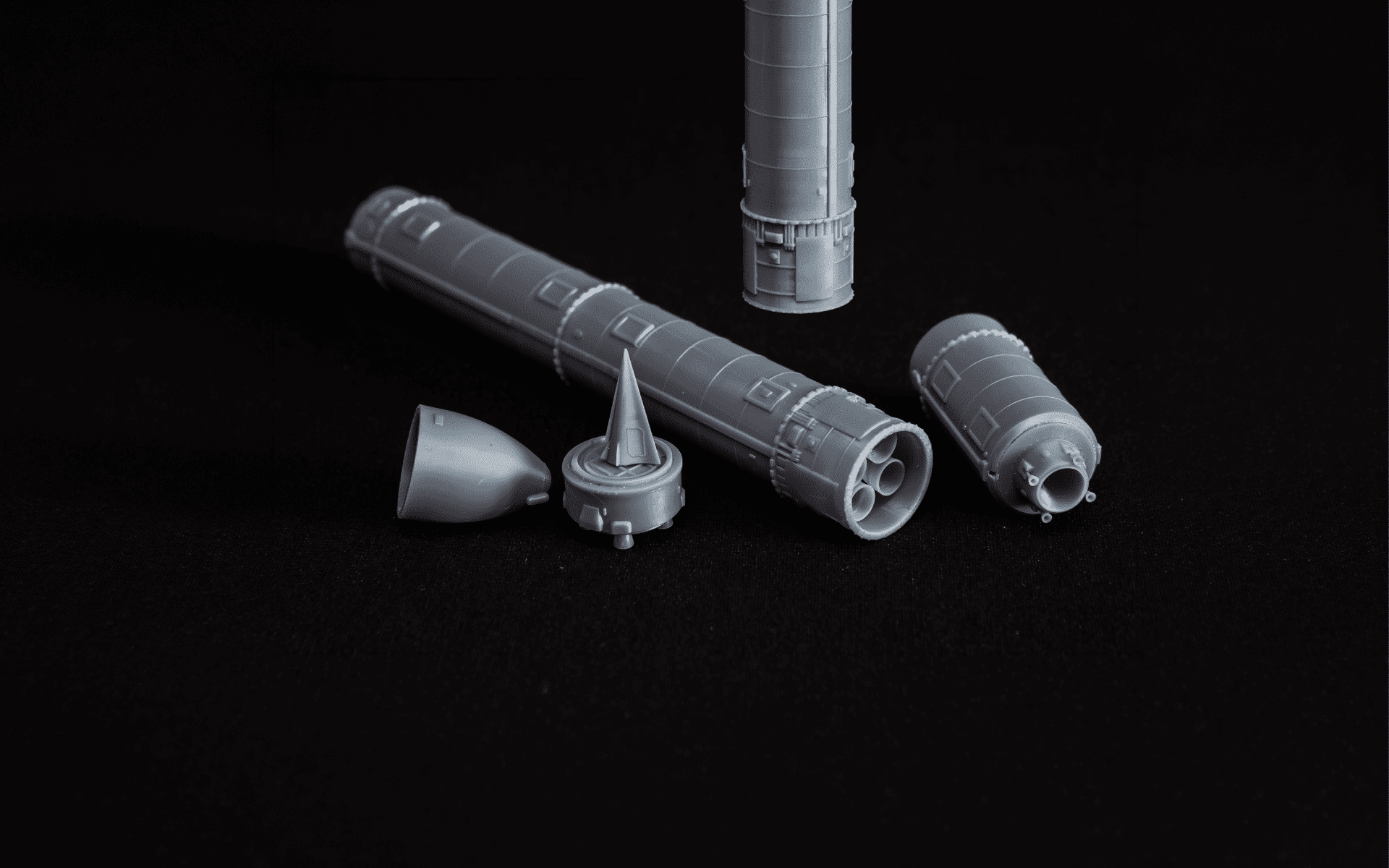
Putin has declared Russia’s nuclear-capable Sarmat missile ready for deployment at least seven times, repeatedly using the weapon to threaten the West. But who builds it? Newly obtained documents reveal a sprawling network of missile, space, chemical, and nuclear enterprises involved in its production.
 Prefer U24 Media on Google
- Authors




-7be939cdd110d785b96874b4c6925960.jpg "Photo of Anna Holishevska")

In May 2026, Russian leader Vladimir Putin once again announced that the RS-28 Sarmat heavy-class intercontinental ballistic missile (ICBM) was ready to be placed on combat duty.
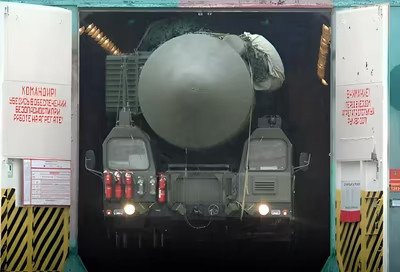
Russian propaganda has been portraying this weapon as one of the key symbols of Russia’s military power and has regularly used it as a tool of nuclear intimidation against the world.
Until now, almost nothing had been publicly known about the missile’s production. However, UNITED24 Media and StateWatch have obtained unique documents that reveal the Sarmat production chain.
Russia’s RS-28 Sarmat: years of delays and deployment claims
The Sarmat ICBM is not a fundamentally new Russian development. Work on the project has been underway for more than 15 years. They were to replace the Voevoda missiles, known to NATO as Satan. These are the oldest nuclear missiles in Russia's arsenal, placed in silos during the 1980s.
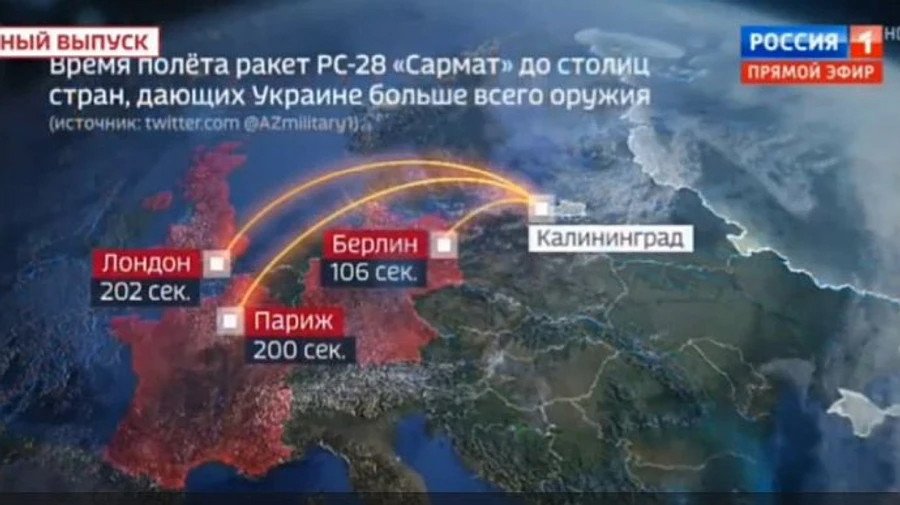
Putin has now effectively announced its deployment for the seventh time, once again using it to intimidate the world. Russian state media actively promotes the missile domestically and frequently publishes calculations showing how many seconds it would take to reach European capitals.
Sarmat missile launched from Kaliningrad could reach Berlin in 106 seconds, Paris in 200 seconds, and London in 202 seconds, said propagandist Olga Skabeeva during a broadcast on Russia 1.
Putin described the Sarmat as "the most powerful missile system in the world," claiming it can travel over 35,000 kilometers (21,748 miles). Yet, the missile remains in testing.
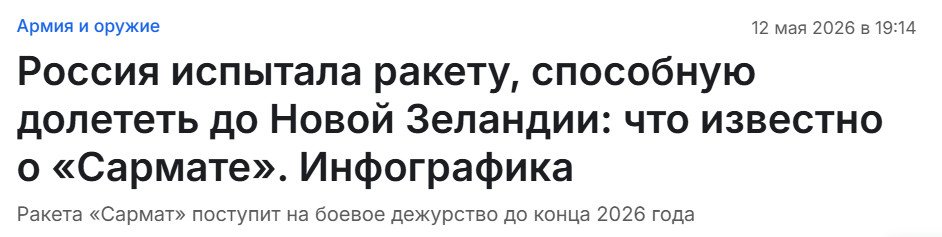


The first successful launch of the Sarmat took place from the Plesetsk Cosmodrome in April 2022. Six months later, officials announced the start of serial production, and in 2023, the system was expected to enter service with Russia’s Strategic Missile Forces. However, subsequent failed tests halted the process.
In 2024, the missile exploded inside its launch silo, leaving behind a crater visible from space. As of May 2026, Russia is still conducting tests of the Sarmat despite Putin’s promise to “actually place it on combat duty” by the end of the year.
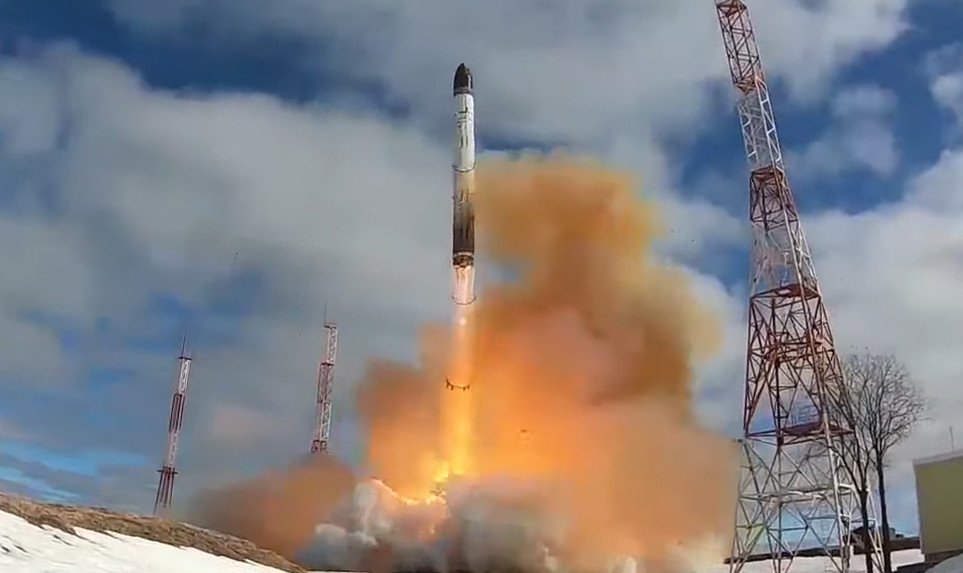
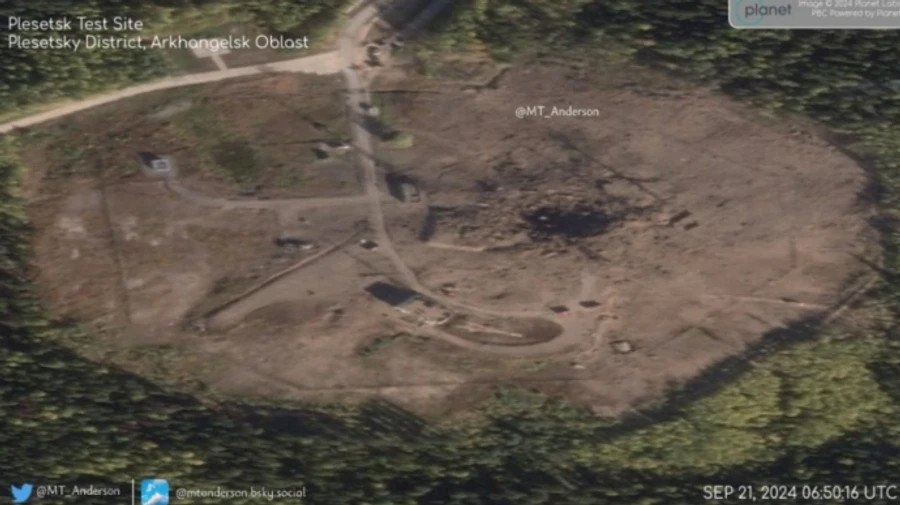
Who is behind the production of Russia’s nuclear-capable Sarmat?
Publicly available information indicates only that the system was developed by the V.P. Makeyev State Rocket Center (JSC GRC Makeyev), while direct missile production is handled by its subsidiary, the Krasnoyarsk Machine-Building Plant (JSC Krasmash). The missile engines are manufactured by the Perm-based company Proton-PM. All three enterprises are part of Russia’s state corporation Roscosmos.
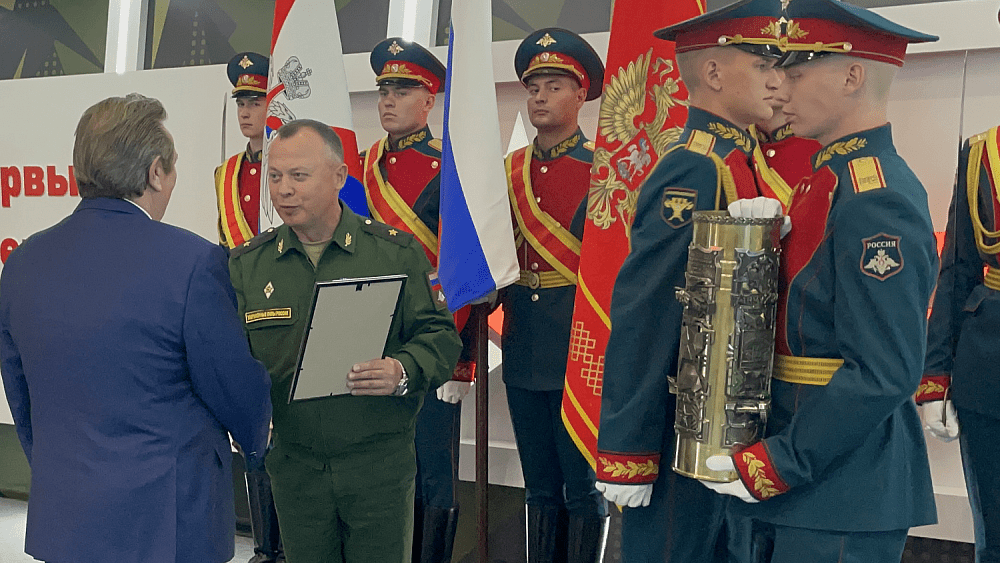
In reality, the strategic missile system relies on a far broader network of Russian defense-industrial enterprises spanning the missile, space, chemical, and nuclear sectors. Dozens of facilities across Russia are involved in producing individual components for the Sarmat. Documents obtained by the editorial team make it possible to trace this manufacturing network in detail.
In contracts and official documents, Russian designers refer to the Sarmat missile by its military designation, 15A28. Non-public correspondence between JSC Krasmash and the Federal State Enterprise Perm Powder Plant reveals that the latter is also actively involved in producing the strategic system and manufactures a number of components for the missile. The companies conduct their joint work on the Sarmat under the code names “001” and “002.”
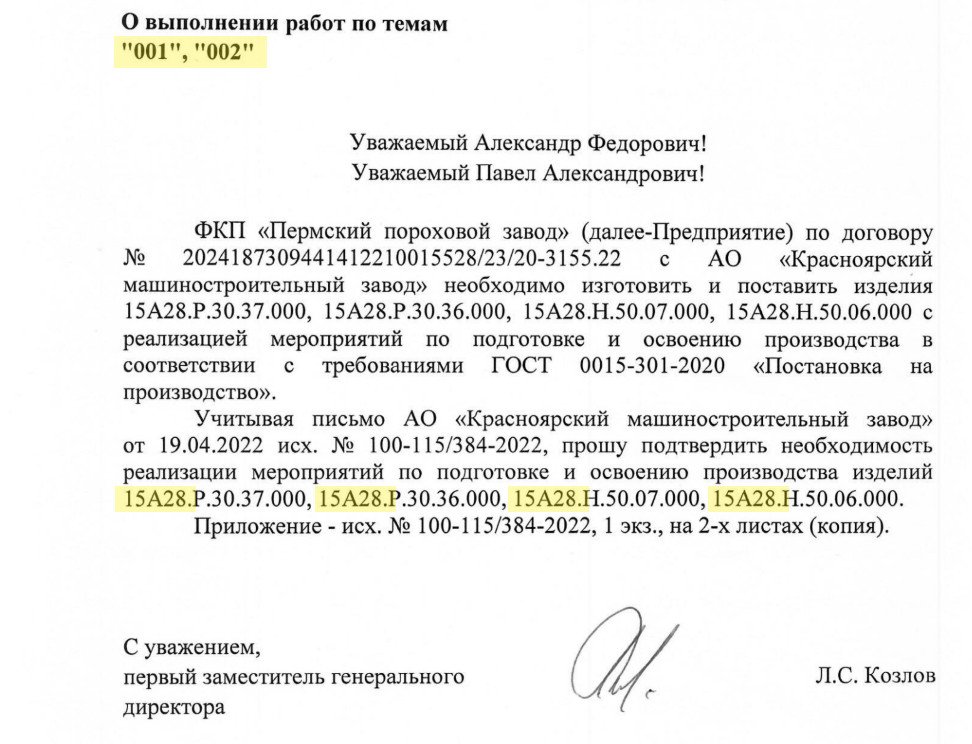

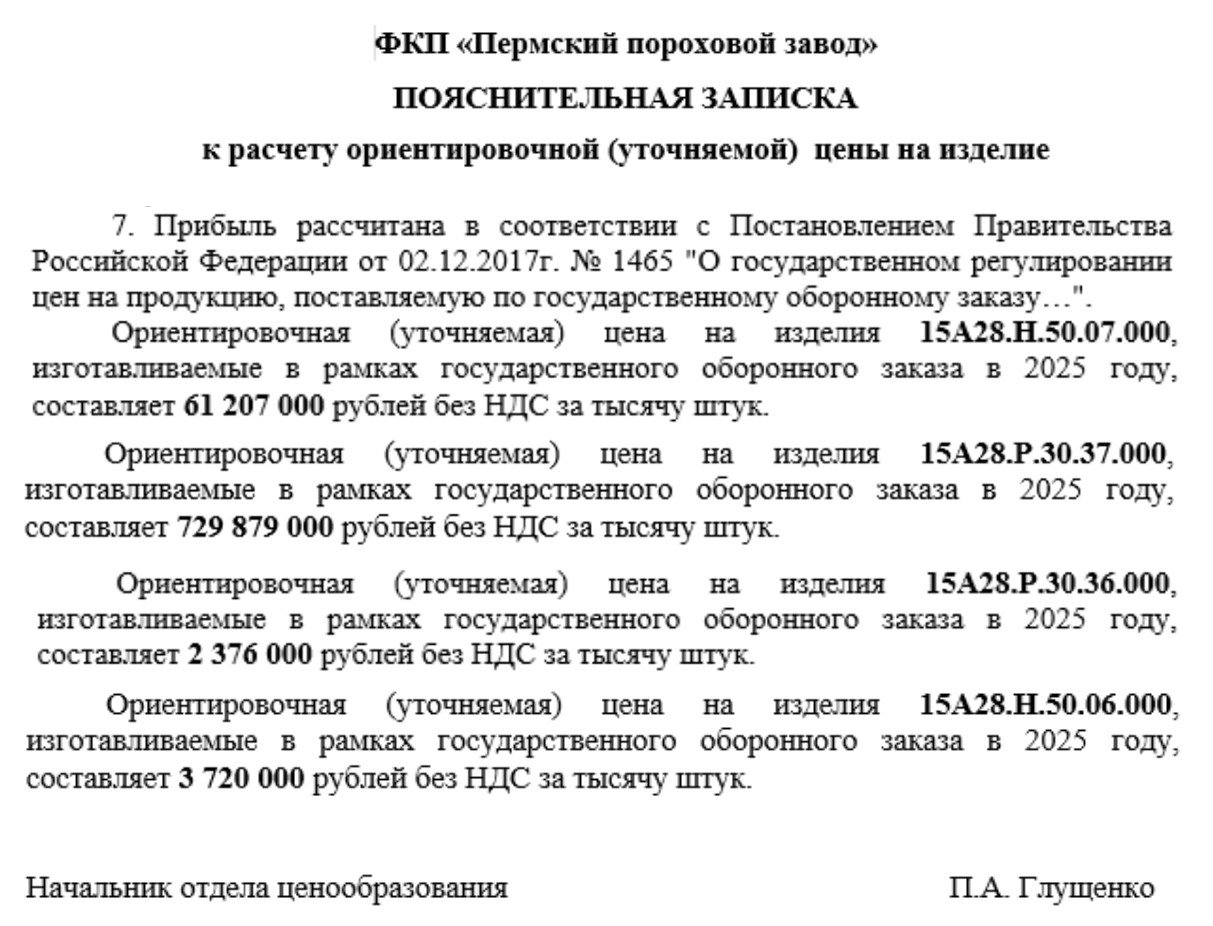
Further examination of documents from the Perm Powder Plant uncovered the contract itself with JSC Krasmash. Under the agreement, the plant was scheduled in 2025 to manufacture components for the Sarmat ICBM under at least four separate product designations: 15A28.N.50.07.000 (61 million rubles or $824,000), 15A28.R.30.37.000 (729.9 million rubles or $9.8 million), 15A28.N.50.06.000 (3.7 million rubles or $50,000), and 15A28.R.30.36.000 (2.4 million rubles or $32,000). Including VAT, the total contract value for the Perm Powder Plant alone exceeded 956 million rubles, or approximately $12.7 million.
Internal company presentations show how sharply the Perm Powder Plant expanded production after Russia’s full-scale invasion of Ukraine. Revenue increased from 7.7 billion rubles in 2022 to 22.6 billion rubles in 2024, while military products accounted for more than 95% of output.

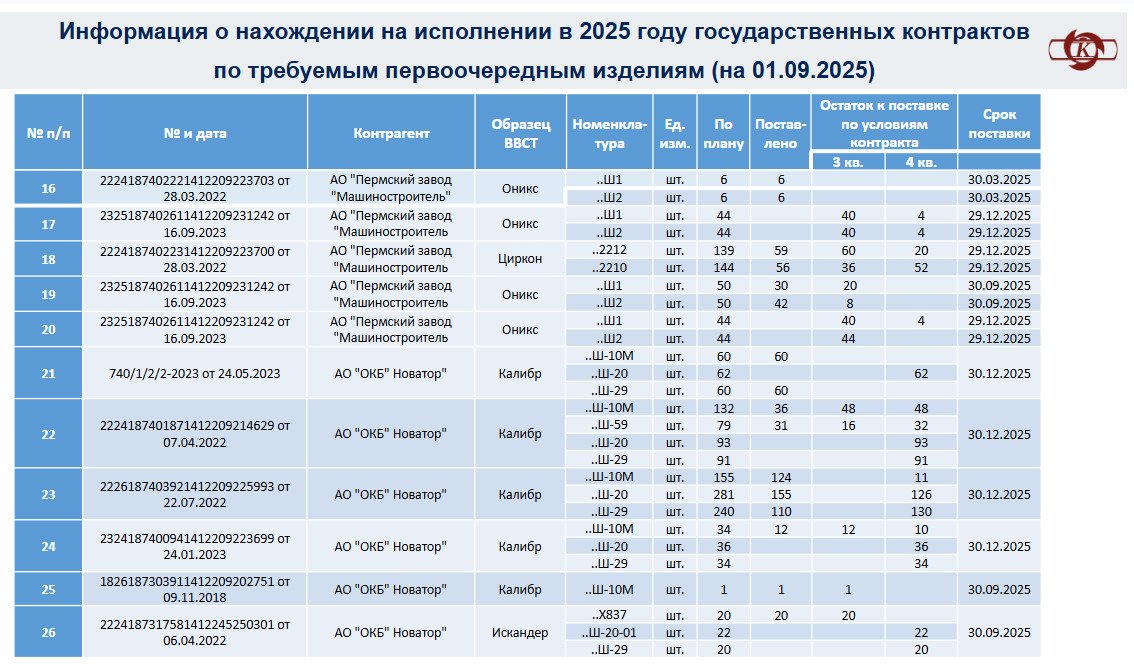
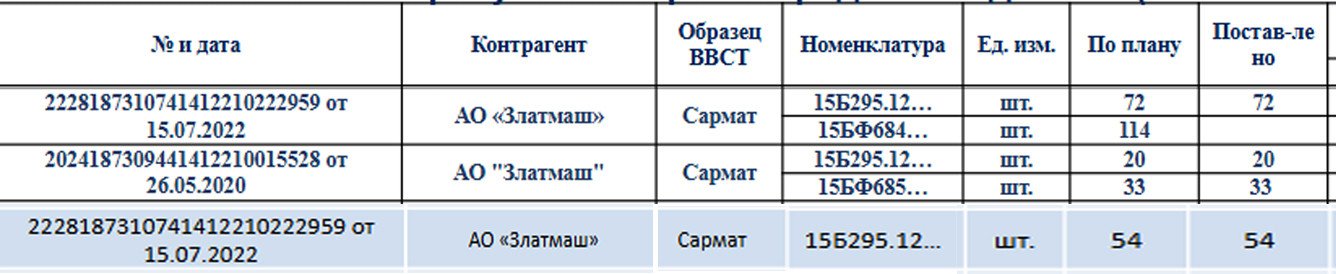
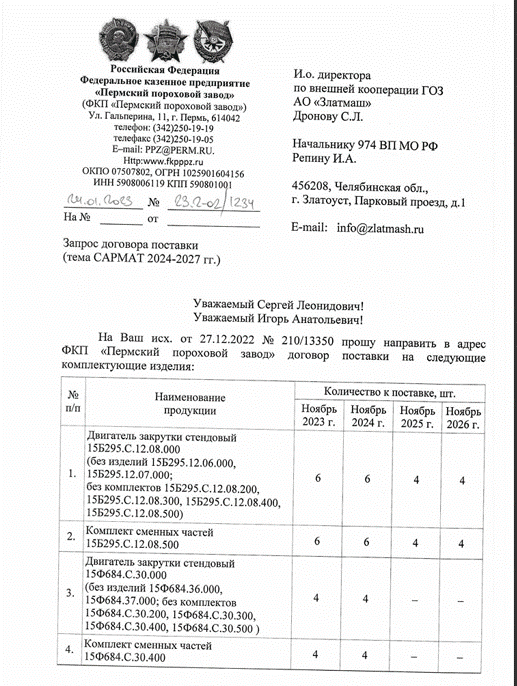
The Perm Powder Plant also supplies Sarmat-related components to JSC Zlatmash, another subsidiary of JSC GRC Makeyev and the largest recipient of state defense orders in Russia’s Chelyabinsk region. Documents from 2024 and 2025 identify the company as a manufacturer of spin-test engines, containers, spare parts kits, and individual components for the missile system.
Additional documents from the Perm Powder Plant contained protocols detailing cooperation among Russian enterprises involved in manufacturing and supplying products under projects “001” and “002.” These records show that more than ten additional enterprises participate in the Sarmat production chain, manufacturing propellant charges, containers, adapters, igniters, and other system components.
The geographic reach and scale of this cooperation are extensive. Documents from 2020–2021 point to collaboration among enterprises located in Russia’s Moscow, Perm, Chelyabinsk, Sverdlovsk, and Omsk regions. These include:
JSC PZ Mashinostroitel—a strategic enterprise in Russia’s defense industry engaged in the development and production of missile and space technology. Within the Sarmat program, it manufactures brackets and individual assemblies and also participates in the production of Iskander-M ballistic missiles.
JSC Avangard—a producer of large composite-material, plastic, and rubber products. As part of the Tactical Missiles Corporation, the company belongs to JSC Military-Industrial Corporation NPO Mashinostroyeniya and manufactures transport-launch containers and solid-fuel missile casings. The Sarmat program produces containers and adapters. NPO Mashinostroyeniya itself develops the Avangard hypersonic glide vehicle, which can also be carried by the RS-28 Sarmat.
JSC NIIPM—specializes in the development of propellants, solid rocket fuels, igniters, and charges. The organization is mentioned in internal correspondence regarding the testing of individual products for the Sarmat system.
JSC MMZ—manufactures ballistic missile components as well as missile-system control and monitoring equipment. It is part of Roscosmos.
JSC NPO Automatics—develops and manufactures control systems and radio-electronic equipment for space technology and intercontinental ballistic missiles.
JSC NII Grafit—a Russian research institute specializing in advanced carbon materials and related products. It is part of the Rosatom state corporation.
JSC Ust-Katav Wagon-Building Plant—one of Russia’s oldest railcar manufacturers, owned by Roscosmos and the United Rocket and Space Corporation.
Federal State Unitary Enterprise RFNC-VNIITF—A developer and producer of nuclear munitions. More than 50% of Russia’s nuclear arsenal is based on technologies developed by this center.
PA Polyot—one of Russia’s largest industrial enterprises specializing in missile and space technology manufacturing. It is a branch of JSC Khrunichev State Research and Production Space Center, which develops launch vehicles and upper stages.
Federal State Unitary Enterprise PA Oktyabr—a Russian radio-electronics enterprise. It manufactures electrical interconnection and switching elements linking various missile-system units and subsystems.
JSC TRI-D—a developer and manufacturer of multilayer woven reinforcement materials made from conventional and heat-resistant fibers.
JSC DKBA—produces airships and aerostats, structural film and fabric-film materials, and soft structures for missile and space technology.
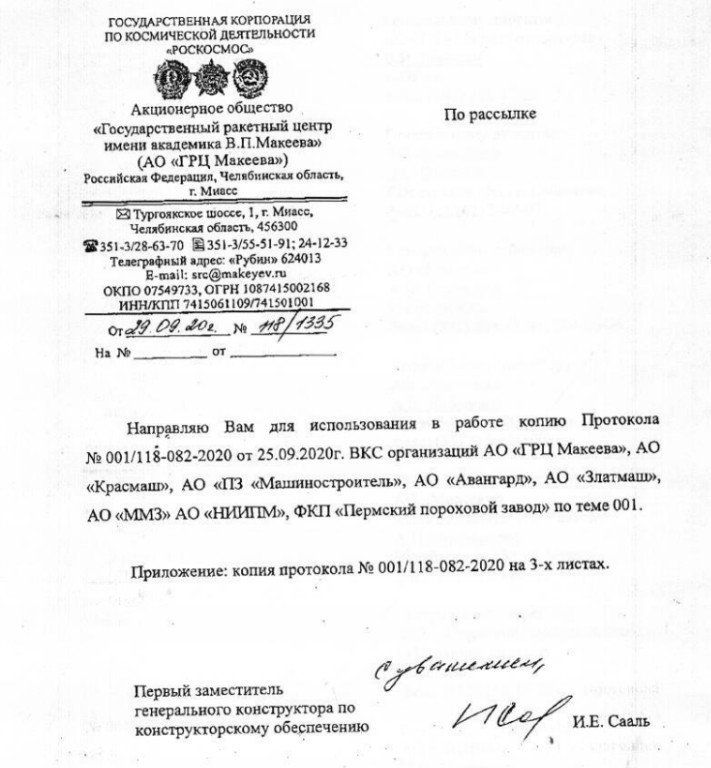
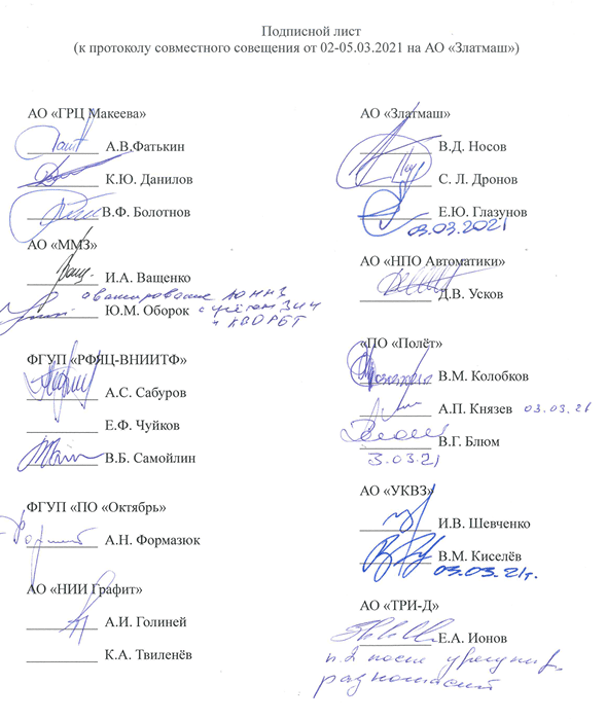
As these documents demonstrate, the scope of cooperation is extraordinarily broad. It can therefore be concluded that production of the RS-28 Sarmat effectively relies on the capabilities of Russia’s entire missile-space and nuclear-industrial complex.
Which Sarmat missile manufacturers are under sanctions?
The overwhelming majority of the enterprises listed above are affiliated with major Russian state corporations—Tactical Missiles Corporation, Rostec, Roscosmos, and Rosatom—which are subject to international sanctions due to their involvement in the war against Ukraine. Nevertheless, a number of individual companies linked to the Sarmat program still do not appear on the European Union or US sanctions lists.
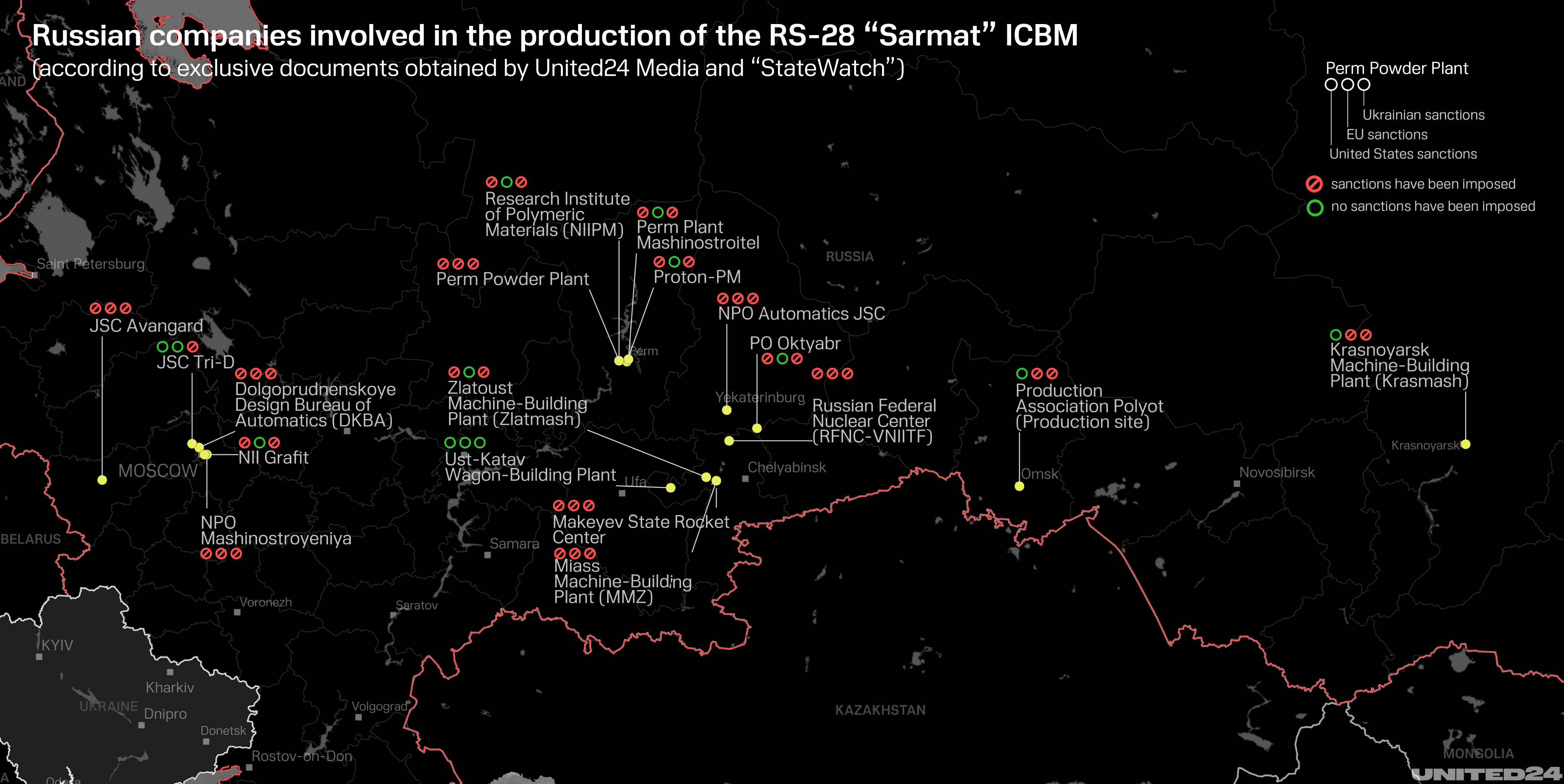
Russia presents the Sarmat as a symbol of military strength and technological superiority. Behind the strategic missile system stand dozens of enterprises, long-term production programs, hundreds of millions of rubles in state contracts, and a complex network of factories spanning the missile, space, chemical, and nuclear sectors. And all of it is devoted to a missile whose successes the Kremlin measures through high-profile statements far more often than through successful launches.
This material was prepared as part of a cooperation between the StateWatch think tank and UNITED24 Media.
Discuss this article:


-605be766de04ba3d21b67fb76a76786a.jpg "Joseph Place")
-111f0e5095e02c02446ffed57bfb0ab1.jpeg "Photo of Roman Kohanets")

-206008aed5f329e86c52788e3e423f23.jpg "Photo of Oleksandr Moiseienko")