- Category
- World
Magura Sea Drones Make Indo-Pacific Debut by Sinking Ship at 17,000-Troop Military Drills
 Prefer U24 Media on Google
- Authors

-72b63a4e0c8c475ad81fe3eed3f63729.jpeg "Photo of Cyril Barabaltchouk")
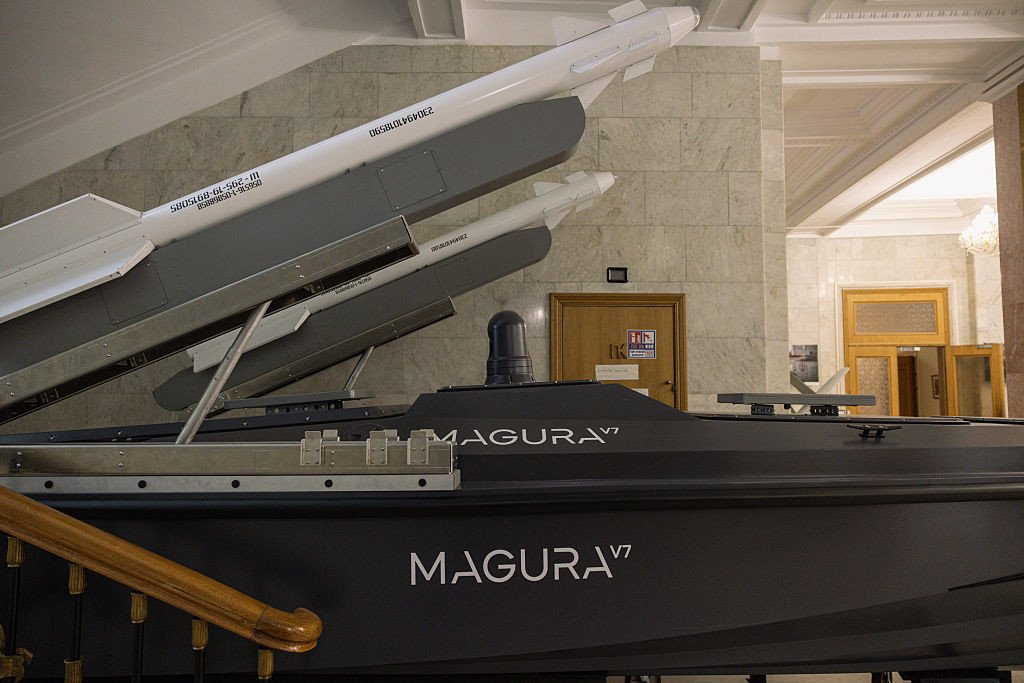
The same family of unmanned surface vessels that has been hunting Russian warships in the Black Sea made its Indo-Pacific debut by sinking a target ship during a live-fire US-Philippines military exercise, Defence Blog reported on June 8.
UFORCE, the exclusive global manufacturer of the Magura maritime drone family, confirmed that its vessels executed the maritime strike off Itbayat in the Batanes archipelago on April 24, 2026. This announcement addressed ambiguity in defence circles over which system was used during the demonstration, with the company emphasizing that no third party is licensed to produce Magura platforms, according to Defence Blog.
We bring you stories from the ground. Your support keeps our team in the field.
The live-fire drone strike was part of Balikatan, an annual military exercise between the United States and the Philippines that recently expanded to include forces from Japan and Canada. Featuring around 17,000 troops, the 2026 drills signaled a major evolution from standard interoperability training to showcasing cutting-edge unmanned naval strike capabilities in a highly contested region.
The strategic significance of the strike’s location in the Luzon Strait—a critical maritime chokepoint about 150 kilometers south of Taiwan—serves as a clear message to any force attempting to project power between the Pacific Ocean and the South China Sea, Defence Blog noted.
The Magura V5 variant, which has seen extensive combat use, measures 5.5 meters long, reaches speeds of 78 km/h, and can carry up to 320 kilograms of explosives over a range of 800 kilometers. These specifications allow the drone to survive high-speed pursuits and inflict devastating structural damage on hostile ships, a capability repeatedly proven against active air defense and electronic warfare systems in Ukraine.
Since the onset of Russia’s full-scale invasion of Ukraine, UFORCE’s naval drones have sunk over a dozen Russian warships and made history by downing manned helicopters and fighter jets, Defence Blog reported.
Oleg Rogynskyy, CEO of UFORCE, stated that the company has taken combat lessons from Ukraine and adapted them to meet Western requirements across major global theaters. To support this demand, UFORCE is scaling up manufacturing in the United States, Asia, and globally to ensure both Ukraine and its international allies have access to these combat-proven platforms. According to Defence Blog, the US Department of War has been actively seeking cost-effective unmanned maritime systems, presenting a significant market opportunity for a company with such an unmatched operational record.
Adding to the intrigue surrounding the exercise, photographs of the Magura drones at Balikatan 2026 were temporarily published on the official US military imagery platform, DVIDS, before being removed without explanation. While the US military frequently deletes imagery for operational security reasons, the timing of the removal—coinciding with UFORCE’s confirmation—creates an additional layer of mystery, Defence Blog concluded.
Another innovative use of the Magura naval drone is its recent modification into a mobile launch platform for airborne interceptor UAVs, effectively transforming the vessel into a “floating aircraft carrier.” The developer UFORCE had updated the platform with specialized deck containers and an elevated navigation radar mast.
This structural overhaul enabled the naval drone to automatically deploy aerial interceptors to hunt and destroy Russian reconnaissance and Shahed-type attack drones directly over the Black Sea, neutralizing threats long before they could reach air defense zones near coastal cities such as Odesa.
Discuss this article:



-c439b7bd9030ecf9d5a4287dc361ba31.jpg "Photo of Katherina Popilnichenko")



-111f0e5095e02c02446ffed57bfb0ab1.jpeg "Photo of Roman Kohanets")