- Category
- Defense Tech
Ukraine’s Gripen Ambition Grows as Saab Prepares to Double Output—Bad News for Russian Aviation
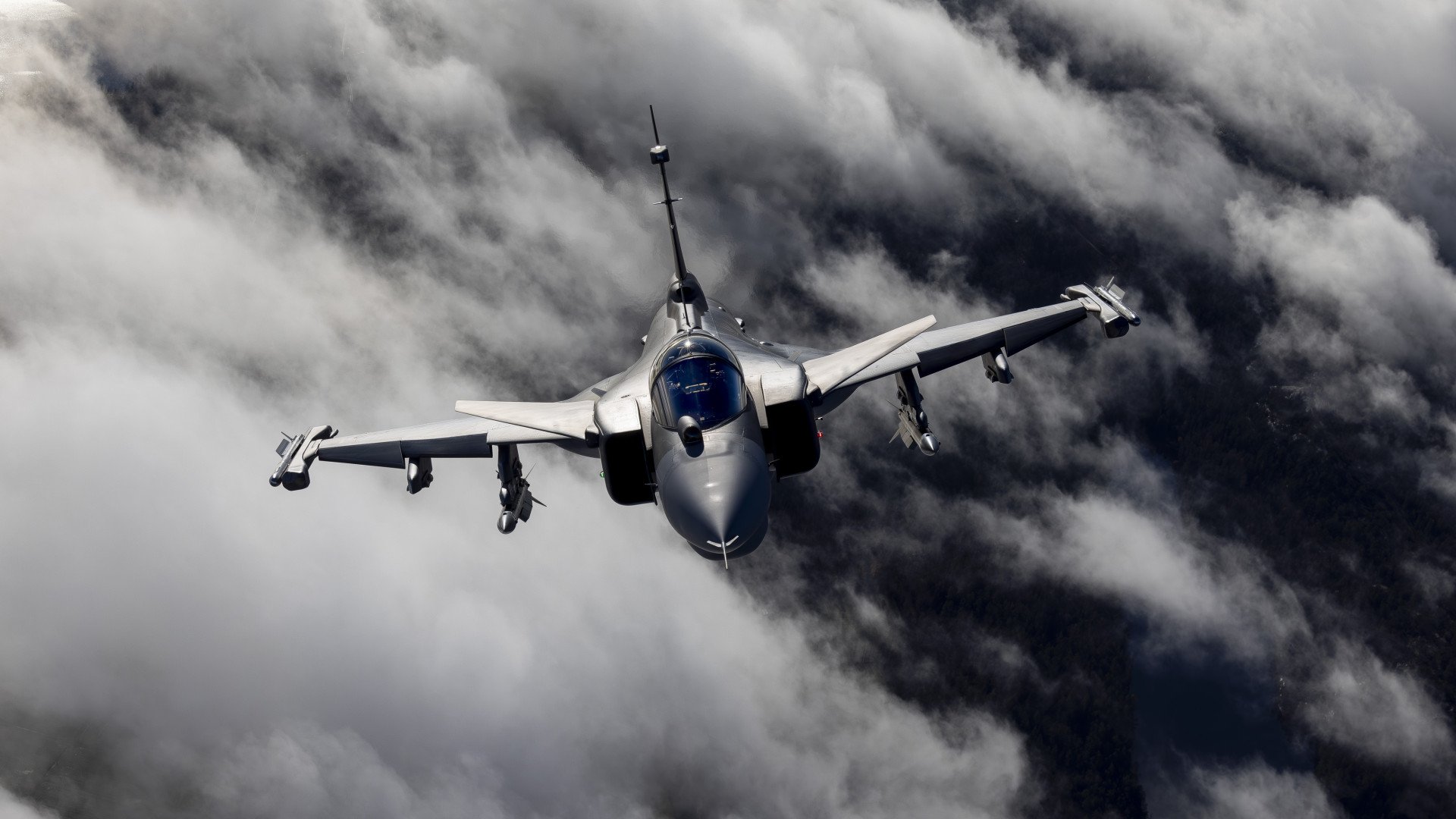
Ukraine’s first 16 Gripen E fighters may be only the opening move: with Kyiv ultimately eyeing as many as 150 jets, Saab is preparing to double annual production as orders pile up across Europe and beyond.
 Prefer U24 Media on Google
- Authors


Swedish defense giant Saab is preparing to roughly double Gripen fighter production from about 15 aircraft a year to between 25 and 30, with Ukraine emerging as one of the biggest factors behind the need for more manufacturing capacity, according to Army Recognition on August 8.
The immediate Ukrainian commitment covers an initial batch of 16 Gripen E fighters valued at $2.6 billion, with deliveries planned for 2029–2030.
We bring you stories from the ground. Your support keeps our team in the field.
But Saab has described those aircraft as only the first batch, while President Volodymyr Zelenskyy has outlined a much larger long-term ambition of acquiring between 100 and 150 Gripens.
That potential fleet radically changes the production math.
At Saab’s current effective rate of approximately 15 aircraft per year, producing 100 new Gripens would theoretically require about 6.7 years of the company’s entire output if no other aircraft were built simultaneously. Increasing production to 25 jets annually would cut that to four years, while 30 per year would reduce it to roughly 3.3 years.
A 150-fighter Ukrainian program would equal about 10 years of output at the current rate, six years at 25 jets annually, or five years at 30.
Those figures are not proposed delivery schedules, Army Recognition noted, since Saab would be building aircraft for several customers simultaneously. They instead illustrate why a major Ukrainian program cannot be absorbed by the production structure developed for the Gripen’s earlier export market.
Did you know? 💭
— Saab (@Saab) August 28, 2025
▪️ Gripen can use a road of 16x800 m for take off and landing.
▪️ Combat turn-around time is remarkably short and requires only a minimal number of ground crew and equipment. pic.twitter.com/zUBERzZKZt
Ukraine turns Gripen expansion into an industrial requirement
Saab President and CEO Micael Johansson said during the company’s Q2 2026 earnings call that the manufacturer is now targeting annual production of between 25 and 30 Gripens.
The company currently assesses its effective capacity at close to 15 aircraft per year.
In simple production terms, that means reducing the average interval between completed aircraft from roughly one every 24 days to one every 14.6 days at a 25-aircraft rate—and approximately every 12.2 days if Saab reaches 30.
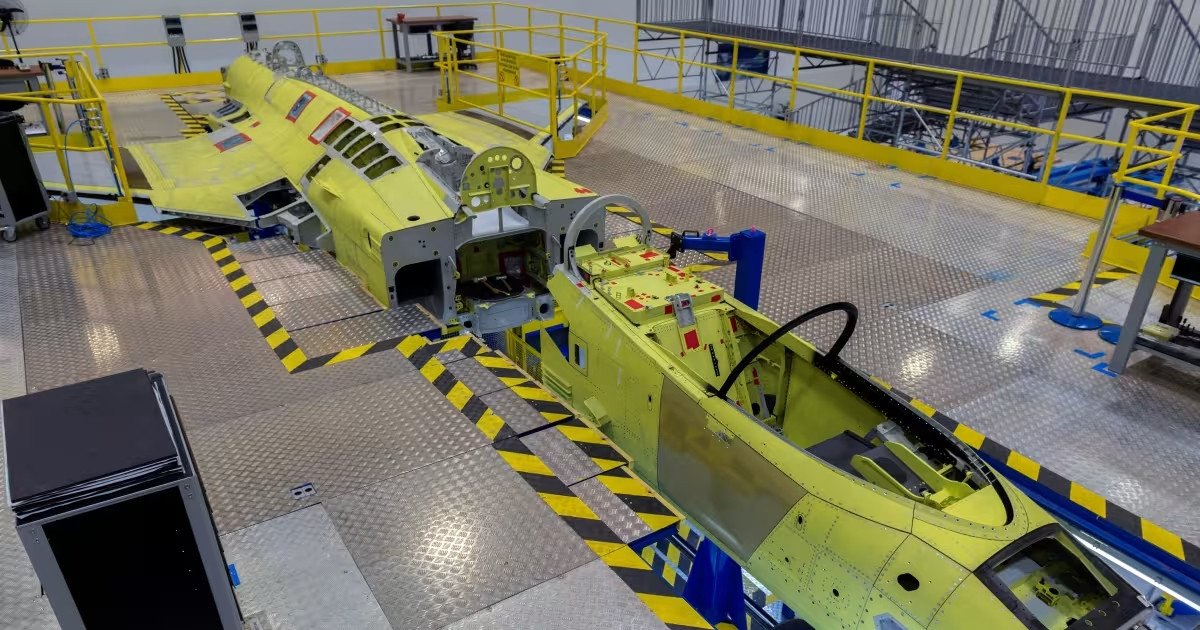
Saab has not yet specified when it expects to achieve the full production rate.
According to Army Recognition, however, the growing workload already makes expansion increasingly necessary rather than merely desirable.
Ukraine’s potential requirement would have to be fulfilled alongside orders and planned purchases from Sweden, Brazil, Colombia, Thailand, Hungary, and potentially additional customers.
And Kyiv’s planned fleet is large enough to dwarf many previous Gripen export contracts.
If Ukraine eventually expands its order from the initial 16 aircraft to 100, the additional 84 fighters alone would represent 5.6 years of production at Saab’s current 15-aircraft annual rate. At 25 aircraft per year, that falls to 3.36 years; at 30, it still represents 2.8 years of worldwide Gripen production.
-d6b0d62be686a72966c5f714e805b5a4.jpg)
Sweden could need more Gripens because of Ukraine
Ukraine’s requirements may also create additional production demand indirectly through Sweden itself.
Stockholm originally ordered 60 Gripen E/F fighters in 2013. Swedish Air Force Chief Maj. Gen. Jonas Wikman has since said another 12 aircraft are expected to enter a future procurement cycle, potentially raising Sweden’s planned Gripen E fleet to 72.
Gripen is designed to operate from a dispersed air base. No airfield is needed. pic.twitter.com/xOXyHwHp7R
— Saab (@Saab) August 7, 2025
According to Army Recognition, those additional aircraft would partly compensate for older Gripen C/D fighters transferred to Ukraine.
That creates a two-sided effect on Saab’s factories: existing C/D aircraft can be transferred without occupying new production slots, but replacing the capability surrendered by Sweden creates additional demand for newly manufactured Gripen Es.
Saab’s order book is already packed
Ukraine is arriving at a time when Saab’s Gripen production line is anything but idle.
The company’s total order backlog reached more than $33 billion in Q2 2026, while sales in Saab’s aeronautics division rose 31% year over year as Gripen production and capability-development work increased.
Meteor is an advanced radar-guided, beyond-visual-range air-to-air missile with the greatest no-escape zone. Gripen E can carry seven of them simultaneously. Read more: https://t.co/9u5Swi81L1 pic.twitter.com/uUypSCgVeK
— Saab (@Saab) November 12, 2024
Group organic sales increased close to 30% during the quarter and more than 26% during the first half of the year. Roughly 60% of Saab’s total backlog is scheduled for delivery within two and a half years.
Army Recognition noted that the Gripen ramp-up is therefore occurring while Saab simultaneously expands production of missiles, radar systems, submarines, and GlobalEye airborne surveillance aircraft.
Colombia, Thailand, Hungary add more Gripen demand
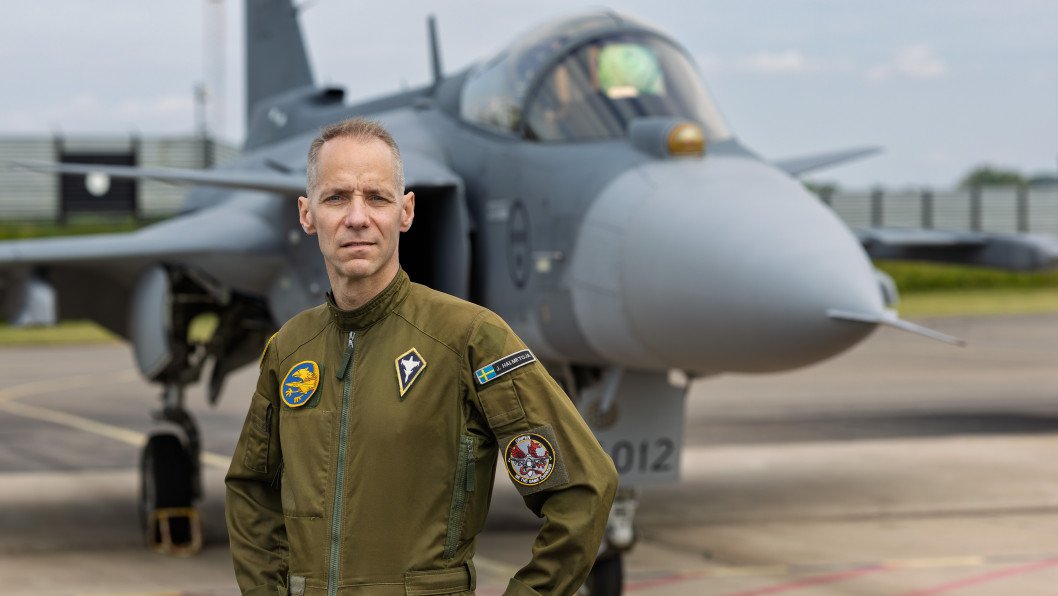
Colombia has signed for 17 Gripens—15 single-seat Gripen Es and two Gripen Fs—with deliveries expected to begin in 2028.
Thailand selected 12 Gripen E/F fighters and ordered its first batch of three Gripen Es and one two-seat Gripen F in August 2025.
🇭🇺🇸🇪Saab AB continues to invest in Hungary, working with our Defence Innovation Research Institute to develop cutting-edge technologies and explore next-gen fighter and MRO projects.✈️
— Kristóf Szalay-Bobrovniczky (@SzBobrovniczky) October 17, 2024
Plans include a new Aviation Development Centre to #enhance both nations’ defense capabilities. pic.twitter.com/AjlTWlHSQg
Hungary, meanwhile, received four additional Gripen C fighters in June 2026, increasing its fleet from 14 to 18 aircraft under an agreement reached in 2024.
All of those commitments add pressure to a production system that must now prepare for the possibility of a far larger Ukrainian requirement.
Brazil gives Saab a second Gripen production base
Brazil is particularly important to the expansion because Gripen manufacturing is no longer concentrated entirely in Sweden.
Brazil’s original contract covers 36 Gripen E/F fighters, while Saab has established full final-assembly capability at Embraer’s Gavião Peixoto facility.
Saab Aeronáutica Montagens in São Bernardo do Campo also manufactures major structural components, including forward and rear fuselage sections, the wing box, air brakes, and empennage.
That industrial setup means Brazilian facilities can absorb some of the additional workload created by growing global demand instead of every fighter having to pass through Linköping.
Photos of F-39E #Gripen production in #Brazil. The first Brazilian made Gripen is now entering final assembly - with delivery to @fab_oficial in 2025. #Embraer 🇧🇷#Saab also build F-39E and F-39F in Sweden. 🇸🇪 https://t.co/qH7bfDXp8d
— Gripen News (@GripenNews) June 6, 2024
The first two-seat Gripen F was rolled out during Q2 2026 following development work that included Brazilian engineers.
Saab and Embraer also agreed in July to create capacity in Brazil for as many as 20 additional aircraft beyond the original program if needed.
A 20-aircraft follow-on order would increase Brazil’s total program from 36 to 56 fighters—an expansion of nearly 56%.
Combined with 12 additional Swedish aircraft, that would add 32 fighters before any expansion of Ukraine’s initial order is considered.
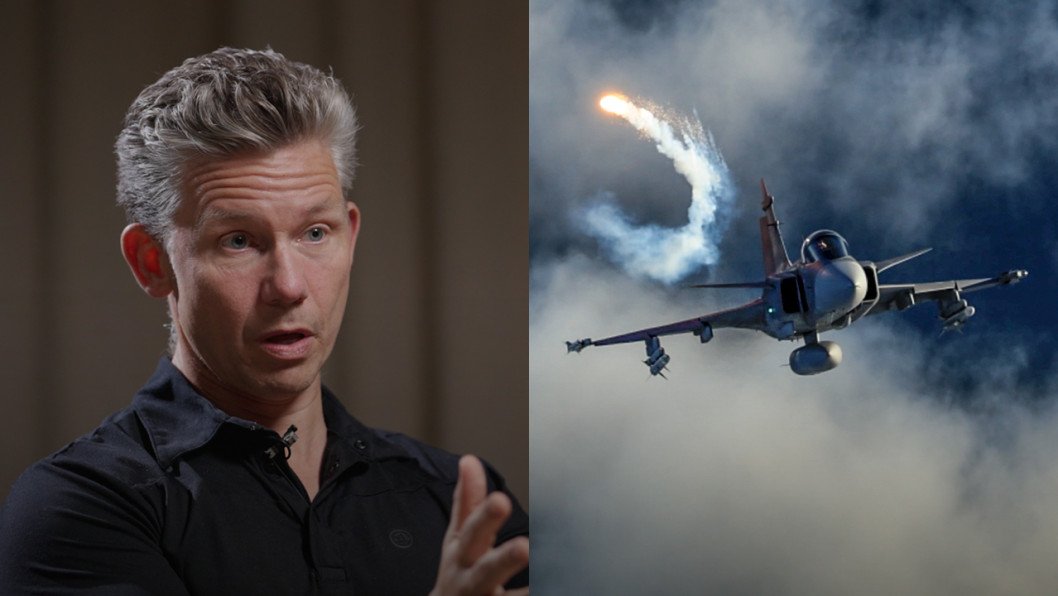
At the current 15-aircraft annual production rate, those 32 aircraft alone equal more than two years of theoretical total output. At 30 aircraft annually, they still represent just over a year.
In practice, production in Sweden and Brazil can run in parallel, which is precisely why Army Recognition sees Brazil’s industrial base as increasingly important to Saab’s expansion.
Building more airframes is the easy part
The biggest problem is not simply finding enough factory floor space.
Johansson identified the supply chain as Saab’s primary constraint, ranking it above recruitment and assembly capacity.
The Gripen E relies on the General Electric F414G engine, Leonardo Raven ES-05 AESA radar, Skyward-G infrared search-and-track system, Saab electronic warfare equipment, flight-control electronics, hydraulic and electrical systems, landing gear, composite and metallic structures, and thousands of smaller components.
Not all Gripen E tests are done in the air. As part of the overall test programme, this one was conducted at the Gripen Flight Test Centre in Brazil to show Gripen E’s engine and other systems can take a good soaking from surface water spray. Read more: https://t.co/XZaStcxAsF pic.twitter.com/9aSldTsf7m
— Saab (@Saab) August 11, 2021
A factory capable of assembling 30 Gripens a year cannot actually deliver 30 aircraft if suppliers can provide only 18 engines, 20 radars, or 22 sets of critical actuators.
According to Army Recognition, that makes the expansion a supply-chain synchronization challenge as much as a factory-expansion program.
Saab is responding by increasing stocks of titanium, aluminum alloys, specialized steels, and selected components. It is also qualifying alternative suppliers to reduce single-source dependencies and bringing some production back in-house where external reliance creates excessive risk.
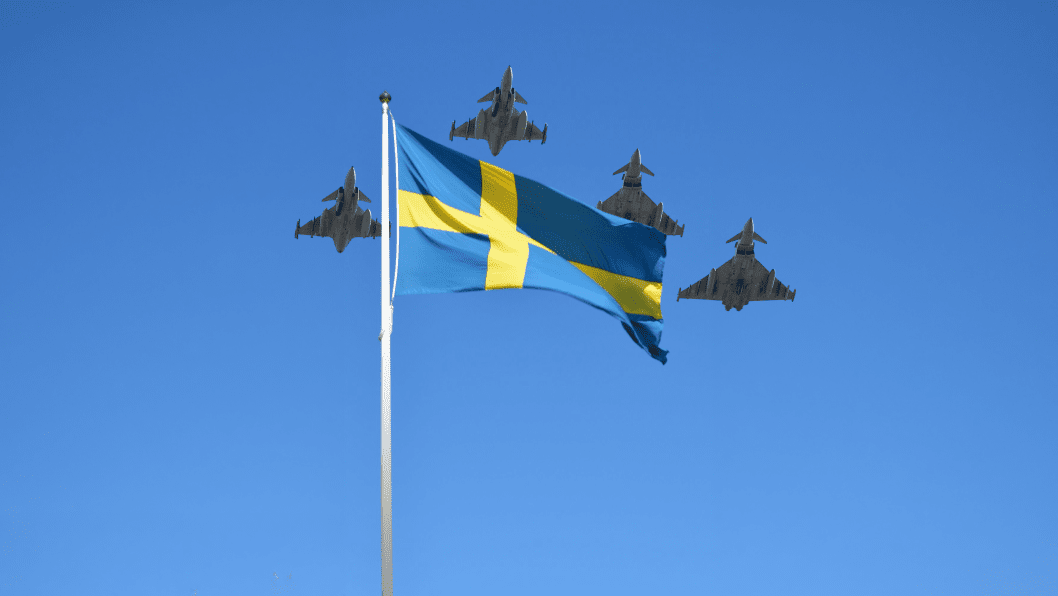
Thirty Gripens won’t all be identical
Higher output is also complicated by the fact that Saab is not simply producing dozens of identical fighters.
Different customers require national communications systems, electronic warfare configurations, software packages, weapons integration, and individual acceptance standards.
Production capacity must therefore expand not only for airframe assembly but also for systems integration, software installation, ground testing, engine runs, flight testing, correction of deficiencies, and customer acceptance.
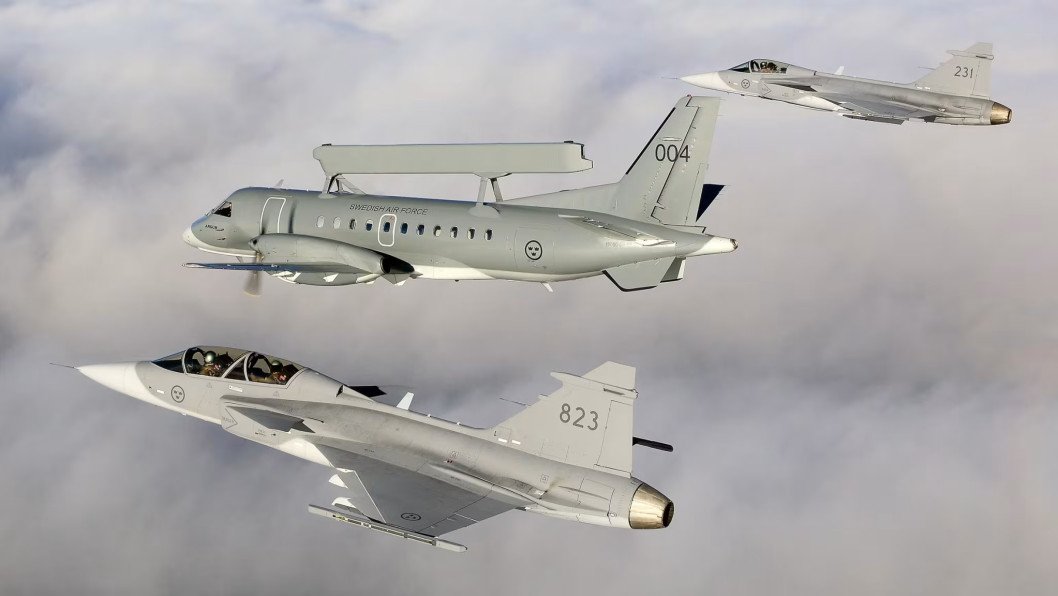
Any one of those stages could become the new bottleneck even after Saab expands physical assembly capacity.
Saab has the money—but Gripen is not the only priority
The company is investing roughly $1 billion annually in additional capacity.
At the end of Q2 2026, Saab held approximately $1.8 billion in cash and liquid investments and had $263 million in net liquidity.
Internally funded research and development reached $463 million on a rolling 12-month basis—more than twice the level three years earlier.
Saab is also adding roughly 3,000 net employees annually and has expanded its workforce beyond 29,000 people.
The expansion comes alongside improving profitability. Its EBIT margin reached 11% during Q2, while sales CAGR over the current target period reached 24% and EBIT CAGR reached 34%. First-half cash flow improved to more than $105 million from negative $115 million a year earlier.
Management continues to target organic sales growth of 22% CAGR and cash conversion above 60% over the 2023–2027 period.
But Gripen is competing for resources with several other rapidly expanding Saab programs.
The company is moving Giraffe 1X radar production beyond 300 systems annually, seeking to increase GlobalEye output from two aircraft per year toward as many as six by 2030, automating weapons manufacturing, and opening additional production facilities in the US and India.
Why Saab is expanding before all orders are signed
Saab’s existing programs already encompass Sweden’s 60 Gripen Es, Brazil’s 36 E/F aircraft, four additional fighters for Hungary, 17 for Colombia, Thailand’s initial four-aircraft batch, and Ukraine’s first 16 Gripen Es.
Swedish and Brazilian deliveries are already underway, meaning those headline program totals cannot simply be treated as remaining backlog.
Beyond the firm commitments, however, stand another 12 planned Swedish Gripens, as many as 20 additional Brazilian aircraft, Thailand’s remaining planned fighters—and Ukraine’s potential expansion toward a fleet of 100 to 150.
That future demand explains why Saab is beginning to expand before every possible order becomes a signed contract.
For Ukraine in particular, the difference between Saab producing 15 Gripens annually and 30 could determine whether a large future fleet takes the better part of a decade to materialize or can be delivered while Sweden, Brazil, Colombia, Thailand, and other customers continue receiving aircraft of their own.
According to Army Recognition, that makes Saab’s planned jump to 25–30 Gripens a year far more than a conventional production efficiency drive. If even part of Kyiv’s 100–150 fighter ambition becomes contractual, doubling output may become essential to making the Ukrainian program possible at all.
Earlier, reports emerged that Ukraine sees Meteor missiles as one of the key elements of its future air defense system and will work to secure as many of them as possible.
The missiles could become an important tool for countering Russian aircraft that launch guided aerial bombs against Ukrainian positions and cities.
Discuss this article:
-9a7b3a98ed5c506e0b77a6663f5727c5.png)



-111f0e5095e02c02446ffed57bfb0ab1.jpeg "Photo of Roman Kohanets")