- Category
- World
Merz Uses EU Budget Talks to Secure Long-Term Funding for Ukraine
 Prefer U24 Media on Google
- Authors


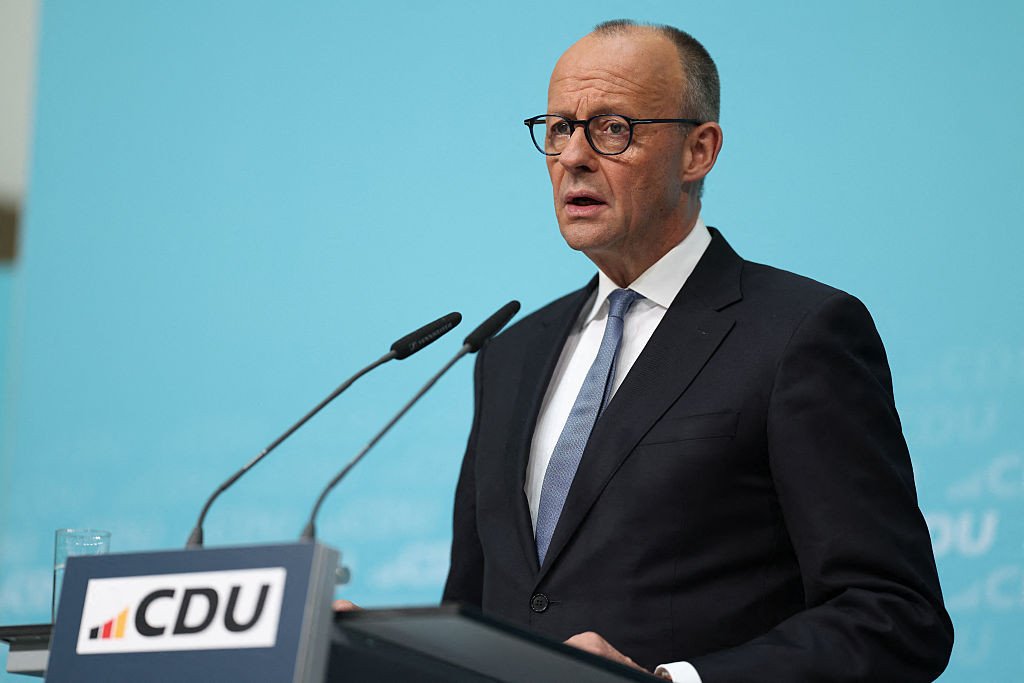
German Chancellor Friedrich Merz warned that he would block the European Union’s next seven-year budget unless all member states commit to supporting Ukraine financially in 2027 and beyond, the Financial Times reported on November 9.
In a letter to European Council President António Costa seen by the Financial Times, Merz made his support for the EU’s 2028–2034 budget conditional on all member states helping cover Ukraine’s projected $78.3 billion financing gap next year.
We bring you stories from the ground. Your support keeps our team in the field.
“A collective commitment that all of us, without exception, will contribute fairly to closing [Ukraine’s financing] gap is an essential prerequisite for resolving this issue and for discussing any further matters, particularly those with financial implications,” Merz wrote.
The warning comes ahead of a meeting of EU leaders in Dublin on Thursday and Friday, where Merz is pushing for Ukraine’s funding shortfall to be addressed.
EU leaders agreed in December to provide Ukraine with a $100.7 billion loan, but Kyiv has indicated that it will require an additional $78.3 billion in 2027 as Russia’s war continues.
The Financial Times noted that the EU has pledged to cover around two-thirds of that amount, or approximately $50.4 billion. The European Commission is examining options including additional joint borrowing, with officials hoping to reach an agreement by the end of the year.

Hungary, Slovakia, Bulgaria, and the Czech Republic have signaled that they do not intend to contribute to further financial assistance for Ukraine, according to the report.
Hungary, Slovakia, and the Czech Republic previously secured exemptions from contributing to interest payments on the $100.7 billion loan.
Merz also called for a longer-term solution covering Ukraine’s financing from 2028 onward, including interest payments linked to outstanding debt.
“We must then find a solution supported by all Member States that ensures a sound and multiannual financing perspective for Ukraine from 2028 onwards,” he wrote.
The Financial Times reported that Germany, the EU’s largest net budget contributor, is seeking to use its leverage in negotiations over the bloc’s next long-term budget to secure sustained financing for Ukraine.
Berlin is also pushing for future Ukraine funding decisions to require only a qualified majority of EU countries rather than unanimous approval, which would reduce the ability of individual member states to block assistance.
“Financial support for Ukraine of all EU member states is essential in order to successfully complete [the EU budget negotiations],” a German government official told the Financial Times.
Germany has already moved to increase its own support for Ukraine. In November, Berlin proposed an additional $113 million to restore water, energy, and transport infrastructure damaged by intensified Russian attacks, including funding for decentralized power generation, energy storage, and repairs to schools and utilities.
Discuss this article: