- Category
- World
New Footage Reveals China’s Advanced HQ-29 Missile System
 Prefer U24 Media on Google
- Authors

-c439b7bd9030ecf9d5a4287dc361ba31.jpg "Photo of Katherina Popilnichenko")
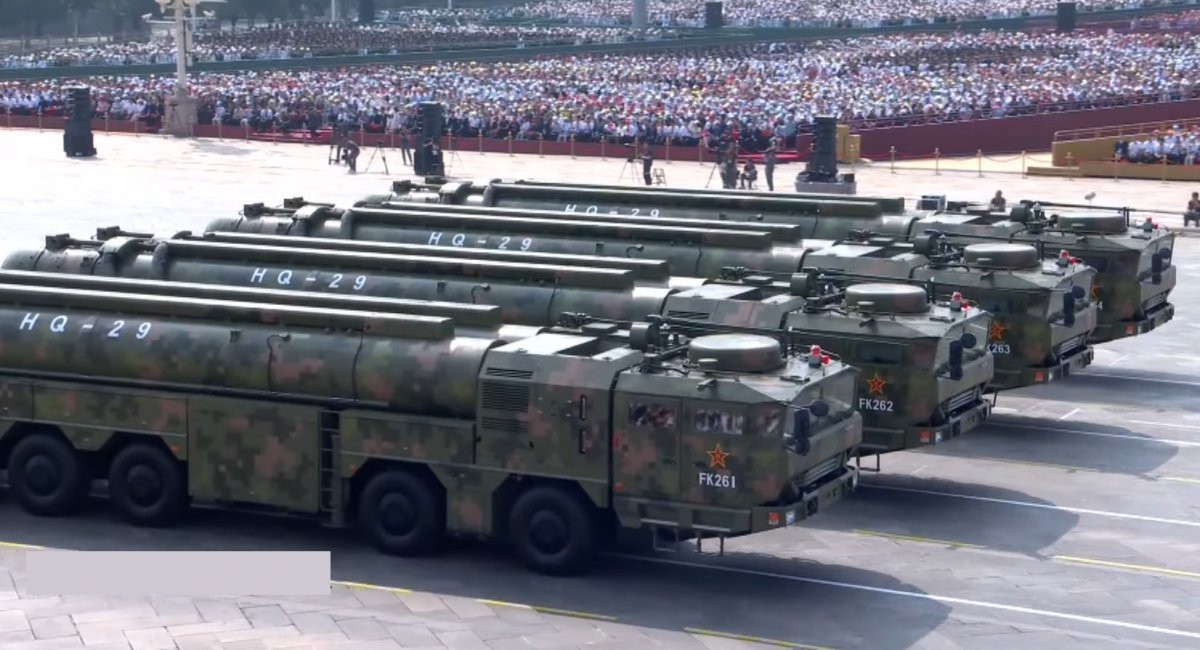
Footage showing the rail transport of China’s HQ-29 missile defense system has emerged on social media.
The video captures at least eight launchers and sixteen interceptor missiles being moved through an undisclosed region. This development provides fresh insight into a system that China claims can intercept both satellites and intercontinental ballistic missiles, according to Defense Express on May 5.
We bring you stories from the ground. Your support keeps our team in the field.
The HQ-29 made its first official appearance during a military parade in Beijing in September 2025. Although development likely began in the early 2000s, the system only recently entered active service.
The different camouflage patterns seen in this new footage compared to the parade units suggest that China may already have multiple batteries in operation.
🇨🇳 HQ-29 mobile strategic missile defense system
— NEXUSx (@Nexus_osintx) May 3, 2026
🔸 Seen being transported on a train, as shown in the video
🔹 China’s long-range strategic anti-ballistic missile system
🔹 Designed to intercept high-altitude ballistic threats
🔹 Mobile platform for rapid deployment and… pic.twitter.com/s04iNAYYlo
Military analysts have shared varying assessments of the system's capabilities due to the lack of official data. Some estimates suggest an engagement range of 2,500 kilometers and an altitude of 850 kilometers.
Other experts believe a more realistic interception altitude is between 150 and 600 kilometers. The missiles are estimated to reach speeds between Mach 6 and Mach 10.
If these technical specifications are accurate, the HQ-29 would surpass the capabilities of Russia’s S-500 system. Current data on the S-500 suggests it can engage targets at a range of 600 kilometers and an altitude of 200 kilometers. The HQ-29 is designed to target ballistic missiles, hypersonic weapons, and satellites in low Earth orbit.
On May 5, 2026, China deployed heavily armed bombers, fighter jets, and naval vessels near a disputed South China Sea shoal as a show of force against joint US-Philippine military exercises.
Two H-6 anti-ship bombers, escorted by J-16 fighter jets, flew over the Scarborough Shoal during a combat readiness drill conducted by the People’s Liberation Army’s Southern Theater Command. Chinese military officials described the patrol as a response to regional "provocative acts," while additional surface vessels and reconnaissance ships monitored multinational naval formations.
This escalation coincided with the Balikatan exercises, which involved 17,000 personnel and focused on maritime strike operations and coordinated defense.
Discuss this article:
-9a7b3a98ed5c506e0b77a6663f5727c5.png)