- Category
- World
Putin’s Temporary Election Exhibit Became a $1.9 Billion Permanent Network Across Russia
 Prefer U24 Media on Google
- Authors

-111f0e5095e02c02446ffed57bfb0ab1.jpeg "Photo of Roman Kohanets")

Russian authorities have already spent or committed at least $1.9 billion on the National Center “Russia” network, a Kremlin-backed system of exhibition spaces promoting the country’s achievements under Russian leader Vladimir Putin.
The figure comes from an investigation by Russian outlet Verstka published on September 17.
We bring you stories from the ground. Your support keeps our team in the field.
Verstka calculated the total from disclosed spending on the original “Russia” exhibition-forum, the permanent Moscow center, and branches in Vladivostok, Krasnoyarsk, Khanty-Mansiysk, Ryazan, Kaliningrad, and Sevastopol in temporarily occupied Crimea.
The investigation noted that the $1.9 billion total is incomplete. Costs for seven additional regional branches already approved by the Kremlin have not yet been disclosed, meaning spending on the network is set to rise further.
The project began with the “Russia” exhibition-forum at Moscow’s VDNKh ahead of Putin’s 2024 presidential election. Verstka reported, citing a source who worked on its organizing committee, that the Kremlin’s domestic political bloc conceived the exhibition as part of Putin’s election campaign.
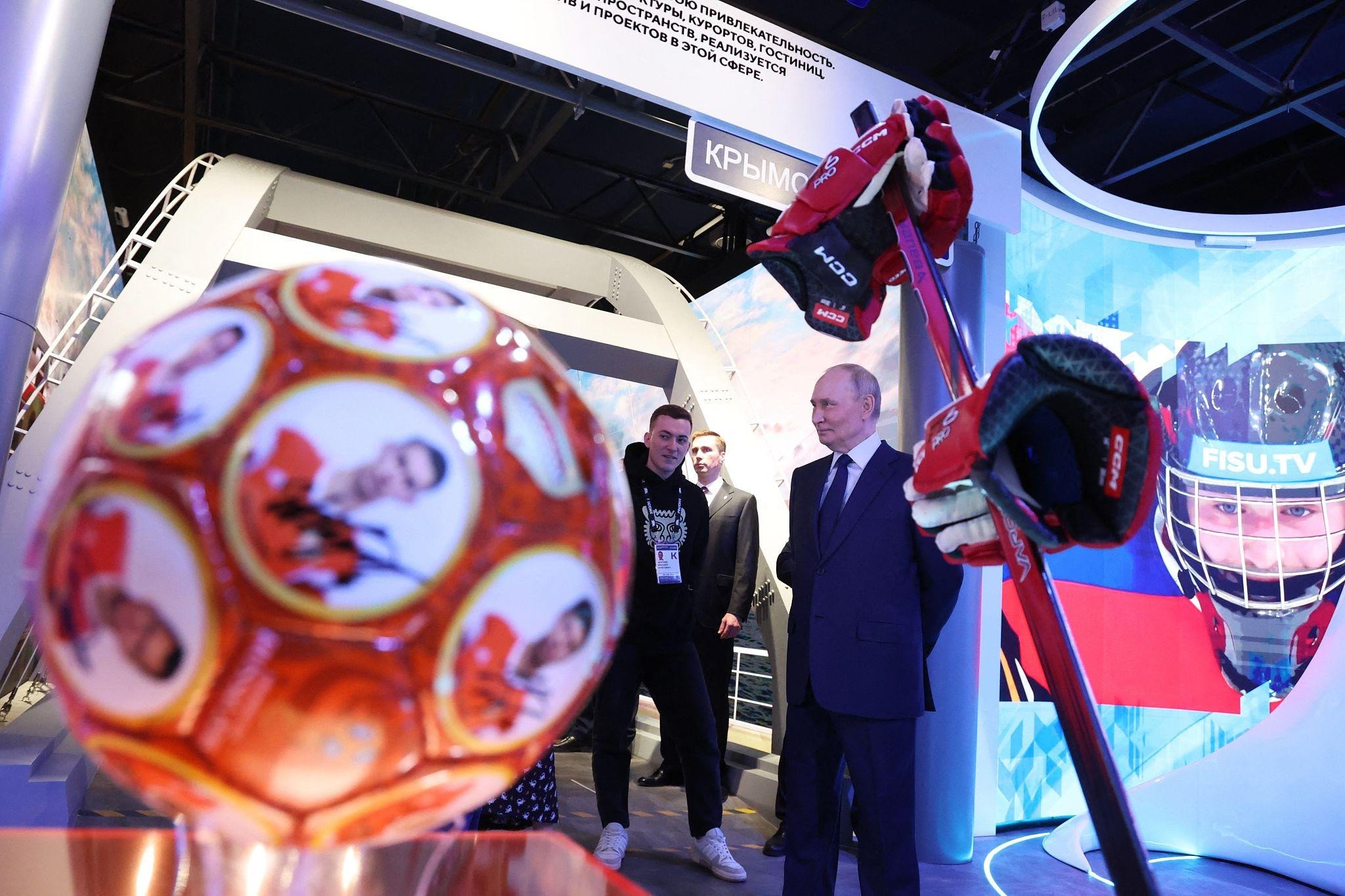
According to Verstka’s calculations, the temporary exhibition alone costs at least about $211 million. Approximately $119 million came from Russia’s federal budget, another $12 million from Moscow, while regions, federal ministries, and state organizations spent more than $83 million on their stands and participation.
“The exhibition was supposed, through a leitmotif of nostalgia for the USSR, to highlight what Russia had become over a quarter of a century,” a former organizing committee member told Verstka.
The exhibition brought together elaborate regional pavilions, federal ministries, state corporations, and displays representing Ukrainian territories occupied by Russia. It also hosted the United Russia congress that endorsed Putin’s candidacy in the 2024 election.
-5cb7e9e1318be990d6b922ede67c233b.png)
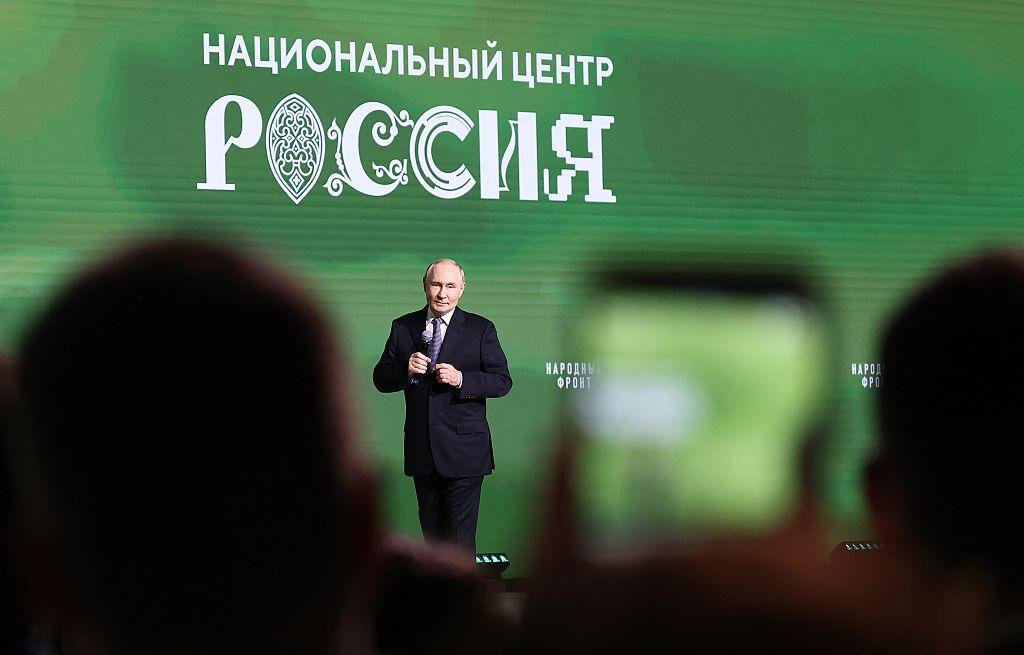
After the Kremlin deemed the project successful, Putin ordered that the temporary exhibition be turned into the permanent National Center “Russia” and directed that the model be replicated nationwide, Verstka reported.
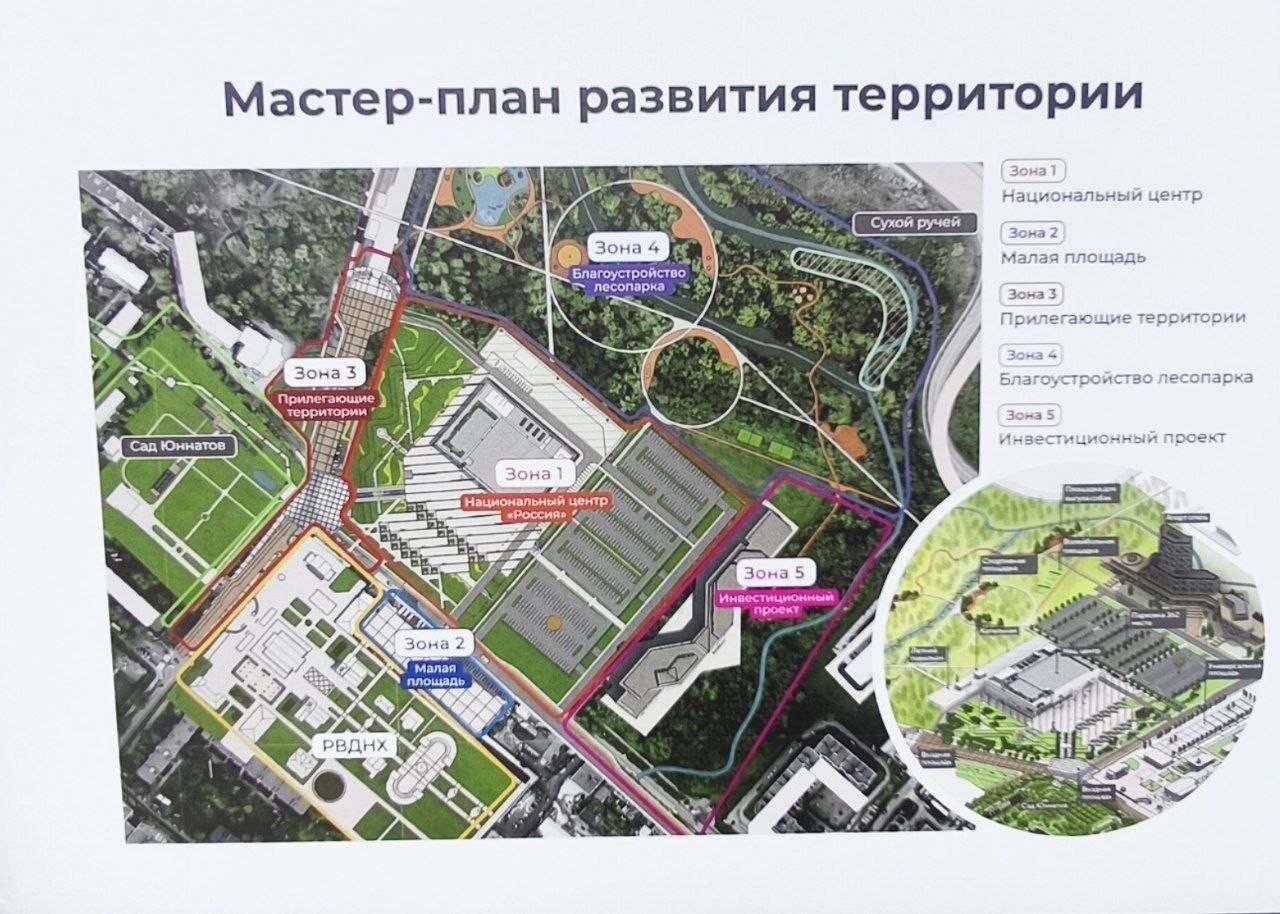
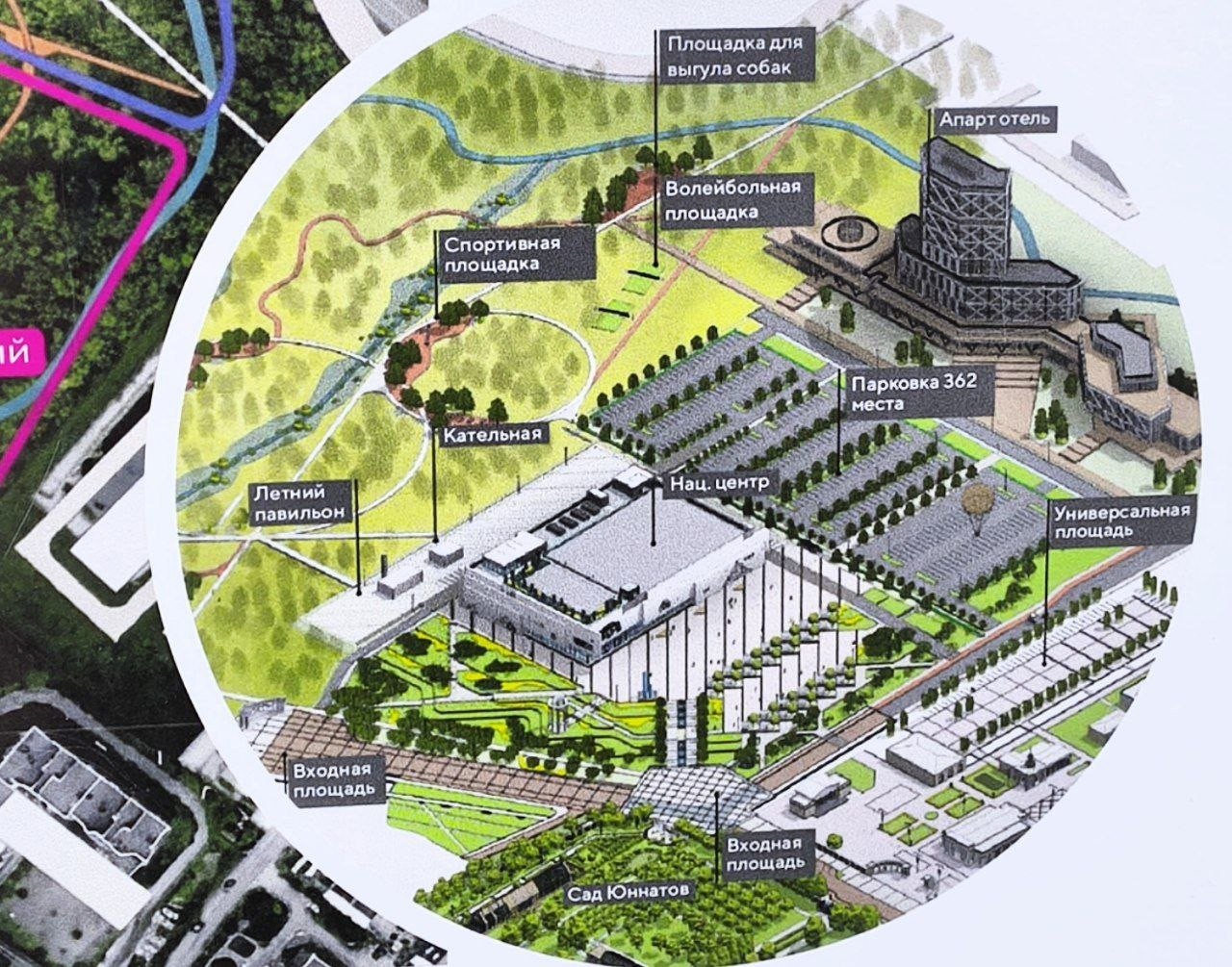
The most expensive part identified by Verstka is a new permanent National Center “Russia” building under construction beside Moscow City. The project is expected to cost about $950 million, accounting for roughly half of all spending identified by the investigation.
The planned 200,000-square-meter complex will include exhibition and business spaces, media centers, an amphitheater, a 3,500-seat concert hall, and a museum operated by the Russian Military Historical Society. Verstka noted that construction is scheduled to finish in 2029, a year before Russia’s next planned presidential election.
Verstka also examined who is benefiting from the spending. Moscow authorities identify the city-owned Mosinzhproekt as the project’s developer, but the outlet found procurement documents indicating that construction is being carried out by Velesstroy.
-44c925e1fe4bfba894eb6248de861461.jpg)
Large expenditures extend beyond Moscow. Verstka calculated that authorities in Ryazan have committed about $36 million to their National Center “Russia,” including construction, equipment, and operating costs.
The outlet reported that the money is coming from a regional budget deficit. At the same time, local authorities have not found enough funding to complete a school and a clinic in the city, according to Verstka.
The Ryazan project has also sparked opposition because it occupies part of a large forest park planted by local residents in the Soviet period. Verstka reported that regional authorities initially allocated three hectares of the green zone to the development in 2025 and another six hectares in 2026.
In Krasnoyarsk, Verstka calculated that the regional center cost more than $24 million. In Sevastopol, in temporarily occupied Crimea, authorities plan to spend nearly $12 million to convert the recently renovated Rossiya cinema into another branch.
Kaliningrad represents an even larger planned investment. Verstka reported that authorities intend to spend about $238 million redeveloping the site of the demolished House of Soviets, with a National Center “Russia” forming part of the project.
The investigation also traced spending to organizations connected with the Kremlin’s political-management infrastructure. The Expert Institute for Social Research, or EISI, helped organize the original “Russia” exhibition and later became a founder of the organization operating the national center, Verstka found.
One of the key contractors was the consulting group Polylog. According to financial records examined by Verstka, the company received about $2.7 million for work, including the center’s website, virtual exhibition tours, and videos.
The outlet reported that Polylog’s business expanded sharply after the exhibition project began. Its annual revenue had remained below roughly $7 million through 2022, but reached about $18.8 million in 2024 and approximately $15.9 million in 2025.

The company recorded around $2.4 million in net profit in 2024 and another $1.6 million in 2025, Verstka found. Nearly $1.5 million of the latter amount was distributed personally to Polylog founder Oleg Karpilov as dividends, according to company reporting reviewed by the outlet.
Despite the scale of the spending, Verstka documented repeated complaints from visitors about access to the centers. Visitors in Moscow and regional branches described advance registration requirements, passport checks, and difficulties obtaining entry slots.
The outlet also examined the centers’ registration system and found that users are asked to consent to extensive data collection, including geolocation, Wi-Fi network information, and details about their hardware and software. A privacy specialist interviewed by Verstka described the policy as resembling a “data vacuum.”
What began as a temporary exhibition tied to Putin’s 2024 campaign has therefore developed into a permanent national infrastructure project. Verstka’s investigation puts disclosed and planned spending at about $1.9 billion before the costs of several approved regional centers have even been made public.
Concern over the price of the network is not new. Earlier independent calculations put the cost of its first four regional branches at no less than $20 million, covering Vladivostok, Ryazan, Krasnoyarsk, and Khanty-Mansiysk.
Comparable sums could instead have built two or three large schools or outpatient clinics. Putin ordered the creation of regional branches in 2023, with additional centers slated for nine more regions by 2031.
Discuss this article:


-c439b7bd9030ecf9d5a4287dc361ba31.jpg "Photo of Katherina Popilnichenko")