- Category
- World
Russia Revives Gaming Bill That Could Block Steam, GOG, and Epic Games Store
 Prefer U24 Media on Google
- Authors

-111f0e5095e02c02446ffed57bfb0ab1.jpeg "Photo of Roman Kohanets")
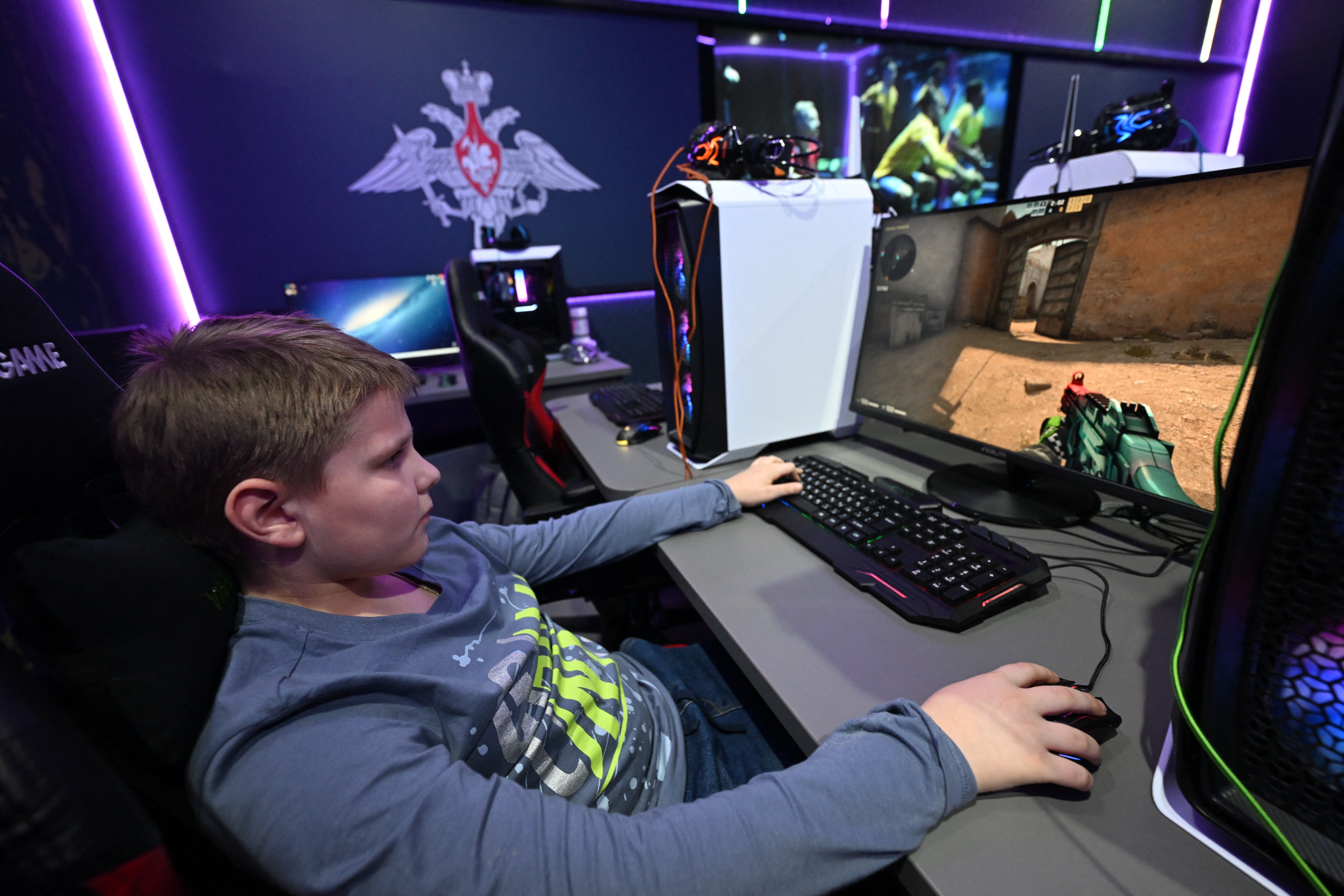
Russia’s ruling United Russia party has signaled it will revive a stalled bill regulating the video game industry after September’s parliamentary elections, a shift that could force foreign distribution platforms out of the market.
Sergei Boyarsky, who chairs the State Duma committee on information policy and sits on United Russia's General Council, made the remarks in an interview with Rossiyskaya Gazeta on August 5.
We bring you stories from the ground. Your support keeps our team in the field.
Boyarsky indicated the initiative would carry into the incoming parliament. "The ninth convocation will return to this issue, since basic industry regulation should still appear," he stated.
He acknowledged the measure had stalled in the current Duma, noting that it had not reached a formal reading and that his committee had not received the government's review. The document would be reworked to reflect feedback from market participants, he added.
The legislation, formally titled "On activities for the development and distribution of video games," was introduced in December 2024 and would establish state oversight of the sector. It requires distributors to block content prohibited in Russia and to label games depicting cruelty, sexual relations, alcohol, drug use, or profanity.
The draft also mandates user identification through a phone number, the Gosuslugi state services portal, or the Unified Biometric System.
Anton Gorelkin, Boyarsky's deputy on the committee, had initially expected the bill to be taken up in 2025. Its authors have framed the measure as a way to protect public morality and citizens' rights and interests.
The Federation Council's committee warned in its review that the closed list of permitted authorization methods could render foreign distribution services unusable inside Russia.
Senators separately flagged that the draft enumerates categories of potentially harmful content without specifying what happens when a game falls into any of them.
Market participants have cautioned that Steam, GOG, the Epic Games Store, and similar foreign platforms are unlikely to meet the requirements, which could result in their being blocked.
Boyarsky defended the push for uniform rules by pointing to the earlier blocking of Roblox, which he described as an isolated case that ultimately "ended well."
He argued that improvised enforcement was not a sound approach. "Reacting only to egregious cases and immediately applying extreme methods is probably not entirely correct," he explained.
The Roblox episode he cited had itself laid bare the volatility of Moscow's stance toward foreign gaming services. Russia's internet regulator Roskomnadzor blocked the platform in December over allegations of extremist and LGBT-related content, only for the authorities to reverse course months later after a flood of complaints—including some 63,000 letters from children—and a deal placing users into age-restricted access tiers.
Discuss this article:





-c439b7bd9030ecf9d5a4287dc361ba31.jpg "Photo of Katherina Popilnichenko")