- Category
- World
Russian Construction Bankruptcies Surge 41% Amid Plunging Demand and High Rates
 Prefer U24 Media on Google
- Authors

-72b63a4e0c8c475ad81fe3eed3f63729.jpeg "Photo of Cyril Barabaltchouk")
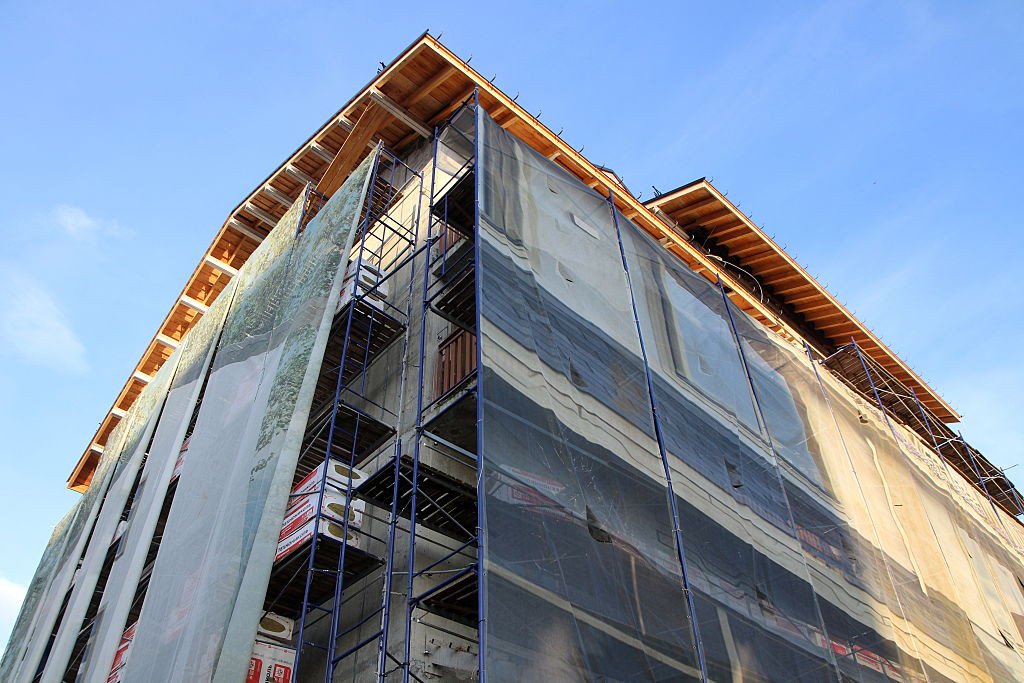
The number of bankruptcy cases among Russian construction companies has surged by more than 30% in just three months, leaping from 1,089 in June to 1,454 by early September, The Moscow Times reported on September 25.
Citing data from the Kontur.Focus registry originally published by the Russian outlet Izvestia, the report highlights a 41% year-over-year increase in insolvencies. The wave of collapses has primarily wiped out regional developers, with prominent firms declaring bankruptcy across major cities, including Kazan, Chelyabinsk, Surgut, Perm, Krasnoyarsk, and Novosibirsk.
We bring you stories from the ground. Your support keeps our team in the field.
Inside Russia, developers point to a lethal combination of collapsing consumer demand and prohibitive financing costs. Maxim Fedorchenko, President of the Novosibirsk Region Builders Association, explained to Izvestia that construction firms are struggling to pay taxes, wages, and service loans without upfront contract payments.
Fedorchenko noted in the report that housing demand has plummeted by 30% to 50% across various regions, while overall investment activity in the economy has contracted by up to 10%.
Dmitry Khalin, managing partner at Intermark Real Estate, confirmed the deteriorating situation to the publication, pointing to accelerating inflation that is driving up raw construction costs.
Further compounding the financial strain, The Moscow Times highlighted that Russian developers have accumulated roughly 100 billion rubles (approx. $1 billion) in fines for delaying the completion of housing projects.
Industry experts are sounding the alarm over the broader economic implications. Dmitry Proskurin, commercial director at Metrium, told Izvestia that the surge in bankruptcies is a “marker of socio-economic deterioration.”
Even industry giants are not immune. Proskurin noted in the report that Samolet, one of Russia’s largest developers, recently faced severe financial difficulties, though the immediate threat of bankruptcy has reportedly passed.
The crisis has forced the Russian government to acknowledge impending failures.
As noted by The Moscow Times, Minister of Construction Irek Faizullin recently admitted there are high risks that state housing commissioning targets will not be met across numerous regions, ranging from St. Petersburg and Tomsk to the temporarily occupied territories of Ukraine’s Luhansk and Zaporizhzhia regions.
Analysts cited in the Izvestia report warn that the pressure on the real estate market will persist as long as borrowing costs remain elevated. Experts estimate that Russia’s key interest rate would need to drop to 10–11% for development activity to recover.
-1371076cf5b44ca59891806a11793121.jpg)
Until then, the publication notes, the number of insolvent companies is expected to multiply, dragging housing production down with it.
Russia is also delaying civilian government expenditures to prioritize military funding as war costs drive up the budget deficit. Finance Minister Anton Siluanov had recently confirmed the federal deficit reached 5.8 trillion rubles ($72.5 billion) between January and August and will continue to grow.
War-related spending hit 10.687 trillion rubles ($126.9 billion) in the first half of 2026 alone—a 30% year-over-year increase and a fivefold jump from pre-war levels—forcing the government to rely on debt and reserve balances to cover the shortfall.
Discuss this article:



-c439b7bd9030ecf9d5a4287dc361ba31.jpg "Photo of Katherina Popilnichenko")