- Category
- World
Russian Oil Profits Surge as Middle East Conflict and Kremlin Cash Counteract Ukrainian Drone Strikes
 Prefer U24 Media on Google
- Authors

-72b63a4e0c8c475ad81fe3eed3f63729.jpeg "Photo of Cyril Barabaltchouk")
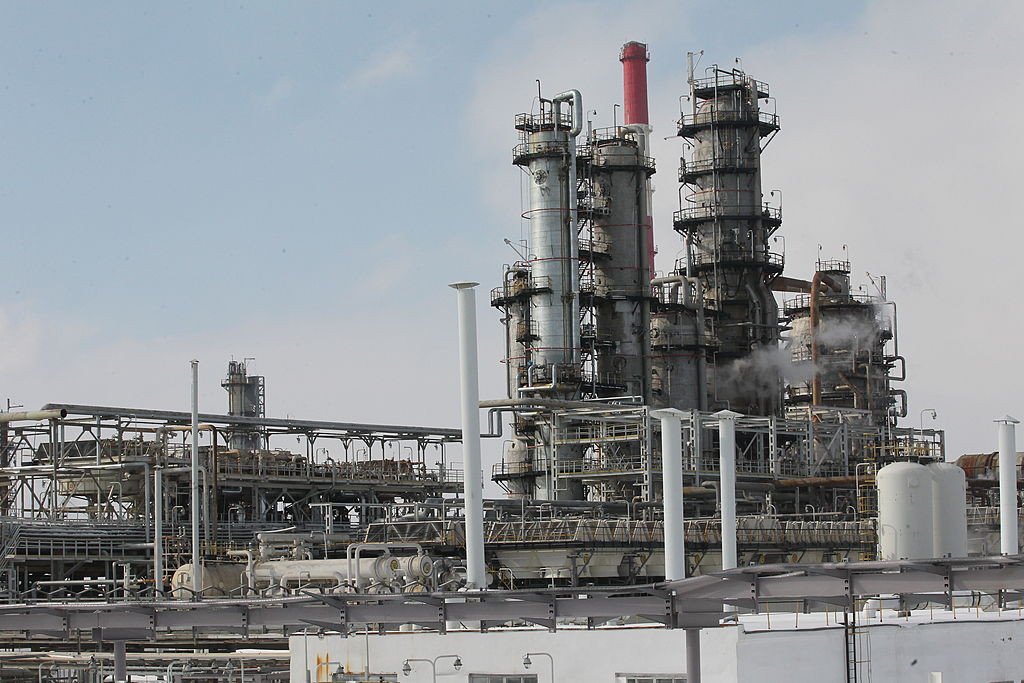
Despite a relentless campaign of Ukrainian drone strikes that has knocked out roughly a fifth of Russia’s oil refining capacity, Russian refineries are raking in unprecedented profits, The Moscow Times reported on September 16.
According to data from Rosstat , the refining sector earned a staggering 938 billion rubles ($11.13 billion) in the first half of the year, a 16.2% increase from the same period last year. Financial analysts expect third-quarter profit margins to surge even higher, marking an era of extraordinary profitability for the domestic segment.
We bring you stories from the ground. Your support keeps our team in the field.
This windfall of “super-profits” is being driven by a combination of record-high wholesale prices on the St. Petersburg exchange and massive state subsidies through Russia’s fuel “damper” mechanism, The Moscow Times noted. Wholesale prices for petroleum products began climbing in March following the outbreak of war in the Middle East.
By July, exchange prices hit record highs, with AI-95 gasoline reaching 82,600 rubles ($980) per ton and diesel at 77,600 rubles ($921). In September, the price of AI-92 gasoline set a new all-time high of 73,100 rubles ($868) per ton.
To prevent these wholesale spikes from fully passing to consumers, the Russian government pays oil companies directly from the state budget. These “damper” payouts ballooned to nearly 350 billion rubles ($4.15 billion) per month during the second quarter, and reached 500 billion rubles ($5.93 billion) across July and August, The Moscow Times wrote.

For giants like Gazprom Neft, these state payouts and price surges have more than compensated for the reduced refining volumes caused by drone attacks and unplanned repairs.
However, this corporate windfall is being directly funded by the Russian public. Since the beginning of the year, retail gasoline prices have surged by 21.2%, while diesel has jumped 18.4%.
The Moscow Times reported that, while major oil companies can artificially hold down prices at their branded stations using state subsidies, independent gas stations are forced to buy fuel at inflated wholesale rates and pass the costs onto everyday drivers.
While the Kremlin tightly guards the exact financial toll of the Ukrainian strikes, the damage remains immense. The Ukrainian General Staff previously estimated that drone attacks have inflicted $13.5 billion in damages to the Russian oil industry since August 2025.
According to the Russian insurance broker Mains, direct losses to the oil and gas sector from drone strikes exceeded 100 billion rubles ($1.19 billion) last year, with total indirect costs and lost profits surpassing one trillion rubles ($11.87 billion), The Moscow Times added.

In addition to striking onshore refineries, Ukraine is also targeting the maritime logistics network Moscow uses to export its petroleum. As part of Ukraine’s Unmanned Systems Forces' “MoLoChKa” campaign to cut off shadow-fleet revenues, a Ukrainian naval drone recently maneuvered past a pursuing Russian interceptor helicopter to strike the sanctioned oil tanker Armada Leader off the coast of Sochi.
Unmanned Systems Forces Commander Robert Brovdi reported that the operation has successfully targeted 285 Russian-linked vessels over 10 weeks, culminating in 16 ship strikes.
While Ukrainian strikes on refineries and shadow-fleet vessels have constrained Russian petroleum exports, the current global fuel crisis is primarily driven by a massive supply shock due to war in the Middle East. Severe transit restrictions through the Strait of Hormuz have slashed Persian Gulf fuel exports by roughly one million barrels per day.
Combined with Russia’s drone-induced outages and self-imposed export limits, this unprecedented squeeze has drained 1.6 million barrels per day of diesel and gasoil from the global market, sending international prices soaring past the equivalent of $200 per barrel.
Discuss this article:



-c439b7bd9030ecf9d5a4287dc361ba31.jpg "Photo of Katherina Popilnichenko")