- Category
- World
Russia’s Near-Bankrupt Defense Giant Builds “Sword” for China’s Military
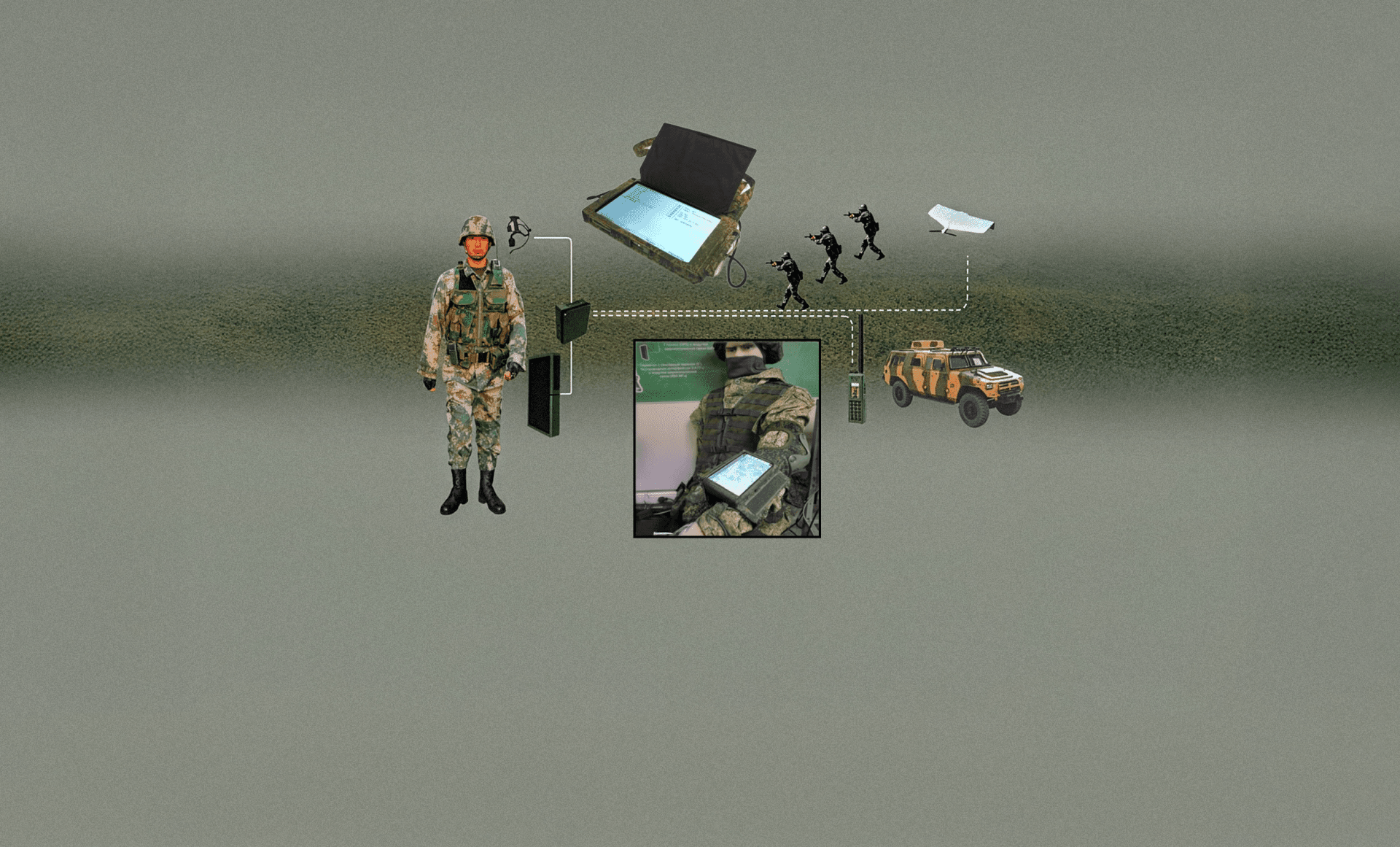
Russia’s defense institute NIISSU is in severe financial distress even as it continues work on “Sword,” a sophisticated command-and-control system for China’s People’s Liberation Army.
 Prefer U24 Media on Google
- Authors

-206008aed5f329e86c52788e3e423f23.jpg "Photo of Oleksandr Moiseienko")
NIISSU is one of the key enterprises in Russia’s military-industrial complex, specializing in automated command-and-control systems. Its developments are used in several countries allied with Russia. The institute’s most well-known project is the so-called “Sword,” which drew widespread attention after a major leak of internal documents online last year.
Inside Russia’s “Sword” project
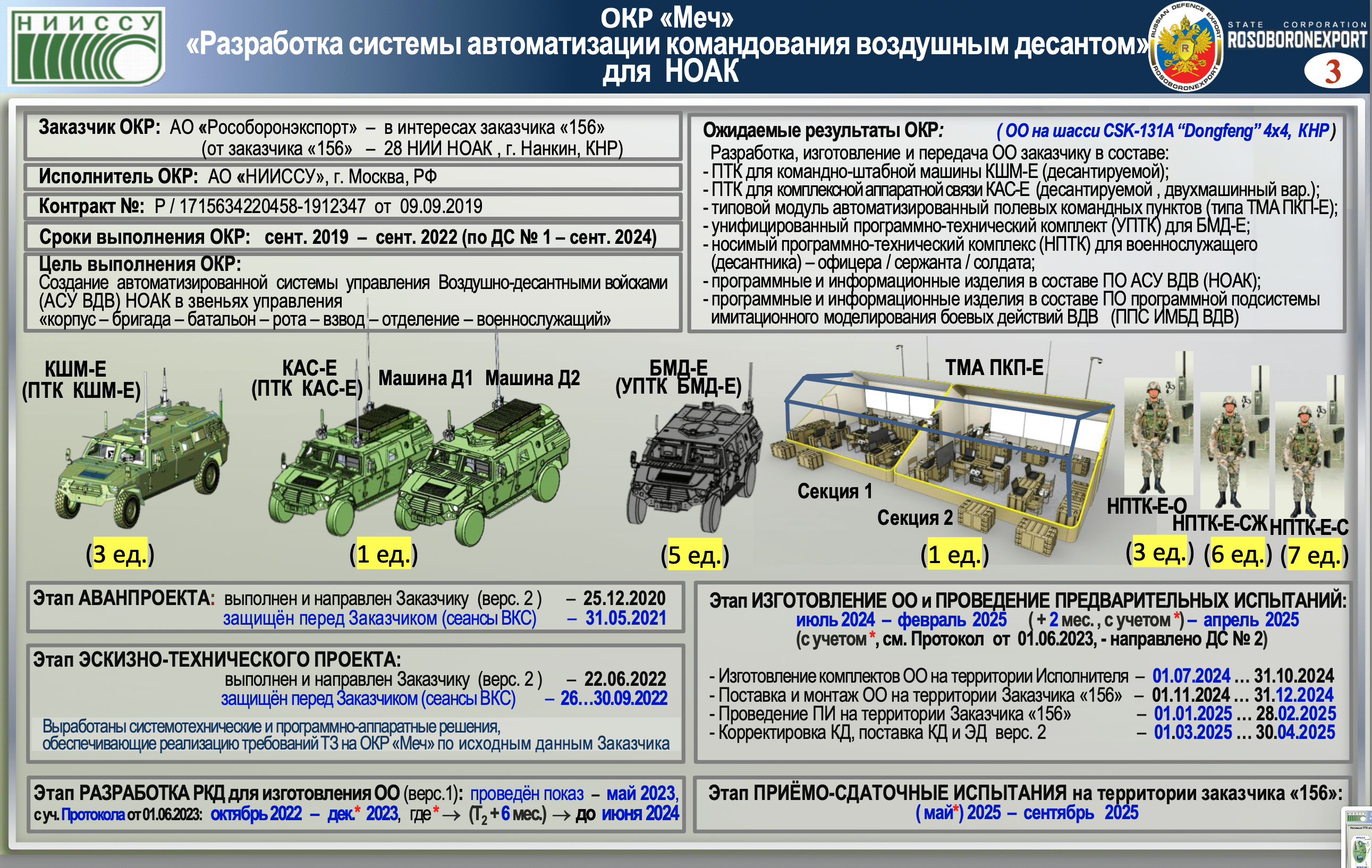
Our editorial team has obtained an internal NIISSU presentation from 2023 that directly describes the R&D project “Sword” as an effort to develop a fully automated command-and-control system for China's People’s Liberation Army (PLA) airborne forces. The project has been underway since at least 2019 and, according to available information, has already passed testing stages on Chinese territory.
The documents state that the customer is Rosoboronexport, acting in the interests of the 28th Research Institute of the PLA (Nanjing), while the contractor is the Russian NIISSU itself. The project’s objective is formulated unambiguously: “the creation of an automated command-and-control system for the PLA Airborne Forces,” covering levels from corps down to the individual servicemember.
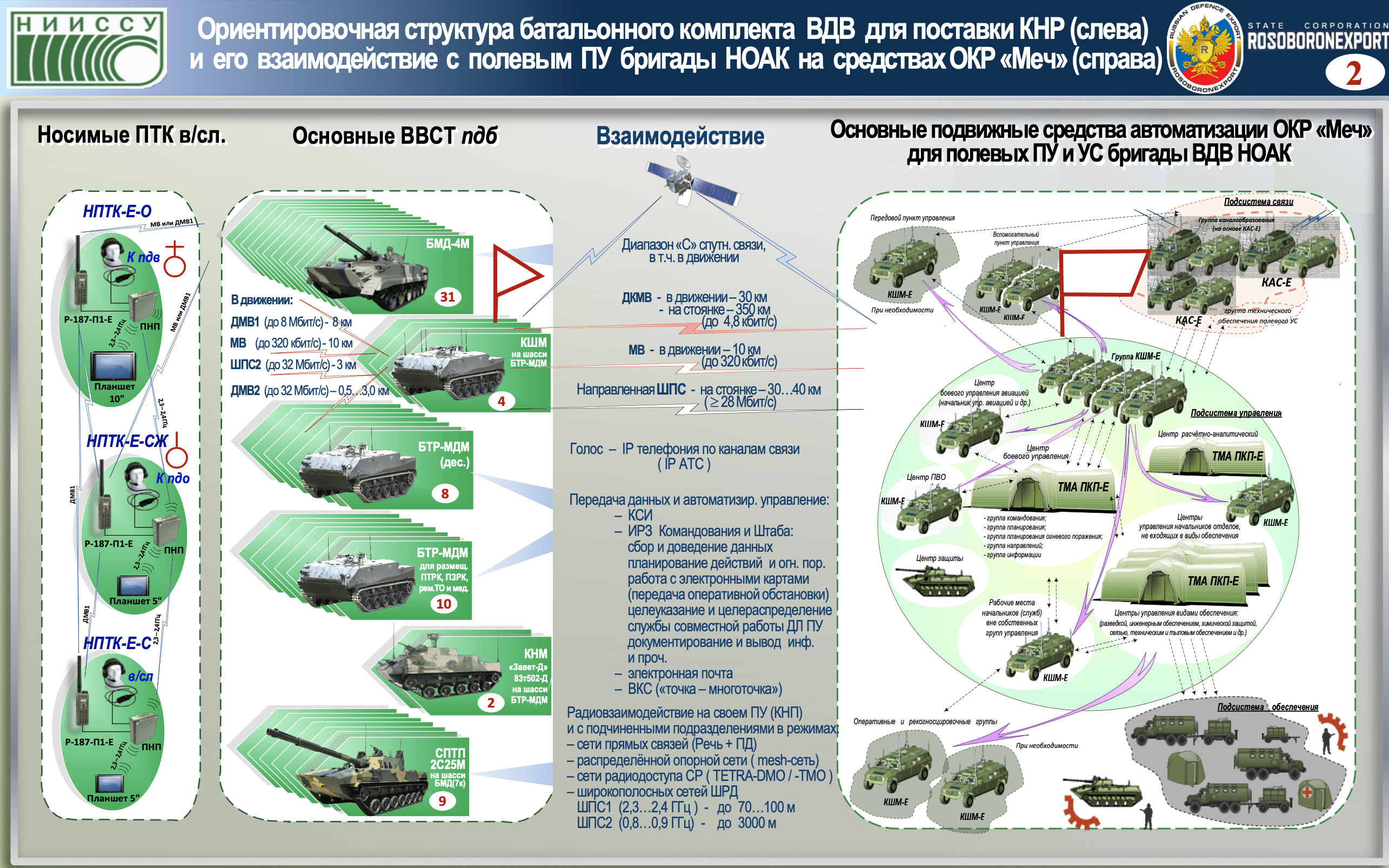
“Sword” is not merely a set of communications tools, but a comprehensive digital combat management system, the documents state. It integrates command-and-staff vehicles, field command posts, satellite and radio communications, secure data transmission networks, geolocation capabilities, electronic maps, tablets, and wearable terminals for each paratrooper.
The system enables real-time transmission of the battlefield picture, target allocation, unit coordination, and the integration of intelligence and UAV data, effectively creating a unified digital battlespace for airborne operations.
The “Sword” project is being implemented in stages. Several early phases—including the preliminary concept and the conceptual-technical design—have already been formally completed, along with a significant portion of the work on preparing design documentation.
The internal schedule indicates that the project will enter a phase of practical implementation in 2025. This includes the manufacture of equipment, delivery of system sets to the customer, deployment of Russian specialists to install the system at the customer’s facilities, and the conduct of on-site preliminary tests, followed by preparations for full acceptance trials in 2026.
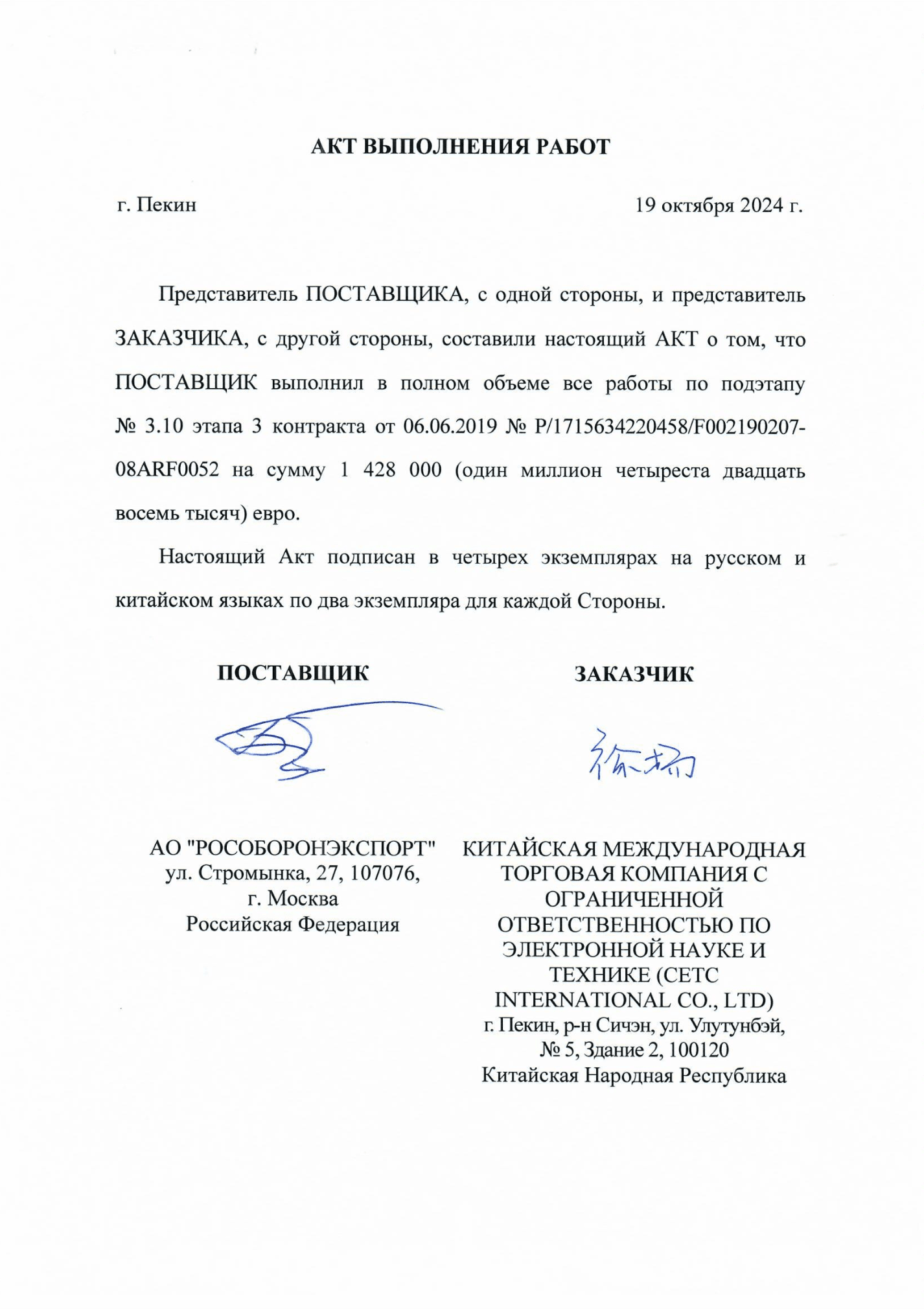
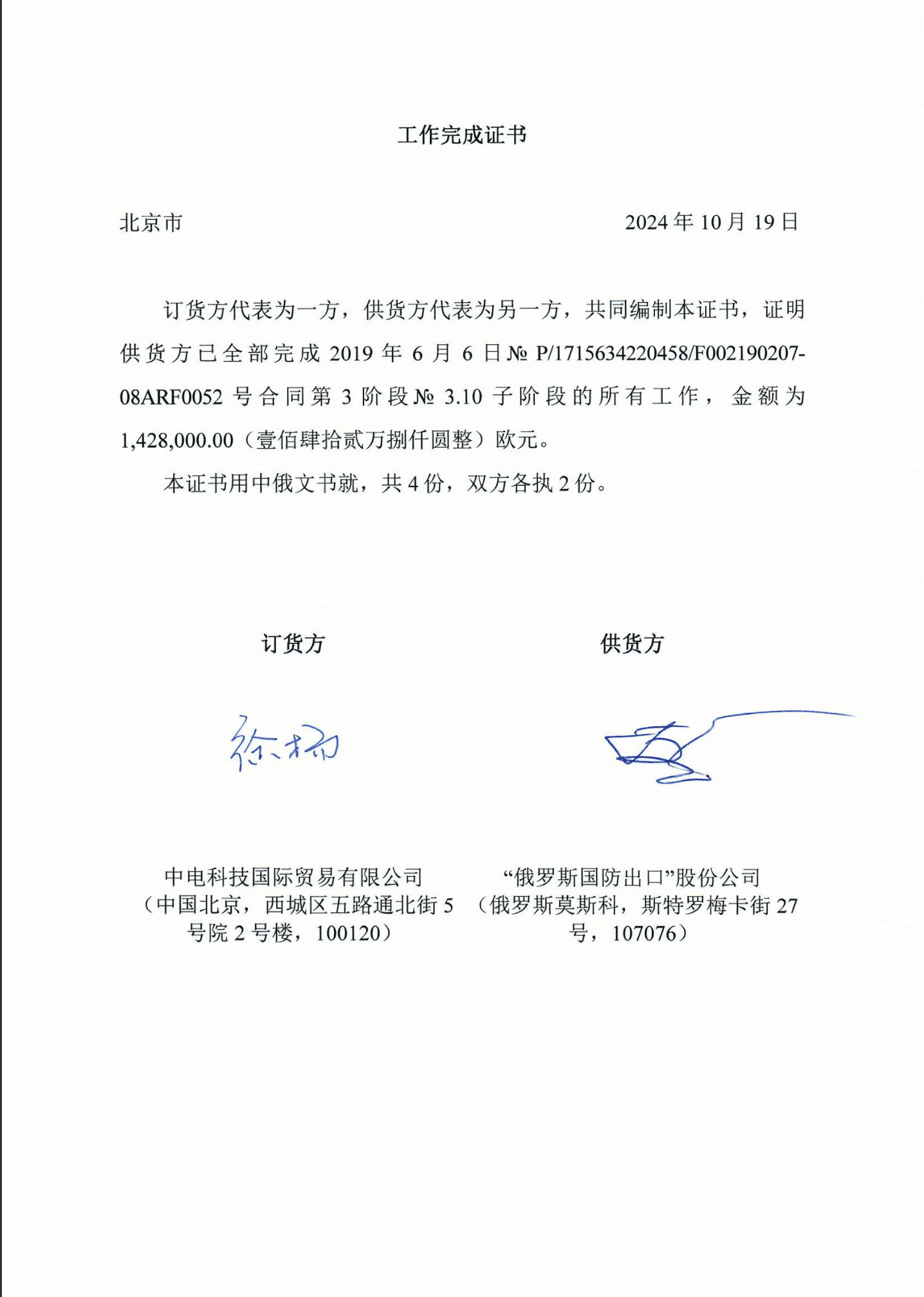
Despite the scale and strategic sensitivity of the project, the Russian institute NIISSU has found itself on the verge of bankruptcy, as evidenced by the analyzed financial and internal documents.
Billion-ruble debts and a pre-bankruptcy state
How is one of Russia’s key defense enterprises surviving?
Despite its participation in a strategic export project for China’s military, NIISSU’s financial condition is described in the company’s own internal documents as critical. The institute’s management openly acknowledges a solvency crisis, a chronic shortage of working capital, and the need to prepare for insolvency proceedings.
Management materials list the causes of this situation: the impact of sanctions and the forced transition to domestically sourced components, a sharp increase in the cost of credit, disruptions and terminations of government contracts, extended delivery timelines for components, staff shortages, and management errors. According to the documents, all of this has led to declining profitability and mounting losses.

As early as the 2022–2026 financial plan, preventing bankruptcy was expected to require attracting 3.6479 billion rubles ($46 million) in corporate and intra-holding loans. However, a significant portion of these funds was never actually received, undermining the planned financial recovery.
In 2024–2025, the institute was forced to seek new financing and requested a 1.5-billion-ruble ($19.5 million) loan. Of this amount, only 585 million rubles ($7.5 million) were approved, and just 463.2 million rubles ($5.9 million) were actually disbursed. At the same time, work is underway to open a separate credit line at Promsvyazbank for 117.5 million rubles ($1.5 million), about which NIISSU officially informed Rosoboronexport in the context of fulfilling current contracts.
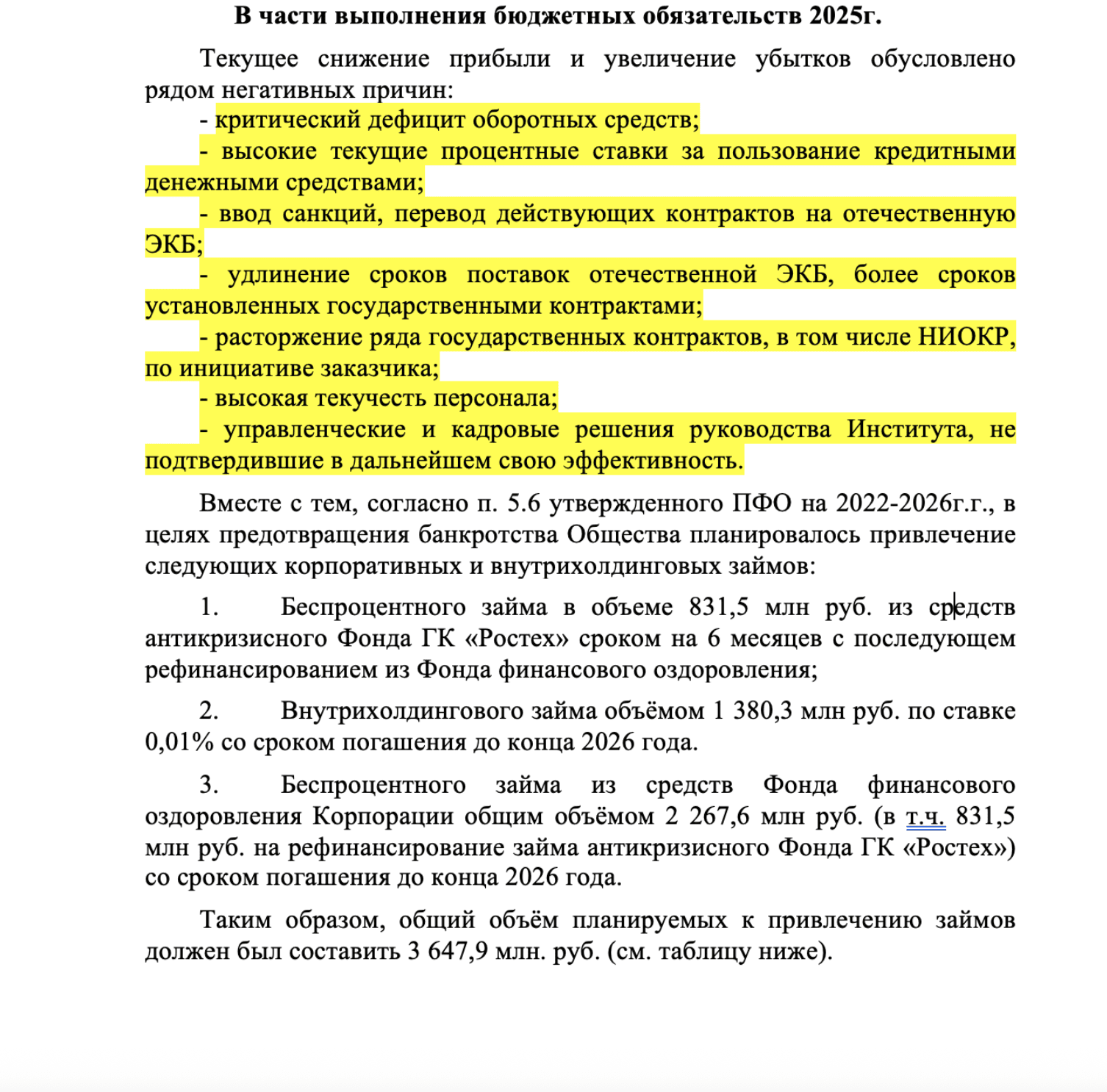
The situation has deteriorated to the point that in October 2024, the management company decided to develop a “roadmap for insolvency proceedings (bankruptcy, observation stage) for JSC NIISSU.” In parallel, a strict cost-cutting program was approved, providing for staff reductions and a cut in the monthly payroll fund from 65 million rubles ($855,000) to 15 million rubles ($197,500).
The scale of the financial problems is also evident from the contract portfolio. With total contracts worth 22.0 billion rubles ($290 million), the institute lacks at least an additional 1.161 billion rubles ($15 million) in funding to ensure fulfillment of its existing obligations.
Against this backdrop, internal management documents record a course toward bringing in the Sozvezdie Concern (the leading Russian developer and manufacturer of electronic warfare) as a co-contractor on NIISSU’s contracts, transferring part of the staff there, and redistributing the financial burden. Formally presented as an anti-crisis measure, this in practice amounts to preparing a scenario under which key competencies and project execution—including “Sword”—could be gradually shifted away from NIISSU if its financial condition continues to deteriorate.
Thus, even participation in a major export military project does not save the institute from systemic financial decline. NIISSU’s story is illustrative of Russia’s defense industry as a whole: under sanctions pressure and with a destabilized economy, even “strategic” enterprises operate under a constant threat of insolvency, surviving through loans and ad hoc management measures.
Discuss this article:

-111f0e5095e02c02446ffed57bfb0ab1.jpeg "Photo of Roman Kohanets")
-37d0c4e589b794d453938c254fb3d00d.png "Comoros-flagged tanker KHORYV, Dnipro city, Ukraine, 2021.")


-72b63a4e0c8c475ad81fe3eed3f63729.jpeg "Photo of Cyril Barabaltchouk")