- Category
- World
Two More Satellites From Russia’s Starlink Alternative Face Atmospheric Reentry
 Prefer U24 Media on Google
- Authors

-c439b7bd9030ecf9d5a4287dc361ba31.jpg "Photo of Katherina Popilnichenko")
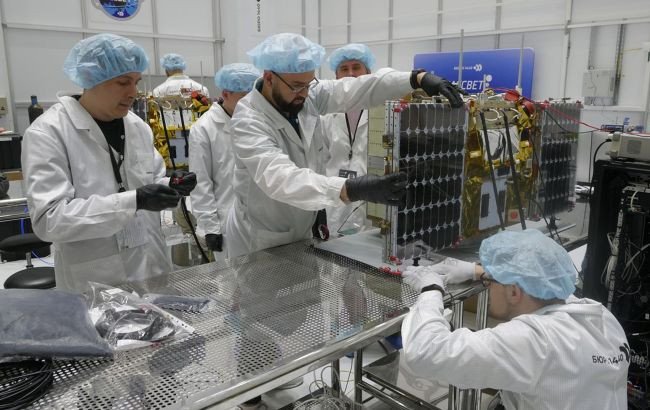
Russia’s attempt to construct a domestic alternative to SpaceX’s Starlink, aimed at delivering high-speed satellite internet and establishing a dedicated military space communications network, is encountering mounting technical failures in orbit.
At least two satellites deployed during the second mass launch on July 20, 2026, are expected to be lost, according to space researcher Anatoly Zak, as reported by The Moscow Times on August 25.
We bring you stories from the ground. Your support keeps our team in the field.
Tracking data published by Russian Space Web indicates that these spacecraft failed to perform orbital elevation maneuvers, falling below an altitude of 300 kilometers, and are likely to reenter Earth’s atmosphere, where they will break apart and burn up.
Three additional satellites from the same launch made unsuccessful attempts to raise their orbits and are currently descending, remaining at altitudes between 310 and 330 km.
Nine other spacecraft continue to perform maneuvers, but their altitudes remain roughly 200 km lower than those of the initial deployment phase at the same point in mission operations.
The project, spearheaded by aerospace company Bureau 1440, launched its first batch of 17 satellites in late March. One spacecraft from that initial group failed to reach its target orbit and burned up in early June.
While 14 satellites eventually formed a chain at an altitude slightly above 500 km, none managed to reach the planned operational height of 800 km designated by Bureau 1440.
Astronomer Jonathan McDowell noted ongoing difficulties with raising orbits within the Rassvet-3 constellation, which is designed to provide broadband data transmission globally.
Maintaining spacecraft at a lower 500 km orbit remains technically possible, but increased gravitational drag requires higher fuel consumption to sustain altitude, significantly reducing the operational lifespan of the satellites, Zak explained.
Roscosmos head Dmitry Bakanov previously stated in June 2025 that the first stage of the 430-billion-ruble ($4.7 billion) Rassvet project would feature 350 satellites to provide continuous global coverage, with plans to eventually expand the network to 900 spacecraft.
Moscow intended to begin commercial operation in 2027, with Russian leader Vladimir Putin noting that the system would support military drone command networks.
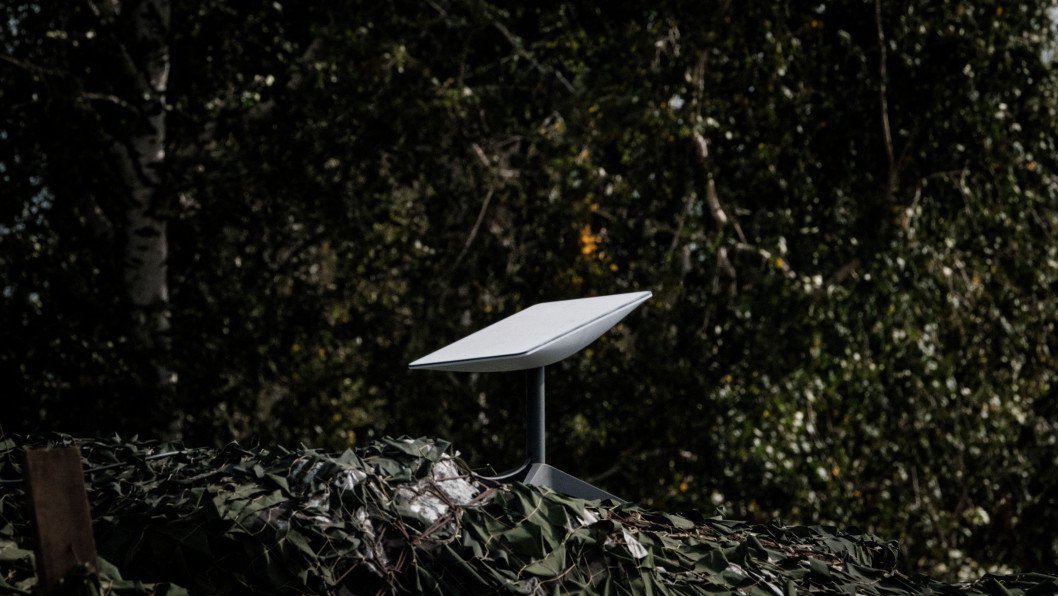
Before that, Russian forces had relied on unauthorized access to Starlink terminals obtained through third-party supply chains to support battlefield communications and drone operations. Ukraine, in coordination with SpaceX, introduced technical restrictions that disabled a significant portion of these terminals by limiting access to registered users.
The impact on Russian units was immediate, with operations disrupted following the loss of secure communication channels. Ukrainian military sources reported a decline in coordination efficiency, while Ukraine’s Defense Ministry adviser Serhiy Beskrestnov said the restrictions created a “catastrophe” for Russian forces on certain sections of the front.
Discuss this article:




-72b63a4e0c8c475ad81fe3eed3f63729.jpeg "Photo of Cyril Barabaltchouk")