- Category
- World
Ukraine Expands Minority Education Rights, Clearing Way for Two More EU Accession Clusters
 Prefer U24 Media on Google
- Authors

-111f0e5095e02c02446ffed57bfb0ab1.jpeg "Photo of Roman Kohanets")
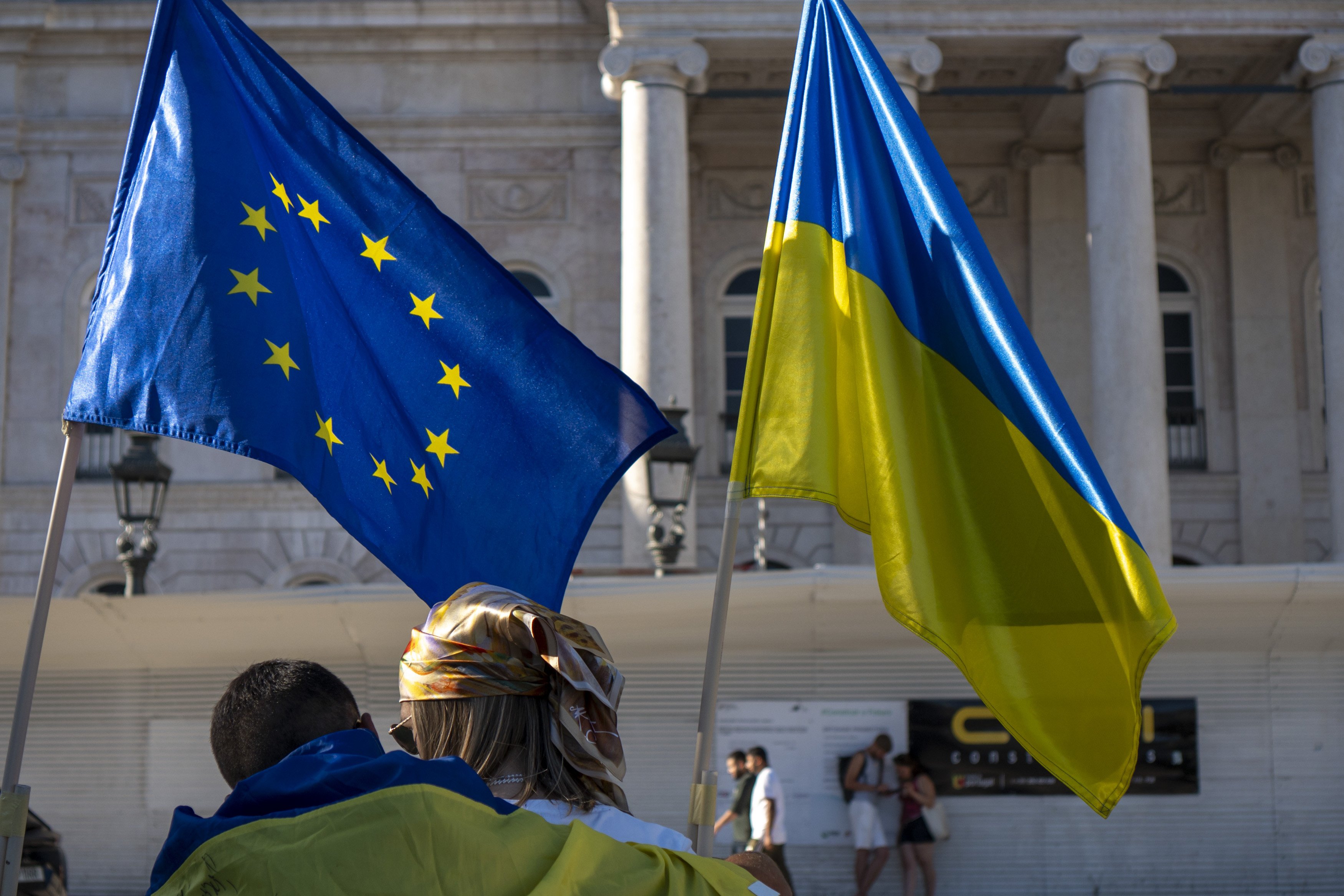
Ukrainian parliament adopted legislation on October 12 expanding education rights for national minorities and indigenous peoples, clearing a key obstacle to the expected opening of two more EU accession negotiation clusters, Reuters reported on October 13.
Verkhovna Rada approved Bill No. 16119 in its first and final reading. The legislation expands opportunities to use official EU languages and indigenous languages in education while preserving Ukrainian's status as the state language.
We bring you stories from the ground. Your support keeps our team in the field.
Lawmakers backed the bill with 273 votes in the first reading and 266 votes in the final vote. Parliament instructed its speaker to sign the legislation immediately and forward it to President Volodymyr Zelenskyy for signature. The law has therefore been adopted by parliament but still requires the president’s signature, Ukrainska Pravda added on the same day.
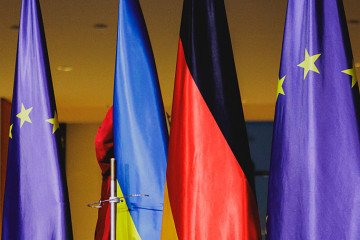
The amendments are expected to unlock negotiations on Cluster 2, the Internal Market, and Cluster 3, Competitiveness and Inclusive Growth, in Ukraine’s EU accession process.
European Pravda reported, citing diplomatic sources in Brussels, that Hungary was prepared to clear the procedural steps required for the EU to open the two clusters once Ukraine adopted the education amendments. The EU Committee of Permanent Representatives, or Coreper, was preparing common EU negotiating positions for both clusters on October 12.
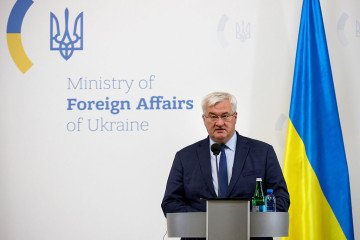
Following talks with Hungarian Foreign Minister Anita Orbán in Luxembourg, Ukrainian Foreign Minister Andrii Sybiha said Kyiv expected the EU to formally open Clusters 2 and 3 on October 13.
“Tomorrow we expect the EU to formally decide on the opening of Cluster 2, ‘Internal Market,’ and Cluster 3, ‘Competitiveness and Inclusive Growth,’” Sybiha said, thanking Hungary for what he described as its constructive position.
Hungary welcomed the parliamentary vote. Orbán called it an “important step” and said it was the result of months of joint work and constructive dialogue between Kyiv and Budapest.
According to the Telex report, Budapest has also said it intends to monitor the legislation’s entry into force and implementation, including guarantees for Hungarian-language education and the legal status of minority schools.
The changes build on proposals introduced on October 1. Under the legislation, schools where more than half of the students study in the language of a national minority that is also an official EU language can receive the status of a national minority school.
-be12baa581b8208e77d61528e09c1250.jpg)
Ukraine’s Ministry of Education and Science estimated that 149 schools, or about 1.2% of the country’s general secondary schools, could qualify for that status.
The law allows greater use of eligible minority languages alongside Ukrainian in the educational process and school communications. It also provides for minority-language versions of certain educational documents, allows schools to incorporate national history, culture, traditions, and symbols into educational programs, and establishes guarantees of continuing education in the relevant language if a school is reorganized or closed.
The provisions apply to indigenous languages and minority languages that are official languages of the European Union. They therefore do not extend the same provisions to Russian, which is not an official EU language.
According to the European Commission, the EU accession process divides negotiations into six thematic clusters covering 33 chapters of EU law and policy. Opening a cluster allows formal negotiations in its policy areas to proceed, but does not mean that the required reforms have been completed. Chapters remain subject to benchmarks and may be provisionally closed only once the EU determines that the relevant requirements have been met.
-223608190163598d0aa4f0d1fde74085.jpg)
Cluster 2, the Internal Market, covers the free movement of goods, workers, services, and capital, as well as company law, intellectual property, competition policy, financial services, and consumer and health protection.
Cluster 3, Competitiveness and Inclusive Growth, covers digital transformation and media, taxation, economic and monetary policy, employment and social policy, enterprise and industrial policy, science and research, education and culture, and the customs union.
Ukraine formally began EU accession negotiations in June 2024. The EU opened negotiations on Cluster 1, Fundamentals, on June 15, 2026, covering democratic institutions, the rule of law, public administration reform, and economic criteria.
The EU then opened Cluster 6, External Relations, on July 14, covering external relations and foreign, security, and defense policy.
Under the EU’s accession methodology, the Fundamentals cluster is opened first and closed last, with progress in that area determining the overall pace of accession negotiations.
Discuss this article:

-72b63a4e0c8c475ad81fe3eed3f63729.jpeg "Photo of Cyril Barabaltchouk")
-c439b7bd9030ecf9d5a4287dc361ba31.jpg "Photo of Katherina Popilnichenko")