- Category
- World
Ukrainian Drone Campaign Forces 135 Million Barrels of Russian Crude to Stall Offshore
 Prefer U24 Media on Google
- Authors

-72b63a4e0c8c475ad81fe3eed3f63729.jpeg "Photo of Cyril Barabaltchouk")
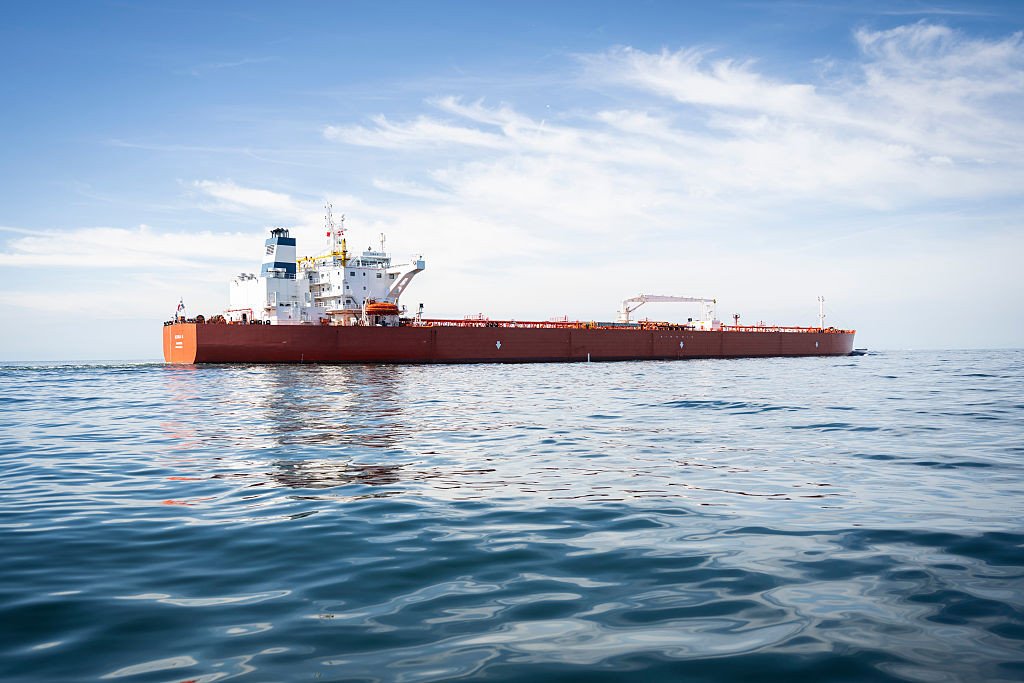
Nearly 135 million barrels of Russian crude are currently stranded at sea as Ukrainian drone strikes on refineries force Russia to ship unprocessed oil abroad, Bloomberg reported on July 15.
The offshore backlog is the result of a Ukrainian drone campaign targeting Russian oil processing plants, including recent strikes on the Gazprom Neftekhim Salavat and Afipsky facilities. These physical disruptions have driven Russia’s domestic refining capacity down to its lowest level in over 21 years, according to Bloomberg’s analysis of commodity market data.
We bring you stories from the ground. Your support keeps our team in the field.
Left with a vast surplus of raw crude that cannot be processed at home, Moscow has been forced to aggressively ramp up its maritime exports to keep its oil fields operational, pushing its four-week average seaborne shipments to 4.21 million barrels a day.
However, these soaring export volumes are failing to reach global buyers due to mounting maritime bottlenecks. Tanker-tracking data monitored by Bloomberg reveals that at least ten tankers carrying Russia’s flagship Urals grade have ground to a halt off the Mediterranean coast of Egypt and in Indonesia’s Riau archipelago near Singapore. Far Eastern Russian grades, including Sokol and Sakhalin Blend, are likewise experiencing weeks-long delays near the Pacific port of Kozmino as they wait to transition from shuttle tankers to ocean-going vessels.
This maritime gridlock has coincided with a decline in the financial returns on Moscow’s exports. Price assessments from Argus Media, cited by Bloomberg, show that the gross weekly value of Russia’s seaborne crude exports fell to a four-week average of $1.68 billion, down by $200 million from the previous period.
-5b9bb1d42a6ea3f8375dd1da8095f27a.jpg)
The drop is driven by falling crude prices, with Baltic Urals dropping to $52.61 a barrel and delivered prices to India hitting an eleven-week low of $70.58 a barrel, reflecting Russia’s weakening leverage over its remaining major buyers.
Compounding these economic pressures is the looming threat of tighter Western financial restrictions. A bipartisan group of US senators recently reached an agreement with the Trump administration to advance new Russian sanctions legislation, which Bloomberg reports could reignite buying hesitancy among Indian and Chinese refiners.
This impending policy shift, paired with the physical disruption from Ukrainian drone strikes, continues to squeeze the Kremlin’s primary revenue engine as global energy markets face further volatility, Bloomberg writes.
The maritime shipping gridlock coincides with a recent Ukrainian drone operation targeting Russian transport and logistics networks. Over eight days, Ukraine’s Unmanned Systems Forces reported hitting 105 Russian watercraft, including cargo ships and shadow fleet tankers, in the Sea of Azov and near occupied Crimea. The disruptions have halted commercial vessel traffic through the Kerch Strait, further constraining the shipping corridors available for Russian seaborne oil exports.
Discuss this article:






-c439b7bd9030ecf9d5a4287dc361ba31.jpg "Photo of Katherina Popilnichenko")