- Category
- World
Why the UK Parliament Is Debating Russian Influence Today
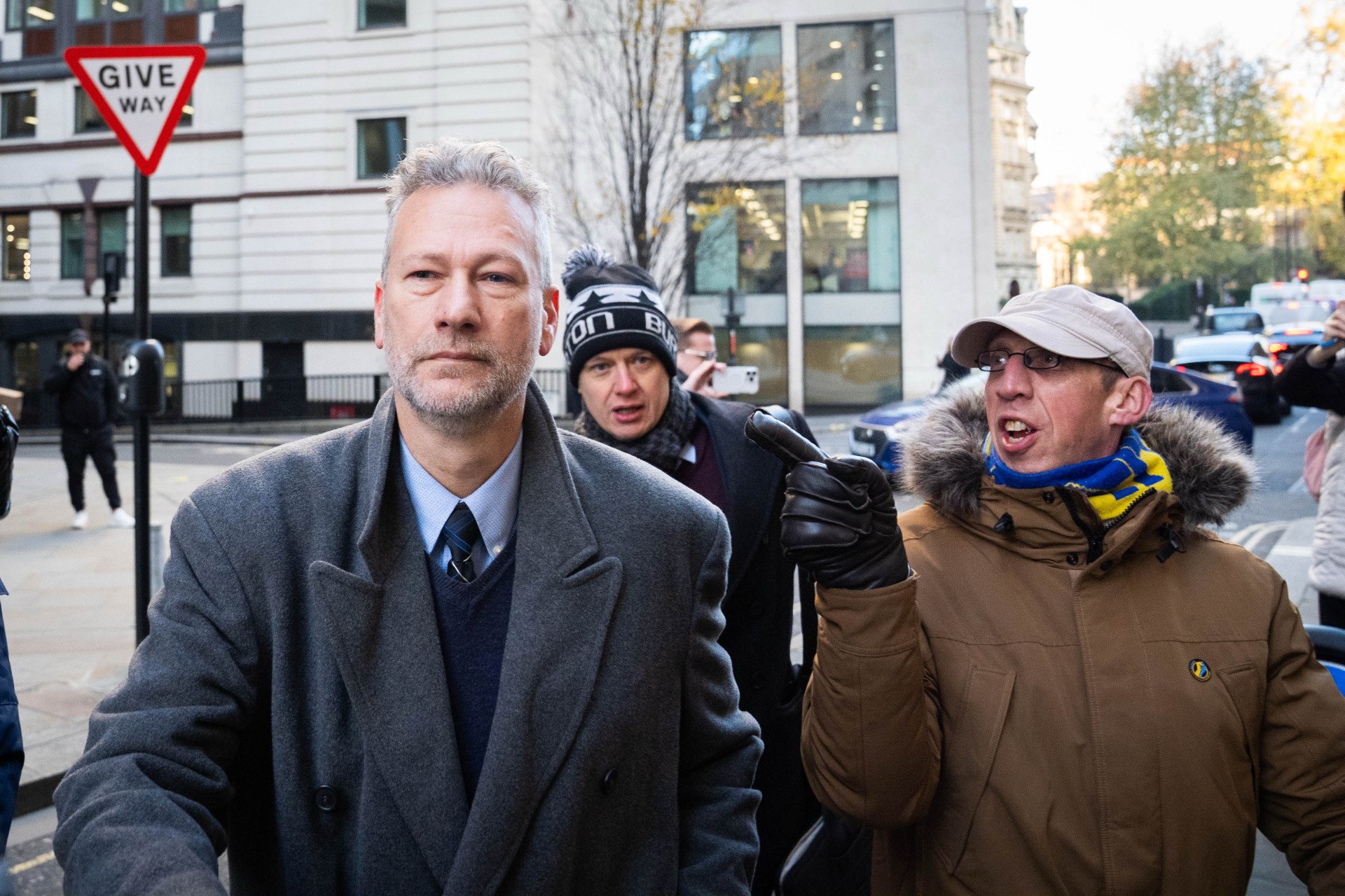
As the UK Parliament today debates Russian influence in UK politics, officials warn the country is locked in a “grey zone war” with the Kremlin.
 Prefer U24 Media on Google
- Authors

-46f6afa2f66d31ff3df8ea1a8f5524ec.jpg "Photo of Jess Daly")
Russian influence in British politics is being debated on February 9, 2026, in the UK Parliament, following a public petition calling for a full public inquiry. The British government has also commissioned an independent review into foreign financial interference, launched in December 2025.
The petition, signed by over 114,000 people, highlighted concerns about Russian efforts to sway democracies in the UK, US, Europe, and beyond. “We believe we must establish the depth and breadth of possible Russian influence campaigns in the UK,” it stated.
🚨 TREASON? He was Reform Party’s Welsh Leader, but now he’s looking at jail sentence. Nathan Gill pleaded guilty to 8 bribery charges - he took money 💰 to push pro Russian propaganda in EU parliament.
— Liz Webster (@LizWebsterSBF) September 27, 2025
Remember: Russia Report, the official account of Russian interference in UK… pic.twitter.com/3SczJyjJlD
The debate and review respond to a growing threat to British democracy, including the case of former Member of European Parliament (MEP), Nathan Gill, jailed in November 2025 for accepting bribes to give pro-Russian speeches and interviews.
The facts are clear. A British politician took bribes to further the interests of the Russian regime, a regime which forcefully deported vulnerable Ukrainian children and killed a British citizen on British soil using a deadly nerve agent. This conduct is a stain on our democracy. The independent review will work to remove that stain.
Housing Secretary
Meanwhile, Moscow has intensified its hybrid warfare globally, particularly since the full-scale invasion of Ukraine. Kremlin-linked disinformation group Storm-1516 has launched multiple operations, using AI-powered disinformation at an industrial scale to undermine Western leaders.
Election meddling has also surged, including in Moldova, where operations coordinated from Russia through criminal networks illustrate the growing threat to democratic processes worldwide.
Amid these wider concerns over Russian interference, the case of Nathan Gill shows how those threats played out in real-world politics.
Nathan Gill’s case
In November 2025, Nathan Gill, former leader of Reform UK in Wales, was sentenced to 10-and-a-half years in prison after admitting he accepted £40,000 to promote pro-Russian statements in the European Parliament. This is believed to be the first such case in UK history.
Gill, who also served as UKIP leader in Wales from 2014 to 2016 and represented North Wales in the Welsh Parliament between 2016 and 2017, admitted to eight counts of bribery dating from 2018 to 2019.
Prosecutors revealed that Gill was taking instructions from Oleg Voloshyn, who is described by the US government as a “pawn” of Russian intelligence (FSB). Gill followed the scripts provided to him.
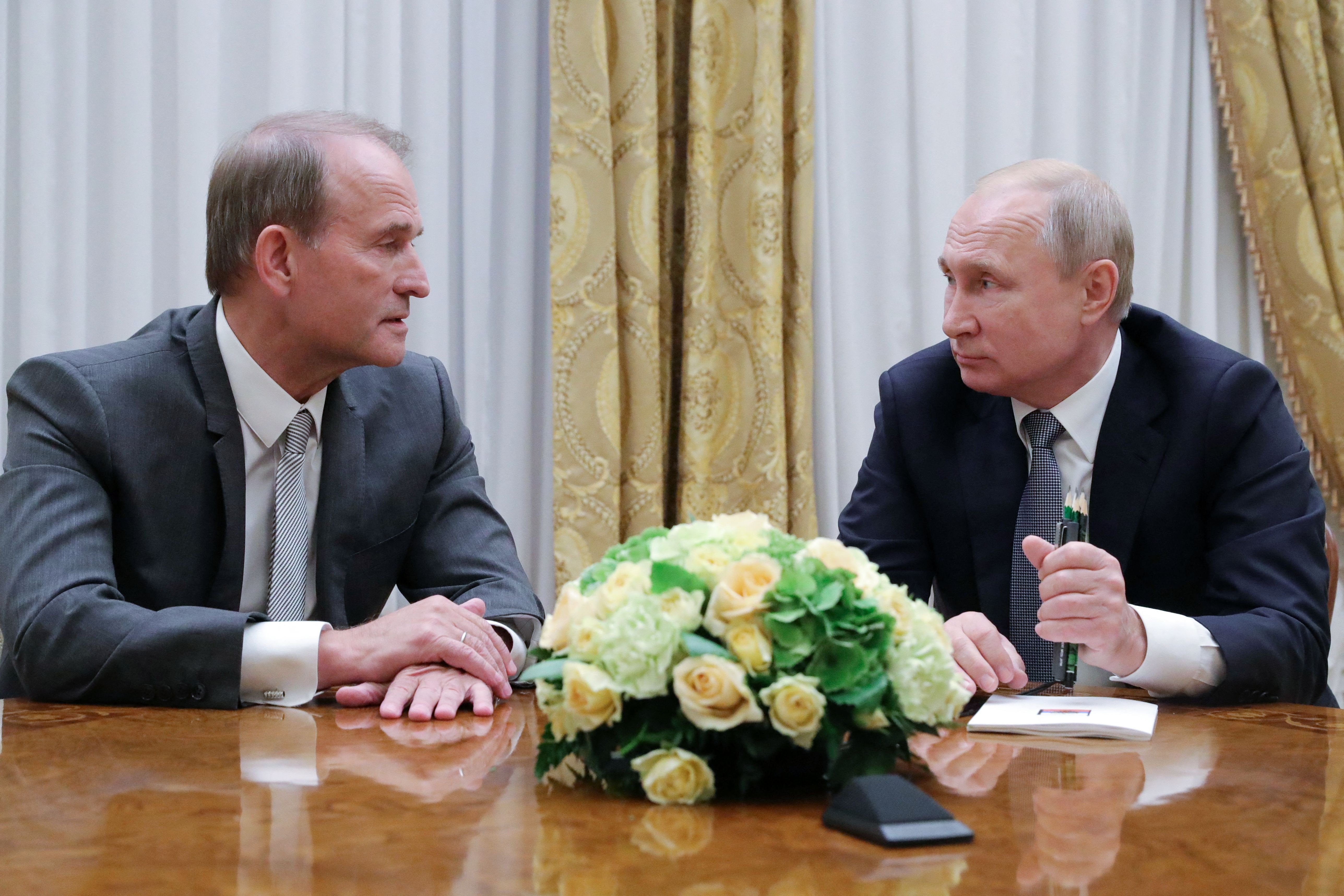
Payments came via Viktor Medvedchuk, a friend of Russian leader Vladimir Putin who is also the godfather to Medvedchuk’s daughter.
Gill regularly appeared on Medvedchuk-controlled Ukrainian TV channels, including 112 Ukraine and NewsOne, amplifying pro-Russian messaging, such as making statements that were supportive of pro-Russia media parroting the Kremlin propaganda being present in Ukraine, UK Counter Terrorism reported.
Gill also sat on the “international editorial board" of the 112 Ukraine channel, the declarations of interests to the European Parliament shows.
By that time, Russia had already invaded Ukraine, attempted the annexation of Crimea, and occupied parts of the Donetsk and Luhansk regions. Voloshyn had already helped prepare two of Gill’s parliamentary contributions in December 2018 and March 2019.
In July 2019, Gill brought Medvedchuk and Voloshyn to the European Parliament in Strasbourg to present a so-called “peace plan” for Ukraine. Experts say the visit gave Medvedchuk a high-profile platform at the heart of Europe to advance a pro-Russian agenda and influence how peace in Ukraine would be framed, the BBC reported.
During sentencing, Prosecutor Mark Heywood highlighted WhatsApp messages showing Gill’s payments: in December 2018, Voloshyn noted he had received “all the promised Christmas gifts” and requested “five more gift cards”—funds traced back to Medvedchuk. “There is clear evidence of agreed actions—following specific scenarios—in exchange for defined sums of money,” Heywood said.
The Metropolitan Police Counter-Terror Team warned that Gill’s actions posed a “potential damage to national security,” underscoring the broader threat posed by foreign influence within UK politics.
“Grey zone war”
Espionage, sabotage, and cyberattacks are just some of the ways Russia operates on UK soil and in its waters. UK officials describe the situation as a “grey zone war”—a type of conflict that sits between peace and open war, including activities such as undermining energy supplies, money laundering, and covert intelligence operations.

In the wake of the Nathan Gill case, concerns about foreign financial interference in the UK’s political and electoral systems have moved to the forefront. In July 2025, the UK government announced major electoral reforms to strengthen safeguards.
Our message to Russia is this: The United Kingdom is watching. We will defend ourselves and our international partnerships. Any attempts to undermine our security and threaten the safety of our citizens will be met with strong consequences.
Neil Holland
Head of the United Kingdom’s Delegation to the Organization for Security and Co-operation in Europe (OSCE)
A second high-profile example came in 2024 when Christine Lee, a UK-based lawyer, was accused by MI5 of working covertly on behalf of the Chinese Communist Party. Lee donated £500,000 to former Brent North MP Barry Gardiner, who chaired the now-disbanded China in Britain All-Party Parliamentary Group. Lee denied the claims and challenged MI5 in court, but her case was dismissed in December 2024.
The ongoing independent review will provide a comprehensive assessment of financial rules and safeguards, offering recommendations to reduce the risks of foreign political interference. Measures under consideration include:
Issuing guidance for election candidates to recognise, resist, and report suspicious activity
Working with professional networking sites to make them a hostile environment for spies
Tightening rules on political donations through a new Elections Bill, ensuring that shell companies can no longer contribute to UK political parties
The review will focus on contemporary events and threats, taking into account recent cases, with its findings and recommendations, along with the results of today’s public enquiry, due to be published in March 2026.
The UK Parliament Petitions Committee will debate the petition at 16:30 GMT, February 9, 2026.
Discuss this article:
-4a56a6b482ec132402c16ef6fcabf9a2.png)


-c439b7bd9030ecf9d5a4287dc361ba31.jpg "Photo of Katherina Popilnichenko")


-111f0e5095e02c02446ffed57bfb0ab1.jpeg "Photo of Roman Kohanets")