- Category
- Anti-Fake
The Book Club Taking Western Money to Fund Russia’s War Against Ukraine
Russia funds its war against Ukraine even through books. An investigation by UNITED24 Media and TUA Research reveals a network targeting audiences across Europe and America to fuel Russia’s military—linking former fighters, designated terrorists, and even a former US Army sergeant.
 Prefer U24 Media on Google
- Authors

-46f6afa2f66d31ff3df8ea1a8f5524ec.jpg "Photo of Jess Daly")
As Russia continues its war of aggression in Ukraine and beyond, a Russian publishing house named “Chernaya 100”, together with the book club supporting it, spreads its influence even abroad. Its name echoes the 20th-century Black Hundreds—ultranationalist groups known for their monarchism, extremism, and violence.
We bring you stories from the ground. Your support keeps our team in the field.
An investigation by UNITED24 Media and TUA Research finds that the network behind Chernaya 100 is drawing money from Western audiences, turning their donations into direct support for Russia’s war in Ukraine.
At its core, the network operates as follows: a Western-facing media platform attracts audiences, channels money through online platforms, and redirects it to a cluster of ultranationalist groups tied to Russia’s war effort. To understand it, we have to start with a podcast.
The podcast that speaks for the club
“Russians With Attitude” (RWA) is a pro-Russian podcast and social media platform. Since its launch in 2020, RWA has built a large right-wing, English-speaking following across the globe—primarily in the US, with additional audiences in the UK, Germany, Canada, and more.
While presenting itself as commentary on Russian history and politics, it consistently echoes Kremlin narratives and promotes pro-war propaganda, supporting the violence against Ukraine. For years, its two creators have remained anonymous, operating behind online aliases—until now. TUA Research, an OSINT group, worked with reporters to uncover the identities of the RWA hosts.
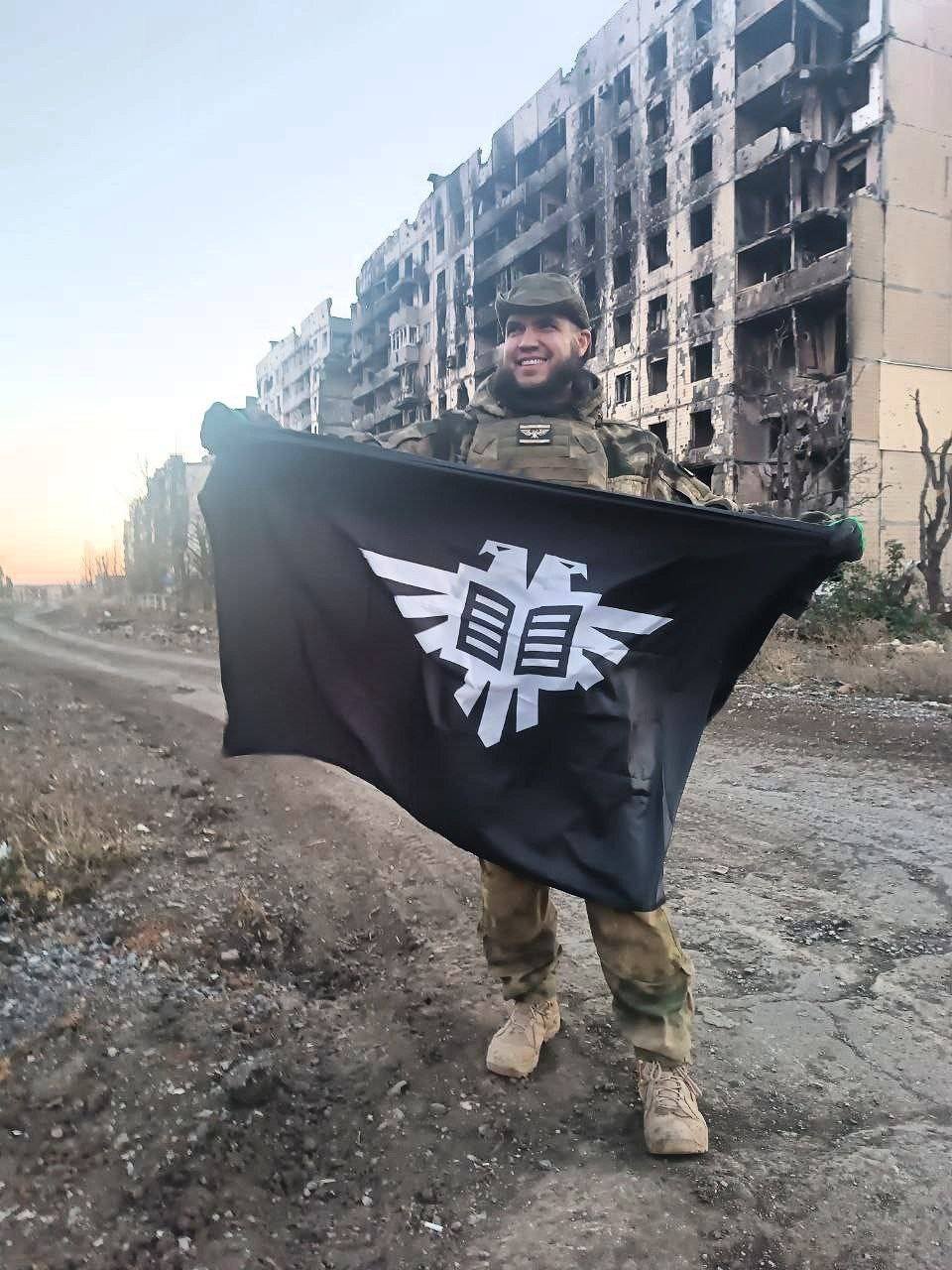
It is Russia’s publishing house Chernya 100 (“Black 100”) through which RWA is funneling foreign donations directly into Russia’s war effort. But Black 100 is not an ordinary publishing house—it is part of a wider so-called “ecosystem,” a military network driving Russia’s invasion, headquartered in the Russian-occupied Donetsk region of Ukraine.
The network includes a book club where Russian propagandists like RWA hosts coalesce, and it also runs a partner group, “Tyl-22,” claiming to be a humanitarian organization. Its leaders are former fighters of the so-called Donetsk People’s Republic (DPR), a Russian-backed force formed during the 2014 invasion of Ukraine’s Donetsk region.
RWA leverages its global audience to solicit foreign funds as “humanitarian aid”—but directs that money to Black 100 and Tyl-22, both led by sanctioned figures, including a US-designated terrorist.
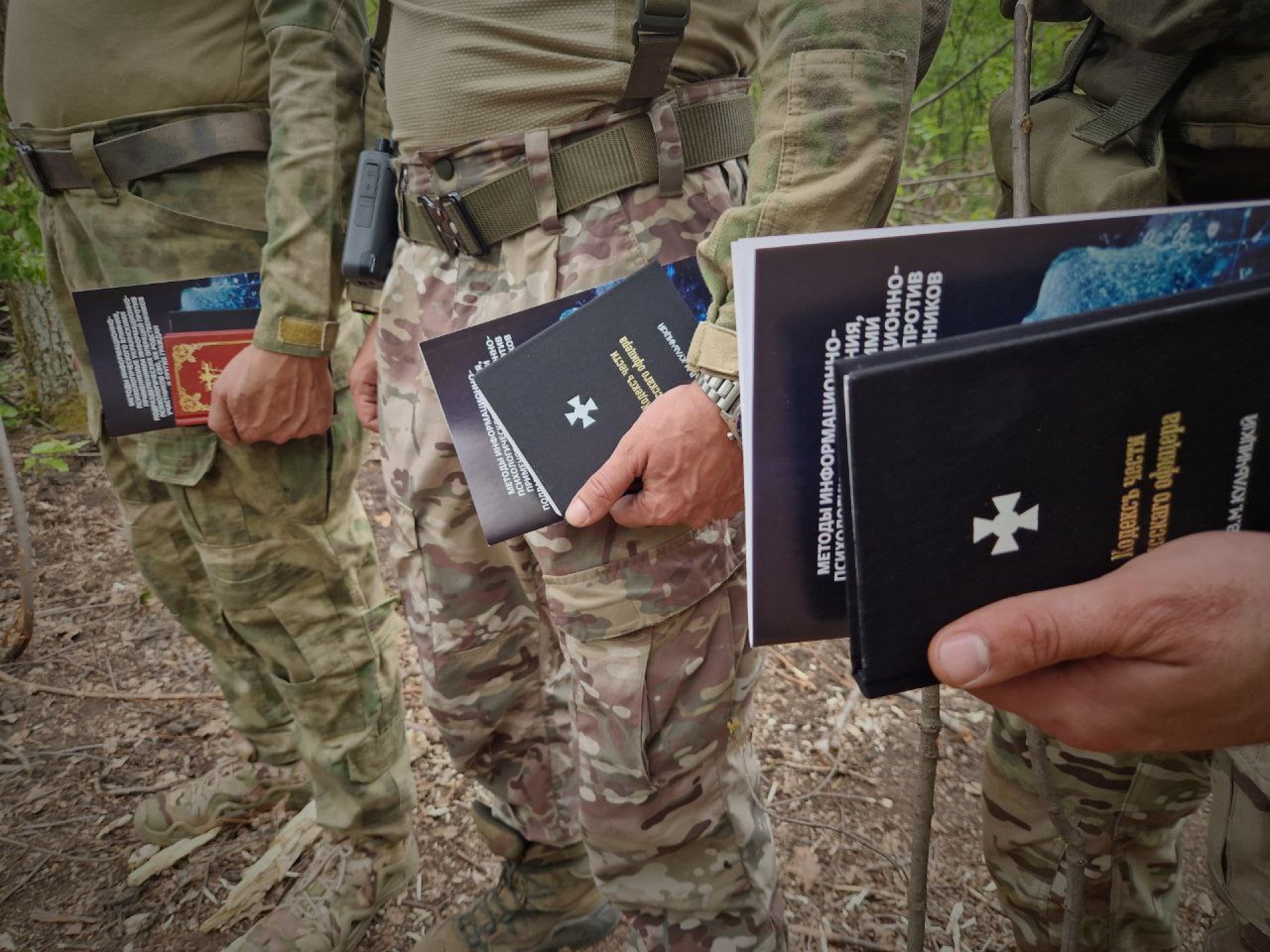
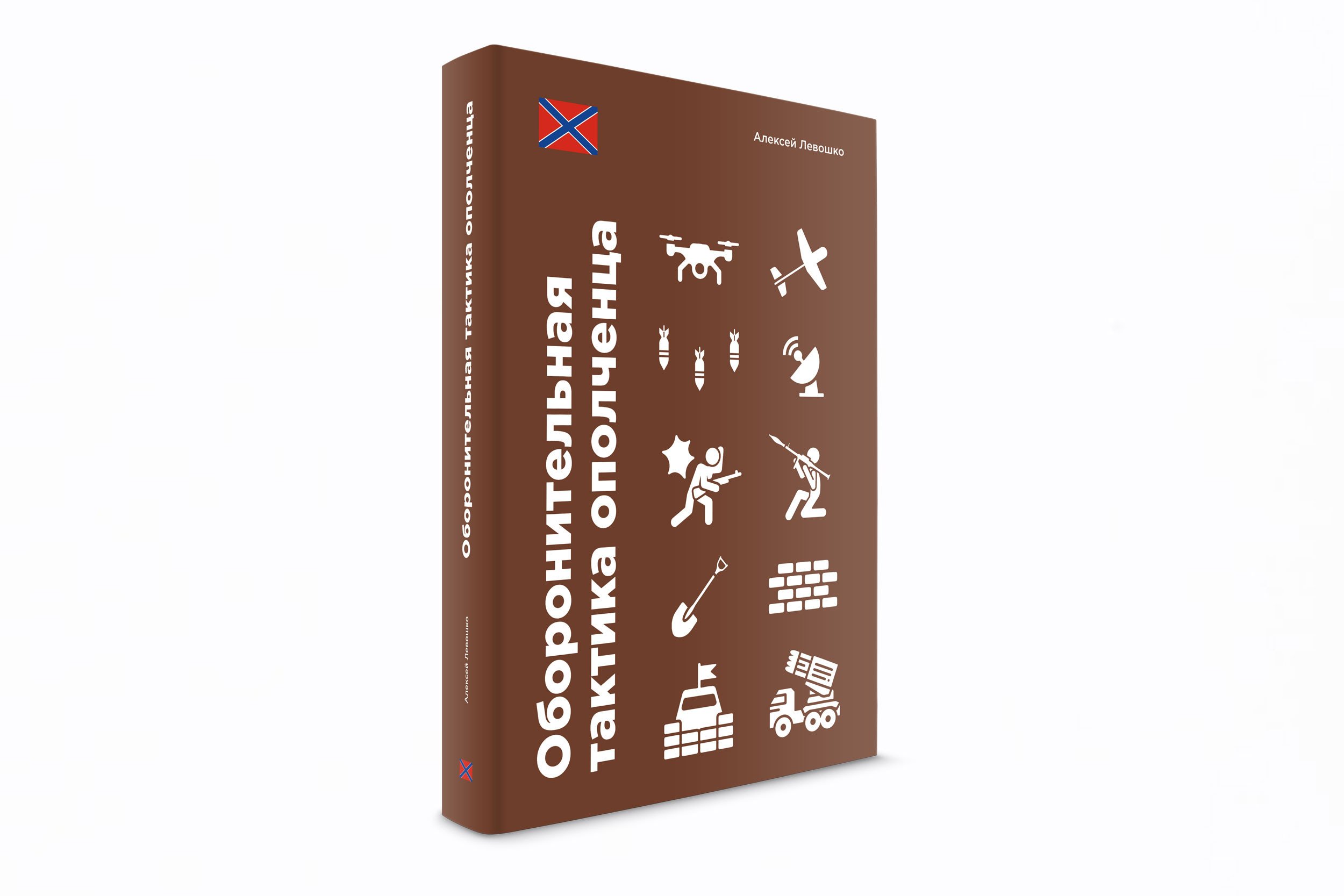
Black 100 trades in war literature; soldiers' firsthand accounts glorifying Russia’s invasion of Ukraine, weapons training manuals, and books steeped in pro-war ideology. From Canada to Australia, and even within London libraries, Black 100 claims its books are sold worldwide.
Some titles are sold openly on Amazon and have been distributed globally, including to readers in the UK. Behind the sales is a US-based intermediary—a former US Army sergeant using an alias—who enables sanction evasion to fund Russia’s army and draws on his US network to advance Moscow's interests abroad.
This investigation reveals his identity, but first, it is essential to understand the network he operates within: a coordinated system spanning online platforms, intermediaries, and Russia’s military apparatus.
From RWA to Black 100, this network hinges on four key figures—two targeting foreign audiences and pulling in support from abroad, and two on the ground converting that money into direct backing for Russia’s war.
Who is behind Russians With Attitude?
RWA is run by "Kirill", identified as Kirill Kamenetsky, and “Nikolay,” identified as Eldar Orlov.
Kamenetsky, a Russian publicist and far-right activist, spent much of his life in Germany before returning to Russia in early 2025. He maintains ties to extremist networks in both countries, including the German Burschenschaft Normannia Heidelberg fraternity, which was suspended over anti-Semitic incidents. Orlov, based in Yekaterinburg, has been active in nationalist online communities for nearly a decade.
RWA’s hosts have repeatedly used online platforms to promote the agendas of Russian ultra-nationalists while radicalizing Western audiences, and through fundraising for sanctioned entities such as the DPR and figures linked to proscribed terrorists, risk crossing from ‘free speech’ into potential criminality.
TUA Research
RWA has built a large right-wing audience across YouTube, Patreon, and Spotify. On X, it has more than 422,000 followers, while Patreon earnings previously exceeded $6,000 per month before a TUA investigation led to its removal. The platform continues to monetize via Substack and Gumroad, where users pay for subscriptions, and its Telegram channel has more than 38,000 followers—largely English-speaking. It has also been listed among Substack’s “bestsellers.”
Once companies continue to host and pay such creators despite clear warnings that funds are being channeled to sanctioned or terrorist actors, they risk shifting from passive intermediaries to knowing facilitators.
TUA Research
RWA has hosted prominent ultranationalist figures, including ideologue Alexander Dugin and “Sasha Meets Russia,” a foreign influencer previously exposed by UNITED24 Media and TUA Research for receiving Russian funding to promote the Kremlin abroad.
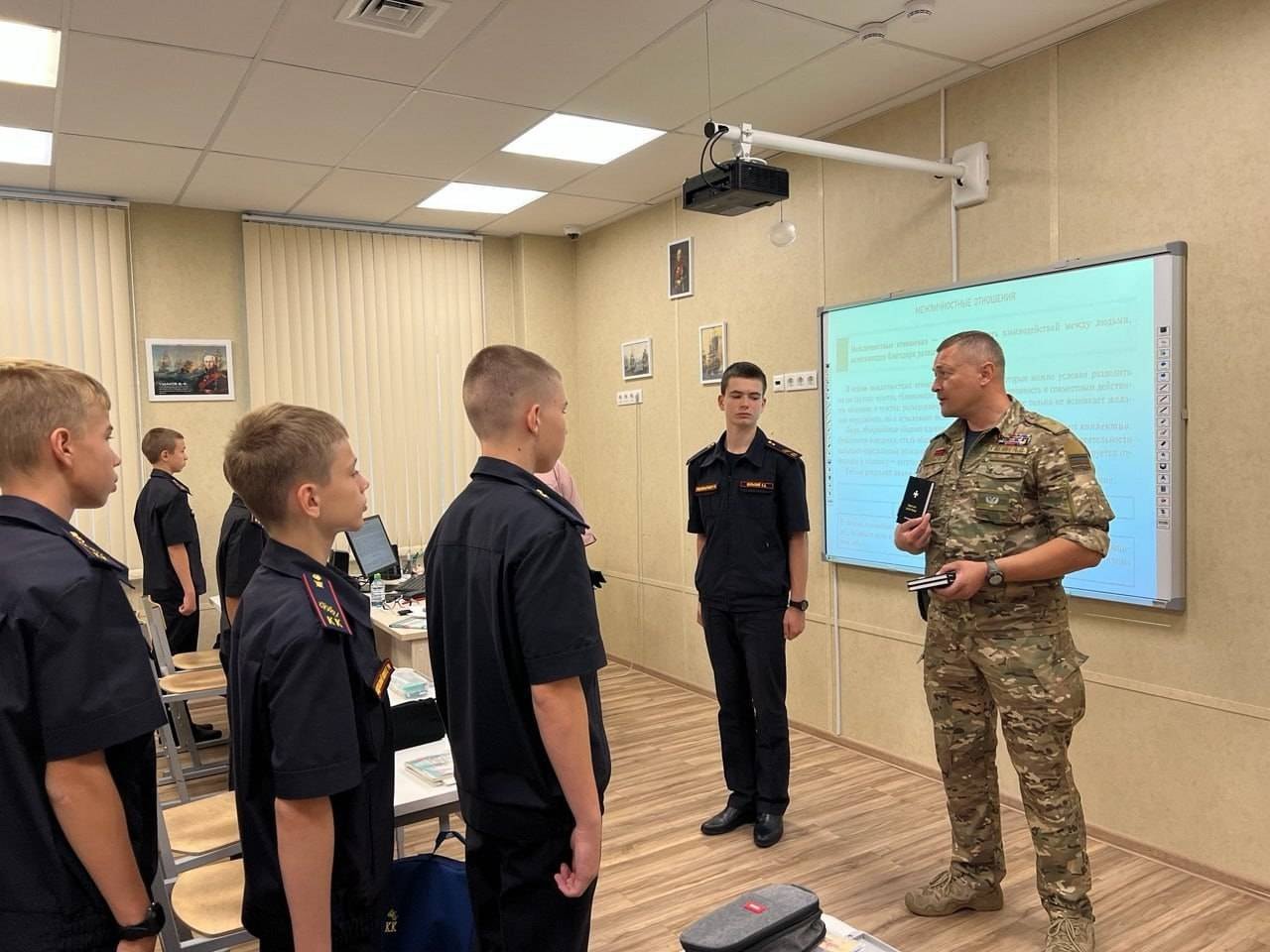
Kamenetsky has contributed to multiple Black 100 publications and attended its events. One title, The Code of Honor of a Russian Officer, has been distributed to the Sevastopol Cadet Corps by adviser to the head of the so-called DPR, Yan Gagin. His home was reportedly raided by German police, and he has claimed authorities opened a criminal case against him for supporting the so-called DPR and LPR .
RWA must not only be fully deplatformed, but also face possible sanctions and further criminal investigations be initiated on Kirill Kamenetsky.
TUA Research
Both hosts have openly endorsed Tyl-22 and its leader, Alexander Zhuchkovsky, describing him as a trusted associate—despite his designation by the US Treasury as a Specially Designated Global Terrorist in June 2022. At the same time, RWA explicitly stated that Tyl-22 is in “no way” connected to the military, meanwhile, Zhuchkovsky has been intermittently fighting in Ukraine for Russia’s military forces since 2014.
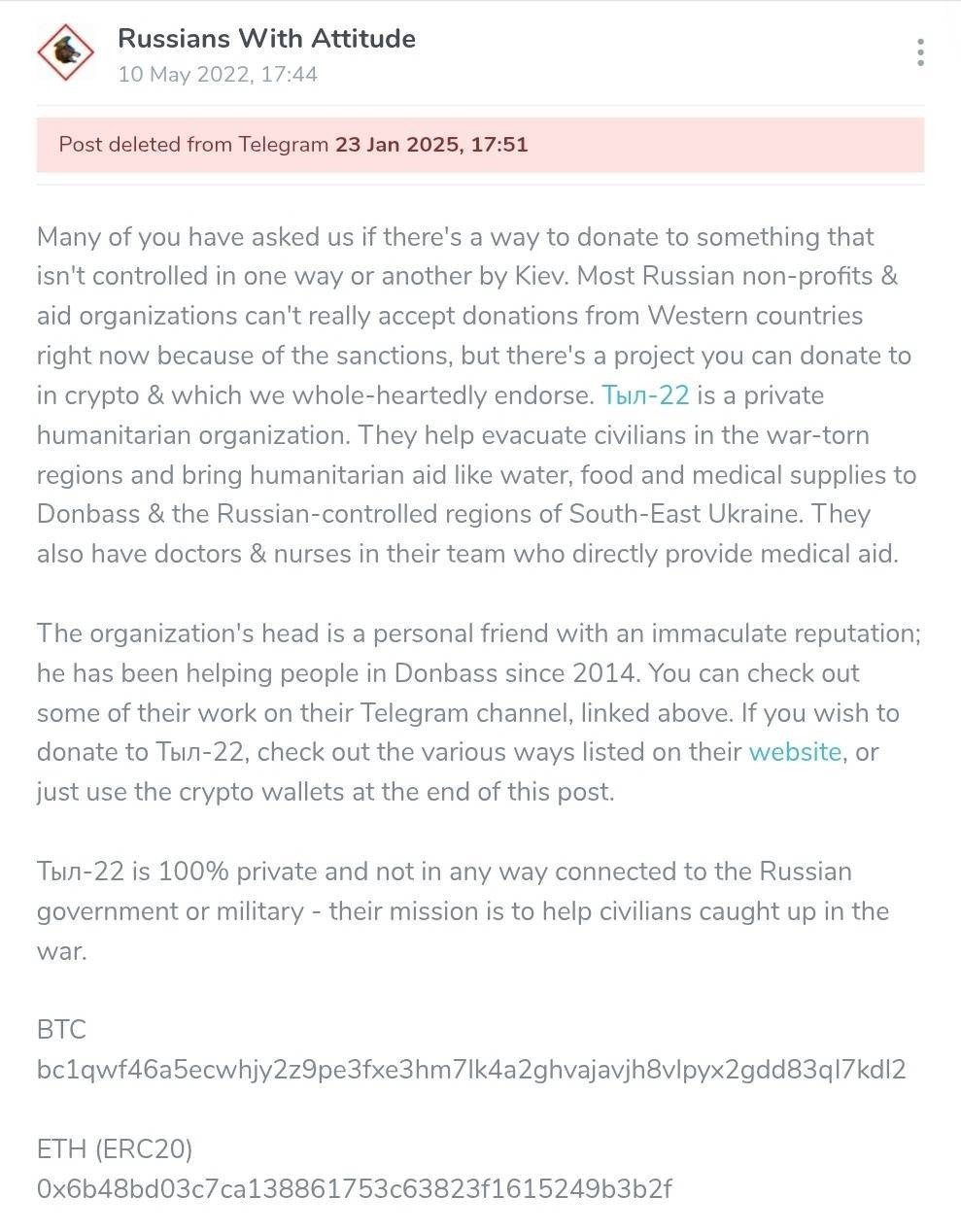
RWA solicits funds from foreign supporters via cryptocurrency. TUA Research found Ethereum wallets linked to the platform are connected to Tyl-22 and Russian soldiers on the front lines. The group has also sold merchandise supporting foreign volunteers fighting for Russia’s army.
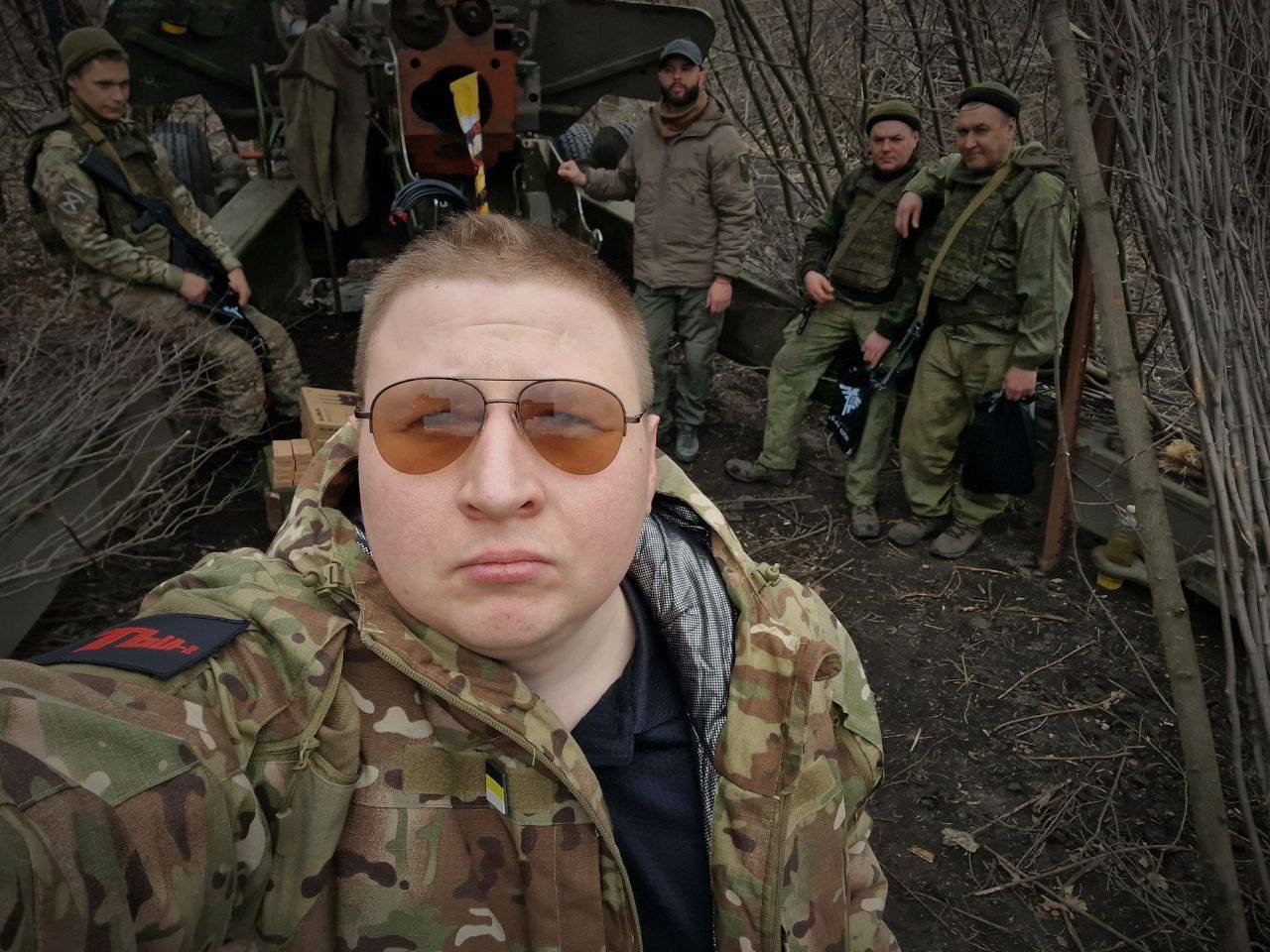
Linked to extremist networks, including the neo-Nazi paramilitary group Rusich, Kamenetsky acts as a key intermediary between RWA, international audiences, and pro-war funding networks—embedding the platform within Russia’s ultranationalist war ecosystem.
Black100: a military-led book club
At the core of this ecosystem is Black100. Its founder, Dima Bastrakov is a former member of the Russian occupation forces in Ukraine.
Bastrakov is closely tied to Igor Girkin, key leader of Russia’s initial invasion of Ukraine and a Russian warlord convicted in absentia over the downing of Malaysia Airlines Flight MH17, which killed 298 people near Alchevsk in 2014.
Igor Girkin, also known as Strelkov, a meme man and one of the main media characters of the Russian-Ukrainian war. There's even a comic about him! At the same time, he is also one of the main criminals of this war. What else should you know about him? pic.twitter.com/YPWmKxRPcU
— UNITED24 Media (@United24media) July 14, 2023
Presenting itself as a philosophical “people’s militia,” Black100 specializes in ultra-nationalist literature, largely promoting Russia’s military ambitions, publishing books with titles such as Notes of a Terrorist (in the Good Sense of the Word), Lugnsk Diary, and Tactical Gun Training of the Militia.
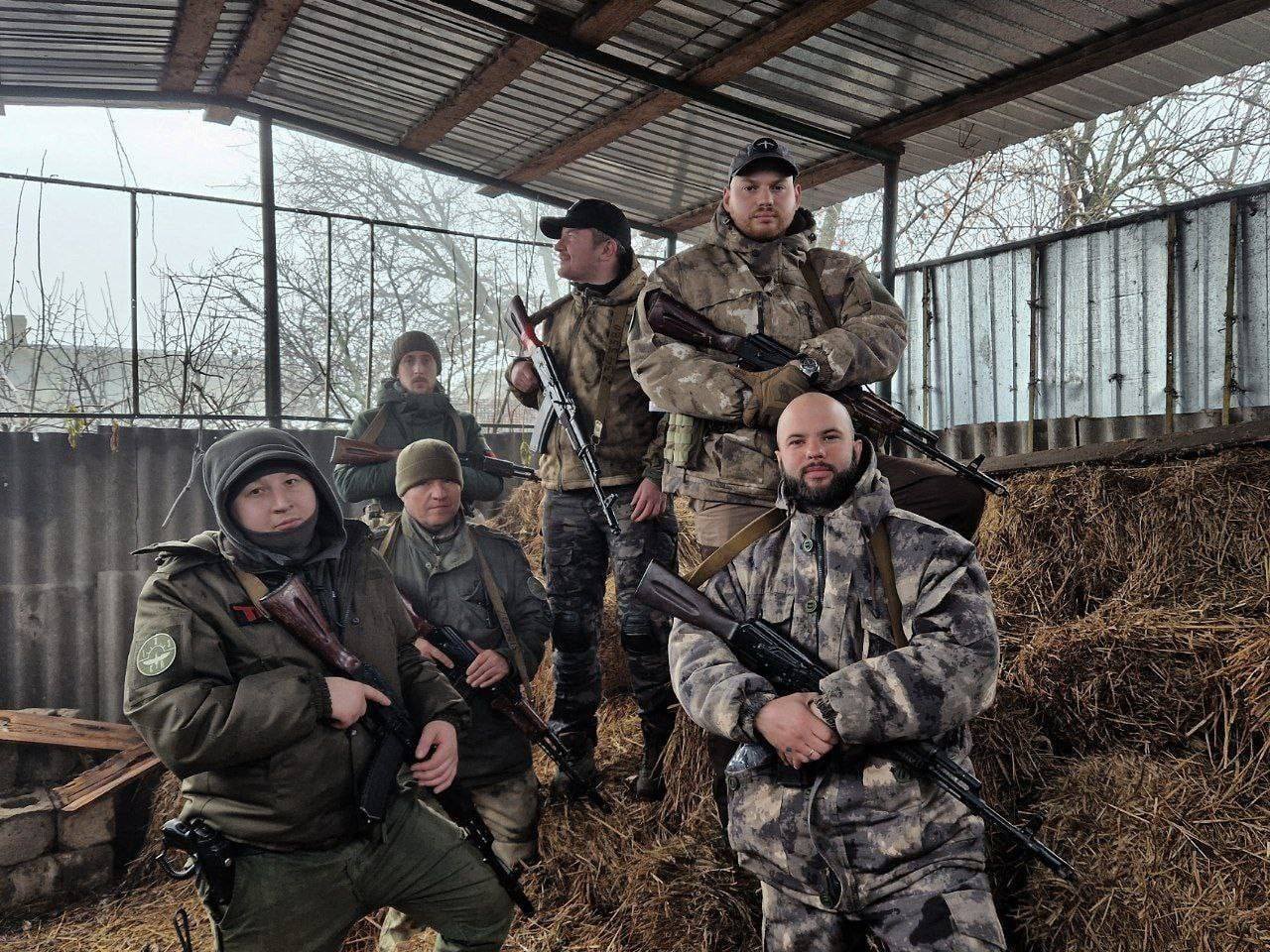
TUA Research says that “Black100 in particular acts as a central hub of sorts for the ultra-nationalist movement within Russia. They focus on building popular grassroots support for the pro-Z cause amongst young university-educated Russians.”
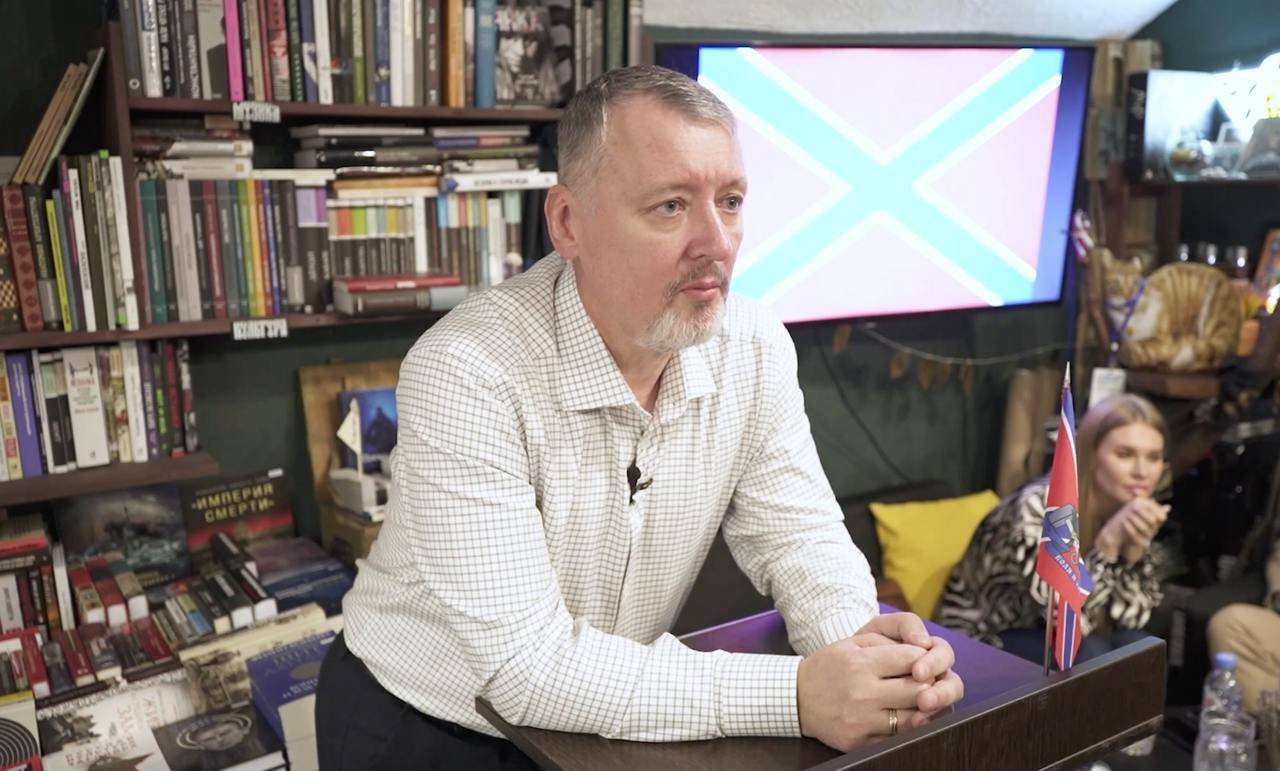
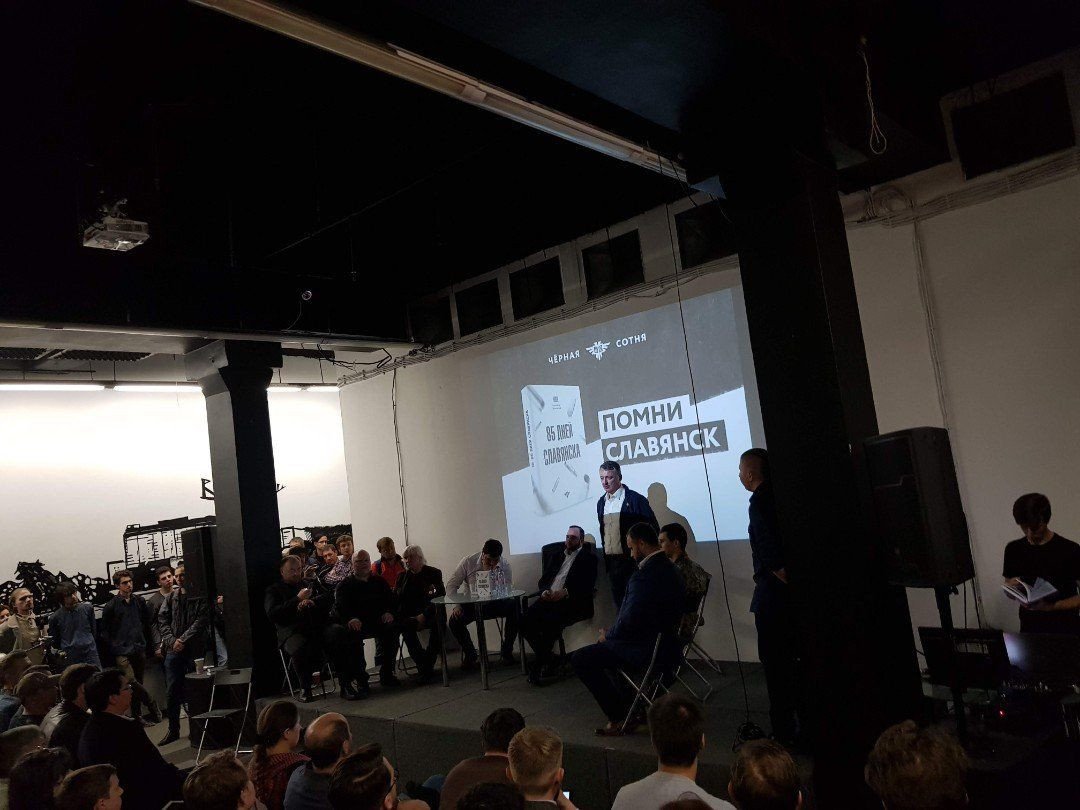
The Listva bookshop in Moscow is a regular location for the nationalist book club and its Kremlin-linked acquaintances. Here they’ve hosted several of Putin’s allies, from Girkin, Darya Dugina (Dugin’s daughter), and other pro-war propagandists, along with members of the Española paramilitary group, including sanctioned commander, Mikhail "Pitbull" Turkanov.
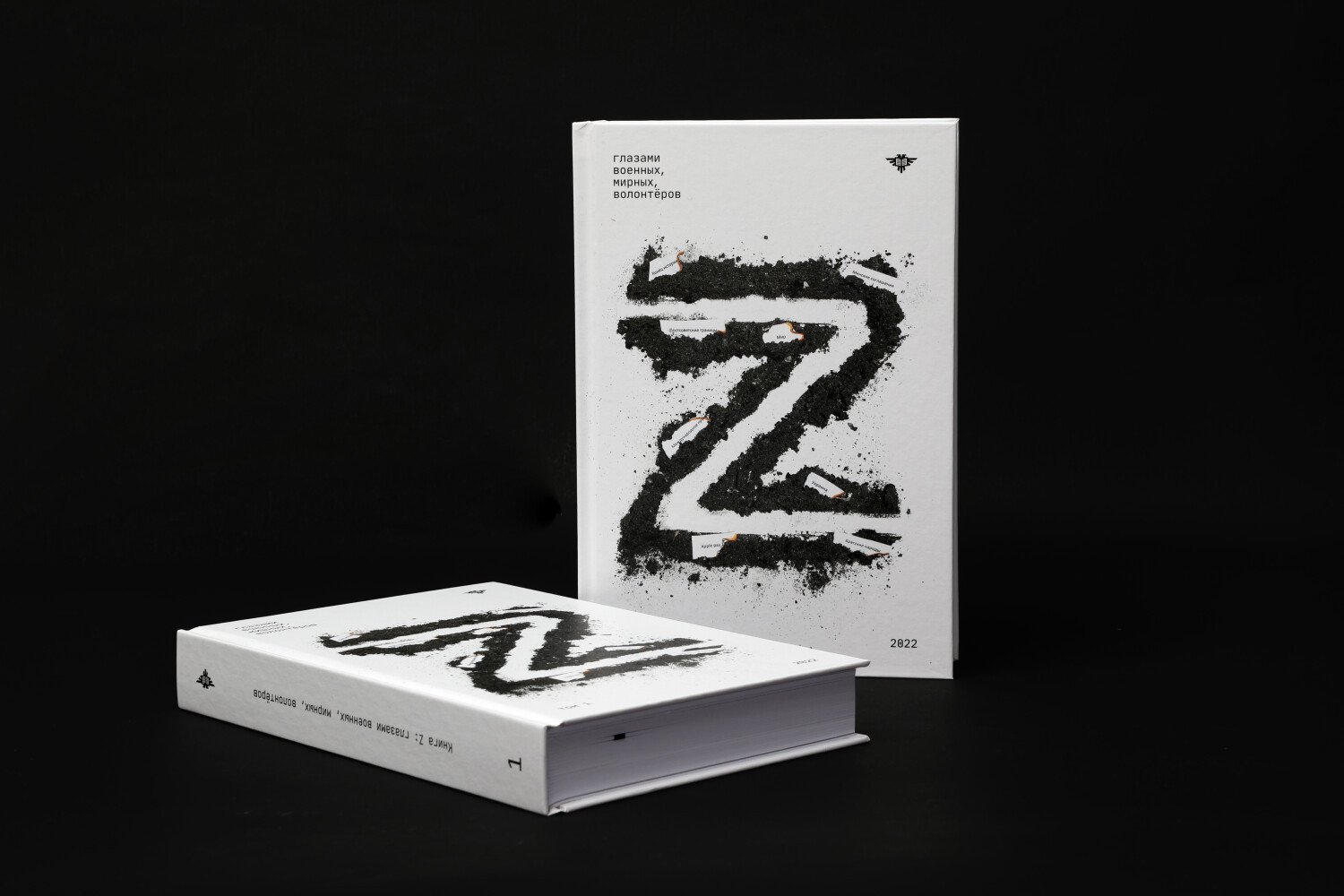
When Black100 launched, it was sponsored by Sputnik i Pogrom (SiP), a radical-right-wing online platform on which RWA’s Kamenetsky has also contributed. Former SiP members include Evgenii Norin, editor and curator of Book Z, a collection of pro-Russian stories about the so-called “special military operation ,” also published via Black100.
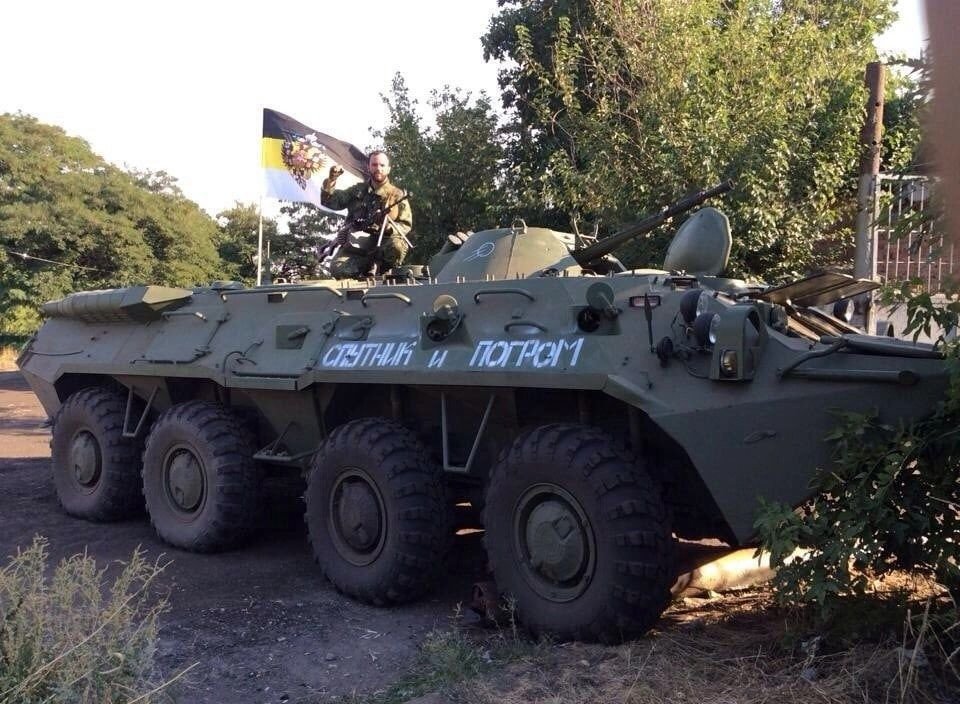
The publishing house claims to have sold books worldwide and boasts of having sent copies to Formula One shareholders and former advisers to the Russian leader, Vladimir Putin. Though they claim to be anti-Putin, the group maintains Kremlin ties, personal relations with Putin’s allies, and actively supports Russia’s invasion.
Though ultra-nationalists are known to be highly critical of the state—for what they perceive as its failures in successfully prosecuting Russia's war against Ukraine. They are even more extreme than state propagandists and mouthpieces when it comes to being staunch supporters of the war and fanatical devotees of Russian imperialism.
TUA Research
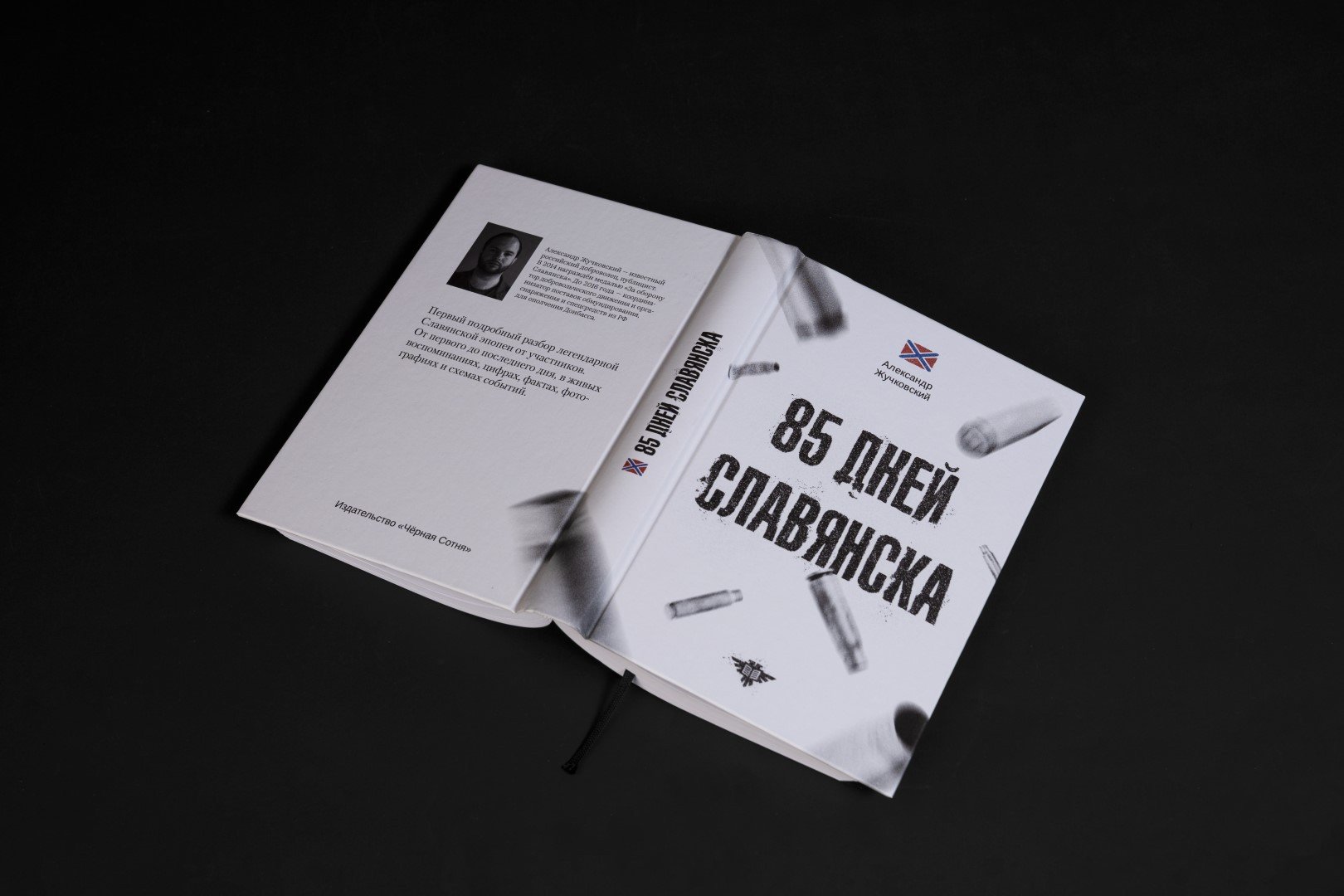
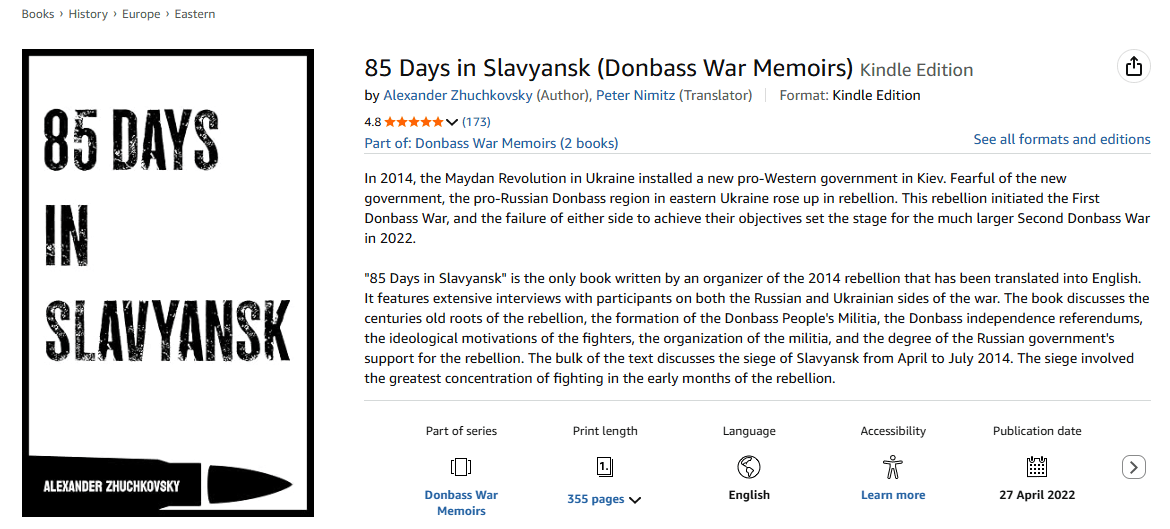
Another Black 100 title, 85 Days in Slavyansk , is authored Zhuchkovsky, the second core figure driving this network. The book presents a pro-Russian narrative of the 2014 occupation of the Ukrainian city of Sloviansk and has been promoted by Girkin. It is sold on Amazon to a global audience, with reviews indicating readership across Italy, Canada, the US, Spain, and particularly the UK.
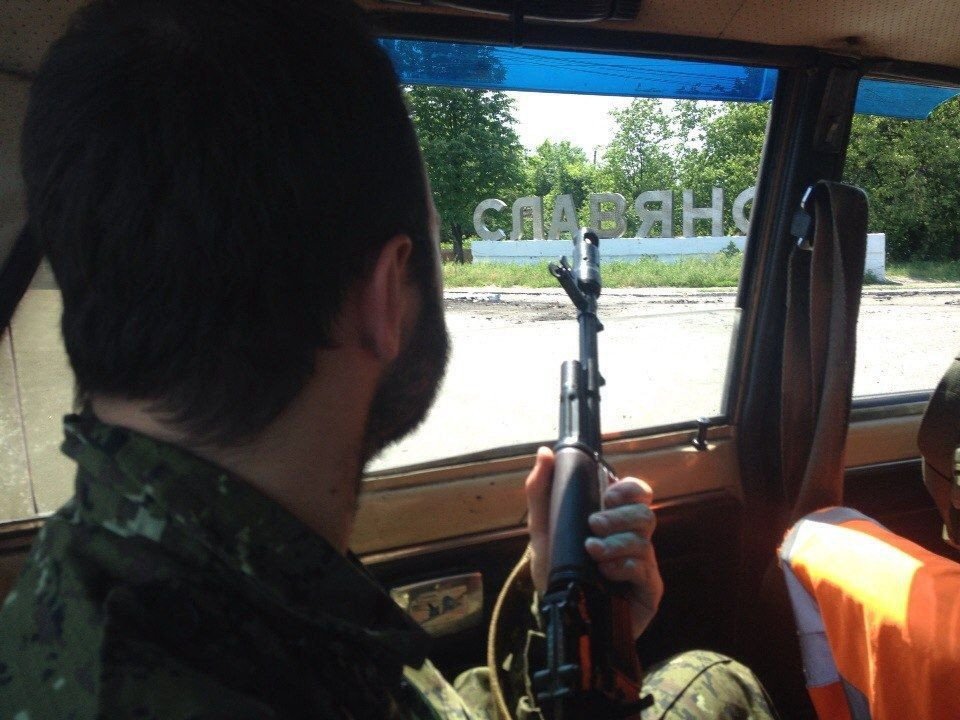
Zhuchkovsky was among the earliest Russian fighters to enter Ukraine, arriving in Sloviansk on May 19, 2014, to join Girkin's forces.
Tyl-22: A breeding ground for Moscow’s men
Tyl-22 is presented as a humanitarian organization, particularly in RWA’s appeals to foreign donors. But those behind it are deeply embedded in Russia’s military operations.
Zhuchkovsky is also, most notably, a US-designated member of the sanctioned terrorist group Russian Imperial Movement (RIM)—an ultranationalist, quasi-paramilitary organization. Zhuchkovsky met Bastrakov during Russia’s invasion of the Donetsk region, while both also wrote for SiP alongside RWA’s Kamenetsky.
Russian Nazi Alexander Zhuchkovsky urges to bomb Ukrainian civilians
— Денис Казанський (@den_kazansky) September 12, 2022
“We need to forget about humanism not only towards soldiers, but also towards civilians. Of course, there are millions of Russians there, but we don’t have time to sort out who is Russian and who is Ukrainian" pic.twitter.com/DAFYY020lO
2014, RIM has collected funds for military equipment and actively trained Russians to fight in Ukraine. RIM operates a coordinated propaganda network across digital and real-world platforms, used to recruit, fundraise, and showcase its fighters’ activities on the battlefield. The group is also connected to Russia’s Ministry of Defense, with new policies requiring RIM and other volunteer units to sign contracts that bring them under state control.
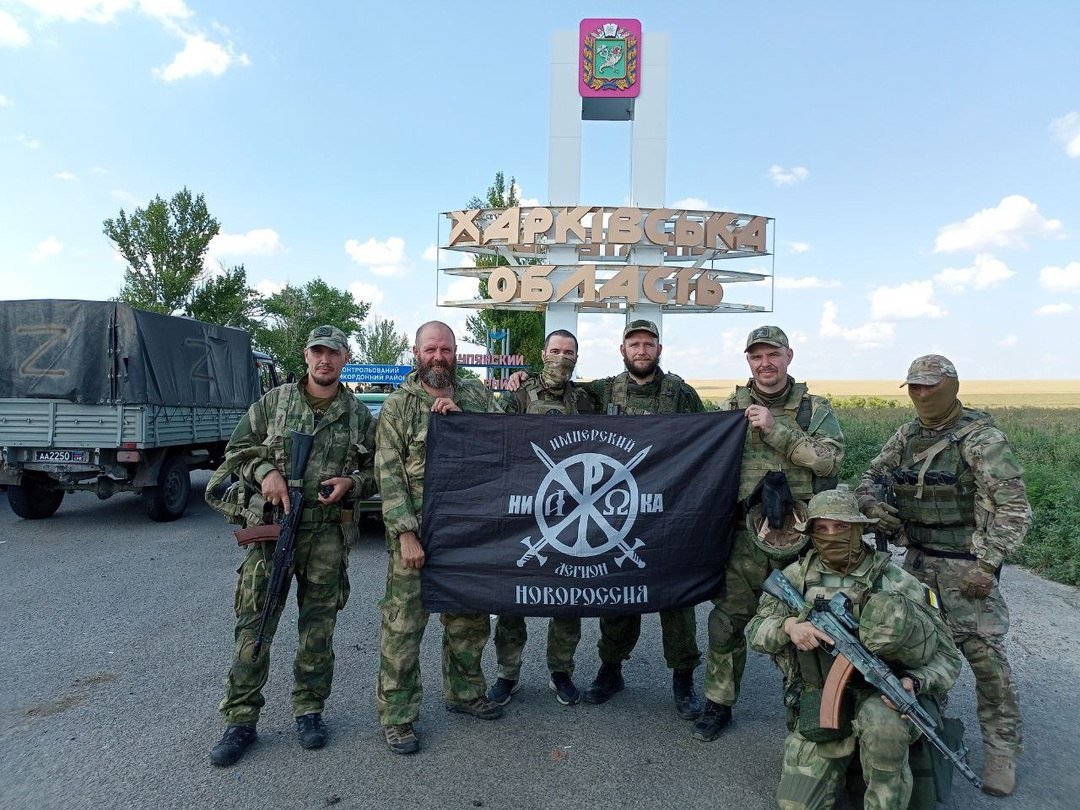
Two key players in RIM operations in 2014 were Denis Gariev, who ran training courses for Russians seeking to fight in Ukraine, and Zhuchkovsky.
Zhuchkovsky organized supplies for Russian forces—uniforms, radios, and equipment—claiming to have raised 30 million rubles (around $335,000) by July 2014, just months into the invasion. He now drives fundraising efforts for Tyl-22.
Under Gariev’s leadership, RIM established the Imperial Legion unit, which operates the Partizan Firearms and Tactical Training Center and continues to actively train Russian fighters for the front lines around the globe.
Trainers have combat experience in Syria, Africa, and Ukraine—referred to on their website as “Malorossiya” (“Little Russia”), typical Russian propagandist rhetoric. Participation in their courses requires applicants to be baptized as Russian Orthodox Christians.
UNITED24 Media has previously reported on Russia using the Orthodox Church to advance its political, economic, and military influence. Girkin, for example, received funding from Konstantin Malofeev, often described as Russia’s Orthodox oligarch, who recently founded the international neo-nationalist extremist organization ISL Paladins.
RIM and its Partizan training organization have links to Rusich, and its leader, Alexey Milchakov, says he formed Rusich after completing the Partizan paramilitary training program in 2014.
US Army sergeant and Russian asset
Zhuchkovsky’s book, 85 Days in Slavyansk, was translated by someone known online as “Peter Nimitz" or "Nemets."
With over 111,000 followers on X, and nearly 10,000 on Substack, Nimitz calls for Russia to “fully conquer Ukraine,” posting relentlessly online to his wide range of well-known far-right influencers and English-speaking audience. He is a Holodomor denialist and regularly calls for the violent annexation of Canada, including separatist groups “dismember” the country. While calling Ukrainians Nazis—typical Russian propagandist talking points—Nimitz himself is embedded with Nazi sympathisers, amplifying their pro-Russian ideology globally, while promoting and glorifying Russia’s Rusich military unit.
Nimitz recently appeared on the Antelope Hill podcast, an American white nationalist publisher based in Pennsylvania, US, known for selling translations of historical works by Nazis, fascists, and ultranationalists. One topic discussed on the podcast was the book The 60-Year Caucasian War; notably, RWA’s Kamenetsky contributed to this book and is sold by both Black 100 and Antelope Hill.
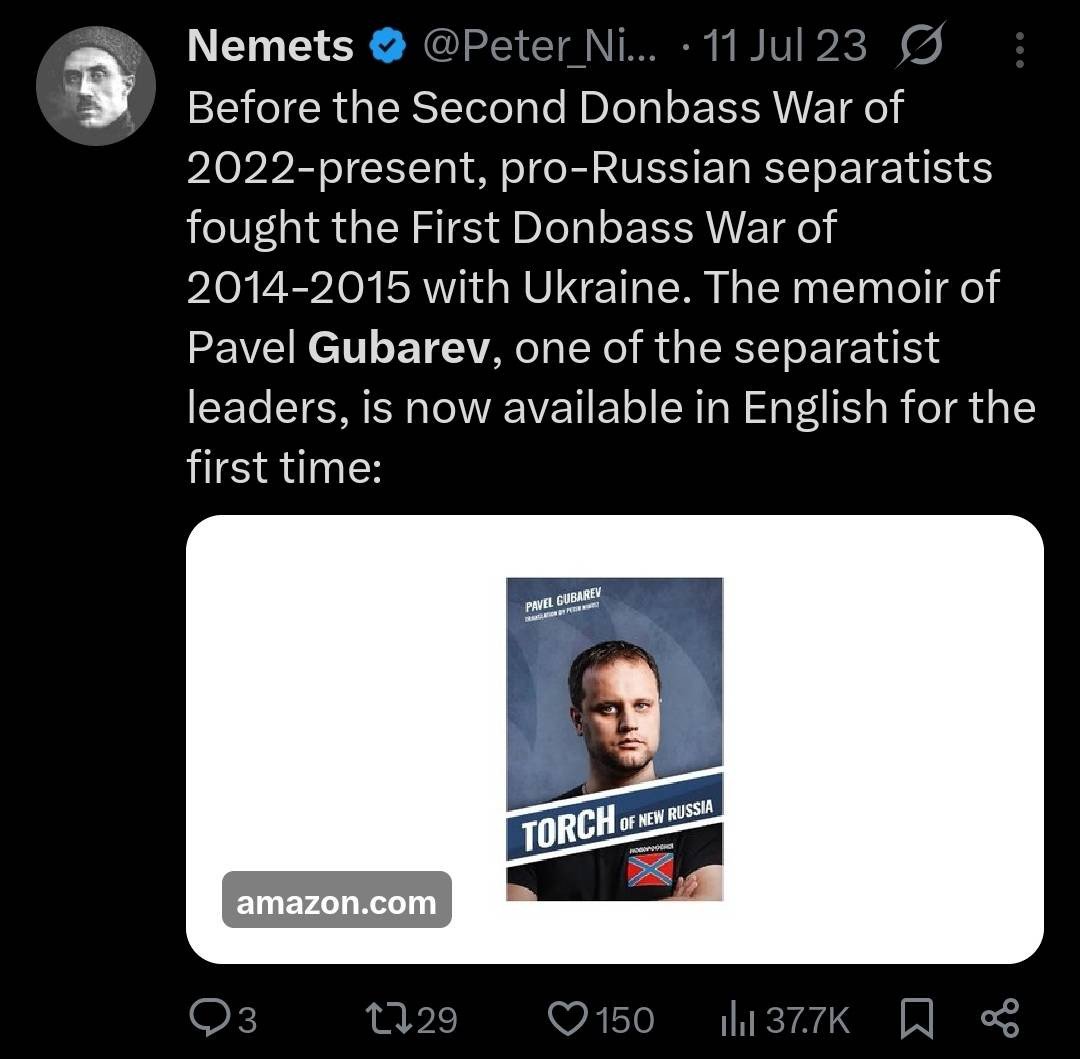
He also translated another book, Torch of New Russia, which he also sells abroad to his foreign audience via Amazon. His posts on X suggest that Amazon removed the book from sale in 2023. At the time of writing the book was back online and still available to buy, however, at the time of publication, it is no longer available.
Its author is Pavel Gubarev, an associate of Girkin, who in March 2014 was proclaimed “people’s governor” of Russia’s so-called DPR. The US Department of the Treasury described Gubarev as “one of the three most prominent leaders of the separatists in southeast Ukraine.”
By cross-referencing information from his account, such as his age, past locations, and more, TUA Research reveals Nimitz’s identity as Matthew Eberwein from North Carolina, US.
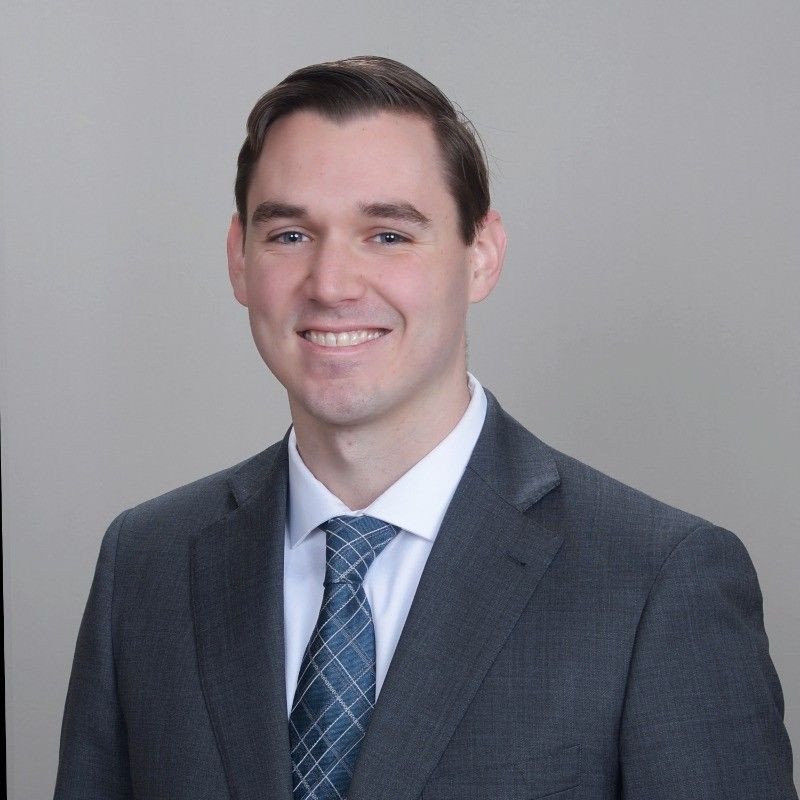
Eberwein is the fourth key link in this network—amplifying Russian pro-war messaging and enabling Black 100 and Tyl-22 to bypass sanctions, channeling foreign money through platforms like Amazon.
Black 100’s website states that direct postal deliveries cannot be made to many countries and that it will “take care of all delivery issues.” Eberwein appears to serve as an intermediary for distribution.
Eberwein served in the US Army from 2018, was promoted to Sergeant in 2022, and left shortly after. Zhuchkovsky’s book was published just one month before he received his promotion. According to his LinkedIn, he created $2 million worth of sensitive equipment for the US military, worked closely with army leadership on tactical plans and execution, and facilitated training for US soldiers.
“Eberwein, according to his LinkedIn, left the US Army in June 2022,” TUA Research said. “That's the same month that Zhuchkovsky also ended up on the US list of sanctioned terrorists. This could just be a coincidence, or there could be something more there. Perhaps Eberwein was afraid that he'd eventually be found out and be subject to the UCMJ as an active member of the army”.
This is a perfect example of how Russian national agendas are being promoted in the US, especially as Eberwein is helping their cause by bringing books by Gubarev and Zhuchkovsky to a wider English-speaking audience.
TUA Research
Unmasking Russia’s propagandist ecosystem
The OSINT group has worked with UNITED24 Media, exposing several central figures to Russia’s information operation, including Sasha Meets Russia, Sanya in Florida, and Track a Nazi Merc.
“Each individual group acting alone may not be particularly effective, but they each contribute to an ecosystem of disinformation that has been allowed and in some cases encouraged to flourish online,” TUA Research said.
TUA Research found that RWA, via Substack, is fundraising for Tyl-22 and refers to Bastrakov as a “close personal friend.” “They are in effect helping to evade US sanctions” by encouraging their followers to donate to Tyl-22, the OSINT group says.
UNITED24 Media submitted official requests for comment to Substack and Gumroad. Substack has not responded at the time of publication. Gumroad responded with an automated AI reply and stated that it does not give official comments about its creators.
The work of groups like TUA is becoming increasingly critical. “When platforms like X and Substack refuse to take down accounts tied to information operations or sanctioned entities, governments need to step in,” the OSINT group says. “When neither acts, it forces groups like ours to act, and force social media platforms to remove actors that are formally or informally acting on behalf of hostile nations and to the detriment of our own.”
Discuss this article:

-206008aed5f329e86c52788e3e423f23.jpg "Photo of Oleksandr Moiseienko")
-72b63a4e0c8c475ad81fe3eed3f63729.jpeg "Photo of Cyril Barabaltchouk")