- Category
- Culture
“We Saw Nothing, We Did Nothing”: French Filmmaker Jacques Audiard on Western Europe’s Blindness to Putin
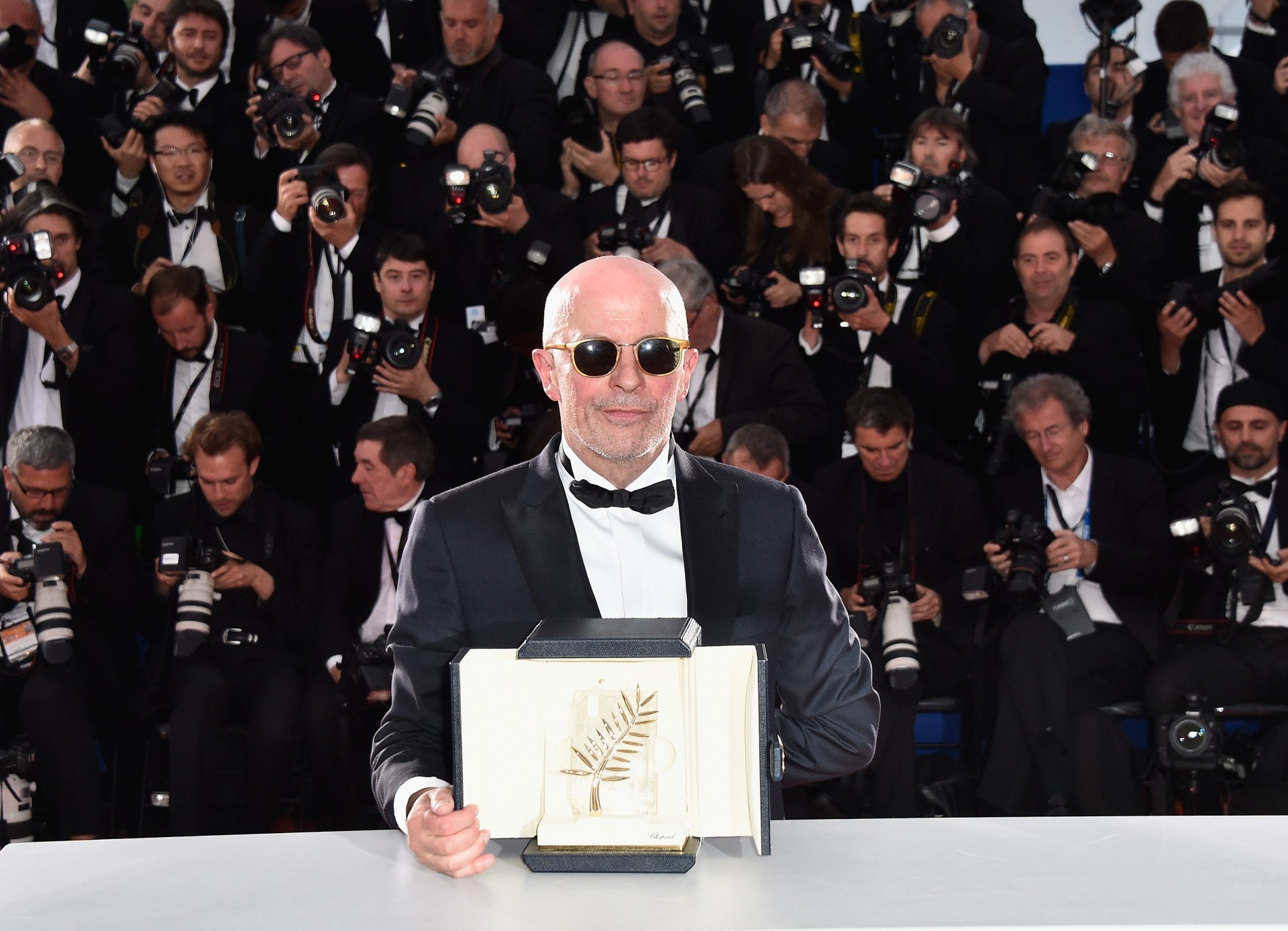
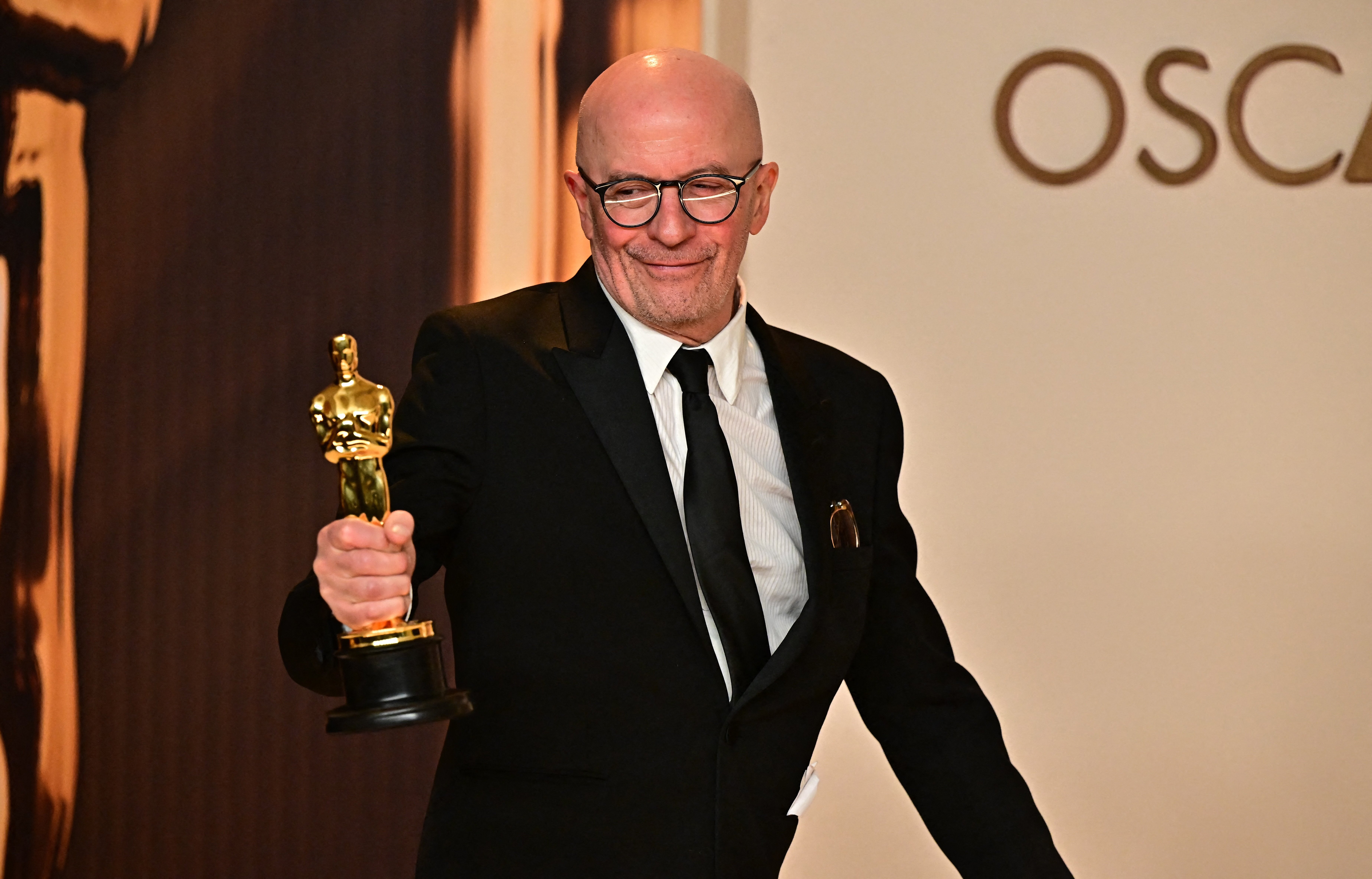
After one of Russia’s worst attacks on Kyiv since the start of the war, with Russian officials warning all foreign nationals and diplomats to leave the Ukrainian capital, Jacques Audiard, France’s most decorated filmmaker, arrived anyway. He sat on a park bench in the spring sun, watched a small bird for a long moment, and talked about cinema, violence, and Europe’s willful blindness.
 Prefer U24 Media on Google
- Authors

-554f0711f15a880af68b2550a739eee4.jpg "Photo of Lucile Brizard")
After one of Russia’s worst attacks on Kyiv since 2022, all foreign residents and diplomats were warned by Russian officials of renewed strikes and advised to leave the Ukrainian capital.
Despite that threat, Jaques Audiard, the acclaimed French director, showed up in Kyiv, part of a delegation led by Eva Nguyen Binh, president of the Institut français in France. “I can say that I have been following what’s going on in Ukraine since the very first day of the invasion,” said the French director.
The director’s presence is notable, given how many artists have avoided making the same journey. Choosing to critique the Russian invasion, but from afar.
Cinema as nation-building
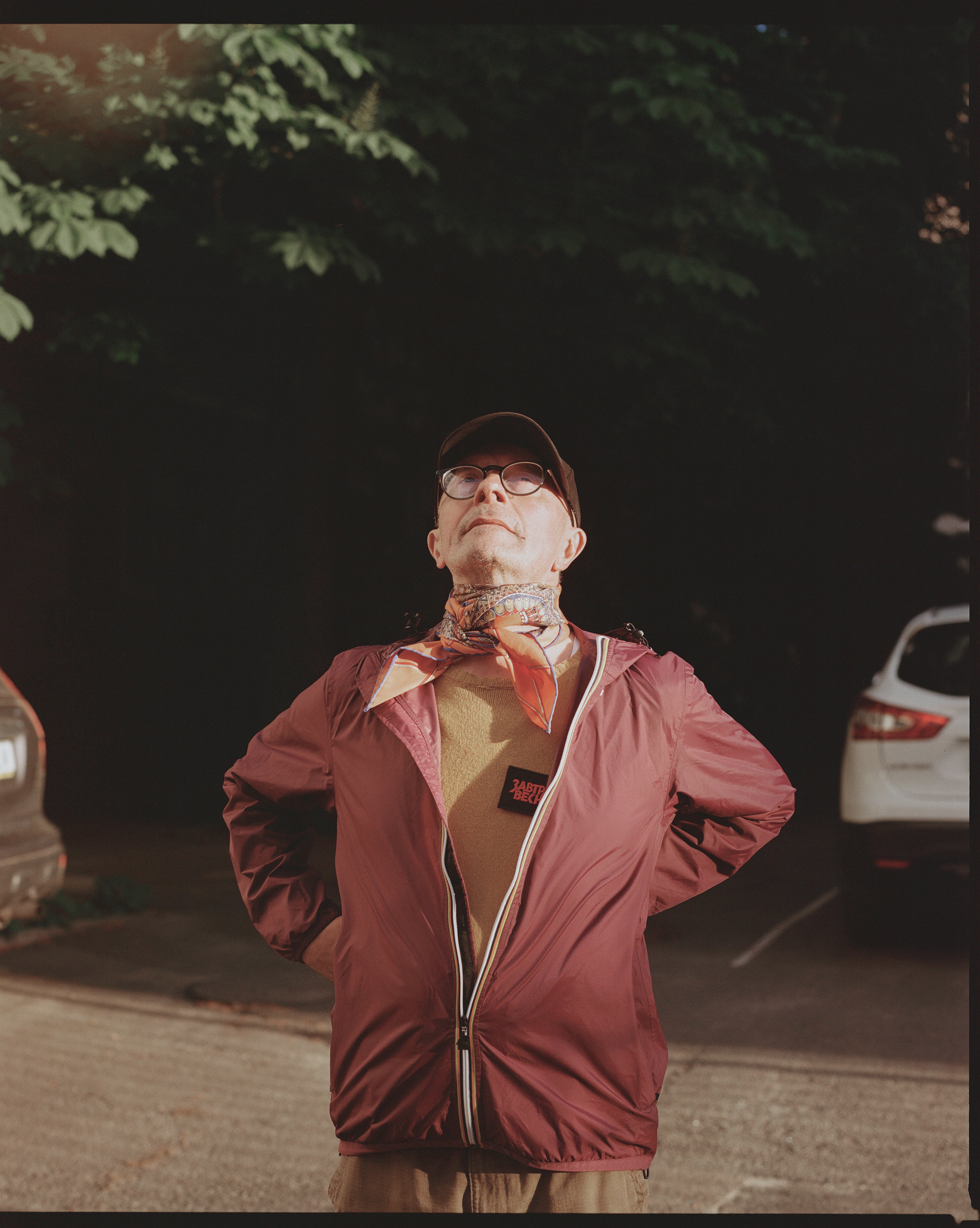
On a mild spring day in Kyiv, after a slew of meetings with Ukrainian directors, producers, and screenings of Ukrainian films, Audiard sat on a park bench where we conducted the interview—a brief pause from the French delegation, which had arranged engagements for Audiard and other prominent French cultural figures, among them Juliette Donadieu, director of the Gaîté Lyrique in Paris.
“Cinema identifies. It can identify individuals, it can identify… how to put it… a society, it can identify a nation,” said Audiard, who is measured and sharp, despite his trademark hyperactivity. “I am convinced that cinema has served that purpose.”
Cinema as an identity builder is not lost in the case of Ukraine, a nation in the midst of refining its identity, long obfuscated by Russia’s heavy interference in all aspects of Ukrainian life.
The French director, who had only been in Kyiv for 48 hours, did not draw the connection to Ukraine explicitly. He sees the countries where cinema still serves a purpose, countries less like France, more like Iran: societies in transition.
“They need to bear witness to what they are living through,” he said. “That is what is interesting—in such places there is still a reason for cinema to exist.”
The polar as launching pad: how Audiard dismantled his own label
Jacques Audiard is the most decorated French filmmaker of his generation: a Palme d’Or, an Oscar, and a filmography that has consistently refused to play it safe, often violent, his films reveal prison corridors in A Prophet, his 2009 drama following a young Arab man through a Corsican crime network to Dheepan, his portrait of Tamil refugees caught in a gang war on the outskirts of Paris. His early work established him as the new master of the French thriller, the “polar,” and he has spent every film since dismantling that label.
Audiard’s latest film, Emilia Pérez, a Spanish-language musical about a Mexican cartel leader who transitions, earned 13 Oscar nominations, while simultaneously igniting a firestorm over his admitted lack of research into Mexico, his casting of non-Mexican leads, and the unearthing of his lead actress Karla Sofía Gascón’s offensive past tweets. Audiard apologized, sort of: “Cinema doesn’t provide answers; cinema only poses questions. Perhaps the questions posed in Emilia are incorrect.”
“Something will come out of it”: Audiard on Ukrainian cinema’s next chapter
His perspective on the Ukrainian film landscape is: “For now, it’s mostly documentary.”
War footage, testimonies, the camera as witness to a country fighting for its survival. Though he anticipated that is only the first chapter, “The question will arise when fiction has to be made,” he said. “What fiction will be made? What is happening in Ukraine today raises such profound questions that something will come out of it.” The shift from documentation to fiction is, for Audiard, the moment that truly matters, the point at which Ukraine will stop recording its reality and begin interpreting it.
Audiard is right about the documentaries. Since the full-scale invasion, Ukrainian documentary filmmaking has earned its place on the world stage: Mstyslav Chernov’s 20 Days in Mariupol, shot from inside the besieged port city, won the first Oscar in Ukrainian history in 2024, and his follow-up, 2000 Meters to Andriivka, earned six Emmy nominations this year; Kateryna Gornostai’s Timestamp, a portrait of Ukrainian schoolchildren navigating war and education, was the first Ukrainian film in over 25 years to compete the Berlinale.
But fiction is coming. U Are the Universe, a science fiction film about a Ukrainian space trucker who becomes Earth’s last survivor, was shot in 2021, released in 2025, and became an unexpected sensation, its producers admitting they were “truly shocked.” Ukrainian audiences, it turns out, were ready for it.
How Western Europe missed Putin’s warning signs
Audiard’s indictment of Western Europe is blunt: the countries that lived under Soviet domination, Ukraine, the Baltic states, and Poland, recognized Putin’s moves for what they were because they had lived them before.
France had no such memory and no such instinct. “In France, I think there is a certain degree of willful blindness.” That blindness, in his words, was not always innocent. “The behavior of the far-right has been deeply troubling,” he said. "The National Front was, I think, partly financed by Putin.”
He stopped short of the word treason, but his suggestion was plain: parts of the French political establishment were not merely naive about Russian aggression but financially entangled with the power now waging war on a European democracy. “Perhaps things are starting to shift,” he said. “But it is late, very late.”
Audiard on cinema’s false blood and Ukraine’s real war
In Audiard’s seminal film, The Prophet, Malik, a young inmate with no gang affiliation, is ordered by the Corsican mob boss who controls the prison to kill a fellow prisoner. Malik will hide a razor blade in his mouth and use the blade to slit the other inmate’s throat. When he goes through with it, he fumbles, and blood gushes everywhere. It is Malik’s initiation into the prison’s criminal world, and the audience’s into Audiard’s.
On the subject of violence, Audiard’s position is not what one might expect. “I hate it,” he said. Violence in cinema, he argued, is the most transparently false thing on screen: the actor does not die, there is no real blood, no real pain, and it is precisely at that moment that the illusion is most exposed.
Rather than avoid that exposure, he leans into it. “Scenes of violence in my films serve to say to the viewer: we have gone this far, will you follow me beyond?” It is a philosophical wager, the moment in the story where the audience must consciously choose, at the very instant belief is hardest to sustain, whether to keep trusting the fiction.
Finishing off his sentence, Audiard noticed a small bird, a Grey Wagtail, “Look at the little bird, isn’t it pretty?” And paused for a long time while he watched.
The paradox, as he sat in Kyiv, was not lost. The violence in Ukraine is very real, and it is that reality that makes disbelief, when faced with evidence of Russian war crimes, feel like a reasonable response.
Audiard had spent part of the day outside before we met, watching people walk the streets, sit at café terraces, live. “And then there is the front, out there,” he said, gesturing. “What moves me deeply is how the two can coexist.” Flags were everywhere, he noted, on every street, in every window. “It seems Ukrainian people never stop thinking about it. And yet they manage to live while carrying that thought.”
Discuss this article:

-e00d178a31a987cd514e15ad3a8c2131.jpeg "Max Klymenko wearing the Etnodim, featuring embroidery inspired by traditional Ukrainian crafts. (Source: Ian Treherne)")

-e88c01988249cd60b6f04f79d29156b7.jpeg "Damage to “Cosmogony,” the largest painting in Ukraine, following a Russian drone attack on Lutsk on October 13, 2026. (Source: @sashyyna/Instagram)")
-480d70a36b9b34492b0b32ca04af4489.jpg "People attend the funeral ceremony of the famous Ukrainian writer Victoria Amelina at the Garrison Church, in Lviv, Ukraine, on July 5, 2023. (Source: Getty Images)")