- Category
- Defense Tech
Russia Builds Ballistic “Frankenstein” From S-400 Missiles—and Packs It With US Tech
 Prefer U24 Media on Google
- Authors


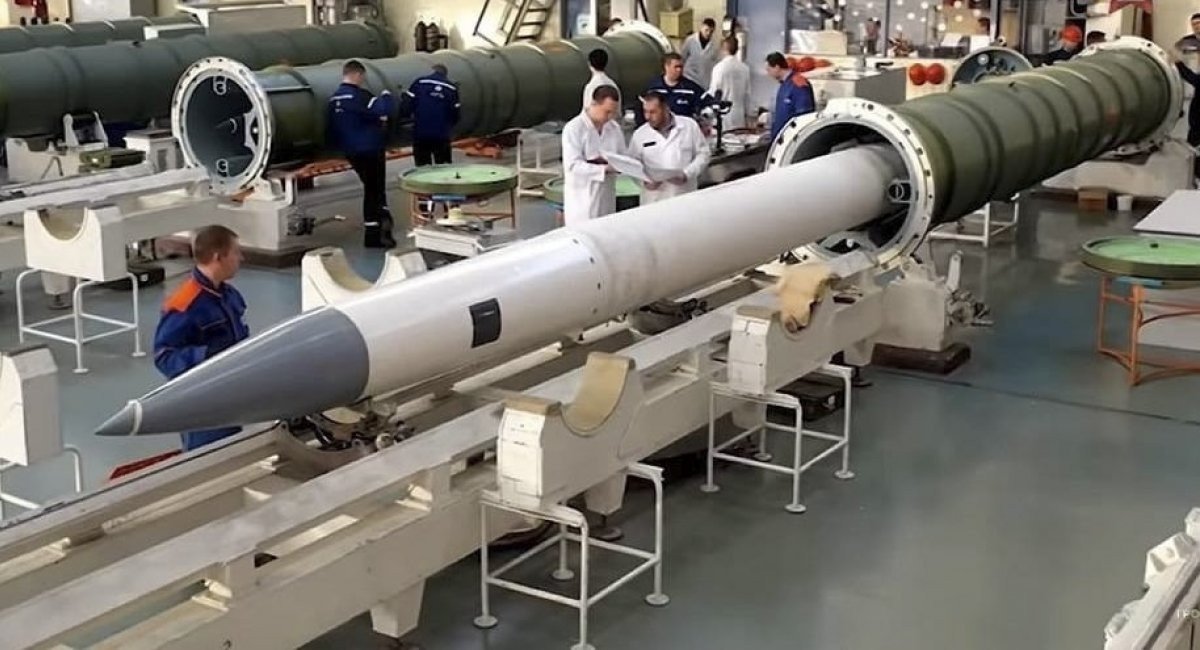
Ukraine’s Defense Intelligence (HUR) has pulled apart Russia’s RM-48U ballistic missile, revealing a weapon assembled from repurposed S-300 and S-400 missile components and packed with foreign electronics, including dozens of parts from US-based manufacturers.
HUR published a detailed breakdown of the missile on its War&Sanctions portal on September 10, including an interactive 3D model, its internal systems, and electronic components.
We bring you stories from the ground. Your support keeps our team in the field.
The intelligence agency also disclosed information on 63 Russian enterprises involved in the RM-48U production chain, along with foreign manufacturing equipment and individuals connected to the program.
According to HUR, Russia is expanding the range of weapons available for strikes on Ukraine by taking decommissioned surface-to-air missiles originally designed for the S-400 system and rebuilding them for ground-attack missions.
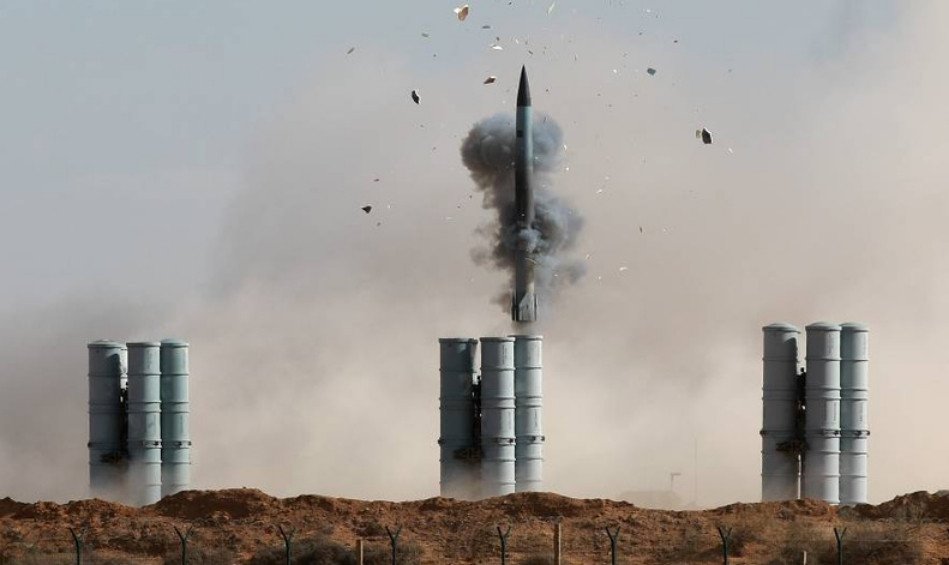
The resulting RM-48U is essentially a hybrid assembled from components originally developed for several different Russian air defense missiles.
“The new Russian ballistic ‘Frankenstein’ has a solid-fuel engine from the 48N6DM surface-to-air guided missile used by the S-400, a tail section from the export 48N6E2 surface-to-air missile used by the S-300 PMU½ and S-400, while the RM-48U instrument compartment consists of individual elements from the 9M96 and 48N6E2 missiles,” HUR said.
The RM-48U is a single-stage, solid-fuel missile that follows a ballistic trajectory at speeds of Mach 4 to Mach 6, according to Ukrainian intelligence. Its operational range reaches up to 400 kilometers, or roughly 250 miles.
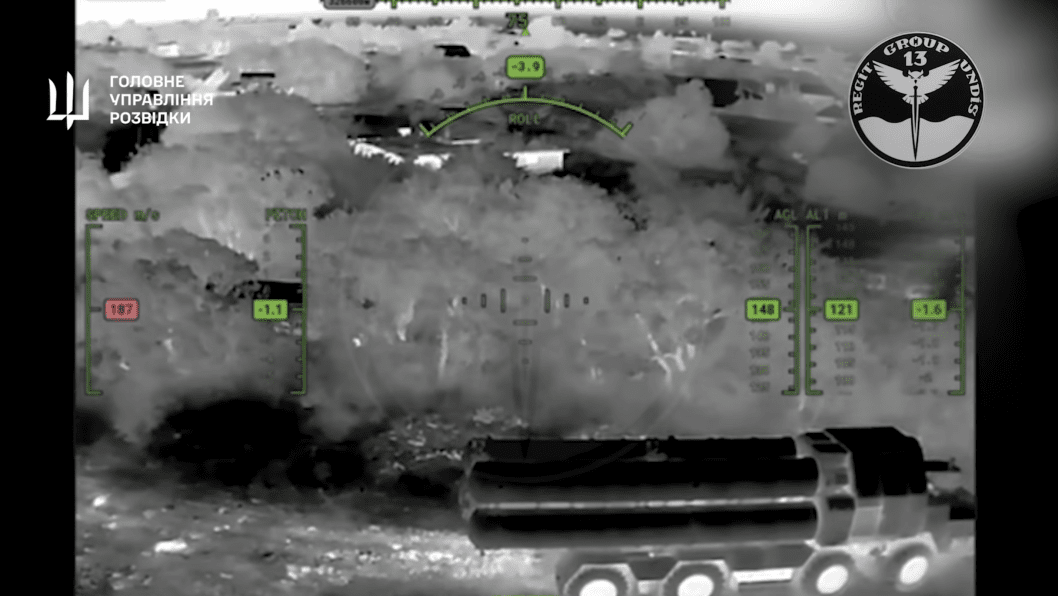
The missile carries a 199-kilogram, or approximately 439-pound, high-explosive fragmentation warhead containing preformed cube-shaped fragments intended to increase the destructive effect around the impact point.
“The RM-48U is a single-stage missile with a solid-fuel engine that flies along a ballistic trajectory at a speed of Mach 4-6 and has an operational range of up to 400 km. The missile uses a 199 kg high-explosive fragmentation warhead with preformed striking elements—cubes,” HUR stated.
For navigation, the missile combines an autonomous strapdown inertial navigation system with satellite guidance using Russia’s Kometa-R12 receivers.
HUR said Russia has also created dedicated units specifically to use repurposed surface-to-air missiles against ground targets at tactical and operational depths. Depending on the mission, those units can employ radio-command or satellite guidance.
Footage of a Ukrainian attack drone hitting a Russian S-400 long-range SAM battery in Adler overnight, causing a catastrophic secondary detonation. pic.twitter.com/d7gfV5aBxb
— OSINTtechnical (@Osinttechnical) September 4, 2026
But despite the predominantly Russian architecture of the missile, its electronics again expose Moscow’s continuing reliance on foreign technology.
“The component base of the missile’s electronic units has the standard country-of-brand composition typical of Russian weapons. The largest share—95 of 117—is from the United States, four are from Taiwan, three from Switzerland, and two each are from Germany, the Netherlands, Japan, and South Korea. Among the new finds is a laser diode manufactured by the French company 3SP TECHNOLOGIES,” HUR said.
Earlier, HUR breached the Moscow Institute of Thermal Technology (MIT), Russia’s chief designer of intercontinental ballistic missiles, and identified 2,648 of its employees who it links to the killing of Ukrainians.
According to HUR, engineers at the institute’s facilities in Moscow and other Russian regions produce the drawings, software, engines, and control units for several of Russia’s core strategic systems:
the Yars (RS-24) intercontinental ballistic missile, a central component of Russia’s nuclear forces;
the mobile Topol-M (RT-2PM2) intercontinental missile system;
the Bulava (R-30), a three-stage missile designed for submarines;
the Iskander-M operational-tactical missile complex;
the Kedr, also known as the Oreshnik, Russia’s newest hypersonic ballistic system.
Discuss this article:
-9a7b3a98ed5c506e0b77a6663f5727c5.png)


-111f0e5095e02c02446ffed57bfb0ab1.jpeg "Photo of Roman Kohanets")