- Category
- Defense Tech
Ukraine's New Vyrivnyuvach Guided Bomb Is Built With 90% Domestic and Western Parts
 Prefer U24 Media on Google
- Authors

-c439b7bd9030ecf9d5a4287dc361ba31.jpg "Photo of Katherina Popilnichenko")
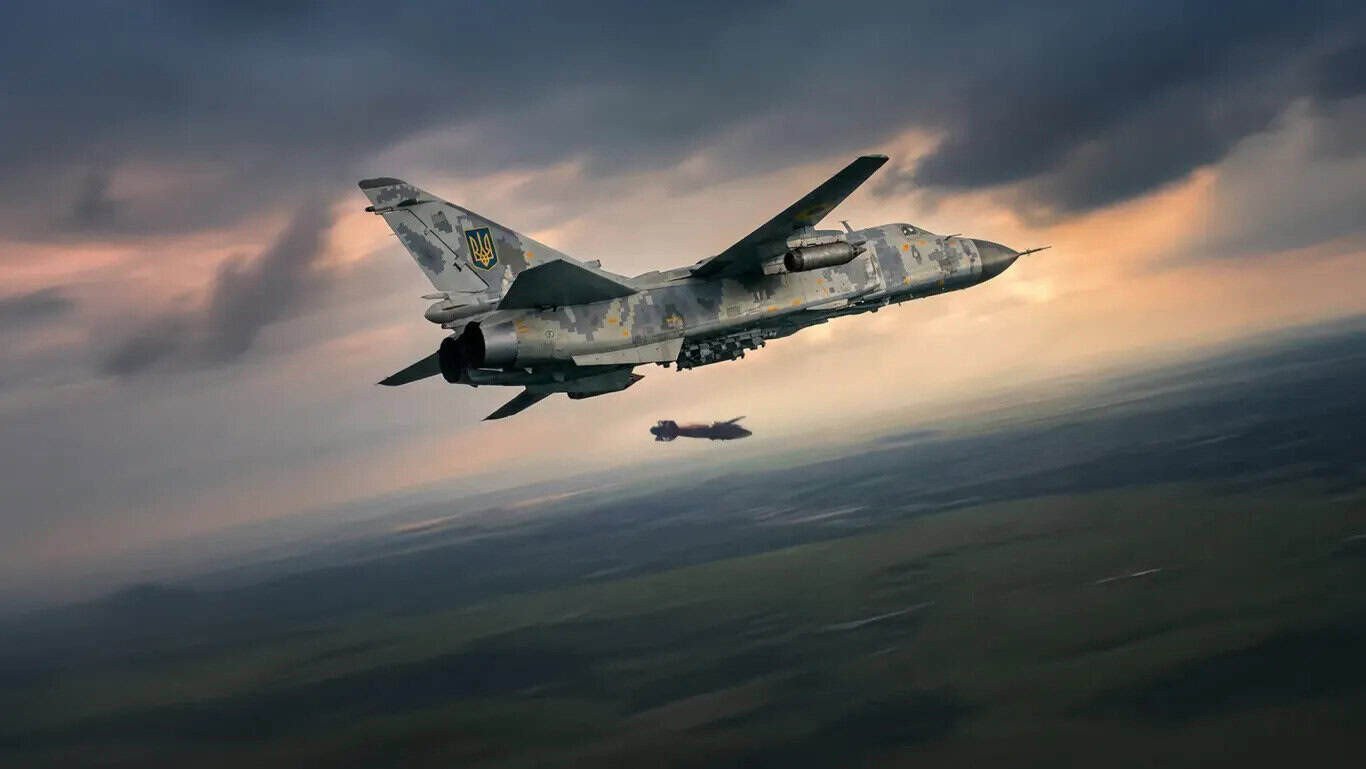
Ukraine’s newly developed Vyrivnyuvach guided aerial bomb relies on Ukrainian and Western parts for 90% of its components, as reported by The War Zone on August 18.
A representative from the Brave1 defense technology cluster revealed the detail, noting that the munition was developed by DG Industry with support from Brave1.
We bring you stories from the ground. Your support keeps our team in the field.
Ukrainian engineers engineered nearly all core elements locally—ranging from the wing structure to the flight controller software—with foreign dependencies limited primarily to specific chips and microcircuits.
Roughly 90% of the weapon’s component base originates from Ukraine, Europe, and the United States, allowing manufacturers to avoid critical reliance on foreign hardware.
The bomb features modern guidance algorithms, though specific operational metrics remain undisclosed. Representatives noted that the system's structural design differs from both Russian and Western equivalents.
Engineers spent approximately 17 months taking the project from initial concept to a functional prototype. Development began roughly two years ago amid concerns regarding future stability in foreign military deliveries.
Following a series of successful tests, the team confirmed the viability of the design by May 2025 and proceeded with project implementation.
Unlike France’s AASM Hammer, the current iteration of the Vyrivnyuvach lacks an engine, and officials have not specified whether future variants will incorporate propulsion.
While technical capabilities allow potential integration with Western platforms like the F-16 and Mirage 2000 subject to manufacturer certification, the munition was designed for immediate compatibility with Ukrainian aircraft.
It is currently integrated onto MiG-29, Su-24, and Su-27 airframes. The bomb has cleared operational testing and is officially being procured for service.
During the mid-May operations, Ukraine executed a record-scale drone attack targeting Moscow, which Russian media claimed involved between 500 and over 1,000 unmanned aerial vehicles.
While the Ukrainian side traditionally maintained silence regarding the specifics, multiple strikes successfully bypassed Moscow’s multi-layered defense network—which included over 100 launchers for S-300, S-400, and S-500 systems alongside more than 50 Pantsir-S1/S2 units—ultimately damaging key military and oil infrastructure across the region.
Discuss this article:
-9a7b3a98ed5c506e0b77a6663f5727c5.png)

-111f0e5095e02c02446ffed57bfb0ab1.jpeg "Photo of Roman Kohanets")