- Category
- Interview
They Survived Azovstal and Russian Captivity. Then They Found Each Other

Olha and Dmytro’s love story began alongside Ukraine’s darkest chapters: Mariupol, Azovstal, Olenivka, captivity. They’d only meet by chance after returning home.
 Prefer U24 Media on Google
- Authors


Dmytro and Olha lived through the same war before they ever met. Both served in Azov. He was an infantryman. She was a communications specialist. Both were in Mariupol when Russia launched its full-scale invasion. Both descended into the underground world of Azovstal, where days and nights disappeared under aerial bombs, hunger, exhaustion, and the knowledge that the surface was becoming less survivable by the hour.
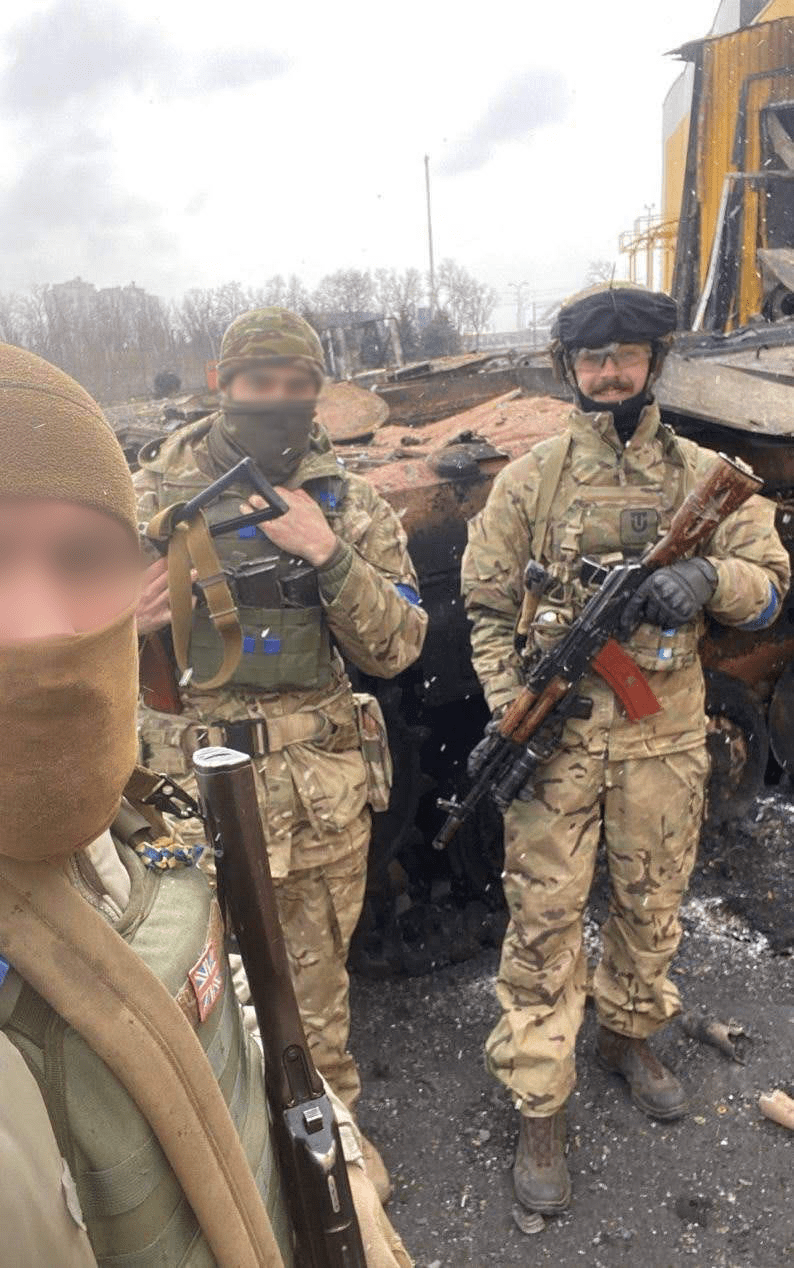
Both left the plant by order. Both were taken prisoner. Both were then held in Olenivka, the penal colony in the Russian-occupied Donetsk region, where, on the night of July 29, 2022, an explosion tore through a building holding Ukrainian prisoners of war.
The prison held many Ukrainian defenders from Mariupol and Azovstal. Russia’s attack killed 51 and injured at least 139 Ukrainian POWs. To this day, Russia has blocked full independent access to the site, and no comprehensive independent investigation has been completed.
Olha and Dmytro did not meet until after their respective releases from captivity. But their love story is extraordinary, tracing the same places that now belong to the history of Ukraine’s resistance, and to the unlikely path that eventually led them to each other.
Olha is a military volunteer from occupied Donetsk, physically impressive and deeply collected. After Russia captured her hometown and began its war against Ukraine in 2014, she joined the Donbas volunteer battalion at the beginning of its formation. In 2016, she moved to Azov because the unit was based in Mariupol, close to her home and the combat zone.

She served as a communications specialist until shortly before the full-scale invasion, leaving Azov in December 2021. But when February 2022 came, she returned. “I knew the work had to be finished, and someone had to do it,” she says. By then, Azov was in Mariupol. So was she.
Dmytro joined Azov later, in 2020, after graduating from a military lyceum. He says he joined with the understanding that Russia’s war against Ukraine had been ongoing since 2014, and that it was not the end, but only the first phase.
Dmytro met the full-scale invasion inside a KrAZ truck. It was February 24, around 4 a.m., and Russian aircraft were already overhead, dropping the first bombs on radar towers and air defense positions.
As Mariupol was encircled, Azovstal became the final holdout for the Ukrainian defenders. Under intensifying Russian airstrikes and artillery fire, they were forced lower into the plant’s vast cavernous network.
Life underground
The shelters at Azovstal were not built for the scale of bombardment Mariupol was facing. Olha says they were not designed for bombs of that caliber, describing the impact of one-ton and three-ton FABs. She explains that the bunkers were meant for chemical protection, while Dmytro adds that they dated back to the Cold War period, when such shelters were built with the expectation of a possible nuclear war between the US and USSR.
Olha and Dmytro were not in the same bunker. Olha says she was in another shelter, while the infamous “Zalizyaka” (The Iron One) shelter was roughly 500 meters away. Even that distance was difficult to cross because of the density of Russian shelling. She says that at times, communications specialists and others were forbidden from leaving the bunker.
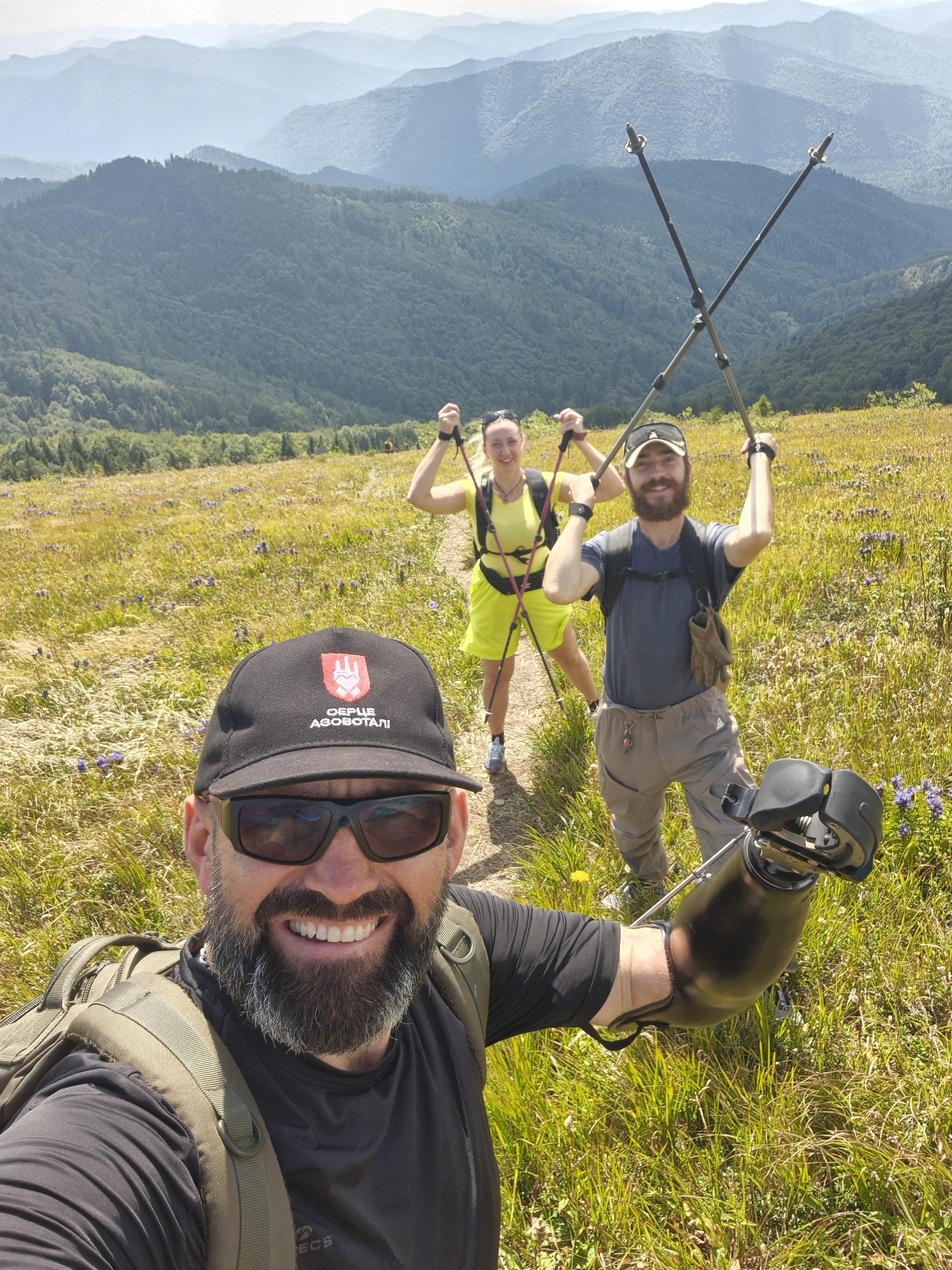
Dmytro fought on the surface in Mariupol and defended the city until he was wounded. After that, he returned to his position and continued fighting at the Azovstal plant. As Russian fire intensified, life inside the plant was pushed deeper underground; some people there, he says, did not see sunlight for two months. In the shelters, exhaustion grew alongside the number of wounded and dead, while supplies continued to run out.
Olha describes this as “bunker sickness.” When the order came to leave Azovstal and go into captivity, some people emerged into the sun shaking and panicking. After weeks underground, even stepping outside became a physical and psychological shock.
The order to surrender
Dmytro describes leaving Azovstal not as a voluntary surrender, but as an ordered exit into captivity. Azov’s defenders, he says, left Mariupol as a unit, under command, after provisions were running out and the number of wounded and dead was growing.
Dmytro describes the moment of leaving Azovstal with his characteristic bluntness. “Walking out of the plant and handing your backpack to some Chechen and people with white armbands is not pleasant,” he says. Seeing columns of civilian buses waiting outside, he expected to be slaughtered.
The ICRC was present to help register POWs as they were sent toward Russian-controlled detention sites, but Dmytro says the help he received was minimal. It was also the last time he would see any international organization during his captivity.
For Olha, the order to leave was difficult to accept. She says she could not understand why they had to go into captivity, especially because she had not fought in the city as a combatant. Her fellow servicemembers told her they were soldiers and had to follow orders. When they arrived in Olenivka, she saw the barbed wire and understood they were being taken inside.
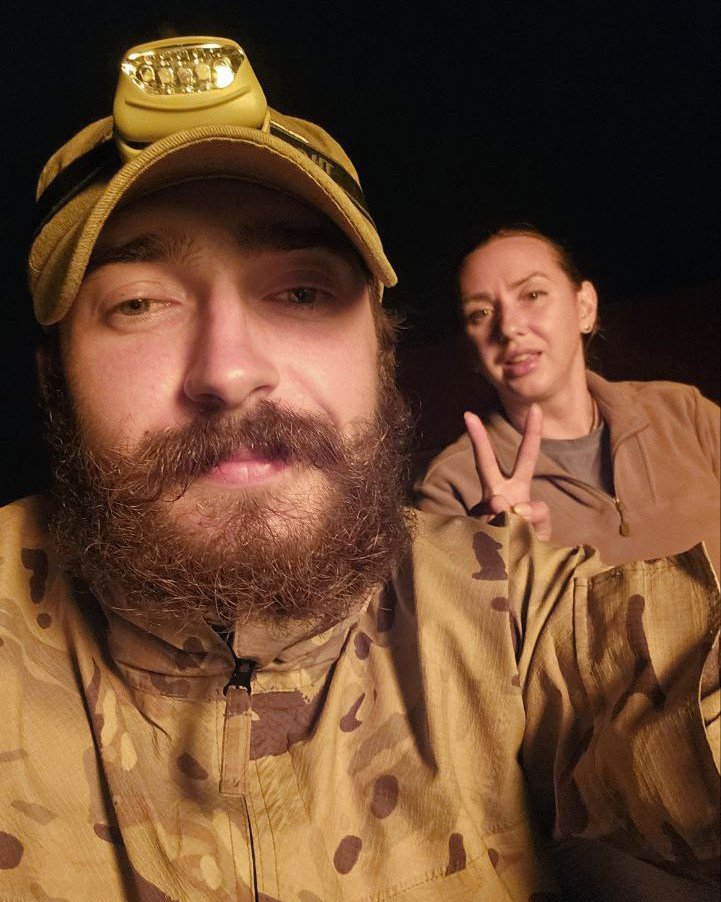
In Olenivka, Olha remembers the women being separated from the men and taken to the DIZO, the disciplinary isolation block. “You see all that barbed wire and understand: you’re going in there,” she says. The women were placed in cells, searched, forced to undress, inspected by women guards, and stripped of jewelry and other belongings.
Dmytro was taken with the men into the barracks. “There was no drinking water, no communication, nothing,” he says. A floor designed for roughly 100 people held 333, forcing men to sleep in corridors, on the floor, in toilets, in the shower room, outside, and wherever there was space.
Olenivka
Olenivka became one of the most notorious massacres of Ukrainian prisoners of war during Russia’s full-scale invasion. Russia claimed Ukraine was responsible, while Ukraine rejected that accusation and called the attack a deliberate killing of Ukrainian POWs. The UN later disbanded its fact-finding mission in January 2023 after failing to obtain the security and access guarantees needed to deploy, while the ICRC said it had requested access to the site but Russia did not grant permission immediately after the attack.
Dmytro was in Olenivka when the explosion tore through the building. Around 200 men had been packed inside in the summer heat. “Imagine a room where 200 people are driven in and then blown up,” he says. The survivors, in his telling, were the ones who were not hit directly, or who managed to receive improvised help before they bled out. Olha and Dmytro say 51 deaths have been confirmed in their understanding of the massacre.
The blast was not the only danger. According to Dmytro, there was more than one explosion, followed by fire. He believes the explosive mixture was likely thermobaric, and says the ceiling insulation began to melt. In a closed space, the shockwave knocked some prisoners unconscious. Others were wounded by fragments, burned, suffocated, or bled out from severe injuries. Even before the explosion, the overcrowding made it difficult to move. Afterward, with beds scattered, darkness, panic, and only one exit, escape became even harder.
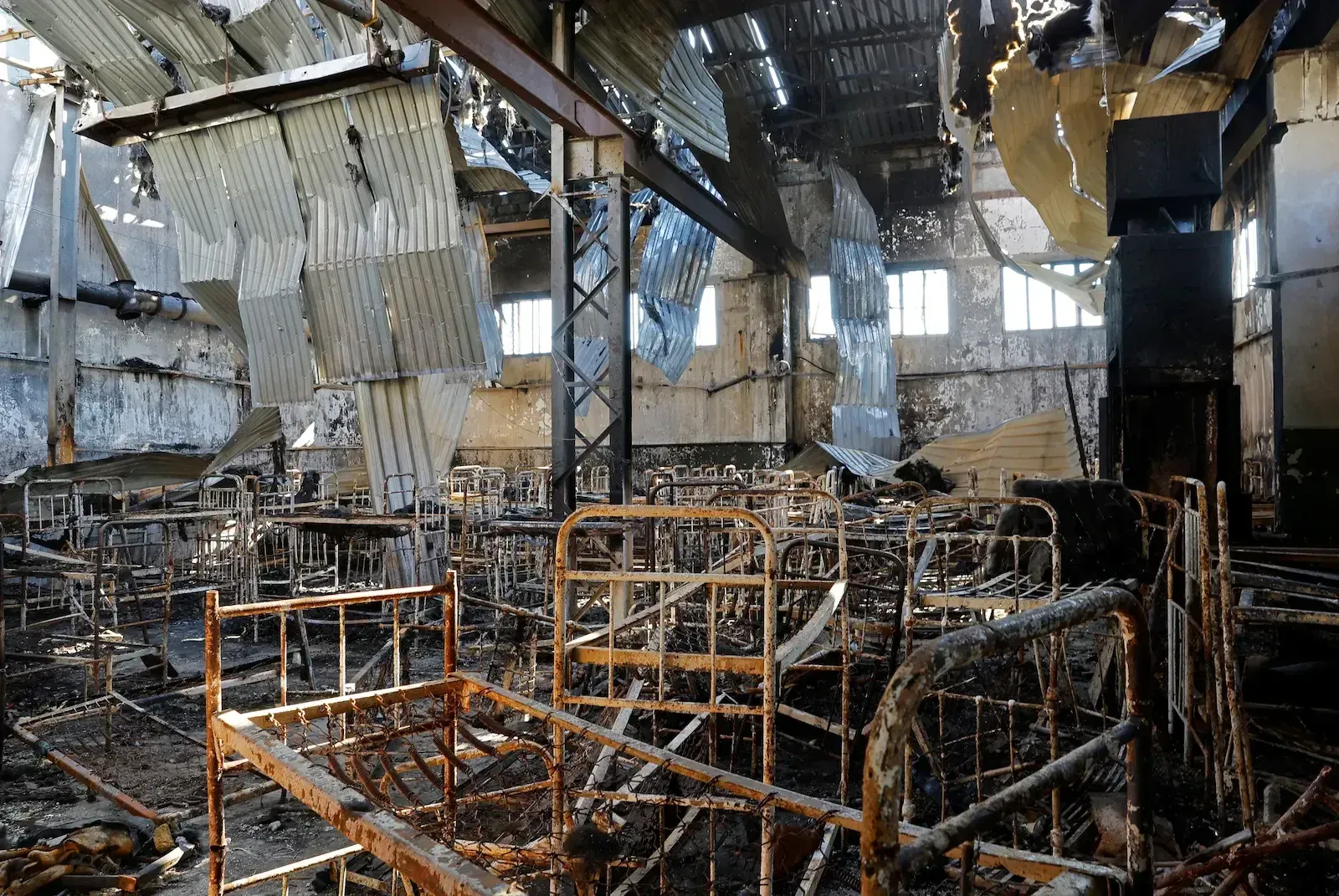
“They did not provide us with medical assistance from the moment of the explosion,” Dmytro says. He would explain that the wounded were not taken to a hospital in Donetsk until the next morning, around 8 or 9 a.m. In the hours between, survivors remained outside near the barracks, trying to treat themselves with whatever was left. Only when it was already getting light did the administration allow Ukrainian POW doctors to come in. Even then, Dmytro says, “it was hard to call it medical care.” The delay before evacuation cost many lives.
Olha was nearby in a DIZO cell when the explosion happened. She says Dmytro can describe the barracks better because he was there, while she experienced it from the women’s section of the prison. Later, she learned who had been killed through notes passed between prisoners. One of the dead was her close friend, known by the callsign Danger.
Later, Olha learned who had been killed through notes passed between prisoners. One of them was her close friend, known by the callsign Danger. “One girl told me, ‘Your friend was killed. Your friend is 200,’” Olha says. “I asked, ‘Which one exactly?’ She said the callsign — it was Danger. I said, ‘So, another one. Another close friend is gone.’”
After Olenivka, Dmytro’s account moves into the wider Russian prison system. He describes penal colonies, SIZOs, prisons, and the procedures around them as a mass system run through Russia’s penitentiary structures. He recalls being held in buses overnight before entering Olenivka, being searched repeatedly, and having basic items such as hygiene products, belts, and shoelaces taken away.
Dmytro also describes being sent to work, including laying and tamping asphalt by hand. In captivity, he read Erich Maria Remarque’s Spark of Life, a novel about a political prisoner in a Nazi concentration camp. Dmytro says that, apart from not being lined up and shot outright, much of the “camp machine” felt the same to him. It is a heavy comparison, but it is his own.
Olha describes captivity through deprivation: lack of movement, lack of privacy, and lack of nature. She says that in a SIZO cell, if prisoners were allowed to look out the window and see a sunset, sunrise, trees, or the weather changing, “that’s your TV.” Dmytro answers with dark humor, saying POW detention sites had their own kind of “nature”: rats, lice, dampness, and things crawling around.
Return
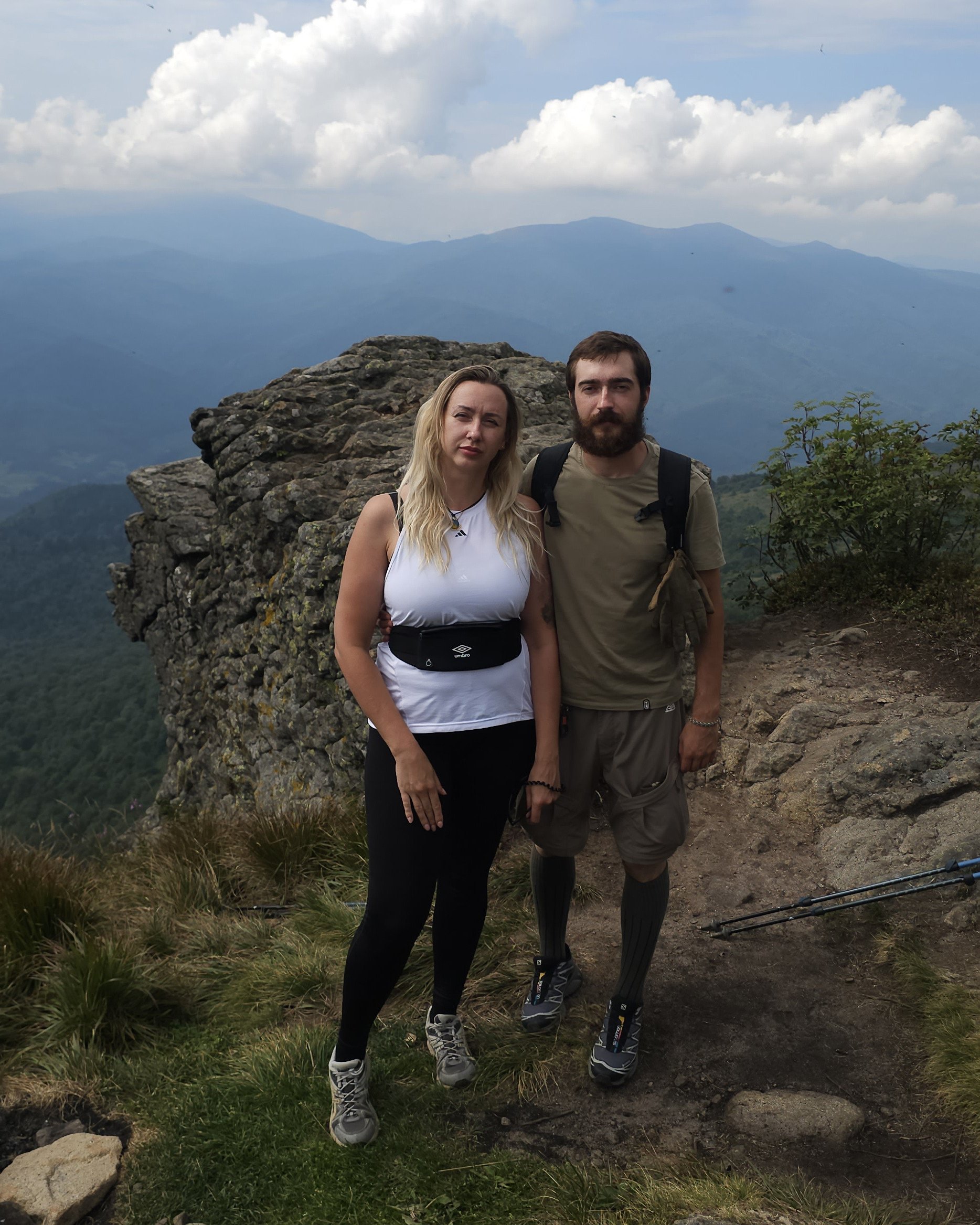
After the exchange, Dmytro says he came back physically depleted: pale, critically underweight, and looking like a skeleton. Olha says that after captivity, she walked through the streets and barely looked at people. She looked at nature, because that was what she had missed: the ability to move freely, see the outside world, speak to people by choice, and spend time alone.
Dmytro remembers the first moment he understood he was going home. At the airfield in Homel, Belarus, the cargo ramp opened, and he saw the planes. “You already understand you’re going to Ukraine,” he says. “It’s just a matter of time. The main thing is that nothing gets canceled at the last moment.”
When he crossed back to the Ukrainian side, he saw Ukrainian officials and, for the first time, “his own people” again. After that, the fear began to fade slowly. “You can finally stop being afraid of being beaten,” he says. “With each day, that fear disappears.”
Olha returned to service six months after her release, this time as a psychologist working with former prisoners of war. “When a soldier is in captivity, he is still in service,” she explains. “He doesn’t return to service — he goes through rehabilitation and then returns to the ranks. Or he can leave the service.”
In 2025, Olha was working with released servicemembers when she met Dmytro during his reintegration. “I am a former Azov soldier, a former prisoner of war, and now I serve as a psychologist,” she says. “I work in support of released servicemen. That is how we met Dmytro.”
They had not known each other before. Olha says their experiences were similar in some ways, but also different, and that they shared many mutual friends: the killed, the wounded, and those who had lived through the same events.
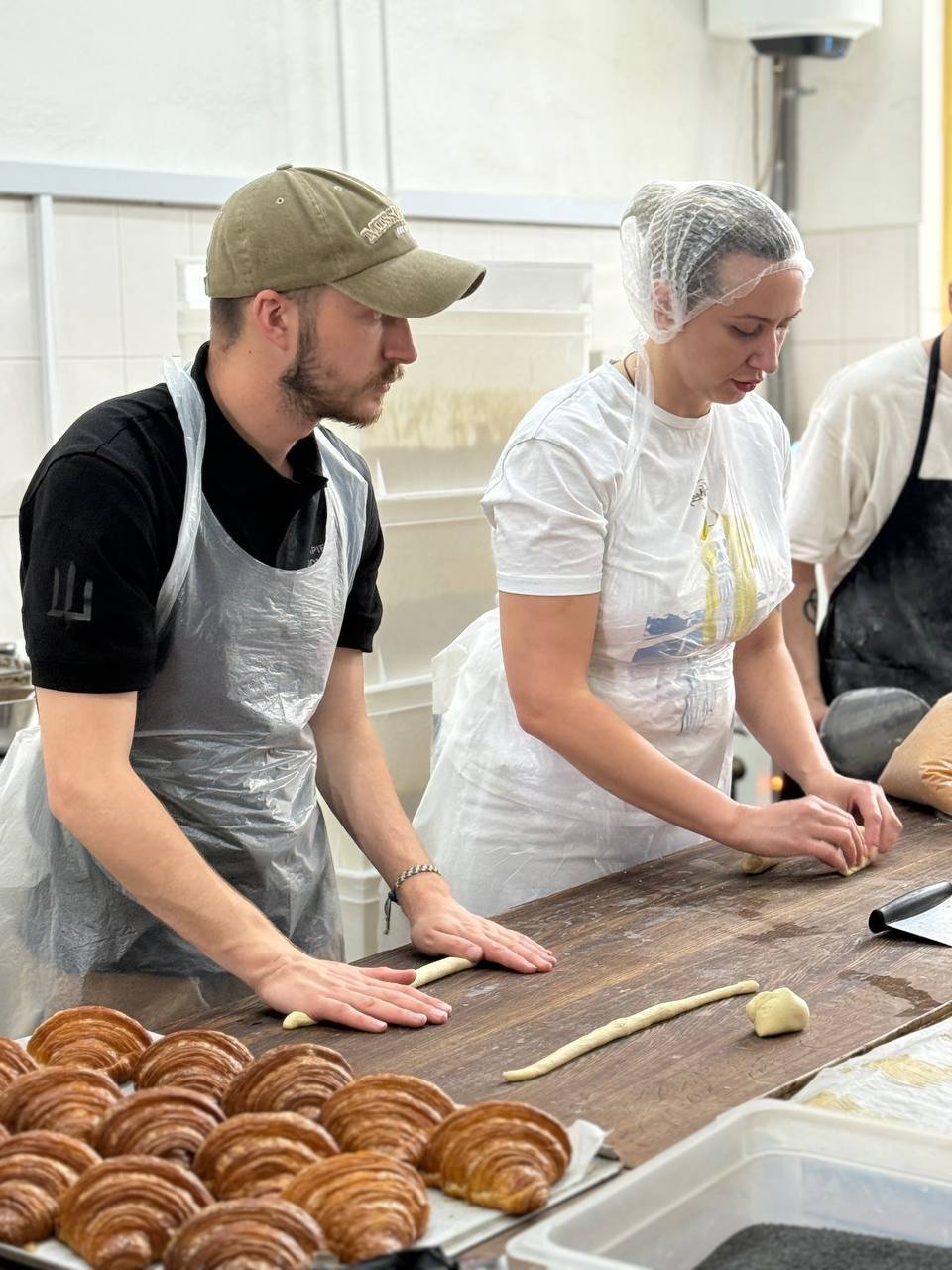
Dmytro says it is powerful when the person beside you understands you completely, especially when both people served in the same unit and lived through many of the same events.
As for their plans for the future, Dmytro says his immediate goal is to restore the function of his hand, while reintegration feels possible because of his “experience of survival and quick adaptation.” Olha, who continues to serve as a psychological support officer for released POWs, also sees her future outside the city. She plans to return to civilian life, live away from the urban noise, and focus on community work. After everything, Dmytro puts it plainly: “In the future, I plan to live outside the city in my own house.”
Discuss this article:


-206008aed5f329e86c52788e3e423f23.jpg "Photo of Oleksandr Moiseienko")
-f3430f0449615e9897dff835086ac204.jpg "Ukraine Broke With a Soviet-Era Military System and Rebuilt It Around the Soldier")
-e126c16a85d580738cf2d57e760b80a3.jpeg "Photo of Vladyslav Greziev")