- Category
- Latest news
28 Hours in Handcuffs and Medical Torture: Ukrainian Cash Handlers Detail Abuse During Detention in Hungary
 Prefer U24 Media on Google
- Authors


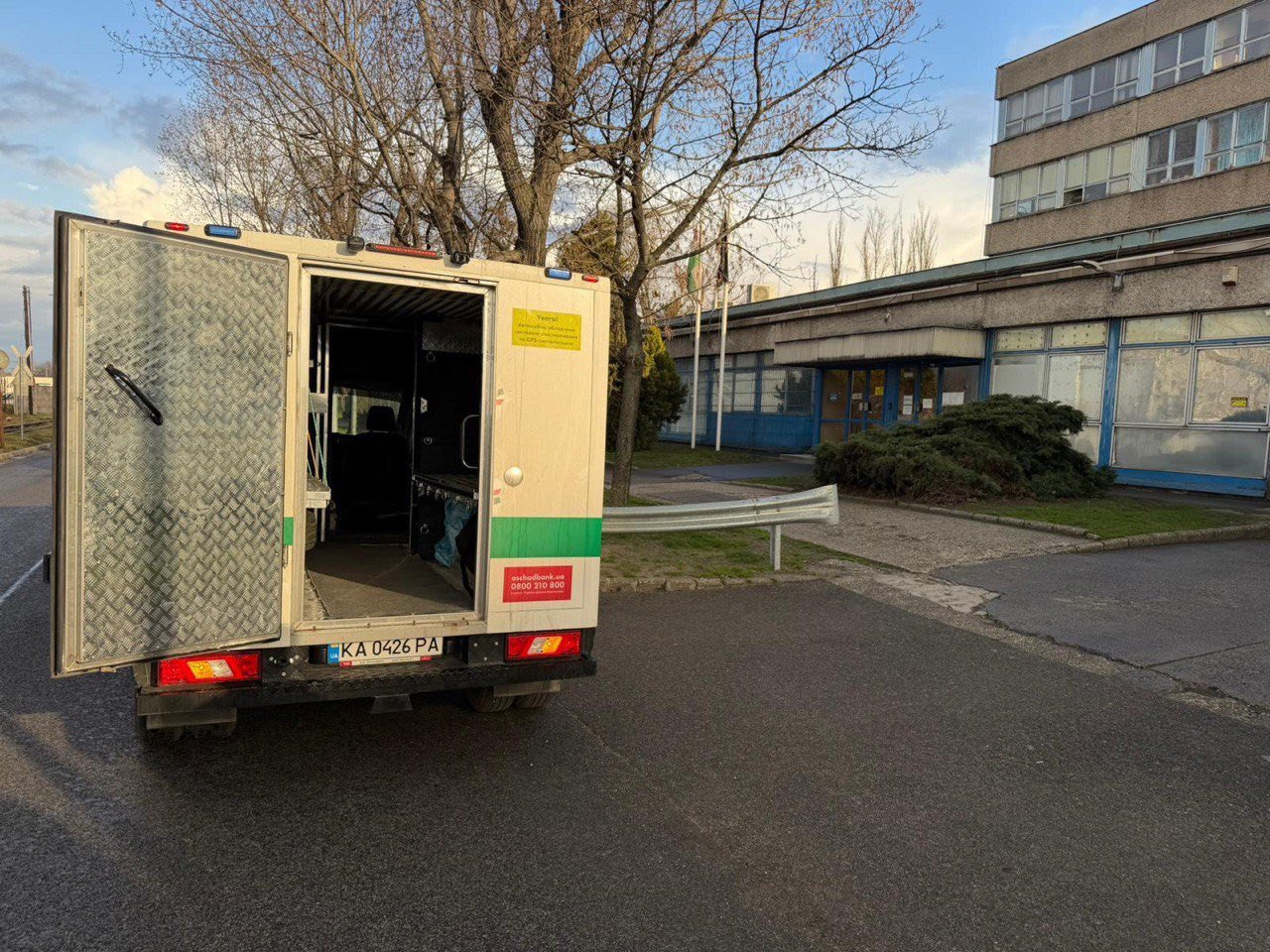
Ukrainian cash-in-transit workers detained earlier this month in Hungary have accused Hungarian security forces of using torture and inhumane methods during their detention, one of the detained workers, Gennadiy Kuznetsov, shared during the meeting with press on March 24.
The workers, employed by Ukraine’s Oschadbank, were involved in the transportation of money and gold from Austria to Ukraine when they were detained by Hungarian authorities.
We bring you stories from the ground. Your support keeps our team in the field.
Kuznetsov explained that the team of Ukrainian workers had thoroughly prepared for the mission, and all relevant Hungarian customs services were notified in advance of their route. However, their journey took a drastic turn when their vehicles were intercepted by Hungarian police near Budapest.
“Our two vehicles were blocked by armored vehicles from the anti-terrorist unit, with all types of weapons and flashing lights. Assessing the situation, I gave the command for the cash handlers to exit the vehicle. After exiting, a harsh physical arrest took place; they immediately put handcuffs on us, some had hoods or balaclavas put on their heads,” the cashier added.
Hungarian authorities reportedly denied consular assistance and legal services to Ukrainian cash handlers detained earlier. One of the detainees, Genadiy Kuznetsov, provided further details about the mistreatment.
According to Kuznetsov, the Hungarian authorities failed to provide any consular help or legal representation during the entire process. He also mentioned that the Ukrainian consul had allegedly “refused” to intervene on their behalf.

“The total time our team spent in handcuffs was more than 28 hours. The handcuffs were removed only at the Zahony-Chop crossing,” said Kuznetsov.
He also noted that the only investigation conducted by the Hungarian authorities was an interrogation of the witnesses by customs officials, which he found improper.
“When I asked how there could be a witness in handcuffs and a balaclava, they said, ‘It's not our competence.’ Well, after being refused participation in these investigative actions, I was subjected to forced medical influence, during which one injection was made, and later in the hospital, another intravenous injection was given,” he added.
Kuznetsov’s health deteriorated after the injections, and he was transported to the hospital by Hungarian law enforcement. By the time he was returned to Ukraine, he had been in the hospital.
The Ukrainian official pointed out that if the Hungarian authorities had any concerns regarding the legality of the cargo, they could have easily verified the documents in just a few minutes. He emphasized that the transportation had been conducted in full compliance with European regulations, and the cargo was properly registered in the customs database.
“I had the original documents with me, so I could have informed the relevant law enforcement agencies about the cargo in five minutes, and another five minutes to access the customs database, scan the European declaration, and verify all this information. However, no one was interested in that,” Kuznetsov clarified.
He further mentioned that he was taken to the border twice, and on the first occasion, he was returned and falsely told that Ukraine had “refused” to take him back.
“The translators were Russian-speaking, and no one responded to our remarks. They filled out some documents that were unclear to us. Given that the cash handlers were in handcuffs, these documents were simply placed in their pockets, and then they were taken into Ukrainian territory,” Kuznetsov concluded.

On March 5, Ukrainian authorities accused Hungarian security forces of using torture and inhumane treatment during the detention of seven employees from Oschadbank, the State Savings Bank of Ukraine.
The bank employees, who were accompanied by two armored vehicles, were stopped on the Budapest ring road. According to Ukraine’s Ministry of Foreign Affairs, Hungarian authorities were aware that the couriers were unarmed. Despite this, the Hungarian Counter-Terrorism Center carried out the operation using an armored personnel carrier and heavily armed officers equipped with machine guns and grenade launchers.
Upon their return to Ukraine, the detained individuals revealed details of their treatment that raised serious concerns about breaches of international legal standards. These include violations of the European Convention on Human Rights and the Vienna Convention on Consular Relations, which protect the rights of detained individuals and their access to consular support.
Discuss this article:
-4a56a6b482ec132402c16ef6fcabf9a2.png)

-c439b7bd9030ecf9d5a4287dc361ba31.jpg "Photo of Katherina Popilnichenko")