- Category
- Latest news
Armored Trains in 2025? Russia Slaps AI “Eyes” on a Relic of Past Wars
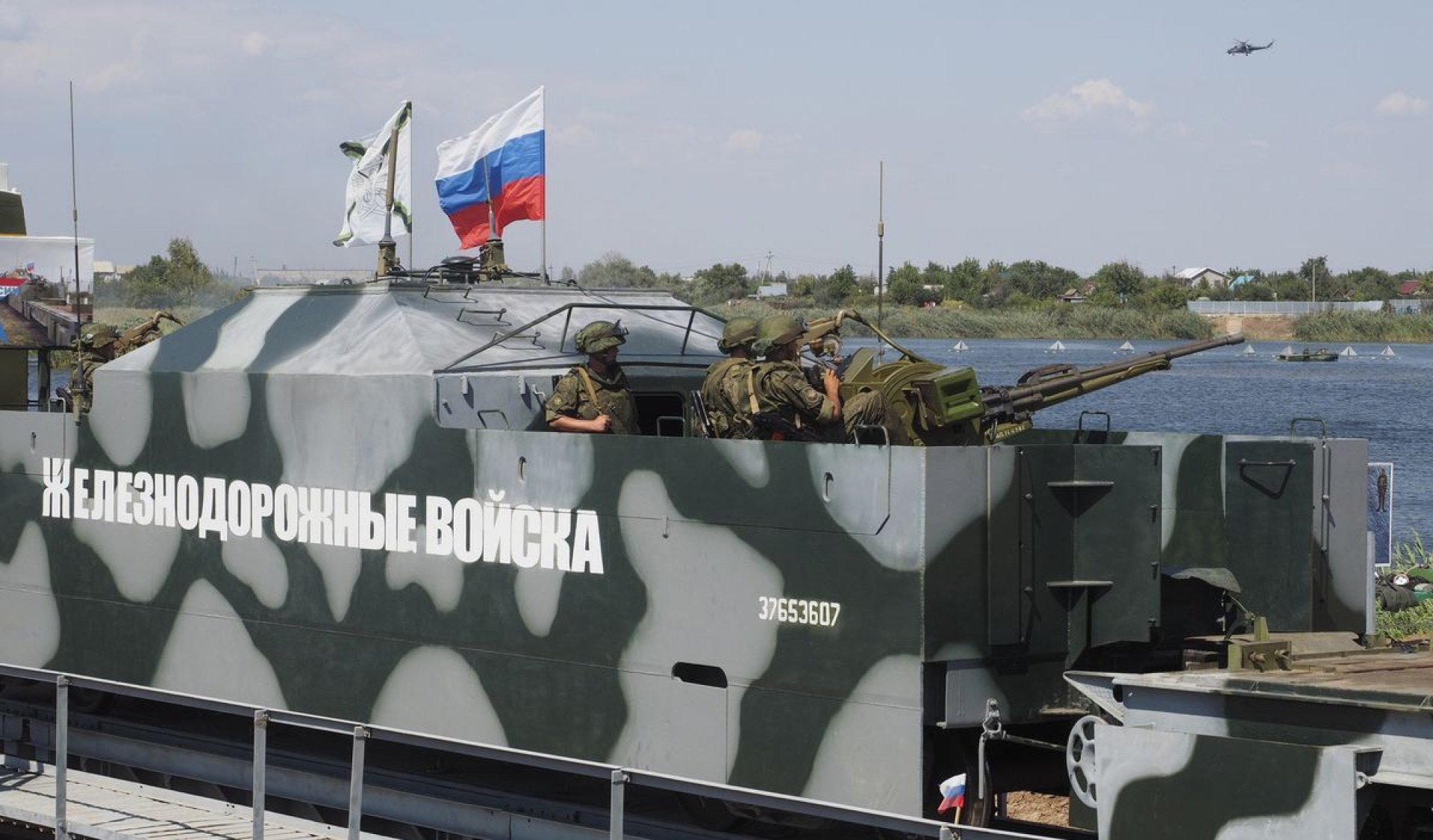
Russia is trying to keep one of its most anachronistic battlefield platforms alive by adding artificial intelligence. According to Defense Express, Moscow plans to equip its armored trains—relics of 20th-century warfare—with AI-powered camera systems designed to automatically detect and track Ukrainian drones, a move that underscores how vulnerable these rail-bound assets have become in the age of precision UAV strikes.
 Prefer U24 Media on Google
- Authors


Russia is planning to upgrade its armored trains with a so-called “technical vision”—an AI-assisted camera system designed to automatically detect and identify Ukrainian drones—as Moscow looks to better protect rail-based logistics from increasingly effective aerial attacks, according to Defense Express on December 14.
We bring you stories from the ground. Your support keeps our team in the field.
The Russian military intends to equip all armored trains currently in service with computer-vision systems capable of independently monitoring surrounding terrain, spotting airborne threats, and alerting crews in real time.
Once a target is detected, the system is expected to issue a signal prompting the crew to engage it using onboard air-defense mounts, automatic cannons, or machine guns. The primary goal appears to be protection against reconnaissance drones and strike UAVs, which pose a growing threat to Russian rail operations near the front.
Russian armored train #Russia #Ukraine #War pic.twitter.com/XzUboU29Y1
— Guda (@Crypto_Gud4r) May 30, 2024
Russian sources claim the integration of “technical vision” will “make reconnaissance of railway routes and adjacent areas more effective and provide additional security for the trains.”
AI cameras, human firepower
The proposed setup reportedly includes multiple cameras, a dedicated data-processing unit, and either a direct link to the commander’s tablet or integration with the train’s vehicle management system to provide targeting data. Russian developers also acknowledge that the computer-vision software still requires additional training to correctly classify objects and avoid misidentification.
Moscow claims the system has already undergone battlefield testing, though no independent verification has been provided.
Russian armored train "Yenisei" on the Pokrovsk direction - Stanislav Krasilnikov https://t.co/UpDfuhgXyL pic.twitter.com/K9EZuTm1Xe
— Alexander's Cartographer (@cartographer_s) June 29, 2025
Vulnerable target on rails
Armored trains have played a niche but persistent role in Russia’s invasion of Ukraine, primarily serving logistical and security functions along key rail corridors. However, their visibility and predictability have made them attractive targets.
In April, drone operators from Ukraine’s 152nd Separate Jaeger Brigade successfully struck one of Russia’s armored trains—an incident that highlighted the platform’s vulnerability.
🚃Russia’s Defense Ministry shows armored train operating in temporary occupied Ukraine to guard supply lines from drones and sabotage. pic.twitter.com/AlVLngCnnH
— Ivan Khomenko (@KhomenkoIv60065) June 29, 2025
At the same time, Russia has intensified its own drone campaign against Ukrainian rail infrastructure, including the use of modified Shahed drones adapted into what analysts describe as oversized FPV strike platforms. Ukraine, meanwhile, has demonstrated the ability to hit moving targets using long-range drones such as the FP-1 and FP-2.
A small, aging fleet
Russian officials say their forces currently operate four armored trains—Baikal, Amur, Volga, and Yenisei —all of which have reportedly been in use since 2022.
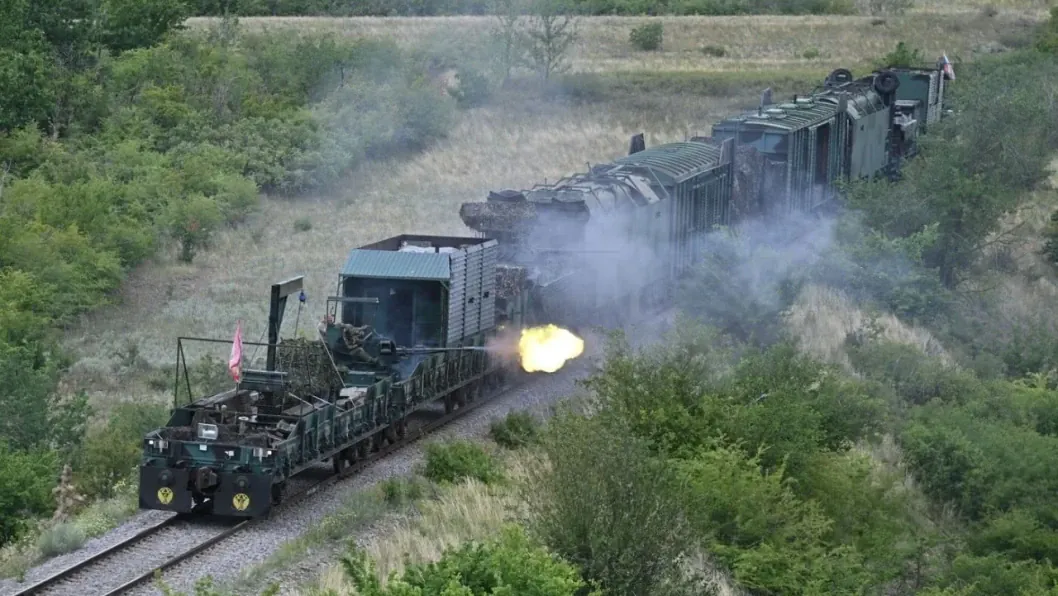
Defense Express notes that whether AI-assisted “technical vision” can meaningfully improve their survivability remains an open question, especially as Ukrainian drone capabilities continue to evolve faster than most defensive adaptations.
Earlier, Russian forces deployed a heavily modified civilian truck outfitted with a Soviet-era S-60 anti-aircraft gun in an apparent attempt to protect field positions from drone threats.
Discuss this article:



-c439b7bd9030ecf9d5a4287dc361ba31.jpg "Photo of Katherina Popilnichenko")